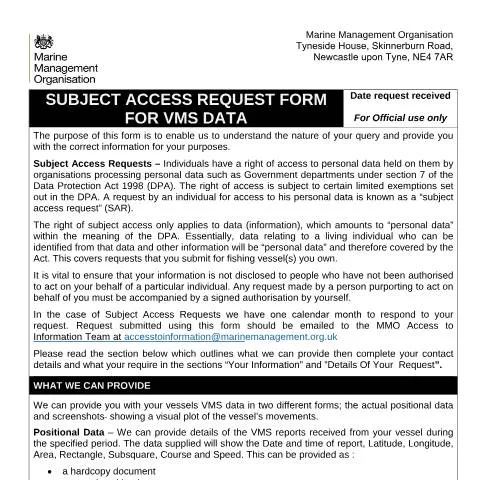
Understanding the Vessel Monitoring System: Data Request Process
The Marine Management Organisation (MMO) plays a pivotal role in managing the UK's marine resources, including the vital task of monitoring fishing activities through the Vessel Monitoring System (VMS). The Data Request Form serves as a crucial link for vessel owners and representatives seeking access to their VMS data. This document outlines the nuances of this process, addressing who should file a request, how to complete the form, and what to expect afterward.
Who Should Submit a Data Request?
Individuals and entities involved in the fishing industry may find themselves in need of VMS data. The following scenarios help clarify the profiles of those who might submit the VMS Data Request Form:
- Vessel Owners: If you own a fishing vessel, you have the right to access data concerning your vessel's movements and activities.
- Skippers and Representatives: If you are a skipper or an authorized representative of the vessel owner, you can submit a request on their behalf. However, ensure that you have a signed authorization from the owner.
- Companies: Businesses engaged in fishing may request data related to multiple vessels under their management. It's important for companies to ensure that they submit requests clearly identifying the vessels involved.
Each profile has specific considerations regarding how they can submit their requests and the types of data they may need.
The Lifecycle of a Data Request: From Submission to Response
Understanding the journey of a data request can demystify the process for users. Here’s a step-by-step breakdown:
- Preparation: Gather all necessary information, including vessel details and your contact information.
- Submission: Complete the VMS Data Request Form by entering the required details, ensuring accuracy to avoid delays.
- Review Period: Once submitted, the MMO has one calendar month to respond to your request, as mandated by the Data Protection Act 2018.
- Response: You will receive your requested data in the specified format, whether as hard copies, Excel spreadsheets, or PDFs.
- Follow-up: If you do not receive a response within the expected timeframe, you may need to follow up with the MMO.
Being aware of these steps can help streamline your experience with the MMO.
Choosing the Right Channel: Submission Methods Explored
There are various methods available for submitting your VMS Data Request, each with its benefits:
- Email Submission: This is the most common method. By emailing the completed form to the MMO Access to Information Team, you can initiate your request electronically. Ensure you have attached any necessary authorizations if you're not the vessel owner.
- Paper Submission: If you prefer traditional methods, you may print the form and send it via post. This may take longer due to mailing time but can be useful if you wish to keep a physical copy.
- In-Person Submission: Although less common, you may choose to visit the MMO’s offices to submit your request directly. This could provide an opportunity to address any immediate questions you may have.
Each method has its pros and cons, depending on your preferences and the urgency of your request.
Timeline: When to Submit and What Happens Next?
Understanding the timeline associated with your VMS Data Request is crucial for managing expectations:
| Action | Timeline |
|---|---|
| Request Submission | Anytime; the sooner, the better for response management |
| MMO Response | Within one calendar month from submission |
| Follow-Up | 1 week after expiration of the response period if no reply received |
By adhering to this timeline, you can effectively track your request and ensure prompt follow-up if needed.
Information Breakdown: What to Include in Your Request
The VMS Data Request Form requires specific information to ensure the process runs smoothly. Here’s a closer examination of each section:
Vessel Information
It is essential to provide accurate details regarding the vessel:
- Name of Vessel: Ensure the name matches the registration details.
- Unique Vessel Identifier (PLN): Include this number for clarity and efficiency.
Applicant Information
Clearly indicate who is making the request:
- Contact Details: Provide a phone number and email address for correspondence.
- Status of the Applicant: Check the appropriate box to confirm if you are the owner, skipper, or representative.
Details of the Data Request
This section is vital for receiving the correct information:
- Date Range: Specify the start and end dates for the data you require.
- Type of Data: Tick the box for positional data, visual screenshots, or both.
- Response Format: Choose how you would like to receive the data — hard copy, Excel, or PDF.
Completing these sections accurately helps avoid unnecessary complications in processing your request.
Anticipating Outcomes: Data Provided and Limitations
Once your request is submitted, it’s essential to understand what you can expect:
- Positional Data: You will receive a detailed log of your vessel’s movements, including date, time, and geographical coordinates.
- Visual Screenshots: In certain circumstances, you may receive visual representations of your vessel's movements. However, be aware that these are provided at the MMO's discretion and depend on resource availability.
Keep in mind that the MMO may not be able to provide data beyond the specific timeframe you request. Plan your requests accordingly to fit your needs.
Managing Your Request: How to Track and Follow Up
After submitting your request, you might wonder how to track its progress:
- Initial Confirmation: Upon submission, you should receive a confirmation email or notification from the MMO acknowledging your request.
- Response Period: Keep track of the one-month timeline for a response. If it hasn’t arrived, prepare to follow up.
- Follow-Up Protocol: If necessary, contact the MMO Access to Information Team via email to inquire about the status of your request.
Understanding these elements ensures you stay informed throughout the process.
Final Thoughts: Navigating the VMS Data Request System
Accessing VMS data through the Marine Management Organisation is a structured process that requires attention to detail and an understanding of the related regulations. By preparing adequately, submitting your request through the appropriate channels, and following up as needed, you can navigate this system effectively. Each step, from gathering information to managing expectations, is crucial in securing the data you require. This proactive approach will help you make the most of your rights regarding personal data and ensure compliance with the regulatory framework governing the marine sector.
Understanding the Legal Framework for Data Requests in Vessel Monitoring Systems
The processing of personal data within the context of Vessel Monitoring Systems (VMS) is governed by several legal frameworks, most notably the Data Protection Act 2018 and the UK General Data Protection Regulation (UK GDPR). These regulations are crucial in shaping how data collected through VMS can be accessed, shared, and used by various authorities.
According to these laws, data subjects—typically the owners or operators of the vessels—have rights over their data. For instance, individuals can request access to their data, seek rectification of inaccuracies, or even object to processing under certain circumstances. Authorities such as the Marine Management Organisation (MMO) must ensure compliance with these regulations when handling data requests related to VMS. This includes having clear processes for data access requests (DSARs) that are transparent and user-friendly.
Moreover, specific provisions apply to data sharing between agencies. For instance, data shared among enforcement agencies for monitoring compliance with fishing quotas must also adhere to these legal standards. It is imperative that when submitting a data request, vessel owners understand the legal implications and the rights they possess concerning their data. This ensures that they can effectively navigate the request process, knowing their rights are protected under UK law.
Practical Steps for Submitting a VMS Data Request
Submitting a data request related to a Vessel Monitoring System might seem daunting, but understanding the practical steps can make the process considerably smoother. To initiate a request, vessel operators should first determine the specific data they need. This could range from tracking information to compliance records. A clear definition of the required data will facilitate a more efficient response.
Once the data scope is established, the next step is to identify the relevant authority—typically the Marine Management Organisation (MMO) or other regulatory bodies overseeing maritime operations. Users should visit the official website of the MMO to check for any specific guidelines on how to submit a request. Most authorities provide a standard template or form for such requests.
When filling out the request form, individuals must include personal details, such as their name, address, and National Insurance number, to help authorities verify their identity. It's also helpful to specify the timeframe for which the data is required and the purpose of the request, as this will assist in prioritising and processing the request efficiently.
After submission, be aware of the statutory timelines. Under the UK GDPR, organisations are required to respond to data requests within one month. However, if the request is particularly complex or if multiple requests are made, this period may be extended by an additional two months, provided that the requester is informed accordingly. Keeping track of this timeline is essential to ensure that rights are upheld.
Lastly, if there are any issues or delays, vessel operators have the right to lodge a complaint with the Information Commissioner’s Office (ICO). This independent authority oversees data protection rights in the UK and can provide guidance on how to escalate issues concerning data access requests.
Common Challenges and Solutions When Requesting VMS Data
Vessel operators often encounter various challenges when attempting to request data from Vessel Monitoring Systems. Understanding these challenges and knowing how to address them can significantly enhance the likelihood of a successful data request.
One common challenge is the potential for delays in processing time, especially if the authority receives an influx of requests. To minimise this risk, operators can ensure their request is as concise and clear as possible. Providing all necessary details upfront can help prevent back-and-forth communication, which adds time to the process.
Another challenge is the risk of incomplete data. Sometimes, the data provided may not fully meet the original request. To mitigate this, vessel operators should formulate their requests with specific parameters or examples of the information they are seeking. This helps the authority understand the context of the request and reduces the likelihood of receiving incomplete data.
Additionally, some operators may face challenges related to understanding the terminology used within VMS data. Therefore, it might be beneficial to seek clarification from the authority regarding any technical jargon before submitting the request. This can help operators frame their requests more effectively and ensure they receive the right information.
Lastly, data protection concerns might deter some operators from requesting data because they fear potential legal repercussions. It is important to remember that under the Data Protection Act 2018 and UK GDPR, vessel operators have rights to their data. Educating themselves on these rights can empower them to pursue their requests confidently and without undue fear.