The Gateway to Commercial Fishing: Understanding UK Vessel Registration Requirements
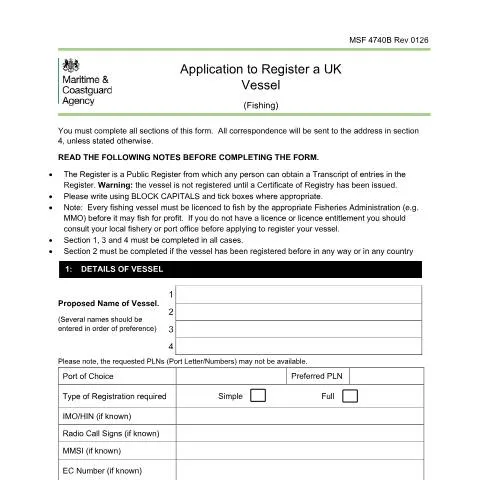
When a fishing vessel owner receives their completed MSF 4740B application form, they hold in their hands the key to legally operating in UK waters. This Maritime and Coastguard Agency registration document represents far more than administrative paperwork—it establishes the vessel's legal identity, determines fishing rights eligibility, and creates a permanent public record that will follow the boat throughout its working life.
The registration process operates within a carefully structured framework where timing, documentation, and regulatory compliance intersect. A vessel cannot legally fish for commercial purposes until both registration and appropriate fishing licences are secured, making this application a critical first step in what can be a complex regulatory journey.
Navigating the Dual Registration Pathways
The MSF 4740B form offers vessel owners a crucial choice between Simple Registration and Full Registration, each serving distinct operational needs and carrying different documentary requirements.
Simple Registration: The Streamlined Route
Simple registration provides basic legal recognition for fishing vessels operating primarily in UK coastal waters. This pathway requires fewer supporting documents—notably, builders' certificates and bills of sale are not required for fishing vessels under simple registration. The process focuses on establishing basic vessel identity, ownership, and compliance with fundamental safety requirements.
Vessels under simple registration receive Port Letters and Numbers (PLN) designation, creating a unique identifier that appears on the public register. However, this registration type may limit certain international operations and financing options.
Full Registration: Comprehensive Maritime Documentation
Full registration provides complete international recognition under UK maritime law, essential for vessels operating in international waters or requiring comprehensive documentation for insurance and financing purposes. This pathway demands complete documentation including builders' certificates, bills of sale, and detailed ownership verification.
Full registration enables vessels to fly the Red Ensign and provides broader operational flexibility, particularly valuable for larger commercial operations or vessels with complex ownership structures.
Critical Intersection: Registration and Fishing Licence Requirements
The form prominently warns that registration alone does not permit commercial fishing. Every fishing vessel must obtain appropriate licences from relevant Fisheries Administrations—typically the Marine Management Organisation (MMO) for English waters—before engaging in profit-making fishing activities.
This dual requirement creates a coordination challenge for vessel owners. The registration establishes the vessel's legal status, while fishing licences govern operational permissions. Experienced operators often begin both processes simultaneously, as fishing licence applications frequently require proof of vessel registration.
Licence Entitlement Considerations
The form specifically advises consulting local fishery or port offices before registration if licence entitlements are uncertain. This guidance reflects the complex quota system governing UK fishing operations, where historical fishing rights, vessel replacement rules, and quota allocations significantly impact operational viability.
Vessel owners without existing licence entitlements may find registration less valuable, as acquiring new fishing rights in established fisheries can be extremely difficult and expensive.
Decoding the Application Sections: Technical Requirements and Common Challenges
The MSF 4740B form structures information collection across five distinct sections, each addressing specific regulatory and operational requirements.
| Section | Primary Focus | Mandatory Status | Key Challenges |
|---|---|---|---|
| Section 1 | Vessel Details | Always Required | Name conflicts, PLN availability |
| Section 2 | Previous Registration | If Previously Registered | International record verification |
| Section 3 | Fishing Activity Status | Always Required | EU regulation compliance |
| Section 4 | Applicant Information | Always Required | Corporate documentation |
| Section 5 | Privacy Notice | Information Only | Data protection compliance |
Vessel Identity and Name Selection Strategy
Section 1 requires multiple name preferences because vessel name conflicts are common in the public register system. The Maritime and Coastguard Agency maintains strict naming protocols to prevent confusion and ensure unique identification.
Port Letter and Number (PLN) requests may be rejected if already allocated, requiring applicants to consider alternative port affiliations. The chosen port often reflects operational bases rather than strict geographical constraints, allowing flexibility in registration planning.
Technical specifications including IMO/HIN numbers, radio call signs, and MMSI numbers connect the registration to broader international maritime identification systems. While some fields accept "if known" entries, providing complete information accelerates processing and reduces subsequent correspondence.
Previous Registration Complexities
Section 2 addresses vessels with prior registration history, whether in the UK, EU/EEA countries, or elsewhere internationally. This section proves particularly challenging for imported vessels or those with complex ownership histories.
EU Number requirements reflect post-Brexit regulatory adjustments, where vessels previously registered within EU systems require careful documentation to establish current status and compliance obligations.
Fishing Activity Declarations and Regulatory Compliance
Section 3 addresses critical fishing-related regulatory questions that significantly impact registration approval and ongoing operational permissions.
Outstanding Mortgage Obligations
Registered mortgage disclosures protect both lenders and subsequent purchasers by maintaining transparent ownership records. The public register nature means these financial encumbrances become visible to all interested parties, affecting vessel transferability and operational flexibility.
Community Waters Fishing Intentions
The community waters question determines applicable regulatory frameworks and quota obligations. Vessels operating exclusively in UK territorial waters face different requirements compared to those accessing broader European fishing grounds.
Post-Brexit arrangements have complicated this determination, as access rights and quota allocations continue evolving through ongoing negotiations and regulatory updates.
De-commissioning Grant History
Previous de-commissioning grants or financial assistance for fishing abstinence create permanent restrictions on vessel operations. The form requires disclosure of any such arrangements across all EU member states, reflecting the international nature of fishing fleet management policies.
Vessels with de-commissioning grant history may face operational restrictions or require special permissions for re-entering active fishing, making this disclosure crucial for regulatory compliance.
Ownership Documentation and Corporate Requirements
Section 4 establishes applicant credentials and determines correspondence protocols throughout the registration lifecycle. The complexity varies significantly between individual and corporate ownership structures.
Individual Ownership Protocols
Individual owners provide straightforward identification and contact information, with options for designating permanent agents or registration representatives. This flexibility accommodates owners who prefer professional maritime service providers to handle ongoing regulatory correspondence.
Corporate Registration Demands
Company ownership requires Certificate of Incorporation copies, establishing legal entity status and authorized signatory permissions. Corporate structures often involve multiple stakeholders, making clear identification of responsible parties essential for ongoing regulatory compliance.
International corporate owners face additional verification requirements, as the Maritime and Coastguard Agency must establish UK jurisdiction and compliance obligations for foreign-registered entities.
Supporting Documentation Strategy and Submission Protocols
The registration application requires careful coordination of multiple document types, each serving specific verification and compliance purposes.
Essential Documentation Matrix
- Declaration of Eligibility—establishes UK registration qualification under maritime law
- Correct fees—current fee schedules available through Maritime and Coastguard Agency channels
- Certificate of Incorporation—required for company applicants only
- Builders Certificate and/or Bills of Sale—except for fishing vessels under simple registration
The documentation exemption for fishing vessels under simple registration reflects practical recognition that many smaller fishing operations may lack comprehensive ownership documentation, particularly for older vessels or those built through informal arrangements.
Processing and Response Timelines
Applications submitted to the Registry of Shipping and Seamen in Cardiff begin formal processing upon receipt of complete documentation packages. Incomplete submissions generate correspondence requesting additional information, extending processing timelines and potentially delaying operational commencement.
The public register status means approved registrations become immediately accessible to any interested party, creating transparency in vessel ownership and operational status while supporting maritime commerce and safety oversight.
Post-Registration Obligations and Ongoing Compliance
Successful registration creates ongoing obligations extending well beyond initial approval. The Certificate of Registry represents the beginning of a continuous regulatory relationship rather than a one-time administrative transaction.
Changes in vessel ownership, operational status, or technical specifications require prompt notification to maintain registration validity. The public register system depends on current, accurate information to support maritime safety, commercial transactions, and regulatory oversight.
Fishing vessel operators must coordinate registration maintenance with fishing licence obligations, quota compliance, and safety certification requirements. This multi-layered regulatory environment demands ongoing attention to ensure continued operational authorization and legal compliance.
The Maritime and Coastguard Agency privacy policy governs personal information handling throughout the registration lifecycle, reflecting Data Protection Act 2018 and UK GDPR requirements for government data processing activities.
Regional Variations and Local Authority Requirements
While vessel registration follows UK-wide maritime legislation, significant regional variations exist across England, Wales, Scotland, and Northern Ireland that affect your application process. The Maritime and Coastguard Agency coordinates with local authorities, but each region maintains specific requirements that can impact registration timelines and documentation.
In Scotland, the Marine Scotland Act 2010 introduces additional considerations for commercial fishing vessels operating in Scottish waters. If your vessel will primarily fish from Scottish ports such as Aberdeen, Peterhead, or Lerwick, you must also register with Marine Scotland's vessel licensing system. This dual registration requirement means submitting supplementary forms alongside your MCA application, particularly for vessels exceeding 10 metres in length or those targeting quota species like cod or haddock.
Welsh fishing vessels face similar complexities under the Welsh Government's marine licensing framework. The Natural Resources Wales body requires separate notification for vessels operating from Welsh ports including Milford Haven, Fishguard, or smaller harbours along the Pembrokeshire coast. Commercial operators must demonstrate compliance with Welsh language requirements on vessel markings and safety documentation, which can affect your initial application if not properly addressed.
Northern Ireland presents unique cross-border considerations, particularly for vessels operating in Lough Foyle or Carlingford Lough where jurisdiction overlaps with the Republic of Ireland. The Department of Agriculture, Environment and Rural Affairs (DAERA) in Northern Ireland maintains specific vessel registration protocols that may require additional documentation proving compliance with both UK and EU regulations, depending on your fishing grounds and species targeted.
Local harbour authorities also impose their own requirements that complement national registration. Major fishing ports like Grimsby, Hull, or Plymouth maintain harbour master records that may require separate registration or notification processes. These local requirements often include berth allocation applications, harbour dues arrangements, and compliance with specific port regulations that aren't covered in your MCA registration but remain legally mandatory for operational fishing vessels.
Insurance, Safety Certificates, and Ongoing Compliance Requirements
Registration represents only the initial step in maintaining legal compliance for UK fishing vessels. The MCA requires comprehensive insurance coverage and safety certification that must remain current throughout your vessel's operational life, with specific requirements varying based on vessel size, fishing area, and crew complement.
All commercial fishing vessels must carry valid third-party liability insurance with minimum coverage amounts determined by vessel tonnage and operational scope. Vessels under 12 metres operating within 12 nautical miles of the UK coast typically require coverage of at least £1 million, while larger vessels or those operating in international waters face significantly higher requirements. Your insurance provider must be authorised by the Prudential Regulation Authority, and policy documentation must specifically reference commercial fishing activities rather than general marine coverage.
Safety certification requirements follow a tiered system based on vessel length and operating distance from shore. Vessels between 12 and 24 metres require a Commercial Vessel Certificate issued after thorough inspection by MCA-approved surveyors. This inspection covers hull integrity, stability calculations, fire safety equipment, life-saving appliances, radio equipment, and navigation systems. The certification process typically takes 4-6 weeks from application to inspection completion, assuming no deficiencies requiring rectification.
Larger vessels exceeding 24 metres must obtain a full Commercial Vessel Certificate with additional requirements including ISM (International Safety Management) Code compliance, STCW (Standards of Training, Certification and Watchkeeping) qualified crew, and comprehensive safety management systems. These vessels also require annual safety inspections and intermediate surveys every 2.5 years, creating ongoing compliance obligations that extend well beyond initial registration.
Radio licensing through Ofcom represents another mandatory requirement often overlooked during initial registration planning. All fishing vessels require appropriate radio equipment and licensing for distress, safety, and operational communications. VHF radio licensing costs approximately £75 for five years, while vessels requiring HF or satellite communications face higher fees and more complex technical requirements.
Crew certification requirements under the MCA's training standards affect vessel operations and may influence your registration category. Skippers must hold appropriate certificates of competency based on vessel size and operating area, while crew members require basic safety training certificates. These requirements create ongoing training costs and compliance monitoring that successful fishing operations must integrate into their business planning.
Economic Considerations and Financial Support Options
Registering a UK fishing vessel involves significant financial considerations beyond the basic application fees, with various support mechanisms available through government schemes and industry programmes that can substantially impact your project's viability and timeline.
The UK Seafood Fund, administered by the Marine Management Organisation, provides grants for vessel modernisation, equipment upgrades, and new vessel construction that can offset registration and compliance costs. Grant applications typically open annually with funding rounds worth several million pounds available for eligible projects. However, grant approval often requires completed vessel registration, creating a chicken-and-egg scenario where applicants must demonstrate registration progress before securing funding that enables registration completion.
Vessel financing through maritime specialist lenders requires comprehensive documentation including registration certificates, survey reports, and business plans demonstrating fishing quota access or market arrangements. Traditional high street banks rarely understand fishing industry requirements, making specialist marine finance brokers essential for securing competitive lending terms. Interest rates for fishing vessel loans typically range from 4-8% above base rate, depending on vessel age, condition, and borrower experience.
Tax considerations under HMRC regulations provide both opportunities and obligations that affect registration timing. Capital allowances for fishing vessel purchases can provide significant tax relief, but claiming these allowances requires proper vessel classification and registration documentation. The Annual Investment Allowance potentially covers up to £1 million of qualifying vessel and equipment costs, but HMRC requires detailed records proving commercial fishing use rather than recreational activity.
EU Exit implications continue affecting vessel values and operational costs, particularly for vessels previously operating under EU common fisheries policy arrangements. Vessels with historical EU fishing rights may retain enhanced value, but demonstrating these rights requires comprehensive documentation that registration authorities increasingly scrutinise. Brexit-related changes to quota systems, licensing arrangements, and market access create ongoing uncertainties that affect vessel investment decisions and financing availability.
Insurance costs vary dramatically based on vessel specifications, intended fishing grounds, and operator experience. New entrants to the fishing industry face higher premiums due to limited claims history, while vessels targeting high-value species or operating in challenging conditions like the North Sea during winter months encounter significantly increased insurance costs. Some insurance providers offer premium reductions for vessels meeting enhanced safety standards or carrying approved tracking systems, creating incentives for higher specification registrations.
Operational cost planning must account for ongoing compliance expenses including survey fees, certification renewals, equipment maintenance, and crew training requirements. These costs can easily exceed £10,000 annually for medium-sized vessels, making accurate financial planning essential for sustainable fishing operations. Many operators underestimate these ongoing costs during initial registration planning, leading to financial difficulties once operations commence.