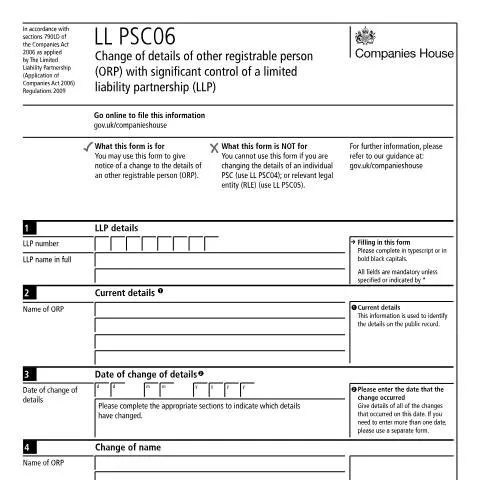
Navigating the LL PSC06: Understanding the Change of Other Registrable Person Details
In the world of limited liability partnerships (LLPs) in the UK, maintaining accurate records of those with significant control is paramount. The LL PSC06 document serves as a key notification tool for any changes regarding other registrable persons (ORPs) with significant control over an LLP. Not only does it facilitate compliance with legal requirements, but it also ensures transparency and accountability in the structure of the partnership.
What Constitutes an ORP in the Context of an LLP?
Before diving into the nuances of the LL PSC06 document, it’s essential to clarify what an ORP is. An ORP refers to individuals or entities that exercise significant control over an LLP but do not fall under the category of individual Persons with Significant Control (PSCs) or Relevant Legal Entities (RLEs).
- Significant Control encompasses various forms of influence, including voting rights, rights to appoint or remove management, and rights to share in surplus assets during winding up.
- Legal Entities may include companies, partnerships, or other structures that fall under the Companies Act 2006 regulations.
Understanding these definitions is crucial when filling out the LL PSC06, as it ensures that the right individuals or entities are reported, preventing potential penalties for non-compliance.
Steps to Effectively Utilize LL PSC06
Utilizing the LL PSC06 form effectively requires a systematic approach. As changes in ORP details can occur for a myriad of reasons—such as changes in ownership, new partnerships, or shifts in control—it's essential to know how to notify Companies House promptly.
Step 1: Confirm the Change
Before submitting the LL PSC06, ensure that the change in details is confirmed and documented. This can involve:
- Internal meetings to discuss changes in control.
- Documentation proving the change, such as meeting minutes or written agreements.
Step 2: Fill Out the LL PSC06 Form
While the form is not complex, accuracy is key. All fields marked as mandatory must be filled out:
- Current details of the ORP.
- The exact date when the change occurred.
- Specific nature of control—including voting rights and right to appoint/remove members.
Step 3: Submit to Companies House
After completing the LL PSC06, the next step is to submit the form to Companies House. This submission can be done via their online portal. It is advisable to keep a copy for your records.
The Importance of Timeliness in Notifications
One of the critical aspects of using the LL PSC06 is understanding the importance of notification timelines. The law mandates that any changes to the ORP details must be reported promptly. This is not merely a bureaucratic hurdle; timely notifications ensure legal compliance and maintain the integrity of the LLP's public record.
- Failing to notify within the designated timeframe can result in fines or legal repercussions.
- Keeping stakeholders informed about changes can also mitigate potential disputes down the line.
Determining the Nature of Control: Key Considerations
When completing the LL PSC06, it’s vital to accurately represent the nature of control that the ORP has over the LLP. The form highlights specific categories, each indicating a different type of significant influence.
Types of Control
Here are the primary types of control that need to be specified:
| Type of Control | Description |
|---|---|
| Share of Assets | Indicates the percentage of surplus assets the ORP is entitled to during winding up. |
| Ownership of Voting Rights | Reflects the percentage of voting rights the ORP possesses within the LLP. |
| Management Rights | Highlights the ORP's rights to appoint or remove management personnel in the LLP. |
| Significant Influence or Control | Applies if none of the above categories are relevant but the ORP still exerts influence. |
Choosing the correct category is essential not only for compliance but also for ensuring that all stakeholders have a clear understanding of the control dynamics within the LLP.
Connecting the Dots: LL PSC06 and Other Related Forms
The LL PSC06 form is part of a larger framework of compliance documents associated with the management of LLPs. It is crucial to distinguish it from other forms to ensure that the right documentation is submitted for the appropriate changes.
- LL PSC04: Used specifically for changes regarding individual PSCs.
- LL PSC05: Pertains to changes in details of RLEs.
This distinction is crucial, as using the wrong form can lead to delays in processing and potential fines for incorrect submissions. It is advisable to consult the Companies House guidance if there is any uncertainty about which form to use.
Common Misunderstandings Around the LL PSC06
As with any administrative procedure, misunderstandings can lead to errors. Here are some common pitfalls one should avoid:
1. Confusing ORPs with PSCs
One of the most common errors is misidentifying ORPs as individual PSCs. Understanding that ORPs can include entities as well as individuals is crucial for compliance.
2. Timing of Submission
Another frequent misconception is the belief that changes can be reported at any time. The Companies Act mandates specific timeframes for reporting changes, and adherence to these is essential to avoid penalties.
3. Overlooking Required Details
It's imperative that all mandatory fields in the LL PSC06 are completed accurately. Omitting details can lead to rejection of the submission, necessitating resubmission and potentially causing further delays.
The Audience for the LL PSC06
The primary audience for the LL PSC06 includes LLP partners and company secretaries tasked with ensuring that the LLP’s records are accurate and up-to-date. However, it can also be beneficial for external stakeholders who require insight into the control structure of the partnership.
- Partners: Directly responsible for maintaining compliance.
- Company Secretaries: Often act as the point of contact for Companies House and need to ensure that documentation is submitted correctly.
- Regulatory Bodies: Interest in the transparency of control can lead them to reference the public record maintained by Companies House.
In certain situations, stakeholders such as investors or potential partners may also find this information critical to their decision-making processes.
Further Resources and Guidance
To navigate the complexities of the LL PSC06 process and related documentation, it is advisable to consult the extensive guidance available on the Companies House website. Here, you can find:
- Detailed guides on compliance for LLPs.
- Examples and case studies elucidating common scenarios.
- Contact information for assistance should any questions arise during the process.
Understanding the LL PSC06 and its implications is crucial for anyone involved with LLPs in the UK. By knowing how to effectively manage and report changes to ORP details, partners can ensure compliance and maintain the integrity of their partnership structure.
Understanding the Role of Persons with Significant Control (PSC)
In the context of Limited Liability Partnerships (LLPs) in the UK, the concept of Persons with Significant Control (PSC) is crucial for maintaining transparency within the business structure. PSCs are individuals or entities that hold significant influence or control over the LLP. This typically includes those who own more than 25% of shares, hold the right to appoint or remove the majority of directors, or have significant voting rights. This system was established to prevent tax evasion and illicit practices by ensuring that those who control an entity are identifiable.
It's vital for all LLPs to regularly review and update their PSC register to reflect any changes accurately. This ensures compliance with the Companies Act 2006, which mandates that changes in control are reported within a specific timeframe. Failure to notify Companies House of such changes can lead to legal consequences and potential penalties for the LLP and its members.
When updating the details of a PSC, it is essential to confirm their identification information, which typically includes their full name, date of birth, nationality, and address. For corporate entities, you will need to provide the company name, registration number, and the part of the UK where it’s registered. This information is supplied when filing the PSC06 form.
Common Mistakes When Filling Out the PSC06 Form
Completing the PSC06 form can be a straightforward process if you are well-informed about the requirements. However, there are common pitfalls that many LLPs encounter, leading to delays or the need for resubmission. Here are some frequent mistakes and how to avoid them:
- Incorrect Identification Information: Make sure to double-check the PSC's details. Any typos or errors in the name, date of birth, or address can result in the form being rejected.
- Failing to Include All Relevant PSCs: If there are multiple PSCs, ensure that information for all of them is included in the application. Providing an incomplete list can lead to compliance issues and potential fines.
- Missing Deadlines: Remember that any change in PSC details must be reported within 14 days. Keeping a calendar reminder can help you stay on top of these deadlines.
- Not Keeping Records: Retain copies of the submitted forms and any correspondence with Companies House. This can serve as vital evidence in case of disputes or checks by HMRC or other authorities.
By being vigilant about these common errors and maintaining organized records, LLPs can streamline their compliance processes and avoid unnecessary complications.
The Future of Reporting Significant Control in LLPs
As part of ongoing efforts to enhance corporate transparency and combat economic crime, the UK government is considering further reforms regarding the reporting of Persons with Significant Control. These proposed changes may include stricter identification requirements, more rigorous checks on the accuracy of information submitted, and potential public access to PSC information.
In addition, the implementation of new technologies, such as blockchain, could revolutionize the way control information is reported and maintained. With a secure and transparent ledger, the risk of misinformation could be significantly reduced, making it easier for regulatory bodies to monitor compliance and for the public to access accurate information about who controls LLPs.
Staying informed about these potential changes is crucial for LLPs as it may affect how they manage and report their PSCs in the future. Regular training and updates for LLP members regarding compliance with existing and forthcoming regulations will be essential in navigating these evolving requirements.