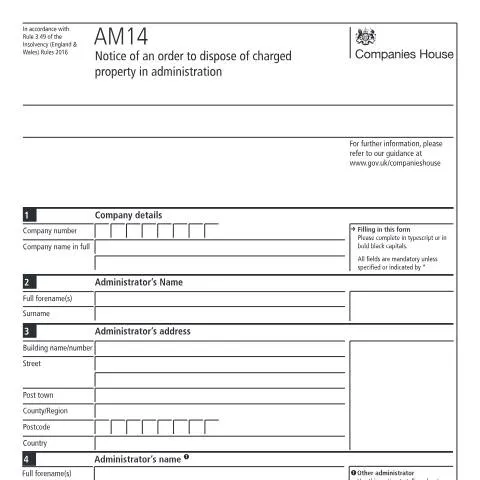
Understanding the Importance of the AM14 Document
The AM14 Notice of an Order to Dispose of Charged Property in Administration is a critical document for companies undergoing administration in the UK. This order enables an administrator to sell or dispose of assets that are charged as security for debts. The implications of this document are profound, as it directly affects the financial recovery options available to creditors and the future viability of a company in distress.
When a company enters administration, its assets are protected from creditors to allow for an orderly restructuring or sale of the business. However, this protection has limitations. The AM14 provides the necessary legal backing to dispose of specific charged assets, thereby facilitating the resolution of the company's financial challenges.
The Audience: Who Needs to Use AM14?
The AM14 is specifically designed for administrators appointed to manage distressed companies. This includes:
- Licensed Insolvency Practitioners: Professionals who oversee the administration process.
- Company Directors: Individuals who may need to understand the implications of asset disposals.
- Creditors: Parties interested in the administration process and potential asset recovery.
Understanding this document is crucial for anyone involved in the administration process. Failure to properly execute or submit the AM14 can lead to complications, including illegal asset disposals or delayed recoveries for creditors.
Key Terminology Associated with AM14
Before delving into the process of using the AM14, it's essential to grasp some critical terminology related to this document:
- Charged Property: Assets that have been pledged as security for a loan or other obligation.
- Administration: A procedure that allows a struggling company to be managed by an appointed administrator.
- Administrator: A licensed professional tasked with managing the company’s affairs during the administration period.
These terms are foundational for understanding how the AM14 fits into the larger context of corporate insolvency in the UK.
Step-by-Step Guide to Using the AM14 Notice
To effectively utilize the AM14, administrators must follow a structured process to ensure compliance with the Insolvency (England & Wales) Rules 2016. Here’s how to proceed:
- Prepare the Court Order: Before submitting the AM14, ensure you have the sealed court order that grants permission to dispose of the charged property. This is a legal requirement.
- Complete the AM14 Form: Fill out the form in typescript or in bold black capitals. Make sure to include all mandatory fields, particularly the company name and number, which must match the public record.
- Gather Supporting Documents: Attach a copy of the sealed court order. Without this, the submission may be rejected.
- Sign the Document: Ensure that you, as the administrator, sign and date the form. If there is another administrator, their details must be included as well.
- Submit the AM14: Send the completed form to the appropriate Companies House address. For companies registered in England and Wales, use the address in Cardiff.
By following these steps precisely, administrators can facilitate the smooth disposal of charged properties, benefiting both the company and its creditors.
Potential Pitfalls in the AM14 Process
While utilizing the AM14 is straightforward, several common pitfalls can hinder the process:
- Incomplete Documentation: Failing to attach the required court order or neglecting to fill out mandatory fields could result in rejection.
- Incorrect Company Details: Ensure that the company name and number are accurate. Discrepancies can cause significant delays.
- Timing Issues: Submitting the AM14 promptly after obtaining the court order is crucial. Delays could affect the timing of asset disposals and financial recoveries.
Awareness of these risks can enhance the efficiency of the administration process and safeguard against potential legal challenges.
The Legal Framework Behind AM14
The AM14 is governed by the Insolvency (England & Wales) Rules 2016. This legislation provides the framework for how administrators operate and the procedures they must follow. Rule 3.49 specifically addresses the notification of an order to dispose of charged property, emphasizing the importance of transparency and proper documentation in the administration process.
The legal basis for the AM14 serves to protect all parties involved, ensuring that disposals are conducted fairly and in compliance with established laws. Understanding these legal underpinnings can aid administrators in navigating the complexities of insolvency law.
Case Studies: Practical Applications of the AM14
Examining real-world scenarios can provide valuable insights into the practical applications of the AM14. Consider the following cases:
Case Study 1: A retail company in administration possesses a fleet of vehicles charged to secure a bank loan. The administrator uses the AM14 to obtain court permission to sell these vehicles to generate funds for creditors. By effectively navigating the AM14 process, the administrator maximizes recovery options for creditors.
Case Study 2: A manufacturing firm faces financial difficulties but has significant machinery charged as collateral. The administrator realizes that disposing of certain machinery through the AM14 can facilitate a quicker resolution, leading to an expedited process that benefits all stakeholders involved.
These examples underscore the flexibility and necessity of the AM14 in various administrative contexts, demonstrating its relevance across different sectors and situations.
Final Thoughts on the AM14 Document
The AM14 Notice of an Order to Dispose of Charged Property in Administration is not just a bureaucratic form; it represents a vital tool for administrators navigating the complexities of corporate insolvency in the UK. By understanding its importance, following the correct procedures, and being aware of potential pitfalls, administrators can ensure a smoother administration process.
Being well-versed in the nuances of this document not only facilitates effective management of charged assets but also enhances the prospects for creditors seeking recovery. As such, mastery of the AM14 is essential for all involved in corporate administration.
Understanding the Requirements for Notice of an Order
When you need to give notice of an order to dispose of charged property, it’s essential to understand the legal framework and requirements involved. The process is governed by several statutes and guidelines that dictate how notice should be given, and what information must be included.
Under the Civil Procedure Rules, specifically Part 25, the court may require you to provide notice to any party affected by the order. This is particularly relevant when you are dealing with secured creditors or other stakeholders who have an interest in the property. The relevant forms, such as the AM14, must be completed accurately to ensure all parties are duly informed of the impending action.
The notice should include essential details such as:
- A clear description of the property: This includes the address and any particulars that identify the property being disposed of.
- The nature of the charge: It's vital to outline the basis of the charge against the property to inform interested parties of the legal implications.
- Details of the order: Specify the court order’s date, the nature of the order, and the action that will be undertaken.
- Timelines: Clearly state important deadlines that interested parties need to be aware of, including any dates by which they must respond if they wish to contest the order.
It's also necessary to adhere strictly to any local court rules regarding method and timing of service. For instance, notices may need to be served personally or sent via recorded delivery, depending on the requirements set by the court.
Variations in Notice Requirements for Different Types of Secured Creditors
The requirements for providing notice when disposing of charged property can vary significantly based on the type of secured creditor involved. Understanding these nuances can have a considerable impact on how you proceed with the notification process.
Banks and Financial Institutions: When dealing with banks or financial institutions, they typically have specific internal requirements as well as statutory obligations under the Financial Services and Markets Act 2000. Notifying them might require additional documentation to be submitted alongside the AM14 form, particularly if the property is part of a larger portfolio of assets.
Individual Secured Creditors: In cases where private individuals hold a charge, you may need to deliver a more comprehensive notice. This could involve personally serving the notice or ensuring receipt through legal counsel. Individual creditors may also dispute the charges, necessitating a more detailed explanation of the grounds for the order.
Public Authorities: If the charged property has any encumbrances from public authorities (like local councils for unpaid taxes or statutory charges), it is critical to follow any specific protocols they may have in place. You may need to contact their legal department directly to ensure compliance, as failure to do so can result in delays or complications.
Multiple Secured Interests: If more than one creditor has a charge over the property, the notice must be comprehensive enough to address all interests involved. This can involve negotiating with multiple parties to ensure that all regulatory requirements for notice are met. Each creditor may have different timelines and preferences for how they receive notice, which may complicate the process but is essential for legal compliance.
Consequences of Failing to Provide Proper Notice
Failing to provide adequate notice can have serious consequences for any party involved in disposing of charged property. Understanding these implications is crucial to navigating the process correctly and effectively.
Invalidation of the Order: If the court determines that proper notice was not given to all parties with a legitimate interest in the property, it may invalidate the disposal order. This means you would have to return to the court to initiate the process once again, leading to increased costs and delays.
Legal Penalties: In some cases, failing to comply with notice requirements can result in legal penalties, including fines or other sanctions against the party responsible for providing notice. This may also affect your credibility and standing with the court, which can complicate future legal proceedings.
Potential for Civil Claims: Affected parties may have the right to pursue civil claims against you if they feel that their rights were infringed due to improper notice. This could lead to costly litigation and additional legal headaches that could have been avoided with proper notice procedures.
Reputational Damage: Beyond the legal implications, failing to handle the notice process correctly can damage your reputation as a legal entity or individual. In business, maintaining a good standing is crucial, and any lapses can affect relationships with creditors and stakeholders.
Navigating the legal landscape of disposing of charged property requires diligence and thoroughness. By understanding the notice requirements, varying creditor specifications, and the consequences of failing to comply, you can mitigate risks and ensure a smoother process in accordance with UK law.