Understanding the Notice to Non-Assenting Shareholders: A Practical Guide
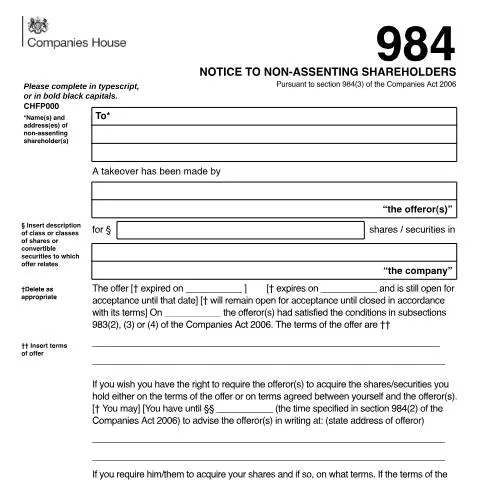
When navigating the complexities of corporate takeovers in the UK, the Notice to Non-Assenting Shareholders plays a pivotal role. This document, issued under section 984 of the Companies Act 2006, is essential for ensuring that non-assenting shareholders are adequately informed about their rights and options following a takeover bid. Understanding this document is crucial for both companies planning a takeover and the shareholders involved.
Key Components of the Notice
The notice contains various important sections that shareholders need to pay attention to. Here are the main elements:
- Name(s) and Address(es) of Non-Assenting Shareholder(s): This section identifies the shareholders who have not accepted the terms of the offer.
- Description of Shares or Securities: The notice must specify the class or classes of shares to which the takeover offer relates, ensuring clarity for the affected shareholders.
- Terms of the Offer: This outlines the conditions under which the offer is made, including any expiration dates and whether the offer is still open for acceptance.
- Right to Require Acquisition: The document explains that non-assenting shareholders have the right to require the offeror to acquire their shares, either on the terms of the offer or terms agreed between the shareholder and the offeror.
- Choice of Consideration: If the terms of the offer provide different options for consideration, shareholders must indicate their preference.
- Legal Recourse: It informs shareholders of their right to seek a court order for the acquisition of their shares on terms deemed appropriate by the court.
Navigating the Takeover Process: Step-by-Step
Engaging with a takeover notice is not merely about understanding its content; it's about navigating your rights and responsibilities effectively. Here’s how to approach this process:
- Carefully Review the Notice: Upon receiving the notice, review its contents thoroughly to ensure you understand the offer's terms and how it relates to your holdings.
- Identify Your Options: Determine if you wish to accept the offer or require the offeror to acquire your shares. Consider the implications of both choices.
- Communicate Promptly: If you opt to require the acquisition of your shares, respond in writing to the offeror within the stipulated timeframe as indicated in the notice.
- Choose Your Consideration Wisely: If the offer includes multiple forms of consideration, make sure to specify your preference clearly. Failing to do so may lead to the default acquisition of shares on terms less favorable to you.
- Consider Legal Advice: If you contemplate contesting the terms or seek alternative arrangements, obtaining legal guidance can be invaluable.
The Legal Framework: How the Notice Fits into the Companies Act 2006
The Companies Act 2006 provides a comprehensive framework for company operations, including takeover procedures. The notice aligns with several key provisions within this Act, notably:
- Section 983: This section outlines the offeror's obligations toward shareholders during a takeover.
- Section 984: This section specifies the requirements for the notice to non-assenting shareholders, ensuring they are informed of their rights.
- Section 986: Provides shareholders the right to seek court intervention if they cannot agree on terms with the offeror.
By understanding these sections, shareholders can better appreciate their rights and the responsibilities of the offeror, ensuring a smoother transition during a takeover.
Common Misinterpretations and Pitfalls
When dealing with the notice and its implications, shareholders may encounter several common misunderstandings:
- Misunderstanding of Deadlines: One of the most critical aspects is the expiration date of the offer. Failing to respond within this timeframe can result in losing the opportunity to sell shares under the offer terms.
- Overlooking Alternative Terms: Many shareholders might assume that they can only sell their shares under the offer's original conditions. However, they may negotiate alternative terms with the offeror.
- Neglecting to Specify Consideration: If an offer allows for a choice of consideration, shareholders must clearly indicate their preference; otherwise, they might receive less desirable terms.
- Assuming Court Action is Not an Option: Many believe they are powerless against the offeror’s terms. In reality, legal pathways exist for those who feel unjustly treated.
Awareness of these pitfalls can significantly enhance a shareholder’s ability to make informed decisions during a takeover.
Connecting the Dots: The Role of Other Documentation
The Notice to Non-Assenting Shareholders is not an isolated document; it interacts with several other crucial pieces of paperwork during a takeover process:
- Takeover Offer Document: This document outlines the initial offer's details and is sent to all shareholders, including those who may not assent.
- Acceptance Forms: Shareholders who decide to accept the takeover offer must complete specific forms that accompany the offer documentation.
- Board Resolutions: Corporate decisions leading up to the offer are formalized through board resolutions, which document the justification and framework for the takeover.
- Shareholder Agreements: Existing agreements among shareholders can influence the dynamics of acceptance or refusal of the takeover offer.
Understanding these documents and how they interrelate can provide shareholders with a comprehensive view of the takeover landscape, enabling them to strategize effectively.
Practical Implications: When is this Notice Essential?
The necessity of the Notice to Non-Assenting Shareholders arises in specific contexts, particularly during corporate transitions such as:
- Mergers and Acquisitions: This scenario is a common trigger for the issuance of the notice as companies seek to consolidate their holdings.
- Private Companies Going Public: A takeover bid may be made as part of a strategy to move from a private to a public structure.
- Change of Control Situations: When a significant change in ownership occurs, the notice is crucial for ensuring non-assenting shareholders are aware of their position.
Conclusion: Empowering Non-Assenting Shareholders
In summary, the Notice to Non-Assenting Shareholders serves as a vital tool for empowering shareholders during takeover scenarios. By clearly understanding its content, implications, and the rights it affords, non-assenting shareholders can navigate the complexities of the corporate takeover landscape with confidence. Keep abreast of your rights, consider legal guidance when necessary, and ensure your voice is heard during these critical transitions.
By actively engaging with this notice and understanding its nuances, shareholders can make informed choices that align with their best interests, ensuring they are not left in the dark during significant corporate shifts.
Understanding the Legal Framework of Takeovers in the UK
In the United Kingdom, takeovers are primarily governed by the Companies Act 2006 and the City Code on Takeovers and Mergers (the Code). The Code is administered by the Takeover Panel, which ensures that shareholders are treated fairly during takeover processes. A key component when handling a takeover is the communication with non-assenting shareholders, particularly when a bidder seeks to secure the acquisition of shares from those unwilling to sell.
The legal framework mandates that when a takeover bid is made, information must be made available to all shareholders, including the terms of the offer, the implications of acceptance or refusal of the offer, and their rights in the process. Non-assenting shareholders must be adequately informed of the implications of their choice, ensuring they are not disenfranchised due to lack of awareness or understanding.
Additionally, under the provisions of the Companies Act 2006, if an offer is accepted by a majority of shareholders, the bidder can exercise rights to compulsory purchase the shares of the minority shareholders—provided certain thresholds are met. This is known as "squeeze-out" rights and typically occurs when the bidder acquires 90% or more of the equity shares of the target company.
Understanding this legal framework is crucial for both bidders and current shareholders, as failing to comply with these regulations can lead to significant legal repercussions. This includes the potential for claims against the bidder for not adequately informing shareholders, failing to follow proper procedures, or not treating all shareholders equitably.
Best Practices for Communicating with Non-Assenting Shareholders
When it comes to notifying non-assenting shareholders during a takeover, effective communication practices can greatly impact the overall success of the acquisition strategy. Here are some best practices that bidders should consider:
Clear and Transparent Messaging: The message should articulate the rationale behind the takeover, including potential benefits and implications for the shareholders. Clarity is paramount; avoid jargon and ensure that the communication is understandable by individuals who may not have legal or financial expertise.
Use of Multiple Channels: Relying solely on written notices can be limiting. Bidders should consider a mix of communication channels, including email notifications, direct mail, and even personal meetings where feasible. Hosting webinars or information sessions can also help facilitate a two-way dialogue, allowing shareholders to ask questions and express concerns.
Timely Notifications: Timing is crucial in the context of takeovers. Non-assenting shareholders should be notified as soon as the decision to proceed with the takeover is made. This allows them ample time to consider their options before any compulsory acquisition processes begin.
Personalized Communication: Whenever possible, tailor communications to specific shareholders or groups of shareholders. A personalized letter discussing their stake and what the takeover means for them can enhance engagement and understanding.
Providing Resources: Make available additional resources, such as FAQs, links to the official investor relations page, or contact information for support teams. Providing a range of resources allows shareholders to seek further information and clarifies any uncertainties they might have.
Follow-Up: After the initial notification, follow up with shareholders to ensure they understand their rights and the implications of their decisions. This not only enhances transparency but also fosters trust and can potentially sway non-assenting shareholders towards a more favorable view of the takeover.
By adopting these best practices, bidders can enhance their interactions with non-assenting shareholders, ensuring their actions are compliant with regulatory requirements while also promoting goodwill among all stakeholders involved in the takeover process.
Implications for Corporate Governance during Takeovers
The implications of a takeover extend beyond just the immediate financial considerations; they also significantly impact corporate governance. The governance structures in place within the target company can face considerable changes, which could influence how non-assenting shareholders are treated.
Board Responsibilities: The existing board of directors must maintain their fiduciary duties, acting in the best interests of all shareholders. During a takeover, their strategy should aim to maximize shareholder value while also considering the fair treatment of non-assenting shareholders. Failure to do so can lead to shareholder dissatisfaction and legal challenges.
Stakeholder Engagement: Beyond shareholders, a takeover can affect various stakeholders, including employees, suppliers, and customers. Non-assenting shareholders are not the only ones impacted; their choice may be influenced by how the takeover could affect these groups. Hence, boards should communicate with various stakeholders to ascertain potential concerns and address them proactively.
Regulatory Scrutiny: With the backdrop of increasing scrutiny from regulators, boards must ensure that governance practices are robust. Non-assenting shareholders may raise concerns regarding transparency and fairness, prompting regulatory bodies to investigate. Establishing a solid governance framework can mitigate risks and enhance the overall reputation of the company amidst the scrutiny.
Integration Strategies: If the takeover proceeds, the new ownership structure will require careful planning concerning integration strategies. Non-assenting shareholders should be kept in the loop regarding how the corporate culture may shift, as well as the strategic direction of the newly formed entity. Clear communication on these points can help ease transitions.
Long-term Vision: Finally, a successful takeover should align with a long-term vision that accounts for both assenting and non-assenting shareholders. The new governing body should ensure continued dialogue with all shareholders, presenting a vision that encompasses growth, sustainability, and shared value creation.
Navigating the complexities of corporate governance during a takeover is critical to maintaining shareholder trust and ensuring long-term success. By being proactive in their governance strategies, companies can effectively manage both the expectations and concerns of non-assenting shareholders, thus optimizing their chances for a successful takeover.