Navigating the Notice of Commencement of Assessment of Bill of Costs
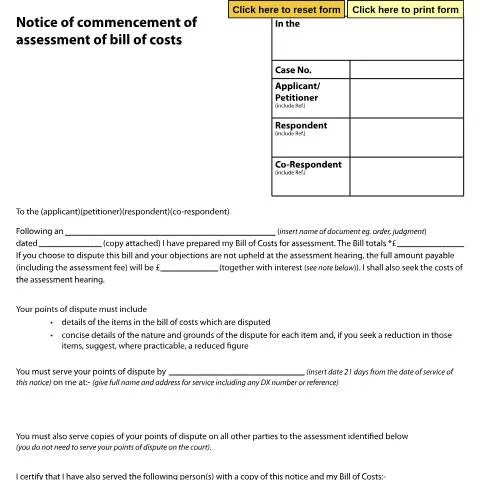
The Notice of Commencement of Assessment of Bill of Costs, known as Form D252, is integral to understanding the intricate process of cost assessments in the UK legal system. Once an applicant has prepared their Bill of Costs following a court order or judgment, this notice signifies the beginning of the formal review of those costs. Understanding its content and implications is crucial for both applicants and respondents involved in civil litigation.
Understanding the Document: What’s Inside and Why It Matters
This document encapsulates essential information tailored to the parties involved in the cost assessment process. It lays out the groundwork for disputing cost bills effectively. Below are the key elements found within the notice:
- Case Identification: The document requires specific case details, such as case numbers and names of the applicant, respondent, and co-respondent.
- Bill of Costs Overview: A concise summary of the total amount of the bill is mentioned, which is pivotal for establishing the financial stakes involved.
- Dispute Framework: The notice explicitly outlines the procedure for disputing the bill, including the necessity of detailed grounds for objection.
- Service Instructions: Clear guidelines on serving points of dispute to all relevant parties are provided, ensuring procedural adherence.
- Consequences of Non-Response: The notice warns that failure to respond may lead to a default costs certificate being issued, underscoring the importance of timely action.
When is the Notice Necessary? Key Situations and Audience
The Form D252 becomes indispensable in various scenarios, primarily when a party is seeking to assess costs after a court ruling. It is significant for:
- Solicitors and Legal Practitioners: They must navigate the complexities of costs associated with their services and prepare the bill accurately.
- Respondents Disputing Costs: Upon receiving the notice, they must understand their rights and obligations regarding the dispute process.
- Litigants in Person: For those without legal representation, comprehending this notice is crucial for ensuring their viewpoints are duly represented during the assessment.
Each party's understanding of the notice can significantly impact the efficiency and outcome of the cost assessment process.
Decoding Points of Dispute: Essential Requirements
At the heart of the D252 notice is the requirement for points of dispute to be articulated clearly. This section details what needs to be included:
- Itemized Disputes: Parties must specify which items within the Bill of Costs they contest, providing clarity on the exact nature of their objections.
- Grounds for Dispute: A succinct explanation of the reasoning behind each dispute is necessary. This should encompass any perceived inaccuracies or unjustified charges.
- Suggested Reductions: When possible, it is beneficial to propose a revised figure for disputed items, showcasing willingness to negotiate while substantively engaging with the costs presented.
Common Pitfalls to Avoid
Failing to adhere to the notice requirements can lead to complications. Some prevalent missteps include:
- Vague Disputes: Providing insufficient detail about objections can weaken a respondent's position during assessment.
- Missing Deadlines: The notice stipulates a 21-day timeframe for submitting points of dispute. Overlooking this can result in a default judgment.
- Inadequate Service: Not serving copies of the points of dispute to all relevant parties may undermine the validity of the objections raised.
Financial Implications: Costs, Fees, and Interest
The potential financial repercussions tied to the assessment of costs are significant. Below are the key aspects:
| Cost Component | Description |
|---|---|
| Total Bill of Costs | The sum amount detailed within the notice, which awaits assessment. |
| Assessment Fee | The fee required for the court to assess the Bill of Costs, typically included in the total amount. |
| Interest Charges | Under the Judgments Act 1838 and the County Courts Act 1984, interest may accrue on certain judgments, further complicating the financial landscape. |
| Default Costs Certificate | If points of dispute are not served within the timeframe, a certificate may be issued for the total amount of costs plus fixed costs and court fees. |
These financial details stress the importance of carefully managing the assessment process to avoid incurring additional costs unnecessarily.
Legal Framework Governing Cost Assessments
The assessment of costs in the UK is governed by a robust legal framework intended to ensure fairness and transparency. Noteworthy components include:
- Data Protection Regulations: The Data Protection Act 2018 and UK GDPR apply to the personal data processed during the assessment process, mandating careful handling of sensitive information.
- Judicial Principles: Courts aim to balance the interests of both parties, particularly in ensuring that legal costs are reasonable and proportionate to the case at hand.
Understanding this framework aids participants in navigating the assessment landscape more effectively, reinforcing their rights and responsibilities throughout the process.
Preparing for the Assessment Hearing
Once the notice is served and points of dispute are filed, the case moves toward an assessment hearing. Preparation for this hearing is critical:
- Gather Supporting Evidence: Parties should assemble documentation supporting their claims or disputes related to the Bill of Costs.
- Clarity in Presentation: Clear and concise presentation of arguments during the hearing can significantly influence the outcome.
- Understanding Court Procedures: Familiarity with court processes can enhance the effectiveness of participation in the hearing, including how to engage with the judge and other parties.
Concluding Thoughts: Beyond the Notice
The Notice of Commencement of Assessment of Bill of Costs (D252) is more than just a procedural document; it is a critical instrument that facilitates the legal process of cost assessment in civil cases. Parties involved should view this notice as an opportunity to engage in a transparent and fair dialogue regarding costs incurred. Being proactive and informed can greatly influence the resolution of disputes, leading to a more efficient and less contentious process.
Understanding the nuances of the Form D252 and its implications empowers both applicants and respondents in managing their legal costs and navigating the complexities of the UK legal system.
Understanding Form D252: Key Components and Requirements
Form D252, the Notice of Commencement of Assessment of Bill of Costs, plays a crucial role in the legal field, particularly in civil litigation cases in the UK. Understanding the components of this form is essential for any legal professional or party involved in litigation as it sets the stage for the formal assessment of costs incurred during legal proceedings.
The form serves as a notification that the assessment process will commence, providing all parties involved with essential details such as the date of the assessment hearing and the implications of failing to respond appropriately. Key components of the form include:
- Details of the Claimant and Defendant: The form must clearly outline the names and contact details of both the claimant and the defendant. This ensures that all parties are aware of the proceedings and have the opportunity to respond.
- The Costs Being Claimed: A detailed breakdown of the costs being claimed must be provided. This includes not just legal fees, but also any disbursements or additional expenses incurred as part of the legal proceedings.
- Date and Time of Assessment Hearing: The form must specify the date and time set for the costs assessment hearing, which typically allows for a notice period of at least 14 days. This gives all parties adequate time to prepare.
- Judgment Reference: Reference to the original judgment or order that is being assessed is critical for context and clarity. This helps all parties understand the basis for the costs being claimed.
Completing Form D252 accurately is vital, as errors or omissions can lead to delays or complications in the assessment process, potentially affecting the recovery of costs.
The Consequences of Non-Compliance with Form D252
Failure to comply with the requirements set forth in Form D252 can lead to significant consequences, both for the claimant seeking cost recovery and for the defendant. Understanding these repercussions is essential for legal practitioners and parties involved in litigation.
Firstly, if a party fails to respond to the Notice of Commencement of Assessment, they may inadvertently forfeit their right to contest the costs claimed. Without a response, the court may proceed with the assessment based solely on the information provided by the claiming party. This can result in higher costs being awarded, as the opposing party has not presented any counterarguments or evidence to dispute those costs.
Moreover, non-compliance can lead to further legal action or sanctions. For instance, the court may issue a default judgment against the non-compliant party, leading to an automatic award of costs to the claimant without a proper assessment hearing. This scenario underscores the importance of monitoring all communications related to legal proceedings and responding promptly to notices like Form D252.
Additionally, parties may incur further costs in an attempt to rectify non-compliance. For example, if a party attempts to appeal a costs decision that was made without their participation, they may face additional legal fees, which could have been avoided by simply responding to the original notice.
In summary, non-compliance with Form D252 can have serious financial and procedural repercussions. Legal representatives should ensure that their clients fully understand the importance of adhering to the timelines and requirements outlined in the notice.
Strategies for Contesting Costs: A Step-by-Step Guide
When faced with a Notice of Commencement of Assessment of Bill of Costs via Form D252, it is crucial to have a clear strategy for contesting costs if you believe they are excessive or unjustified. Here is a step-by-step guide on how to effectively prepare for and contest costs:
Step 1: Review the Notice Thoroughly
Start by carefully reviewing Form D252. Take note of the costs being claimed, any accompanying documents, and the deadlines for responding. Ensuring that all details are correct is vital, as even minor errors can impact your ability to contest the claim.
Step 2: Gather Evidence
Gather all relevant documentation that supports your position. This may include invoices, time sheets, correspondence, and any other evidence that demonstrates the reasonableness or unreasonableness of the claimed costs. The more substantial your evidence, the stronger your case will be.
Step 3: Prepare a Response
Draft a response to Form D252 that outlines your objections to the claimed costs. Be specific about which costs you contest and why. It’s essential to provide a rationale for your position, supported by the evidence you have gathered.
Step 4: Submit Your Response on Time
Timeliness is crucial. Ensure that your response is submitted well before the assessment hearing date included in Form D252. Late submissions may not be considered, which could jeopardize your ability to contest the costs.
Step 5: Attend the Assessment Hearing
If a hearing is scheduled, attend it with all necessary documentation and evidence. Be prepared to present your case clearly and concisely. This is your opportunity to argue your position directly before the court, and thorough preparation can significantly impact the outcome.
Step 6: Follow Up
After the hearing, be sure to follow up on the outcome and any subsequent orders. If the court rules in your favor, ensure that the awarded costs or any adjustments are correctly implemented. If the ruling is not in your favor, consider your options for appeal or further action.
By following these steps, you can effectively contest costs laid out in Form D252, potentially leading to a more favorable outcome in terms of cost recovery.