Navigating the Notice of Disuse: A Comprehensive Guide
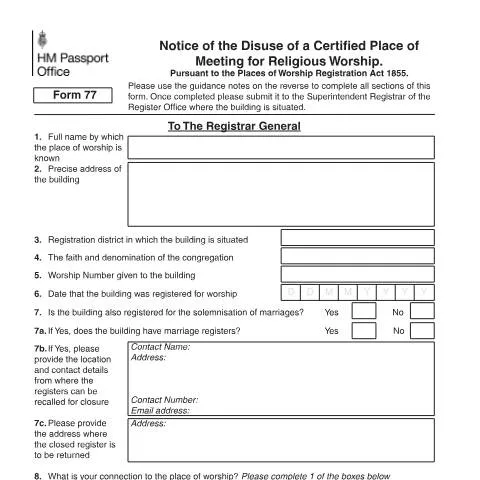
Transitioning a place of worship to disuse is a significant change that requires careful attention to legal procedures. If you're involved with a religious congregation that has decided to cease using a building for worship, understanding the specifics of the Notice of Disuse (Form 77) issued by HM Passport Office is crucial. This notice serves as an essential step in formally discontinuing the registration of a place of worship under the Places of Worship Registration Act 1855. Here's an in-depth look at its purpose, application process, and interconnections with other documentation.
Understanding the Disuse Declaration
The Notice of Disuse is not merely a formality but an important legal declaration. When you submit this notice, you are officially notifying the authorities that a registered place of worship is no longer active. This process entails several prerequisites and entails a series of careful considerations:
1. Legal Implications of Disuse
When a place of worship is declared as disused, various legal implications arise:
- Liability and Taxation: The cessation of worship activities may influence property tax obligations and any related liabilities.
- Ownership and Governance: Understanding who has the authority to declare disuse is vital. This typically falls to trustees, owners, or occupiers of the property.
- Historical Commitments: If the building was historically significant, additional steps may be required to ensure compliance with heritage laws.
Step-by-Step Submission Process
Here’s a detailed outline of how to effectively navigate the submission of the Notice of Disuse:
Gathering Required Information
You're required to provide specific details in the Form 77, including:
- Full Name: The name under which the congregation knows the building.
- Precise Address: The full address, including any building numbers and names.
- Registration District: Identify the registration district where the building is located.
- Congregation Details: Faith and denomination of the congregation must also be stated.
- Worship Number and Registration Date: These details can be found in the original worship certificate from the General Register Office.
- Marriage Registration: Specify if the building is registered for the solemnisation of marriages, and if so, provide additional details about the marriage registers.
Submission to the Appropriate Authorities
After completing Form 77 with the necessary details, it must be submitted to the Superintendent Registrar of the Register Office where the building is situated. This step is imperative, as it ensures the notice is formally acknowledged and processed.
The Role of the Superintendent Registrar
The Superintendent Registrar plays a vital role in this process. Their responsibilities include:
- Reviewing the submitted Notice of Disuse for completeness.
- Counter-signing the declaration to confirm it has been properly filed.
- Maintaining accurate records of disused places of worship.
As a point of interest, without the Superintendent Registrar's confirmation, the disuse declaration might not have legal standing, hence the importance of their involvement.
Public Interest and Potential Appeals
Understanding the community context of disuse declarations is crucial, as it often touches more than just the congregation involved. A place of worship can serve as a community hub, and its disuse might raise concerns among local residents:
1. Community Engagement
Before submitting a disuse declaration, it may be beneficial to engage with the community, addressing any concerns and informing local residents about the decision.
2. Appeal Procedures
If a community member has objections to the disuse declaration, there could be a structured process for appeals. Check with local authorities about potential pathways for community dialogue or formal objections.
Common Misunderstandings About Notice of Disuse
Many applicants might find the process daunting and may misinterpret some parts of the documentation. Here are a few common misunderstandings:
1. Assumption of Automatic Registration Cancellation
Many believe that submitting the Notice of Disuse will automatically cancel all registrations associated with the building. However, specific actions may be required to close marriage registers, which must be handled separately with the General Register Office.
2. Misinterpretation of Connection to the Place of Worship
It is important to clarify that the connection you declare (trustee, owner, etc.) must be accurate, as any discrepancies can lead to complications or delays in processing.
Interconnections with Related Documents
Understanding how the Notice of Disuse interacts with other official documentation is essential for a seamless process:
Worship Registration Certificate
The original Worship Registration Certificate is critical. It contains essential details such as the worship number and registration date, which are necessary for completing Form 77 accurately.
Marriage Registers
If the building was previously registered for marriages, the process for handling marriage registers must be initiated promptly after filing the Notice of Disuse. This includes locating and closing any active marriage registers in compliance with legal requirements.
Records Retention and Documentation
Following disuse, ensure that you maintain copies of all documents for future reference, including the Notice of Disuse, any correspondence with the Superintendent Registrar, and related legal documentation. This could be helpful for historical records or potential future inquiries.
Conclusion: Importance of Compliance and Diligence
Submitting a Notice of Disuse is more than a routine administrative task; it marks a significant transition for a place of worship and its community. By carefully adhering to the guidelines, maintaining clear communication with relevant authorities, and actively engaging with the community, you can navigate this process effectively. It’s essential to approach this responsibility with thorough understanding and diligence to ensure a smooth transition away from religious activities within the building.
Understanding the Implications of Filing a Notice of Disuse
When a taxpayer submits a Notice of Disuse via Form 77, it indicates a conscious decision to discontinue claims for certain tax reliefs or allowances. This can be a strategic choice for various reasons. Understanding the broader implications of this decision is crucial for taxpayers who want to ensure compliance and avoid potential complications.
One significant aspect to consider is how a Notice of Disuse may affect a taxpayer's future filings and entitlements. By filing this notice, the taxpayer essentially signals to HMRC that they no longer wish to claim specific allowances, which could impact their eligibility for related tax credits or benefits in subsequent years. For instance, if a taxpayer discontinues claims for certain business expenses, they may find their overall tax liability increases, which can affect cash flow and financial planning.
Additionally, it is important for taxpayers to be aware of how such decisions might be perceived by HMRC. The agency may question the rationale behind the disuse, particularly if the same expenses or claims were previously submitted. Therefore, it is advisable to maintain adequate records and documentation that support the reasoning behind the Notice of Disuse. This is especially vital in cases where taxpayers might reconsider their decisions in later tax years.
Furthermore, taxpayers should consider the timeline and frequency of submitting Form 77. Regular disuse filings may trigger a review from HMRC, who could investigate the taxpayer’s overall compliance and engagement with the tax system. This situation can lead to unnecessary audits or inquiries, so maintaining a clear record of all communications and documentation is essential to avoid disputes.
Common Mistakes to Avoid When Submitting Form 77
While filing a Notice of Disuse using Form 77 may seem straightforward, several common pitfalls can lead to issues in the future. Being aware of these mistakes can help taxpayers mitigate risks and streamline the process.
One prevalent mistake is failing to provide comprehensive supporting information. Taxpayers should include clear reasons for discontinuing claims and any relevant documentation to justify their decisions. Lack of information may lead to delays or rejections from HMRC, causing headaches for taxpayers who are simply trying to manage their obligations efficiently.
Another common oversight is not considering the timing of the Notice of Disuse. Submitting it too close to key tax deadlines—such as the Self Assessment deadline on 31 January—can complicate matters. Taxpayers should ensure they allow sufficient time for HMRC to process the notice and adjust their tax computations accordingly. This is particularly critical if the disuse affects an ongoing tax year; timely submission can prevent unnecessary penalties or interest charges.
Moreover, failing to keep track of any subsequent changes in tax law or regulations can lead to complications. Taxpayers must stay informed about updates to allowable claims and tax reliefs. If there are changes that could reinstate previous claims, they should consider revisiting their decision to file a Notice of Disuse. Being proactive about tax legislative changes helps ensure that taxpayers do not inadvertently miss out on potential savings.
Finally, another common error is neglecting to communicate with HMRC following the submission of Form 77. It is advisable to follow up with the agency to confirm receipt of the notice and review any adjustments made to the taxpayer's record. This not only ensures clarity but also fosters a more transparent relationship with HMRC, which can be beneficial during future interactions.
Post-Submission Strategies for Managing Tax Liability
Once a Notice of Disuse has been filed using Form 77, it's essential for taxpayers to implement strategies to manage their tax liability efficiently. Understanding how to navigate the aftermath of this submission is crucial for minimizing any adverse financial impacts.
Firstly, taxpayers should reassess their overall financial position. After filing Form 77, it might be beneficial to engage with a tax professional or financial advisor who can provide insights into how discontinuing certain claims affects the taxpayer’s overall liability. This professional guidance can lead to a tailored financial strategy, ensuring that the taxpayer does not face unexpected tax burdens.
Secondly, maintaining an organized record-keeping system is vital. Taxpayers should ensure that all related documents, such as previous tax returns and records of expenses, are readily accessible. This way, should HMRC require further information or clarification about the Notice of Disuse, taxpayers can respond quickly and accurately.
Another effective strategy involves exploring alternative tax reliefs or allowances that may still be claimable after the disuse. Taxpayers should conduct thorough research on any potential benefits that apply to their situation, especially as tax laws frequently evolve. An informed approach can help taxpayers optimize their tax position, even post-disuse.
Lastly, taxpayers should regularly review their financial performance and tax position throughout the year, rather than waiting until the end of the tax year. By actively monitoring their financial activities, they can make timely adjustments to their claims and potentially identify any new opportunities to offset their tax liabilities.