Understanding the Provisional Assessment Process through Form N253
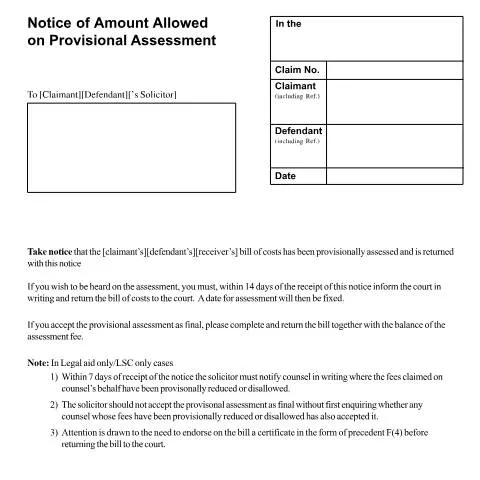
Receiving a Notice of Amount Allowed on a Provisional Assessment (Form N253) can be pivotal in legal proceedings involving costs. This document serves as a critical junction in resolving disputes over legal fees, particularly for claimants and defendants navigating the complexities of litigation. The significance of this notice cannot be understated; it outlines the provisional assessment of costs associated with a legal claim and offers guidance on the next steps one should consider.
The Role of Form N253 in Legal Proceedings
Form N253 plays a unique role within the framework of legal costs management. It is a notification from the court indicating that the legal costs submitted by either party have been provisionally assessed. This document is not an end in itself but rather a facilitator for further legal discourse regarding the assessed costs.
- It specifies the amount allowed based on the provisional assessment.
- It invites the parties involved to respond within a stipulated time frame, highlighting the need for swift action.
Understanding this role is crucial for parties involved in a claim, as it sets the stage for either acceptance or contestation of the costs assessed. Failure to respond appropriately can lead to unintended consequences, including forfeiting the right to further challenge the assessment.
Key Components of Form N253
The N253 form is structured to convey essential information clearly. It includes:
- Claim Number: A unique identifier for the case.
- Parties Involved: Identification of both the claimant and the defendant.
- Date of Assessment: When the provisional assessment was conducted.
- Instructions for Parties: Clear guidance on how to proceed based on the provisional assessment.
Each of these components ensures that the parties are well-informed of their positions and the court's findings. It's imperative that every detail is scrutinised as it directly impacts the legal finances at stake.
Interpreting the Provisional Assessment Amount
When reviewing the amount allowed on the provisional assessment, several key factors need to be considered. Understanding how this figure is determined can significantly influence the decisions made in response to the N253 notice.
- Basis of Assessment: The court evaluates costs based on the reasonableness, necessity, and proportionality of expenses incurred during the proceedings.
- Legal Fees: Only costs that are deemed reasonable and necessary for the case at hand will be allowed.
- Disallowed Costs: If certain costs are disallowed, it's essential to understand the rationale behind this decision, which may include factors like lack of documentation or relevance to the case.
Being aware of these considerations allows parties to prepare better for any dialogue with the court or the opposing party regarding the assessment.
Next Steps Following Receipt of Form N253
Upon receipt of the N253, the parties must take decisive actions within specified time frames to ensure their positions are adequately represented. The document provides crucial steps that need to be followed:
- Response Time: The recipient has 14 days from the date of receiving the notice to respond in writing if they wish to contest the assessment.
- Returning the Bill of Costs: Should the parties accept the provisional assessment, they must return the bill of costs, including the balance of the assessment fee.
- Notification of Counsel: In legal aid cases, the solicitor must notify counsel within 7 days regarding any fees that have been provisionally reduced or disallowed.
This structured timeline is designed to promote efficiency in handling legal costs and to ensure all parties are on the same page regarding the financial implications of the legal proceedings.
Common Pitfalls in the Provisional Assessment Process
Navigating the provisional assessment process can be fraught with challenges, and several common pitfalls can lead to complications:
- Delayed Responses: Failing to respond within the 14-day window can lead to the automatic acceptance of the assessed costs.
- Lack of Communication: Not informing counsel about changes in the assessment can create discord and potential disputes regarding fees.
- Misinterpreting the Assessment: Parties may misunderstand the nature of the provisional assessment, leading to incorrect assumptions about their financial obligations.
Proactive communication and adherence to timelines are essential to mitigate these risks and ensure a more straightforward resolution process.
Understanding the Context of Legal Aid in the Assessment
The existence of legal aid introduces additional layers to the understanding of Form N253, especially regarding costs and fees. Legal aid cases have specific requirements and procedures that differ from standard cases. Key considerations include:
- Legal Aid Providers: Solicitors must be mindful of their obligations towards counsel and ensure any provisional reductions are communicated promptly.
- Endorsements Required: Legal aid cases necessitate that the bill of costs include a certificate in a specified format before submission to the court.
- Consequences of Non-Compliance: Failing to adhere to these guidelines can jeopardise the legal aid status of the case, potentially impacting the funding for legal representation.
Awareness of these nuances is critical for legal professionals managing cases involving legal aid, as they can significantly affect both the financial and procedural aspects of the assessment.
The Importance of Clarity in Legal Costs Management
The N253 brings to light the importance of clarity in managing legal costs throughout litigation. Effective communication between solicitors, counsel, and clients is paramount to navigate the complexities of costs management successfully. Here are some considerations to improve clarity:
- Detailed Billing: Solicitors should provide clear and detailed invoices that substantiate the costs claimed.
- Open Dialogues: Regular discussions with clients regarding costs can prevent misunderstandings and foster transparency.
- Utilisation of Legal Resources: Engaging with resources offered by HM Courts & Tribunals Service can provide additional clarity on processes and expectations.
By prioritising clarity, legal practitioners can enhance their ability to address any disputes arising from provisional assessments and ensure a smoother process overall.
Conclusion: The N253 as a Critical Document in Cost Assessment
The Notice of Amount Allowed on a Provisional Assessment (Form N253) acts as a cornerstone document for litigants engaged in cost disputes. By understanding its components, navigating the required actions, and being aware of the pitfalls, parties can ensure they make informed decisions regarding their legal costs. Engaging with this document knowledgeably and proactively can facilitate a smoother resolution process, enabling a focus on the substantive issues of the case rather than getting bogged down in financial disputes.
Understanding Form N253: The Provisional Assessment Explained
Form N253, also known as the Notice of Amount Allowed on a Provisional Assessment, is an important document issued by the HM Courts & Tribunals Service. It plays a critical role in the resolution of disputes, primarily concerning money claims in civil court. A provisional assessment occurs when the court evaluates a claim based on written evidence submitted by both parties, without a hearing. This process can expedite the resolution, providing quicker outcomes for litigants.
Once the provisional assessment is complete, the court issues Form N253. This document details the amount the court has provisionally determined is owed and outlines how this amount was calculated. It is crucial to understand what this means for both the claimant and the defendant, especially in terms of potential next steps following the issuance of the form.
Parties receiving Form N253 have 14 days to respond if they wish to dispute the amount assessed. If neither party contests the decision, the provisional assessment will become final. This is significant for claimants seeking a swift resolution and for defendants who may prefer to negotiate before the figure is finalized. Understanding the implications of Form N253 can significantly affect the strategy employed by both parties in the dispute.
Responding to a Provisional Assessment: Options and Procedures
Upon receiving Form N253, individuals must consider their options carefully. The form provides specific instructions on how to respond, and timely action is vital. If you agree with the amount indicated, you can simply accept it, which leads to a quicker resolution of the case. This acceptance can be communicated formally to the court via a Notice of Acceptance, which simplifies the completion of the process.
Conversely, if you wish to challenge the provisional assessment, you must complete the relevant section of the form and submit a response to the court within the stipulated 14-day period. This response can include your reasons for contesting the assessment, any supporting documentation, and a request for a hearing if necessary. It is advisable to seek legal advice when preparing a response to ensure that your case is presented effectively and that all procedural requirements are met.
Bear in mind that the court may set a hearing date to further discuss the case if a challenge is made. During this hearing, both parties will have the opportunity to present their arguments, and additional evidence may be submitted. The decision made during this hearing could ultimately differ from the provisional assessment, as the judge will consider all evidence presented.
Common Challenges and Considerations when Dealing with Form N253
When engaging with Form N253 and the provisional assessment process, several common challenges may arise. One significant consideration is the clarity and completeness of the evidence submitted. Parties often underestimate the importance of providing comprehensive documentation to support their claims or defenses. Since the provisional assessment is based heavily on written evidence, it is crucial to ensure that all relevant information is included, including contracts, correspondence, and financial statements, that can substantiate your position.
Another challenge might be the interpretation of the assessment itself. Parties may find the terms and calculations used in Form N253 confusing or unclear. It is advisable to consult with legal professionals or advisors experienced in civil court procedures to better understand the document and its implications. They can help clarify any legal jargon and provide insight into the next steps based on the specifics of your case.
Moreover, the emotional aspect of disputes should not be overlooked. Engaging in a legal process can be stressful, and the pressure to respond to Form N253 can add to that stress. Parties facing financial strain due to the ongoing dispute may feel particularly anxious about the implications of the assessment. Seeking support from legal and financial advisors, as well as mental health professionals when necessary, can help mitigate some of these pressures and lead to more informed decision-making.