Navigating Form FIS9: A Key to Responsible Lobster Deposits
When it comes to the management of aquatic life, particularly lobsters, adhering to the regulatory framework set by the UK's Centre for Environment, Fisheries and Aquaculture Science (Cefas) is imperative. Form FIS9 is not just a document; it's the gateway for businesses engaging in the deposit of lobsters, specifically the species Homarus americanus and Homarus gammarus. This form underscores responsible aquatic animal health management and biodiversity protection.
The Importance of Compliance: What’s at Stake?
Engaging in lobster deposit without the appropriate licence can lead to severe consequences, including hefty fines and reputational damage. The legal framework surrounding lobsters is designed to safeguard ecological balance and ensure the health of marine environments.
Through Form FIS9, applicants are not only seeking permission; they are also contributing to a larger effort to maintain the sustainability of aquatic ecosystems. Thus, understanding the implications of compliance versus non-compliance is crucial for anyone involved in this sector.
Understanding Your Obligations
- Licensing Requirements: A valid licence is required for depositing lobsters, ensuring that all activities are tracked and managed.
- Data Sharing: By submitting this form, applicants agree to the potential sharing of their information for research and environmental oversight purposes.
- Environmental Impact: Applicants should consider the potential ecological effects of their actions on local marine life.
Step-by-Step Guide to Completing Form FIS9
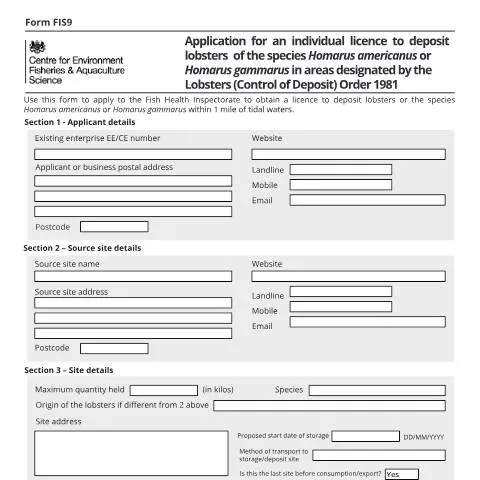
Completing Form FIS9 effectively requires attention to detail. Each section demands specific information, and inaccuracies may lead to delays or refusals. Below is a breakdown of the critical components of the form, along with tips to avoid common mistakes.
Section Breakdown
- Applicant Details: Provide complete information, including your postal address, contact numbers, and email. It’s essential to ensure that this information is current, as it will be used for all official communications.
- Source Site Details: Here, you’ll need to detail where the lobsters are sourced. Accuracy is key; any discrepancies in the address or species origin can lead to complications.
- Site Details: Clearly describe the location of the deposit site, ensuring that it’s within the stipulated distance from tidal waters. This section also includes vital questions regarding transportation methods and the maximum quantity of lobsters to be held.
Preparing Your Documentation: A Checklist for Success
Prior to submission, ensure you have all the necessary documentation and details ready to streamline the process. Missing information can lead to unnecessary delays.
Essential Documents
- Completed Form FIS9.
- Supporting evidence such as Business Registration and compliance certificates.
- Proof of environmental assessments if applicable.
| Section | Required Information | Common Pitfalls |
|---|---|---|
| Applicant Details | Full name, business name, and contact information. | Incomplete or outdated contact information. |
| Site Details | Exact location and measurement details. | Failure to mention secondary transport plans. |
| Species Origin | Specification of lobster species and their source. | Inaccurate species identification. |
Where to Submit: Channels and Their Nuances
Once Form FIS9 is filled out, it’s time to submit it. The form can be submitted either via email or post. Each option has its considerations:
Email Submission
For a quicker turnaround, submitting your application via email is advisable. Use the email address provided on the form: [email protected]. Ensure your email includes a clearly labelled subject line and that all attachments are in a compatible format.
Postal Submission
If you prefer a traditional method or need to submit additional physical documentation, mailing your completed form is another option. The postal address is as follows:
Fish Health Inspectorate, Cefas, Barrack Road, Weymouth, Dorset, DT4 8UB
Be mindful of mailing times; submissions can take longer to process when sent via post.
What Happens After Submission? Understanding the Review Process
After you submit your application, it enters the review phase, during which the Fish Health Inspectorate will evaluate the details provided. Here’s what to expect:
Review Timeframes
The review process can vary based on several factors, including the complexity of your application and the current workload of the inspectors. Generally, you can expect a response within a few weeks.
Potential Outcomes
- Approval: If everything is in order, you will receive your licence, allowing you to proceed with your lobster deposits.
- Refusal: In the event of refusal, the inspectors will provide reasons for their decision. You may be entitled to appeal or be asked to rectify specific issues.
- Request for Additional Information: Sometimes, inspectors may require more details before making a decision. Respond promptly to avoid delays.
Addressing Issues: Navigating Refusals and Appeals
Receiving a refusal can be disheartening, but understanding how to address these situations is vital for moving forward.
What to Do If Refused
- Carefully read the refusal letter to understand the reasons.
- Gather any additional documents or information that could support a re-application or appeal.
- Consider contacting the Fish Health Inspectorate directly for clarification or guidance.
Reapplication Process
If you choose to reapply, ensure that you rectify the issues outlined in the refusal and provide comprehensive details to avoid a repeat situation.
Key Takeaways: The Significance of Form FIS9 in Lobster Management
Form FIS9 plays a critical role in maintaining the integrity and sustainability of lobster populations in the UK. By securing the appropriate permissions, businesses contribute to responsible practices that benefit both the environment and the economy.
As you navigate the intricacies of this application process, remember the importance of accuracy, clarity, and compliance. Each section of the form is designed to ensure the safety and health of marine ecosystems, promoting a balanced coexistence between human activities and nature.
In the end, successful navigation of Form FIS9 is not merely a bureaucratic obligation; it is a step towards responsible stewardship of valuable aquatic resources.
Understanding the FIS9 Form Process
The FIS9 Form is integral to the application process for those who wish to deposit lobsters in designated areas around the UK. Specifically, this form is necessary for compliance with the regulations set forth by the Centre for Environment, Fisheries and Aquaculture Science (CEFAS), which oversees marine wildlife conservation efforts. Completing the FIS9 application can seem daunting, but understanding its components can streamline the process.
The form requires specific information, including your personal details, location of the deposit, and scientific justification for your request. Applicants must clearly indicate the marine area where the lobsters will be deposited, as well as the species involved. It is important to note that deposits should align with sustainable practices, emphasizing the necessity for ecological considerations within marine environments.
Applicants must also verify that they possess the necessary qualifications to conduct such activities, including relevant licenses or certifications. Proof of previous successful lobster management or conservation efforts can significantly strengthen your application. If you are part of a registered organisation, attaching supporting documentation can further substantiate your request and showcase your commitment to environmental stewardship.
Fees and Charges Associated with the Application
While the FIS9 application process aims to promote sustainable lobster deposits, it's important to understand the associated fees that may apply. Typically, there can be several tiers of costs involved, which may vary based on the scale of your operation and the specific marine area you are targeting. These fees are designed to ensure that applicants contribute to the ongoing management and research required to sustain lobster populations.
Before submitting your application, it is advisable to consult the latest guidance from CEFAS regarding current fees. Documentation may require that you budget for both the application fee and potential additional costs related to environmental assessments or monitoring post-deposit. Engaging local environmental agencies or consultants for advice can provide invaluable insight into the financial obligations you might encounter during this process.
Furthermore, applicants should remain aware that failure to pay required fees could result in delays or even refusal of the application. Therefore, maintaining clear financial records and understanding the full financial scope of your project is crucial to a successful outcome.
Post-Application Steps and Responsibilities
Once you have submitted your FIS9 application, there are several post-application responsibilities that applicants must adhere to. First and foremost, remain aware of any communication from CEFAS regarding your application status. They may request additional information or clarification regarding the details provided in your application.
Upon successful approval of your application, you will receive a formal confirmation and guidelines for proceeding with the deposit. It is imperative to maintain accurate records of your activities, including the date of deposit, the quantity of lobsters deposited, and any monitoring processes that must be adhered to as part of your commitment to sustainable practices.
Additionally, after the deposit, you may be required to submit follow-up reports to CEFAS. These reports help monitor the impact of lobster deposits on local ecosystems and contribute to broader marine conservation efforts. Familiarity with the reporting requirements will ensure compliance and demonstrate your commitment to responsible management of marine resources.
Engagement with local advisory groups or conservation organizations can also enhance your approach, offering insights and collaborative opportunities for ongoing monitoring and sustainability efforts. This proactive approach not only benefits your project but also contributes positively to the marine environment as a whole.