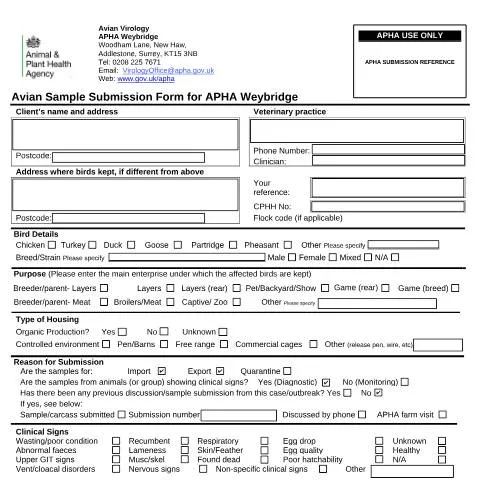
Understanding the Birds: Test for Viruses for Export, Import or Quarantine (APHA1)
When engaging in the international movement of birds, the Birds: test for viruses for export, import or quarantine (APHA1) form becomes a pivotal component. This document not only facilitates compliance with strict biosecurity measures but also plays an essential role in safeguarding animal health and preventing the spread of diseases. For breeders, veterinarians, and importers alike, understanding the nuances of this form is critical.
The Framework Behind the APHA1 Form
The implementation of the APHA1 form is steeped in regulatory requirements intended to protect both public and animal health. Established under the auspices of the Animal and Plant Health Agency (APHA), this protocol aligns with the UK's commitment to adhere to international standards set forth by organizations like the World Organisation for Animal Health (OIE).
Historically, the movement of birds has faced numerous challenges amidst outbreaks of avian influenza and other virulent diseases. The APHA1 form reflects these evolving concerns and serves as a mechanism to trace and monitor health reports effectively.
Key Legal Frameworks
- Animal Health Act 1981: This act underpins the legal authority for controlling the movement of animals.
- Import/Export Regulations: Specific guidelines are enforced to restrict the entry and exit of potentially infected birds.
- Data Protection Act 2018: This governs the handling of personal information provided in the form.
Unraveling the Submission Process of APHA1
To ensure a seamless experience, it's crucial to navigate through the submission process of the APHA1 form methodically. This journey begins with the initial identification of the reason for submission, whether it involves import, export, or quarantine.
The Journey from Submission to Laboratory Analysis
- Completion of the Form: Fill in the necessary details, including the client’s name and address, veterinary practice information, and bird details.
- Identification of Purpose: Clearly mark the reason for submission (import, export, or quarantine) and any clinical signs observed.
- Sample Collection: Ensure proper collection and labeling of samples, adhering to guidelines to avoid contamination.
- Submission to APHA: Send the completed form and samples to the designated APHA facility.
Decoding the Components of the APHA1 Form
The APHA1 form comprises several critical sections that each serve a unique function in the overall submission process. Understanding these sections is vital for accurate completion.
Vital Sections to Note
- Client and Veterinary Details: Correct identification of all parties involved ensures accountability.
- Bird Details: This section gathers specific information regarding the type and condition of the birds.
- Clinical Signs Section: Recording any observable symptoms can provide vital insights into the health status of the birds.
- Tests Required: It is essential to specify which tests are necessary to expedite the analysis process.
Handling Issues: Missing Pieces and Rejections
In the event of a submission error, it’s crucial to know how to rectify the situation. Missing information or incorrectly filled-out forms can result in delays or outright rejections.
Potential Outcomes of a Flawed Submission
- Rejection of Samples: Incomplete forms may lead to rejection, necessitating resubmission and additional delays.
- Need for Clarification: APHA may contact the submitter for further information or clarification.
- Re-testing Requirements: If samples are deemed unsatisfactory, further testing may be required, impacting the timeline.
Navigating the Submission Channels
Understanding the different channels for submitting the APHA1 form can streamline the process significantly.
Available Submission Methods
| Channel | Description | Pros | Cons |
|---|---|---|---|
| Online | Utilizing digital platforms for submission | Speed and convenience | Technical issues may arise |
| Postal | Mailing physical copies of the form | Reliable for those unfamiliar with digital submission | Longer processing times |
| In-person | Submitting directly at APHA offices | Immediate feedback and clarification | Limited operating hours |
The User Experience: Rights and Obligations
Completing the APHA1 form is not merely a bureaucratic process; it embodies a series of rights and obligations for all parties involved. Users of this form must be acutely aware of what is at stake.
Rights Embedded in the Process
- Right to Timely Processing: By completing the form accurately, the submitter is entitled to a timely review and response.
- Access to Results: Submitters have the right to receive comprehensive results regarding the health of the birds.
Obligations to Fulfill
- Providing Accurate Information: All details must be accurate to ensure compliance.
- Adhering to Biosecurity Measures: Submitters must continue to follow biosecurity measures as outlined by the APHA.
Post-Submission: Tracking and Follow-Up
After sending the APHA1 form, being proactive in tracking the submission can help alleviate anxieties related to processing times and outcomes.
How to Effectively Monitor Your Submission
- Keep Copies: Always retain copies of the submitted form for your records.
- Contact APHA: Do not hesitate to reach out to APHA for updates if processing delays occur.
- Check for Notifications: Be vigilant for any communications from APHA regarding additional information or clarifications.
What’s Next: After Testing is Complete
Understanding the next steps after submission helps set expectations regarding subsequent actions and results.
Interpreting the Results
Once the laboratory has conducted the necessary tests, results will be communicated to the submitter. It is crucial to be prepared for varying outcomes:
- Negative Results: Birds may be cleared for export or remain in their current location under normal conditions.
- Positive Results: Immediate action may be required, including potential quarantine or reporting to authorities.
Final Thoughts on the APHA1 Process
Engaging with the APHA1 form can seem daunting, but it is essential for anyone dealing with the import or export of birds. By familiarizing oneself with the purpose and process, users can ensure compliance with regulations while contributing to the overall health of avian populations. Adhering to the requirements not only fulfills legal obligations but also helps maintain the sanctity of biosecurity in the UK and beyond.
Understanding the Role of APHA in Bird Health Management
The Animal and Plant Health Agency (APHA) plays a crucial role in safeguarding animal health within the UK, particularly when it comes to avian species. Their mandate includes monitoring and controlling not just diseases but also viruses that could potentially impact both domestic and wild bird populations. APHA conducts regular inspections and surveillance activities to identify any health risks early on, thus preventing outbreaks that could affect the poultry industry and biodiversity.
When importing or exporting birds, it is essential for all parties involved to adhere to the guidelines set forth by APHA. This includes submitting required documentation that confirms the health status of the birds. The APHA employs risk-based approaches to determine the level of inspection and testing needed for each case, depending on factors such as the country of origin, the species involved, and the purpose of the import or export.
APHA also collaborates with breeders, zoos, and wildlife rehabilitation centres to ensure that best practices are followed. These partnerships enable the sharing of vital information about emerging threats and effective management strategies. Moreover, they offer workshops and training sessions to educate stakeholders about biosecurity measures that can help prevent the spread of infectious diseases.
Quarantine Measures and Procedures
Quarantine is an essential component in the management of bird health, especially for birds arriving from regions where certain viruses are endemic. APHA has established strict regulations regarding quarantine periods, which can vary depending on the species and the health risks associated with them. Typically, birds may be required to undergo a quarantine period ranging from 30 days to several months. During this time, they are closely monitored for signs of illness and must pass specific health tests.
Facilities designated for quarantine must meet stringent requirements outlined by the APHA to ensure that they are adequately equipped to prevent the spread of diseases. These facilities undergo regular inspections to verify compliance with health and safety standards. Importers are responsible for ensuring that the birds are housed in suitable conditions and that all necessary biosecurity protocols are followed during the quarantine period.
In addition to physical inspections and health checks, APHA may also conduct laboratory tests to detect any potential viral infections. Test results typically take a few days to process, and birds must not be released from quarantine until all tests have cleared them of any infectious diseases. Failure to comply with these regulations can result in significant penalties, including fines and the potential seizure of the birds.
Legal Framework and Responsibilities of Bird Owners
The legal framework governing the import, export, and quarantine of birds in the UK is multifaceted and must be navigated carefully by all stakeholders. APHA operates under several legislative instruments, including the Animal Health Act 1981 and the Animal Health (Biosecurity) (Wales) Regulations 2010, which provide guidelines for the prevention and control of animal diseases.
Bird owners and breeders bear significant responsibilities under these laws. They must ensure that their birds are healthy and free from diseases before entering the trade system, which includes acquiring the necessary health certificates from a veterinary surgeon accredited by APHA. Furthermore, they are required to maintain records of their birds' health status and any movements in and out of their premises. This documentation is crucial in the event of an outbreak, as it helps trace the source of infection.
In addition, any bird showing signs of illness or distress must be reported to APHA immediately. Failure to do so not only endangers other birds but can also lead to legal repercussions. The responsibility extends to ensuring compliance with biosecurity measures on their premises, which includes preventing contact between domestic and wild birds and implementing strict hygiene practices.
In summary, navigating the regulatory landscape surrounding the import and export of birds in the UK requires a comprehensive understanding of the roles and responsibilities enforced by APHA, as well as the legal implications for bird owners. Ensuring adherence to these guidelines is paramount for the health of avian populations and the safety of the poultry industry.