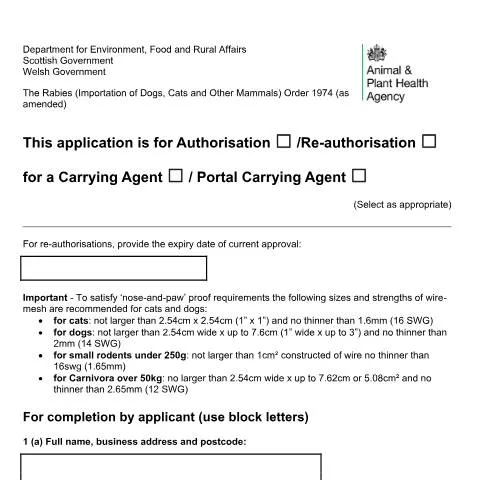
Navigating the Carry Agent Application Process: A Comprehensive Guide
For businesses involved in the transportation of animals, the application for authorisation as a Carrying Agent or Portal Carrying Agent is a critical step. This document plays a vital role in ensuring compliance with the regulations surrounding animal quarantine in the UK. Understanding its significance, and the required processes can help streamline your application and avoid potential pitfalls.
Understanding the Roles: Who Needs This Application?
The application is essential for various stakeholders involved in animal transport. Primarily, it targets individuals and businesses intending to act as Carrying Agents for quarantine animals—a category that encompasses the transportation of dogs, cats, and other mammals. The importance of being duly authorised cannot be overstated, as it ensures the welfare of the animals transported and aligns with legislative obligations.
Categories of Applicants
- Pet Transporters: Businesses that provide services for moving pets, often internationally.
- Veterinary Practices: Clinics that might transport animals for medical purposes.
- Rescue Organizations: Groups that rescue and relocate animals to safe environments.
Each category may have specific conditions or additional documentation required for their application, emphasizing the need for tailored approaches in the application process.
Document Preparation: What You Need to Have Ready
Before submitting your application, gathering all necessary documentation is crucial. This not only facilitates a smoother application process but also reduces the chances of rejection due to missing elements.
Essential Documentation
- Proof of Authorization: If you're renewing your authorisation, include the expiry date of the current approval.
- Details of Quarantine Protocols: Information about how you will maintain animal welfare during transport.
- Vehicle Details: You will need to specify where your vehicles are kept and any relevant identification numbers.
It’s helpful to create a checklist for your application, ensuring each required document is collected beforehand, which can help facilitate the review process by the relevant authorities.
Timeline of the Application Process: From Submission to Approval
Understanding the timeline for the application process is essential for all parties involved. The entire process can vary depending on several factors, including the completeness of your application and the current workload of the Animal and Plant Health Agency (APHA).
Key Milestones in the Application Process
- Submission: Once your application is complete, it can be submitted either online or via paper forms. Ensure to check your submission method as it can affect processing times.
- Processing Time: After submission, the agency will review the application. This typically takes a few weeks, but it can vary based on the volume of applications.
- Approval or Rejection: You will receive a notification regarding the status of your application. If approved, you will receive your authorisation documentation.
It’s advisable to start this process well in advance of any planned animal transports to accommodate any unforeseen delays.
Submission Channels: Navigating Your Options
When it comes to submitting your application, you have multiple options, each with its own advantages and considerations.
Online vs. Paper Submission
| Method | Advantages | Disadvantages |
|---|---|---|
| Online | Faster processing time, Immediate confirmation | Requires reliable internet connection |
| Paper | Accessible for those less tech-savvy | Longer processing times, potential for postal delays |
Consider your own resources and preferences when choosing the method of submission. For many, online submission is more efficient, but ensure that all documents are correctly filled out to avoid errors during processing.
Understanding Compliance: The Regulatory Framework
The application as a Carrying Agent is not merely a procedural formality; it operates within a broader regulatory framework designed to protect animal welfare during transit. The Rabies (Importation of Dogs, Cats and Other Mammals) Order 1974 is a primary piece of legislation that governs the movement of these animals.
Key Regulatory Considerations
- Animal Welfare: Regulations enforce strict standards regarding the treatment of animals during transport, dictating conditions such as temperature and hydration.
- Transport Authorisation: Businesses transporting animals must comply with statutory orders that mandate specific authorisation numbers.
- Record-keeping: Maintaining accurate records is essential to ensure compliance with regulatory inspections.
Understanding these regulations enhances your ability to operate within the law and provides reassurance to your clients about the welfare of their animals.
Addressing Unique Circumstances: Special Cases in the Application Process
Various unique situations can arise during the application process, requiring additional considerations or documentation. Understanding these scenarios can save time and avoid complications.
Special Considerations
- International Applicants: If you are applying from outside the UK, be prepared for additional scrutiny and documentation regarding your operations and compliance with UK laws.
- Transporting Underage Animals: Special regulations apply when transporting animals under a certain age, necessitating extra documentation.
- Urgent Applications: In emergencies, there might be expedited processes available, but these require prior coordination with the APHA.
Each of these scenarios may require specific forms or additional documentation, so it is essential to consult directly with the APHA for guidance tailored to your situation.
Conclusion: Preparing for Success in the Application Process
Successfully navigating the application process for a Carrying Agent or Portal Carrying Agent is crucial for maintaining compliance and ensuring the welfare of animals during transport. By understanding the requirements, gathering the necessary documentation, and following the outlined processes, applicants can enhance their chances of a successful application.
For further assistance, consult the Animal and Plant Health Agency’s resources or seek professional guidance tailored to your specific needs.
Understanding the Role of Carry Agents in Animal Quarantine
Carry agents play a pivotal role in the regulation of animal movement within the UK, particularly regarding compliance with quarantine requirements. When transporting animals internationally or even domestically, understanding the specific duties of a carry agent can be beneficial. A carry agent acts as a facilitator, ensuring that all legal requirements are met, including necessary vaccinations, health certificates, and documentation required under the Animal Health Act 1981.
Most importantly, a carry agent must be well-versed in the specific needs of various species. For instance, different animals such as dogs, cats, and exotic pets may need tailored documentation and health checks. The Animal and Plant Health Agency (APHA) oversees these regulations, and a carry agent must liaise with them to confirm that all protocols are adhered to. Many carry agents maintain close relationships with veterinary services to ensure animals are fit for travel, thus minimizing the risk of spreading diseases during transit.
Moreover, the carry agent's responsibilities extend to ensuring that the transport method complies with welfare standards outlined in the Animal Welfare Act 2006. This includes providing adequate space, ventilation, and food for the animals during transportation. A failure to adhere to these regulations not only jeopardizes animal welfare but can also result in significant penalties or the refusal of transport permits.
Application Process for Becoming a Registered Carry Agent
To become an official carry agent for animal quarantine in the UK, an applicant must undergo a comprehensive application process regulated by the APHA. This process involves several steps that ensure only qualified individuals or businesses can facilitate animal transport.
The first step is to submit a formal application to the APHA, detailing the nature of the business, the types of animals they plan to transport, and the geographic areas they intend to operate in. Applicants must be able to demonstrate a thorough understanding of animal health and welfare regulations. This often includes providing evidence of previous experience in animal transport or veterinary services.
Once the application has been submitted, the APHA will conduct an assessment. This assessment may involve an inspection of facilities and equipment used for animal transport, ensuring that they meet the necessary welfare standards. The applicant must also provide a valid insurance policy that covers any liabilities that may arise during the animal's transport. The insurance should specifically cover the care and custody of the animals during their journey.
After a successful assessment, the APHA will issue a carry agent registration number, which must be displayed on all relevant documentation issued during animal transport. Registered carry agents must also keep detailed records of all transported animals and their health conditions, ensuring compliance with the UK's strict monitoring requirements.
Challenges and Considerations in Animal Transportation
Animal transportation, especially between countries, can present numerous challenges that carry agents must navigate. One of the primary challenges is compliance with both UK regulations and those of the destination country. Each country has its own set of rules, which can vary widely, and understanding these can be daunting for carry agents.
For example, certain countries may require specific vaccinations or quarantine periods before animals can enter their borders. Failure to comply with these requirements could result in denied entry or, in severe cases, euthanasia of the animal. Thus, it is crucial for carry agents to have access to the most current information regarding international regulations, which may require ongoing education and training.
Another significant challenge is the logistical aspect of animal transport. This includes securing appropriate transport vehicles that comply with animal welfare standards, ensuring that travel itineraries are optimized to minimize stress on the animals, and being able to provide immediate care if an animal becomes ill during transport.
Moreover, carry agents must also be prepared for the emotional aspects of transporting animals. Some animals may experience anxiety or distress during travel, and having trained personnel to handle such situations can greatly enhance the overall transport experience. Understanding animal behaviour and employing appropriate stress-reducing techniques is paramount for a smooth transition during transport.
In summary, while the role of carry agents in animal quarantine is crucial, it encompasses a variety of challenges and obligations that require a keen understanding of regulations, logistics, and animal welfare. Their expertise not only facilitates legal compliance but also helps ensure the well-being of the animals entrusted to their care.