When Tuberculosis Strikes Your Cattle: The Critical Path to Herd Freedom
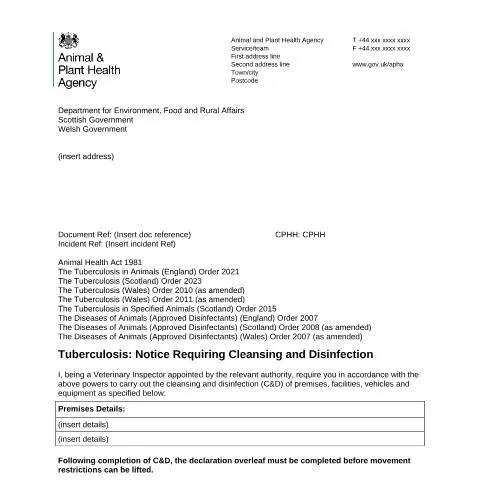
When bovine tuberculosis infiltrates your herd, the journey back to Officially TB Free (OTF) status demands meticulous attention to biosecurity protocols. The BT05 form represents the final checkpoint in this process—a declaration that confirms your premises have undergone the rigorous cleansing and disinfection required by law following TB reactor removal. Without this crucial document properly completed and submitted, your cattle remain under movement restrictions, potentially costing thousands in lost trading opportunities and operational constraints.
The Animal and Plant Health Agency issues this notice under the Animal Health Act 1981 and corresponding tuberculosis orders for England, Scotland, and Wales. Each jurisdiction maintains specific regulatory frameworks, yet the fundamental requirement remains consistent: comprehensive cleansing and disinfection must occur before movement restrictions lift. This isn't merely administrative paperwork—it's a biosecurity imperative that protects both your livestock investment and the broader cattle population from further TB transmission.
Decoding the Veterinary Inspector's Requirements
The BT05 form arrives as part of a formal notice from an appointed Veterinary Inspector, bearing specific legal authority under tuberculosis legislation. This document identifies precisely which areas of your operation require attention, from cattle housing and handling facilities to vehicles and equipment that contacted infected animals. The inspector's specifications aren't suggestions—they constitute legal requirements with potential prosecution consequences for non-compliance.
Understanding your notice begins with identifying the affected areas. The inspector may specify entire buildings, particular sections of housing, outdoor handling facilities, or mobile equipment like cattle trailers. Each designated area must undergo the complete cleansing and disinfection protocol before you can declare compliance. The notice also includes your County Parish Holding (CPH) number, document reference, and incident reference—critical identifiers for tracking your case through the APHA system.
Jurisdictional Variations Across Britain
While the core requirements remain consistent, slight variations exist across England, Scotland, and Wales. Scottish premises operate under the Tuberculosis (Scotland) Order 2023 and associated regulations, while Welsh holdings follow the Tuberculosis (Wales) Orders 2010 and 2011 as amended. English operations fall under the Tuberculosis in Animals (England) Order 2021. These differences primarily affect submission addresses and specific regulatory citations rather than practical cleansing requirements.
The Science Behind Approved Disinfectants
Not all disinfectants meet the stringent requirements for tuberculosis control. The Diseases of Animals (Approved Disinfectants) Orders for each jurisdiction specify products proven effective against Mycobacterium bovis, the causative agent of bovine TB. These approvals consider factors including contact time, dilution rates, temperature requirements, and organic matter interference.
| Disinfectant Category | Typical Dilution Rate | Contact Time Required | Temperature Considerations |
|---|---|---|---|
| Phenolic compounds | 1:40 to 1:80 | 30 minutes minimum | Effective at low temperatures |
| Quaternary ammonium | 1:100 to 1:200 | 15-30 minutes | Reduced efficacy below 10°C |
| Hypochlorite solutions | 1:10 to 1:50 | 20 minutes minimum | Highly temperature dependent |
| Aldehyde-based | As manufacturer specifies | 60 minutes typical | Consistent across temperatures |
Each approved product carries specific labelling indicating its TB control approval and required dilution rate. Using incorrect concentrations or non-approved products invalidates your declaration and may require repeating the entire process. The official list at gov.uk/guidance/defra-approved-disinfectant-when-and-how-to-use-it provides current approvals, though your local APHA office can supply this information directly.
Calculating Disinfectant Requirements
Proper calculation of disinfectant volumes prevents wastage and ensures adequate coverage. For spray applications, budget approximately 200-300ml per square metre of surface area, depending on porosity and contamination levels. Concrete surfaces typically require less volume than rough stone or wooden structures. Factor in multiple applications—initial treatment of manure-covered surfaces, followed by post-cleaning disinfection of scraped areas.
Manure Management: The 21-Day Rule and Beyond
Manure handling represents perhaps the most critical aspect of the cleansing process, given its high concentration of potential TB organisms. The regulations mandate a specific sequence: spray contaminated manure with approved disinfectant before removal, then stack the treated material for minimum 21 days in locations inaccessible to farm animals.
The stacking location requires careful consideration. Choose well-drained ground away from water courses, with vehicular access for eventual removal or spreading. Cover the stack with either additional disinfectant treatment, a layer of uninfected manure, or clean earth. This covering prevents wildlife access and reduces environmental exposure to potential pathogens.
Liquid Waste Considerations
Slurry and liquid waste from affected areas demand equal attention. If collection coincides with solid manure removal, the liquid component receives treatment through the normal stacking and storage process. However, separate liquid waste requires individual disinfection treatment before storage or disposal. Consider the capacity of your slurry storage systems and plan accordingly—you may need additional temporary storage during the treatment period.
Spreading treated manure on pasture requires additional precautions. While not prohibited, regulations strongly recommend avoiding pasture application or ensuring cattle don't graze treated areas for 60 days post-application. This extended period accounts for environmental persistence of TB organisms and reduces reinfection risks.
Completing the Declaration: Precision Matters
The declaration section of the BT05 form demands absolute accuracy. The completion date you record becomes the official reference point for calculating when movement restrictions may lift. Record the actual completion date of all required activities, not the date you're completing the paperwork. This date must reflect when the final disinfection application occurred and required contact time elapsed.
Product identification requires specific detail beyond generic descriptions. Record the complete product name as it appears on the approved disinfectant label, along with the exact dilution rate used. For example, "Virkon S at 1:100 dilution" provides the specificity APHA requires for verification. Avoid abbreviations or informal product names that might create confusion during file review.
The Grassland Isolation Option
The checkbox for reactor isolation at grass represents an alternative pathway for specific circumstances. If TB reactors and direct contacts were isolated in grassland areas rather than housed facilities, and you commit to leaving these areas destocked for 60 days following removal, this may substitute for some cleansing requirements. However, this option doesn't eliminate the need for cleaning vehicles, handling equipment, and any structures the animals contacted.
Documenting grassland isolation requires precise record-keeping. Note the exact removal date of all animals from the designated areas, as the 60-day period begins from this point. Consider seasonal factors—winter destocking may present challenges for alternative grazing, while summer periods might coincide with peak grass growth when spelling paddocks becomes more manageable.
Submission Routes and Response Times
The BT05 form offers multiple submission pathways, each with distinct processing implications. Email submission to the designated addresses provides fastest processing and immediate confirmation of receipt. The jurisdiction-specific addresses ensure your declaration reaches the appropriate case management team:
- England: [email protected]
- Scotland: [email protected]
- Wales: [email protected]
Postal submission to your local APHA office remains available, though processing times extend due to manual handling requirements. Include your CPH number, document reference, and incident reference clearly on any covering correspondence to prevent misfiling or delays.
Tracking Your Submission
Email submissions generate automatic receipt confirmations, providing proof of delivery for your records. However, receipt doesn't guarantee immediate processing—APHA staff must review your declaration against the original notice requirements and your holding's case history. Complex cases involving multiple premises or previous compliance issues may require additional verification before movement restrictions lift.
Expect processing times of 5-10 working days for straightforward declarations, though peak periods or staffing constraints may extend this timeframe. If movement restrictions haven't lifted within two weeks of submission, contact your local APHA office directly with your incident reference number for status updates.
On-Farm Inspections and Verification Protocols
APHA officers maintain authority to conduct unannounced inspections during the cleansing and disinfection period. These visits assess compliance with the specific requirements outlined in your notice and verify that declared activities actually occurred. Officers examine physical evidence of cleaning, check disinfectant product labels and dilution calculations, and assess manure storage arrangements.
Preparation for potential inspections involves maintaining detailed records of all activities. Photograph before and after conditions of cleaned areas, retain disinfectant product containers with visible labels, and document the timing of each cleaning stage. These records demonstrate due diligence and provide evidence supporting your declaration if questions arise.
Common Inspection Findings
Inspectors frequently identify issues with inadequate manure pre-treatment, incorrect disinfectant dilutions, or incomplete cleaning of hard-to-reach areas. Overhead structures, feed barriers, and water systems often receive insufficient attention, yet these areas may harbour significant contamination. Pay particular attention to areas where animals spent extended periods, such as feeding areas or favoured lying spots.
Equipment cleaning presents another common challenge. Tractors, handling equipment, and feed machinery require thorough cleaning if they contacted infected animals or contaminated areas. This includes internal surfaces of livestock trailers, which often escape adequate attention despite their high-risk status for disease transmission between premises.
Beyond Compliance: Rebuilding Herd Health
Successfully completing the BT05 declaration marks the beginning, not the end, of your journey back to full herd productivity. Movement restrictions lifting doesn't automatically restore market confidence or eliminate the elevated surveillance requirements that follow TB incidents. Understanding these ongoing obligations helps plan your recovery strategy and maintain the biosecurity improvements implemented during the outbreak response.
Post-restriction testing schedules typically involve more frequent surveillance for 12-24 months, depending on your area's TB risk status and the extent of infection identified. Budget for additional veterinary costs and potential trading restrictions as buyers may require additional health assurances beyond standard pre-movement testing.
The cleansing and disinfection protocols you've implemented during TB restriction represent valuable biosecurity infrastructure for preventing future incidents. Consider maintaining enhanced cleaning routines for high-risk areas, particularly around cattle handling facilities and feed storage areas where disease transmission risks remain elevated.
Record Keeping and Documentation Requirements for TB Cleansing Operations
Maintaining comprehensive records throughout the cleansing and disinfection process forms a critical component of TB restriction compliance across England, Scotland, and Wales. The Animal and Plant Health Agency requires detailed documentation that extends far beyond the basic declaration form, encompassing every stage from initial assessment through final verification.
Your record-keeping obligations begin immediately upon confirmation of TB restriction status. Document the date of restriction notification, the specific premises identification number, and the total number of animals removed from each building or area. This baseline information proves essential when APHA inspectors conduct their verification visits, as they will cross-reference your records against their own movement databases.
For each building requiring cleansing, maintain a detailed log showing the sequential steps undertaken. Record the removal of all organic matter, noting specific areas where heavy contamination required additional attention. Document any structural repairs completed before disinfection commenced, including repairs to concrete flooring, gate fixtures, or ventilation systems. These repairs often prove necessary as TB bacteria can persist in cracks and crevices that standard cleaning cannot adequately address.
Photographic evidence significantly strengthens your documentation portfolio. Capture images showing premises conditions before cleansing begins, during intermediate stages, and following completion of all disinfection procedures. Focus particularly on areas that typically harbour contamination: feed passages, water troughs, drainage channels, and corners where organic matter accumulates. These photographs serve multiple purposes, supporting both your declaration submission and providing evidence should any compliance queries arise during subsequent inspections.
Chemical usage records require meticulous attention to detail. Document the specific disinfectant products used, including manufacturer details, batch numbers, and expiry dates. Record the concentration rates applied, noting any variations required for different surface types or contamination levels. For spray applications, document the pressure settings and coverage rates achieved per square metre. This level of detail demonstrates professional competence and helps APHA inspectors verify that appropriate disinfection standards were maintained throughout the process.
Weather conditions during outdoor cleansing operations warrant specific documentation. Record daily temperature ranges, precipitation levels, and wind conditions, as these factors significantly impact disinfectant efficacy and drying times. APHA guidance specifies minimum temperature thresholds for certain disinfectants, and your records must demonstrate compliance with these requirements. Note any delays caused by adverse weather and the compensatory measures taken to maintain disinfection effectiveness.
Contractor involvement requires additional documentation layers. If engaging professional cleansing services, retain copies of their certification, insurance documentation, and specific method statements. Document the contractor's arrival and departure times, the personnel involved, and any equipment brought onto the premises. This information proves vital if cross-contamination concerns arise or if APHA requires verification of the contractor's competency and compliance history.
Managing Cleansing Operations Across Mixed-Use Agricultural Premises
Mixed-use agricultural premises present complex challenges when implementing TB cleansing and disinfection protocols, requiring careful coordination to maintain both livestock welfare and operational continuity. Farms combining cattle operations with sheep, pig, or poultry enterprises must navigate intricate biosecurity requirements while ensuring each species' specific needs are adequately addressed throughout the cleansing process.
Establishing effective segregation protocols becomes paramount when cattle removal affects only portion of a mixed enterprise. Create physical barriers preventing cross-contamination between areas undergoing disinfection and those housing other livestock species. This often involves temporary fencing, dedicated access routes, and separate equipment storage areas. Document these segregation measures comprehensively, as APHA inspectors will verify that appropriate biosecurity boundaries were maintained throughout the cleansing period.
Shared infrastructure components require particularly careful attention in mixed-use situations. Water systems serving multiple species need systematic disinfection without disrupting supply to unaffected areas. This typically involves isolating specific pipeline sections, conducting targeted disinfection procedures, and implementing thorough flushing protocols before reconnecting to the main system. Similarly, shared feed storage areas require complete emptying and disinfection, necessitating temporary alternative storage arrangements for other livestock feed supplies.
Vehicle and equipment decontamination protocols intensify on mixed-use premises due to increased movement requirements. Tractors, handling equipment, and feed delivery vehicles used across different species areas need rigorous cleaning between each use during the cleansing period. Establish dedicated washing areas with appropriate drainage systems to prevent contaminated runoff reaching other livestock areas. Document all vehicle movements and decontamination procedures, noting specific routes taken and cleaning protocols applied.
Timing coordination becomes critical when managing cleansing operations alongside other agricultural activities. Breeding programmes, vaccination schedules, and feed delivery requirements for unaffected species must continue while cattle areas undergo intensive disinfection. Develop detailed operational schedules showing how routine activities will proceed without compromising cleansing effectiveness or creating biosecurity breaches. This planning demonstrates professional competence and helps prevent operational conflicts that could delay the cleansing process or necessitate additional APHA interventions.
Staff training requirements expand significantly in mixed-use environments. Personnel must understand species-specific biosecurity protocols, appropriate personal protective equipment for different areas, and the critical importance of preventing cross-contamination between treated and untreated zones. Implement formal training sessions before cleansing begins, documenting attendance and competency verification. This investment in staff preparation reduces the likelihood of procedural errors that could compromise the entire cleansing operation or extend restriction periods.
Environmental monitoring takes on added complexity when multiple species occupy the same premises. Establish sampling protocols that account for different contamination risks across various areas while ensuring comprehensive coverage of all potentially affected zones. This might involve additional sampling points, extended monitoring periods, or enhanced laboratory testing to verify that disinfection procedures have been equally effective across all operational areas.
Post-Restriction Livestock Management and Restocking Considerations
Successfully completing TB cleansing and disinfection procedures marks only the beginning of a comprehensive livestock management strategy designed to prevent future TB incidents while rebuilding productive capacity. The transition from restriction to normal operations requires careful planning, strategic decision-making, and ongoing vigilance to maintain the biosecurity improvements achieved through the cleansing process.
Restocking decisions demand thorough evaluation of multiple factors extending beyond immediate replacement needs. Consider the enhanced biosecurity measures now in place and how different cattle types or management systems might better complement these improvements. Some farmers opt for different breeds known for TB resistance, while others modify their grazing systems to reduce wildlife contact or improve monitoring capabilities. Document these strategic considerations as they may influence future APHA risk assessments and inspection frequencies.
Source verification becomes crucial when selecting replacement cattle. Prioritise animals from herds with excellent TB testing histories, preferably those that have maintained clear status for extended periods. Request comprehensive health records, including details of previous testing intervals, any historical TB incidents within the source herd, and current biosecurity protocols maintained at the originating premises. This due diligence significantly reduces the risk of introducing infection through incoming cattle and demonstrates proactive risk management to APHA officials.
Quarantine procedures for incoming cattle require careful implementation even when purchasing from apparently low-risk sources. Establish dedicated isolation facilities separate from main grazing areas, preferably with independent water supplies and handling systems. Implement enhanced monitoring protocols during the quarantine period, including additional health checks and behavioural observations that might indicate developing health issues. Document all quarantine procedures meticulously, as this information proves valuable during subsequent TB testing rounds and helps establish your commitment to maintaining high biosecurity standards.
Gradual restocking approaches often prove more successful than attempting to rebuild herd numbers rapidly. Introduce smaller groups initially, allowing time to evaluate their integration with existing management systems and monitor their health status before adding additional animals. This staged approach provides opportunities to identify and address any emerging issues before they impact larger numbers of cattle, while also spreading the financial risk associated with replacement purchases over extended periods.
Monitoring protocols established during the restriction period should continue and potentially intensify during the restocking phase. Maintain enhanced record-keeping systems that track individual animal health, grazing patterns, and any unusual behaviours that might indicate health concerns. Regular consultation with your veterinary surgeon becomes particularly important during this period, as professional oversight can identify subtle changes that might escape routine observation but could indicate emerging health challenges.
Financial planning for restocking operations requires careful consideration of both immediate replacement costs and longer-term productivity implications. Factor in the costs of enhanced biosecurity measures, extended quarantine periods, and potentially higher insurance premiums that may apply following TB incidents. Some farmers explore alternative enterprises or modified production systems that might prove more resilient to future TB risks while maintaining economic viability. These strategic adaptations often prove beneficial in the long term, even though they may require significant initial adjustments to established operational patterns.