Navigating the Pre-Landing Declaration for Fish Landed in EU Ports
For those operating within the commercial fishing industry, understanding the complexities of cross-border operations is vital. The Pre-Landing Declaration is not just a formality; it plays a crucial role in ensuring compliance with both UK and EU regulations when landing fish in designated ports. This article delves into the specificities of this document, the processes surrounding it, and the implications for fishery operations.
The Context of Pre-Landing Declarations
The Marine Management Organisation (MMO) and the Department for Environment, Food and Rural Affairs (DEFRA) oversee regulations governing fish landings. Following the UK’s exit from the EU, new protocols were established to manage how fish is landed in EU ports, requiring British flagged vessels to submit a Pre-Landing Declaration. This document serves to notify EU authorities of the specifics surrounding fish landings, ensuring transparency and adherence to legal standards.
The Chain of Compliance
Before landing fish into an EU port, several steps must be followed:
- Ensure vessel registration and compliance with both UK and EU fishing regulations.
- Prepare the Pre-Landing Declaration, including comprehensive details regarding the catch.
- Submit the declaration via email to the designated port authority at least four hours prior to landing.
This systematic approach is designed to facilitate inspections and ensure that all landings are accounted for in accordance with international fishery management protocols.
Essential Components of the Declaration
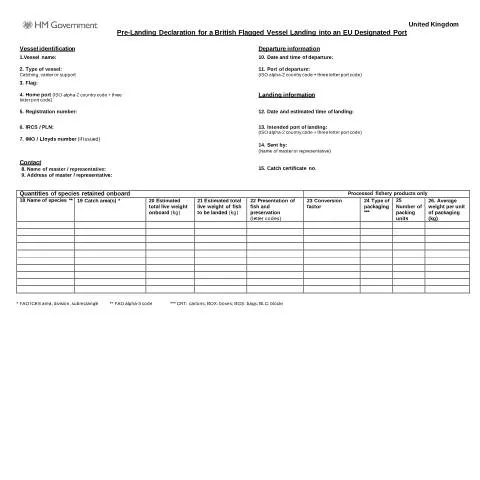
Completing the Pre-Landing Declaration accurately is crucial. The document demands specific information, which can be categorized into distinct sections:
- Vessel Information: Details such as the name of the vessel, type, flag, and registration number must be included. This establishes the identity of the operating vessel.
- Departure Information: Including the date and time of departure, port of departure, and contact information for the master or representative are essential for logistical accuracy.
- Landing Information: Specify the intended port of landing, estimated landing time, and the name of the representative sending the declaration.
- Catch Details: This section requires detailed information about the species of fish caught, including estimated weights and packaging types.
Detailed Breakdown of Key Sections
| Section | Description |
|---|---|
| Vessel Identification | Includes the name, type, flag, and registration number of the vessel. |
| Departure Information | Date and time of departure, and the port from which the vessel is departing. |
| Landing Information | Intended port of landing and estimated time of landing. |
| Catch Details | Species, quantities, preservation methods, and packaging information. |
Submission Protocols: Timing and Contact
Understanding the timeline for submission is critical to avoid potential delays or penalties. The Pre-Landing Declaration must be submitted:
- At least four hours before the estimated time of landing.
- Via email to the designated port of landing authority.
This requirement allows port authorities to prepare for incoming vessels and conduct any necessary inspections upon arrival.
Consequences of Non-Compliance
Failing to submit the declaration on time, or submitting incorrect or incomplete information, can lead to various ramifications:
- Delays in landing the catch, resulting in financial losses.
- Possible fines or penalties as imposed by regulatory authorities.
- Increased scrutiny on future operations, complicating subsequent landings.
In the worst case, repeated failures can lead to restrictions on future access to EU ports.
Addressing Refusals and Errors
In the event that a declaration is rejected, or if you realize there's been an error after submission, it’s essential to take appropriate actions:
- Contact the relevant port authority immediately to understand the specifics of the refusal.
- Provide corrections or additional information as requested by the authorities.
- Be prepared to demonstrate compliance with all fishing regulations and standards.
Keeping detailed records of all communication and submissions related to the Pre-Landing Declaration will aid in resolving disputes swiftly.
The Legal Framework Surrounding Fish Landings
The necessity for a Pre-Landing Declaration is underpinned by international fishery management agreements and UK legislation post-Brexit. Regulatory frameworks have evolved to maintain sustainable fish stocks and ensure equitable practices among nations. The Data Protection Act 2018 and the UK GDPR also play a role in how personal and operational data is handled during this process.
Historical Context and Future Implications
As fishing practices continue to adapt to changing environmental and regulatory landscapes, the importance of maintaining accurate records and communications will remain high. Understanding the historical context of these regulations can provide insights into potential future changes. The UK fishing industry has witnessed considerable shifts in policy, leadership, and market demands, making compliance more complex.
Real-World Implications for Fishermen and Operators
For fishermen and operators, the Pre-Landing Declaration isn’t merely a bureaucratic hurdle; it represents a commitment to sustainable practices and legal adherence. With fishing being a critical sector for many coastal communities, ensuring seamless access to EU markets while adhering to regulations can significantly impact profitability and sustainability.
Enhancing Efficiency with Proper Documentation
Operators are encouraged to develop robust internal processes for preparing declarations. This includes:
- Regular training for crew members on documentation requirements.
- Utilizing checklists to ensure all necessary information is readily available.
- Establishing a clear chain of communication between the vessel and port authorities.
Such measures will not only smooth the landing process but also contribute to a more sustainable fishing environment.
Final Thoughts on Compliance and Best Practices
Maintaining compliance with the Pre-Landing Declaration process requires diligence, attention to detail, and a proactive approach. The implications of non-compliance are significant, underscoring the importance of understanding the requirements and maintaining open lines of communication with port authorities.
By embracing these principles, fishermen and operators can navigate the challenges of international fishing regulations with greater ease, ensuring the longevity and sustainability of their operations.
Understanding the Pre-Landing Declaration Process
Before you commence your journey to land fish in an EU port, it's crucial to understand the pre-landing declaration process. This step is not merely procedural; it plays a significant role in ensuring compliance with both UK and EU regulations, particularly after Brexit. The pre-landing declaration is a notification that must be submitted to the relevant authorities, thereby allowing them to monitor landings effectively and maintain fisheries management. This declaration typically includes details such as the quantity of fish on board, species, and the intended landing port.
The pre-landing declaration must be made to the appropriate authority at least four hours before the landing is scheduled to take place. This can vary based on specific agreements with EU countries and the type of fish being landed, so it’s essential for fishers to check the latest requirements stipulated by the relevant EU member state. Notably, failure to comply with these pre-landing declaration requirements can lead to heavy penalties, including fines or seizure of the catch.
Specific Requirements for Different Fisheries and Species
It’s important to note that not all fisheries and species are treated equally when it comes to pre-landing declarations. Certain types of fish, particularly those subject to quota regulations or those which are considered endangered species, may have additional requirements. For instance, if you are looking to land mackerel or herring, there are specific quotas and bycatch regulations that apply. Understanding these nuances can be crucial not only for compliance but also for sustainable fishing practices.
Fishermen must also be aware of the potential requirement for additional documentation, such as catch certificates or health certificates, especially for sensitive species. If you're landing fish that fall under EU regulations concerning sustainability, you may need to provide evidence that your catch was sourced responsibly. This compliance not only reflects on your business practices but is increasingly becoming a requirement for entry into European markets.
Post-Landing Responsibilities and Record Keeping
Once the fish has been successfully landed, your responsibilities do not cease with the submission of the pre-landing declaration. Fishermen must maintain accurate records of their catch, as these are necessary for future inspections and may be requested by authorities during audits. Keeping detailed logs of the quantity and species of fish landed, along with the corresponding pre-landing declarations, can assist in demonstrating compliance with both UK and EU regulations.
It’s also beneficial to stay updated with any changes in policies or regulations that may arise, particularly as intergovernmental agreements evolve in response to environmental concerns and fishing sustainability. Regularly reviewing this information through resources like the UK’s Marine Management Organisation (MMO) or relevant EU fisheries bodies can help you remain compliant.
Moreover, if you engage in selling your catch within the EU, you must also adhere to the traceability requirements laid out by the EU Fishery Control Regulation. This includes the obligation to provide evidence that the fish you land is sourced in compliance with quotas and sustainable fishing practices. Failure to maintain these records can result in significant penalties, including bans from fishing in EU waters or fines that can impact your business operations.