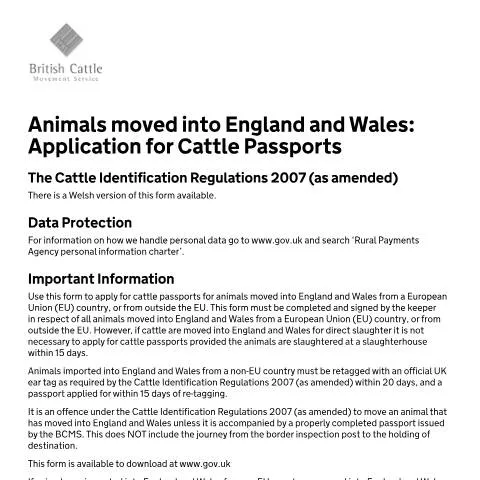
Understanding the Cattle Passport Application Process
When importing or moving cattle into England or Wales, the application for cattle passports is a vital step that cannot be overlooked. This official document certifies the identity and origin of cattle, ensuring that all livestock can be tracked throughout their lifecycle. The importance of this process is underscored by legal requirements set forth in the Cattle Identification Regulations 2007. Non-compliance can lead to significant penalties.
The Role of Cattle Passports in Animal Health and Trade
Cattle passports serve multiple purposes:
- Traceability: They allow for the tracing of cattle movements, an essential aspect of disease control and food safety.
- Compliance: Ensuring adherence to UK and EU regulations regarding animal health and movement.
- Marketability: Possessing a cattle passport enhances the market value of livestock, as buyers are often more willing to engage with sellers who can provide such documentation.
A cattle passport must accompany each animal as it moves, except during the journey from a border inspection post to the destination holding. This requirement emphasizes the established tracing protocols aimed at protecting both animal health and public welfare.
The Application Timeline: From Import to Passport Receipt
Embarking on the journey to obtain cattle passports involves several crucial stages, each with strict timeframes:
- Initial Movement: Upon arrival of cattle into England or Wales from an EU country or non-EU country, a cattle passport application must be submitted.
- Retagging Requirements: For non-EU imports, retagging must occur within 20 days, and cattle passports must be applied for within the following 15 days.
- Documentation Submission: Completed forms along with supporting documents must reach the BCMS within the stipulated time to ensure timely processing.
The total duration before receiving cattle passports can vary, but it is advisable to expect around 15 days after submission. If no correspondence is received within this period, contacting the British Cattle Movement Service (BCMS) is imperative to check the status of your application.
Essential Documentation: What You Need to Prepare
Fulfilling the application requirements necessitates careful preparation of several documents, classified by situation:
| Situation | Required Documents |
|---|---|
| Animals from EU countries | Original foreign passport or details sheet; export health certificates. |
| Animals from non-EU countries | Retagging certificates; original foreign passport (if applicable); export health certificates. |
| Animals moving to slaughter | No passport required if slaughtered within 15 days. |
It is essential to ensure all supporting documents are included and correctly correspond to avoid delays. Incomplete applications can lead to significant setbacks, emphasizing the need for meticulous attention to detail.
The Interplay of Rights and Obligations
Engaging with the cattle passport application process carries specific rights and obligations for the keeper of the animals:
- Rights:
- To receive timely updates regarding the status of your application.
- To ensure your animals are documented in accordance with regulations, providing access to markets.
- To seek clarification or assistance via the BCMS helpline.
- Obligations:
- To submit accurate and truthful information on the application form.
- To comply with the regulations governing cattle identification and movement.
- To ensure that all animals have the necessary identification prior to movement.
Failure to comply with these obligations can lead to legal repercussions, including potential fines or prosecution under the Cattle Identification Regulations.
Engaging with the BCMS: Application Processing and Follow-Up
Once your application has been submitted, the processing phase begins. The BCMS operates a thorough verification process:
- Verification: Each application undergoes scrutiny to ensure compliance with required standards.
- Documentation Review: Supporting documents such as health certificates and original passports are checked for authenticity and accuracy.
- Issuance of Passports: Upon successful completion of the verification process, cattle passports are generated and dispatched.
For any queries or follow-up, the BCMS helpline offers assistance. Keep in mind that providing accurate details during the initial application reduces the need for follow-ups and enhances processing speed.
Submission Channels: Navigating Your Options
Understanding the various submission channels is essential for a smooth application process. Here’s a breakdown:
- Online Submission: This is the most efficient method, allowing for quicker processing and tracking of your application. Ensure that all documents are scanned and attached correctly.
- Paper Submission: Completing a physical form and mailing it to the BCMS is another option. However, this method may lead to delays due to postal times.
- In-Person Submission: Although not as common, submitting documents directly to BCMS offices can be done if you need immediate assistance.
Regardless of the method, ensure that you retain copies of all submitted documents for your records.
Final Considerations: Beyond the Application
Understanding the implications of obtaining a cattle passport extends beyond the initial application. Keepers must remain vigilant and proactive:
- Ensure that all future movements of the cattle are accompanied by the appropriate documentation.
- Stay updated with regulatory changes and amendments in cattle identification laws to maintain compliance.
- Keep records of all transactions and movements, as traceability remains a key aspect of animal health management.
Engaging responsibly with the cattle passport system not only fulfills legal obligations but also supports the broader goals of animal welfare and public safety.
Understanding Cattle Passports: The Importance and Legal Framework
Cattle passports are crucial documents for the health, identification, and traceability of livestock in England and Wales. The legal requirements surrounding cattle passports stem from EU regulations that have been retained in UK law post-Brexit, specifically the provisions designed to ensure animal health standards and food safety. The key aim of the cattle passport system is to prevent the spread of zoonotic diseases and to streamline the movement of cattle across borders.
When you import cattle into England or Wales, it's essential to ensure that each animal is issued a passport, which provides details about the animal's identity, origin, and associated health status. The passport must accompany the animal at all times. If you're a farmer or a livestock producer, understanding the importance of these documents can help ensure compliance with the relevant laws, thus avoiding potential fines or complications during inspections by the Animal and Plant Health Agency (APHA).
The primary legal framework governing cattle identification and registration is outlined in the Cattle Identification Regulations 2007. Under this legislation, you are required to apply for a passport through an approved cattle passport issuing agency within seven days of the animal's birth or upon importation. This not only keeps accurate records but also aids in managing and tracking disease outbreaks effectively.
Step-by-Step Guide to Applying for Cattle Passports in England and Wales
Applying for cattle passports involves a few straightforward steps, but ensuring that you follow them meticulously is essential to avoid delays or potential legal issues.
Choose an Approved Passport Issuing Agency: Before making your application, identify an approved agency that issues cattle passports. The British Cattle Movement Service (BCMS) is the primary authority in this regard. Once selected, ensure that you have their contact information and any necessary application forms.
Gather Required Information: The application will require specific information about the cattle you are bringing into the UK. This typically includes:
- The animal's date of birth.
- The breed and sex of the animal.
- The unique identification number (e.g., the ear tag number).
- The name of the owner and the address of the holding.
Ensure that all details are accurate, as discrepancies can lead to significant complications down the line.
Complete the Application Form: Fill out the application form provided by your chosen issuing agency. The BCMS, for instance, has a specific form known as the BCMS 'Cattle Passport Application Form'. Once completed, double-check for any errors or missing information to prevent delays.
Submit Your Application: Send the application along with any required fees to the issuing agency. Payment methods may vary, so check with the agency for acceptable payment options.
Receive Cattle Passport: After processing your application, the agency will send you the cattle passport, usually within a few weeks. Upon receipt, check the passport carefully to ensure that all the details are correct.
Compliance and Record-Keeping: Once you have the passport, maintain proper records of all cattle movements as required by law. This includes keeping track of sales, transfers, and any changes in ownership.
Following this step-by-step guide can help streamline the application process for cattle passports and ensure compliance with UK regulations.
Common Pitfalls to Avoid When Moving Cattle
When importing or moving cattle into England or Wales, several common pitfalls can complicate the process. By being aware of these issues, you can take proactive measures to avoid them:
Inaccurate or Incomplete Records: One of the most significant errors arises from not maintaining adequate records of cattle movements. Each time you move cattle, whether to a different location or to a market, you must record it. Failure to do so can lead to penalties during inspections by the APHA.
Failure to Meet Import Regulations: If you are importing cattle from outside the UK, be aware of the specific import regulations. This includes health certificates, vaccinations, and any quarantine requirements. Not adhering to these regulations can result in confiscation of the animals or hefty fines.
Ignoring Animal Health Requirements: The health status of imported cattle must be adequately verified. Ensure that animals are free from diseases such as Bovine TB or Bluetongue. Ignoring these health checks not only puts your herd at risk but can lead to wider implications for the industry.
Delays in Application Processing: Submitting an application for a cattle passport too close to a planned movement date can result in delays. Always apply well in advance, allowing time for processing and any potential follow-up queries from the issuing agency.
Failing to Update Ownership Records: If an animal changes ownership, it is essential to update the passport records accordingly. Neglecting this can create complications during future sales or movements, as it may create confusion regarding animal ownership.
By being vigilant and proactive regarding these common pitfalls, cattle owners and farmers can ensure a smoother process when importing or moving cattle and maintain compliance with UK regulations.