Understanding the Role of Form 2.17B in Company Administration
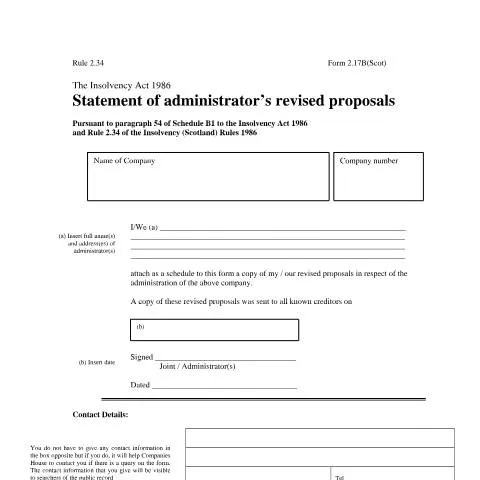
Within the complex landscape of corporate insolvency, the Statement of administrator’s revised proposals: Form 2.17B (Scotland) is a crucial document that embodies the administrator’s plan for salvaging a company undergoing administration. This form serves not merely as a bureaucratic requirement but as a roadmap outlining the steps the administrator proposes to undertake in addressing the company’s financial distress. The implications of this document spread beyond mere formalities; it encapsulates the strategic intentions of the administrator, aimed at protecting the interests of creditors while seeking the optimal outcome for the company itself.
The Pathway of Form Submission: Modes and Nuances
When it comes to submitting Form 2.17B, stakeholders need to navigate various avenues, each possessing unique characteristics. Submissions can occur through traditional postal services, via electronic means, or in person.
1. Postal Submission
Filing the form through the post remains a widely-used method. This involves mailing the completed form to:
Companies House, 4th Floor, Edinburgh Quay 2, 139 Fountainbridge, Edinburgh, EH3 9FF
It is advisable to use recorded delivery to ensure the submission is traceable, providing peace of mind that the document has been dispatched.
2. Electronic Filing
Electronic submission is increasingly favoured due to its efficiency. Online filing may streamline the process, reducing the time between submission and acknowledgment from Companies House.
3. In-Person Submission
For administrators who prefer the traditional route, delivering the form in person offers an immediate way to ensure it is received. During this process, administrators can engage with officials who can clarify any uncertainties on the spot.
Distinguishing Form 2.17B from Similar Documents
Confusion often arises between various forms associated with insolvency proceedings. Understanding the specific function and context of Form 2.17B is essential.
Key Differences
- Form 2.17A: This preliminary proposal form outlines the initial thoughts of the administrator. In contrast, Form 2.17B represents a refined proposal, reflecting feedback from creditors.
- Form 2.30: Unlike Form 2.17B, which focuses on revised proposals, Form 2.30 deals with the administrator's final report and the outcomes of the administration process.
- Form 2.34: This form is concerned with the administrator’s approval of proposals after they have been discussed, representing a more advanced stage in the administration process.
Processing Timeline: What Happens After Submission?
Once submitted, the form triggers a series of administrative steps within Companies House and The Insolvency Service.
1. Acknowledgment by Companies House
Upon receiving Form 2.17B, Companies House will issue an acknowledgment which is pivotal for record-keeping. This acknowledgment serves as a reference point for both the company and the administrator.
2. Review and Feedback Loop
After submission, the proposals are scrutinized. If adjustments are necessary, Companies House may reach out for clarification or further information from the administrator. Engaging actively with this feedback helps avoid delays in the administration process.
3. Communicating with Creditors
Following the submission of the revised proposals, it's crucial that the administrator communicates effectively with all known creditors regarding the proposed terms. This communication is paramount in maintaining transparency and fostering trust during the administration process.
Deciphering the Form: A Closer Look at Each Section
Understanding each segment of Form 2.17B is key to ensuring accurate completion and avoiding potential pitfalls.
1. Administrator Details
The first section mandates the full name and address of the administrator(s). It is vital to ensure that this information is correct to avoid any issues with communication or tracking.
2. Company Information
This section requires the name and company number of the entity in administration. Missing or incorrect company information can lead to significant delays.
3. Revised Proposals Attachment
Here, administrators must attach a detailed set of revised proposals. The quality and clarity of these documents can significantly impact the perception of creditors regarding the viability of the administration plan.
4. Sign-off and Date
Lastly, the administrator must sign and date the form. This signature not only validates the document but also establishes a formal responsibility for the administration process.
Preparing Supporting Documents: The Essential Checklist
The successful submission of Form 2.17B does not solely depend on the form itself. Adequate preparation of supporting documents is essential.
1. Financial Statements
Comprehensive and accurate financial statements must accompany the revised proposals. This includes profit and loss statements, balance sheets, and cash flow forecasts.
2. Creditor List
A full and updated list of creditors should be prepared, identifying their claims and any outstanding debts. This is crucial for transparent communication and proposal acceptance.
3. Compliance Documents
Document any compliance issues that have arisen during the administration process, including any correspondence with regulatory bodies. Showing that compliance has been maintained strengthens the credibility of the proposals.
Implications for Stakeholders: Rights and Responsibilities
The implications of submitting Form 2.17B extend to both the administrators and the creditors involved.
1. Rights of Creditors
Submitting this form opens up avenues for creditors to have a say in the revised proposals. Creditors have the right to challenge and provide feedback on the proposed plans, thus influencing the final outcome.
2. Obligations of the Administrator
For the administrator, the submission signifies a commitment to transparency and accountability. Failing to adequately communicate or provide the required documentation can lead to challenges in the administration process and may even prompt legal repercussions.
The Broader Context of Insolvency Administration
The Statement of administrator’s revised proposals is not just a formality; it plays a pivotal role in the broader context of the Insolvency Act 1986. By providing a structured approach to navigating insolvency, this document seeks to balance the competing interests of creditors, employees, and other stakeholders.
Fill in your form directly online
No printing: type your details into the boxes of the official form, tick, then download the PDF ready to send.
- 1Type into the form boxes
- 2Tick in one click
- 3Save and download the PDF
In conclusion, understanding Form 2.17B and its implications is paramount for administrators working within the confines of insolvency. Careful attention to detail, proactive communication with creditors, and thorough preparation of supporting documents can significantly influence the outcomes of the administration process, paving the way for effective resolution of financial distress.
Understanding the Context of Form 2.17B in the Scottish Insolvency Process
The Statement of Administrator’s Revised Proposals, known as Form 2.17B, plays a critical role in the administration process for insolvent companies in Scotland. The administration procedure, primarily governed by the Insolvency Act 1986 (as amended), is intended to rescue a company as a going concern or achieve a better result for creditors than would be likely if the company were wound up. Understanding the context and implications of Form 2.17B is essential for administrators, creditors, and stakeholders involved in the process.
The form is specifically designed for use following the initial proposals set out in Form 2.17A. It outlines any revisions the administrator feels may be necessary due to new information or feedback from creditors. The importance of transparency and clear communication cannot be understated, as creditors have a vested interest in understanding how their funds are being managed and the potential for recovering their debts. By submitting Form 2.17B, the administrator demonstrates compliance with statutory obligations and a commitment to acting in the best interests of creditors.
Furthermore, the submission of Form 2.17B triggers a series of steps that must be followed, including creditor meetings where revised proposals are discussed. It is essential for administrators to prepare adequately for these meetings, as they may face inquiries about the rationale behind the revisions. This preparation includes knowing how changes affect payment schedules, anticipated recovery rates, and any alterations to the administration timeline.
Key Considerations for Completing Form 2.17B
When completing Form 2.17B, administrators should keep several critical factors in mind to ensure the document is comprehensive and meets legal requirements. First, it is vital to provide a clear rationale for any changes made to the previously submitted proposals. This rationale should detail the circumstances that led to the revision, such as changes in asset valuations, unexpected liabilities, or new agreements with creditors. A well-articulated rationale not only informs creditors but also aids in avoiding disputes later in the process.
Another crucial element is the financial analysis that accompanies the revised proposals. This section should include updated cash flow forecasts and projections of future income and expenses associated with the administration. By offering a transparent financial outlook, the administrator can instill confidence among creditors regarding the viability of the revised proposals.
Furthermore, the timing of the submission is equally important. Administrators should be aware of statutory deadlines and ensure that Form 2.17B is submitted in a timely manner. Failure to submit within stipulated timeframes may lead to complications, including potential legal challenges from creditors or regulatory bodies. Additionally, it may impact the administrator's standing with the Court and their overall effectiveness in managing the administration process.
Common Pitfalls in the Revision Process and How to Avoid Them
Despite the importance of Form 2.17B, administrators often encounter common pitfalls during the revision process. Recognizing these challenges and understanding how to navigate them is crucial to a smooth administration. One frequent issue is the misalignment between creditor expectations and the revised proposals outlined in Form 2.17B. Administrators should be proactive in engaging with creditors throughout the process, soliciting their opinions and addressing concerns before finalizing the revised proposals. Open communication channels can mitigate misunderstandings and foster a collaborative atmosphere, ultimately aiding in the acceptance of the revisions.
Another common pitfall involves inadequate documentation and support for the revised proposals. It is essential that administrators gather all necessary documentation to substantiate changes, including new financial reports, valuations, and any legal opinions that may affect the administration. Providing robust documentation not only enhances the credibility of the revised proposals but also protects the administrator in the event of questions or challenges from creditors.
Finally, administrators must be cautious of the potential for conflicts of interest. In cases where the administrator has ongoing relationships with creditors or company stakeholders, it is vital to disclose these relationships upfront. By maintaining transparency about any potential conflicts, administrators can uphold the integrity of the process and minimise the chances of disputes arising later in the administration.