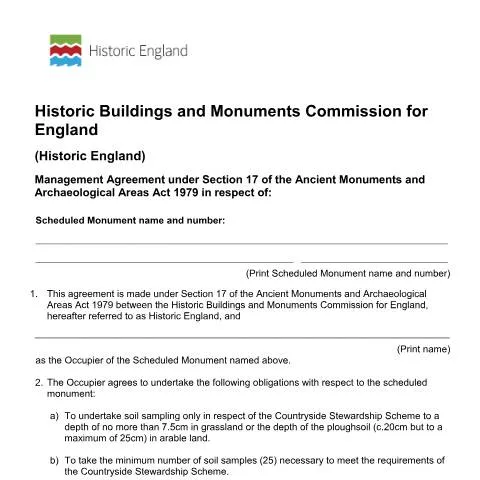
Navigating the Consent for Soil Sampling on Scheduled Monuments
In the landscape of rural conservation, the Consent for Soil Sampling on Scheduled Monuments form plays a pivotal role in ensuring that archaeological integrity is maintained while allowing land management practices to continue. This unique document is not merely a formality; it serves as a bridge between the objectives of the Countryside Stewardship Scheme and the safeguarding of our historic sites. Engaging with this form is essential for those who occupy or manage scheduled monuments, as it lays down the groundwork for responsible stewardship.
Understanding the Framework of the Countryside Stewardship Scheme
The Countryside Stewardship Scheme is designed to encourage environmentally friendly farming practices and to promote the conservation of wildlife, landscapes, and historic features. Within this framework, soil sampling is a critical activity that provides data for managing land effectively. The consent form is a requisite for anyone wishing to conduct such sampling on scheduled monuments, ensuring that potential archaeological resources are protected.
For those engaged with the scheme, understanding the implications of this form is crucial. When the land is part of a stewardship agreement, the agreement stipulates how and when soil samples can be collected. Each scheduled monument within this scheme carries with it its own history and set of responsibilities, highlighting the importance of informed consent.
The Significance of This Document in Archaeological Preservation
At its core, the consent form facilitates a dialogue between landowners and Historic England. By signing this document, occupiers agree to adhere to specific conditions that govern the sampling process. For instance, soil sampling must be limited to a specified depth and only for the purposes defined by the stewardship agreement. This regulation is vital in preserving the archaeological context and avoiding damage to artifacts or soil profiles that might hold critical historical information.
- Depth Restrictions: Sampling is limited to 7.5cm in grassland and up to 25cm in arable land.
- Minimum Sample Requirement: A total of 25 samples must be taken to fulfil the needs of analysis.
- Artifact Handling: All findings must be reported to Historic England, ensuring responsible management of archaeological discoveries.
The Complete Journey of the Form: From Preparation to Submission
Completing the Consent for Soil Sampling form requires careful attention to detail. The occupier must print the name of the scheduled monument and their own name clearly, ensuring that all fields are filled in accurately. Misrepresentations or omissions can lead to delays or rejections of consent.
Once the form is signed, it must be submitted to the relevant local office of Historic England. This can be done via email by sending a scanned copy of the signed form or through traditional mail. The choice of submission method may affect the processing time; electronic submissions are typically faster.
It’s important to note that sampling activities should not commence until the completed form is returned with Historic England’s signature. This stipulation protects the integrity of the site and ensures that all parties are informed and in agreement regarding the sampling activities.
Submission Channels: Online vs. Paper
There are two primary methods for submitting the consent form:
| Channel | Advantages | Considerations |
|---|---|---|
| Email Submission | Fast processing; Confirmation of receipt possible. | Requires access to scanning equipment; Potential technical issues. |
| Paper Submission | Traditional method; No technical skills required. | Longer processing time; Risk of postal delays. |
Decoding the Form: Essential Sections Explored
Each section of the consent form has a specific role to play in the overarching process of soil sampling. Here’s a breakdown of notable sections that deserve close examination:
- Occupier Information: It’s essential to provide accurate details here. Errors can lead to complications in communication and consent.
- Date of Agreement: Note the date accurately, as this will determine the timelines for consent validity.
- Scope of Sampling: Understanding the limitations of the sampling process is essential. The form clearly delineates what is permissible, reinforcing responsible management of archaeological sites.
Common Pitfalls in Filling Out the Form
Even with a straightforward design, several common pitfalls can occur when completing the form:
- Incomplete Information: Failing to fill out all required fields can lead to immediate rejection.
- Incorrect Depth Notation: Misunderstanding sampling depth can result in unintentional damage to the archaeological record.
- Delayed Submissions: Sending the form too late can mean missing vital deadlines within the stewardship scheme.
What Happens After Submission? The Path Forward
Upon submission and review, Historic England will return the signed consent form if all conditions are satisfied. This confirmation represents the official go-ahead to proceed with the soil sampling. However, it is crucial for the occupier to remain engaged throughout the process.
Once sampling is conducted, detailed reports on findings must be forwarded to Historic England. This step is vital for maintaining an accurate historical record and for engaging with the ongoing stewardship scheme. Failure to report artifacts or findings could jeopardise future consent for other activities on the scheduled monument.
Consequences of Non-compliance
Non-adherence to the conditions outlined in the consent form can lead to serious repercussions:
- Loss of Stewardship Agreement: If the land ceases to be part of a stewardship agreement, the consent becomes null and void.
- Legal Ramifications: Unauthorized alterations to scheduled monuments can invoke penalties under the Ancient Monuments and Archaeological Areas Act of 1979.
Understanding Special Circumstances
Certain situations may complicate the process of obtaining consent. For instance, if the occupier is not the owner of the land but is acting on behalf of another party, additional permissions may be required. In such cases, it’s advisable to consult with Historic England to clarify any additional documentation that may be necessary.
Furthermore, if the monument is shared between multiple stakeholders, it is imperative to ensure that all parties are in agreement before progressing with the application.
Engaging with Historic England for Clarity
Occupiers who are unsure about the consent process, or who face unique circumstances, should engage directly with their local office of Historic England. Each office can provide tailored advice and ensure that the necessary regulations are clearly understood, thus facilitating smoother compliance.
Final Thoughts on Responsible Stewardship
The Consent for Soil Sampling on Scheduled Monuments form is a crucial component of responsible archaeological and environmental stewardship. Understanding its significance, completing it carefully, and adhering to its stipulations not only preserves our heritage but also fosters a collaborative relationship with conservation authorities. Landowners should view this form as an opportunity to engage actively in the stewardship of our historic landscapes.
Understanding Scheduled Monuments and Their Legal Protections
Scheduled monuments are nationally important archaeological sites or historic buildings that are legally protected under the Ancient Monuments and Archaeological Areas Act 1979. This legislation ensures that significant archaeological and historical features are preserved for future generations. Any alterations, including soil sampling, require consent from the Secretary of State for Digital, Culture, Media and Sport.
The designation of a site as a scheduled monument means that any planning or land use changes must consider the potential impact on the site’s archaeological integrity. This includes activities associated with agriculture, forestry, or any other land management practices. Therefore, understanding the implications of scheduled monument status is crucial for landowners and farmers who wish to engage in soil sampling or other invasive activities.
When considering consent for soil sampling, applicants must demonstrate not only compliance with the regulations but also how the proposed sampling will enhance understanding and conservation of the monument. A detailed methodology must be submitted, outlining the purpose, the techniques to be used, and how the findings will contribute to the site’s historical narrative.
The Application Process for Soil Sampling Consent
The process of applying for consent to conduct soil sampling on scheduled monuments can be intricate and requires meticulous attention to detail. The application must be made through the relevant department, often the Department for Digital, Culture, Media and Sport, and must include specific details such as the location of the monument, the extent of the proposed sampling, and the anticipated timeframe for the work.
Before submitting the application, it is advisable to engage with the local planning authority and any relevant archaeological advisors, as they can provide guidance on the feasibility of the project and any local conditions or considerations that must be taken into account. It is also beneficial to consult with local heritage groups, who may offer insights into the historical significance of the site and any previous research that has been conducted.
Once the application is submitted, there is typically a consultation period during which stakeholders, including local authorities and conservation bodies, can review and comment on the proposal. This period is essential for ensuring that all potential impacts are considered, and it may lead to requests for modifications or additional safeguards to protect the monument during the sampling process.
It is crucial to factor in the timeline for approval, as the consent process can take several weeks or even months, depending on the complexity of the application and the responses received during the consultation period. Therefore, initiating the process early and maintaining open communication with authorities can significantly streamline the experience.
Best Practices for Conducting Soil Sampling on Scheduled Monuments
Once consent for soil sampling has been obtained, it is essential to follow best practices to ensure both compliance with legal requirements and the preservation of the site’s integrity. It is crucial to approach the sampling process with respect for the site's historical value and to implement strategies that minimize any potential damage.
Before commencing work, a comprehensive plan should be developed that outlines the methodology to be employed, including the type of sampling tools and techniques, the specific locations for sampling, and the depth of soil to be sampled. Where possible, non-invasive techniques should be prioritized, such as using augers that minimize disturbance.
Training and awareness for all personnel involved in the project are vital. Individuals should be briefed on the significance of the site and the importance of adhering to the agreed methodology to mitigate risks of unintentional damage. Regular monitoring should be conducted during the sampling process to ensure compliance with the consent conditions and to make adjustments if necessary.
Following the completion of sampling, a detailed report should be compiled, documenting the findings and any impacts observed during the process. This report should be submitted to the appropriate authorities as part of the compliance requirements, and the data should be made available for further research and public knowledge, contributing to a broader understanding of the historical context of the scheduled monument.