Understanding the Context of the Greening Amendment Form
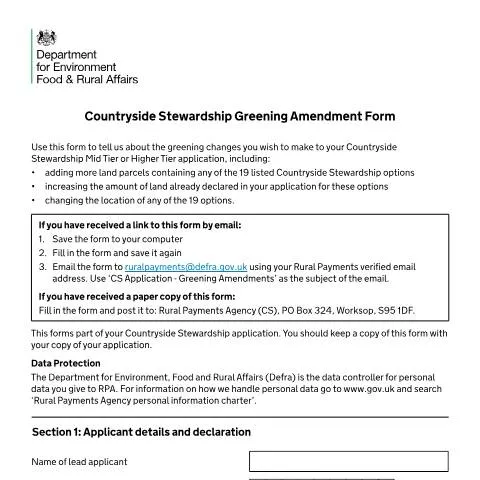
Navigating the complexities of environmental stewardship can be daunting for farmers and landowners. The Greening Amendment Form for Countryside Stewardship represents a vital tool that enables applicants to adjust their participation in the Countryside Stewardship scheme. This form specifically facilitates changes related to greening measures, a crucial aspect of sustainability practices within rural farming. The Countryside Stewardship programme, administered by the Rural Payments Agency (RPA) under the Department for Environment, Food and Rural Affairs (DEFRA), offers financial incentives for land management that enhances the natural environment.
Who Needs to Engage with This Form?
The individuals or organizations who will engage with the Greening Amendment Form include:
- Farmers and Landowners: Those who have previously submitted a Mid Tier or Higher Tier Countryside Stewardship application.
- Environmental Consultants: Professionals assisting landowners in maximizing their stewardship options.
- Advisors and Agricultural Agents: Individuals providing guidance on compliance and amendments to ensure the best practices are being followed.
Understanding the eligibility criteria for amendments is essential. Specifically, only those who have existing applications can submit this change request. This form must be used for various enhancements, including adding new land parcels, increasing already declared land, or altering existing options in an application.
Detailed Breakdown of Required Documentation
Before filling out the Greening Amendment Form, applicants must prepare specific documentation. The following items should be assembled based on the alterations being made:
- Land Ownership Documents: Proof of ownership or tenancy for the relevant parcels of land.
- Previous Application Details: The original Countryside Stewardship application, which includes the Application ID and other identifiers.
- Maps and Land Parcel References: Accurate OS Map references or National Grid numbers detailing the land involved in the amendments.
Contextualizing Changes: When and Why to Use This Form
The timing of submitting the Greening Amendment Form is crucial. Applications for amendments can be made at any point during the application process, provided they adhere to the operational guidelines set by DEFRA. Key scenarios where this form is applicable include:
- When a landowner has acquired additional land suitable for the specified Countryside Stewardship options.
- If the landowner wishes to optimise land already declared by adjusting the size or the allocation of stewardship options.
- In circumstances where an application must be realigned due to operational changes or land management updates.
Understanding the precise timing and reasons for these adjustments can enhance the effectiveness of an application, leading to better outcomes and compliance with DEFRA’s goals.
Step-by-Step Process: From Application to Decision
The journey of submitting a greening amendment begins with a clear understanding of one's existing application and the desired changes. Here is a chronological walkthrough of the process:
- Review Existing Application: Examine the details of the original Countryside Stewardship application, ensuring all necessary information is accurate and up-to-date.
- Identify Changes: Clearly outline the modifications you wish to make, whether that involves adding new land parcels or modifying existing entries.
- Complete the Form: Fill out the Greening Amendment Form, being meticulous in providing accurate details in each section, especially regarding land parcel references and sizes.
- Submit the Form: Depending on how the form was received, you can either email it to the provided address using a verified Rural Payments email or send a paper copy to the designated postal address.
- Await Confirmation: After submission, the RPA will process the amendment request. It is important to retain a copy of the submitted form for your records.
- Post-Submission Communication: Be prepared to receive feedback or requests for additional information from RPA, ensuring prompt responses to facilitate faster processing.
Unpacking the Form: Key Sections and Considerations
The Greening Amendment Form comprises several sections that require careful attention. Below is a detailed examination of each segment:
Section 1: Applicant Details and Declaration
This section requires the lead applicant's name, the Single Business Identifier, and the Application ID. It is crucial to check the accuracy of this information, as errors could delay processing.
Section 2: Changes Due to Greening Amendments
This is where the heart of your application lies. Applicants must detail:
- Land Parcel Details: Include the parcel name, field parcel reference, and OS Map sheet reference.
- Total Land Parcel Size: Indicate the size in hectares, ensuring correct measurements.
- Options Selected: Specify whether these are new options being added or alterations to existing ones. Make sure to indicate whether the options are rotational or non-rotational.
- New Quantity: Clearly state the new quantity following the amendments to avoid discrepancies.
Section 3: Additional Changes
If there are any other adjustments not covered in Section 2, they should be detailed here. This may include changes in management practices or new compliance requirements that have arisen since the original submission.
The Timing of Submissions: What You Need to Know
Understanding when to submit the Greening Amendment Form is crucial for ensuring compliance and maximising benefits.
- Submission Period: Amendments can typically be submitted at any point within the application year, but it is advisable to do so as soon as changes are identified.
- Response Times: While the RPA aims to respond promptly, applicants should allow several weeks for processing due to the potential high volume of submissions.
- Impact on Payments: Be aware that delays in submitting amendments may affect payment schedules, particularly if additional land has been added that requires evaluation.
Monitoring Progress: Following Up on Your Submission
After submitting your Greening Amendment Form, it is essential to keep track of its status. Here are steps to ensure proactive engagement:
- Retain Copies: Always keep a copy of your submission and any correspondence related to your amendment.
- Follow Up: Should there be a delay or lack of communication from the RPA, consider reaching out through the official contacts provided on the GOV.UK website.
- Stay Informed: Regularly check updates on the Rural Payments Agency's guidance pages for any changes in processing times or requirements.
Data Protection and Privacy Considerations
All information provided in the Greening Amendment Form is subject to the Data Protection Act 2018 and UK GDPR. The RPA is committed to protecting personal data and will process it in accordance with their privacy charter. Familiarising yourself with these regulations is crucial to understand your rights as an applicant.
Understanding the Greening Amendment Form in the Context of Countryside Stewardship
The Greening Amendment Form is essential for farmers and land managers who participate in the Countryside Stewardship scheme in the UK. This scheme is designed to provide financial incentives for managing land in a way that enhances the natural environment. Understanding how to properly fill out this form ensures participants can adapt their stewardship agreements to reflect changes in their farming practices or land management strategies.
The form typically covers amendments to management options, land use changes, and updates to the environmental outcomes expected from the stewardship activities. It is crucial to approach this form with an understanding of the specific requirements laid out by the Rural Payments Agency (RPA). Failing to provide accurate information could result in penalties or loss of payments.
Farmers must ensure that they are applying for amendments in a timely manner. For instance, if you intend to make amendments that affect your agreement for a specific calendar year, it is advisable to submit the Greening Amendment Form as soon as the change is anticipated. According to the latest guidelines, the RPA recommends submitting amendments as early as possible to facilitate smoother transitions.
When filling out the Greening Amendment Form, it is important to provide clear justifications for each change. This could include environmental benefits, compliance with new regulations, or shifting agricultural practices. You should pay close attention to supporting documentation, as the RPA may request further evidence to substantiate your claims.
Common Pitfalls to Avoid When Completing the Greening Amendment Form
Completing the Greening Amendment Form may seem straightforward, but several common pitfalls can hinder the process. Awareness of these issues can help ensure a smooth submission and compliance with the requirements of the Countryside Stewardship scheme.
One of the primary mistakes involves inadequate detail provided in the form. Applicants often underestimate the importance of thoroughness. The RPA requires explicit descriptions of the changes you are wishing to make, including specific locations and relevant management practices. Vague statements can lead to queries or rejections.
Another frequent oversight is missing deadlines. The Countryside Stewardship scheme operates under strict timelines, and missing a submission date can result in loss of funding or complications with your stewardship agreement. It is vital to maintain a calendar of important dates, particularly for changes that might affect your funding status.
Moreover, failing to engage with local advisors or experts can be detrimental. The RPA works alongside various agricultural and environmental bodies that can offer guidance and support. Utilizing these resources can assist in providing a robust application that stands up to scrutiny.
Lastly, neglecting to keep copies of submitted forms can lead to confusion later. Always retain a complete record of what has been submitted, along with any communications with the RPA concerning your amendments. This can help resolve disputes or clarify misunderstandings in the future.
Environmental Impact Assessments and Their Relevance to Greening Amendments
Environmental Impact Assessments (EIAs) are a critical consideration when modifying a Countryside Stewardship agreement through the Greening Amendment Form. An EIA helps in evaluating how proposed amendments might impact the surrounding environment, ensuring compliance with both local and national regulations.
Before completing the Greening Amendment Form, it is advisable to conduct an EIA to assess potential consequences thoroughly. Such assessments can range from evaluating soil health and biodiversity impacts to considering how changes could affect surrounding habitats or water quality. The results of the EIA can significantly influence the types of amendments that can be proposed.
Additionally, it’s important to remember that certain amendments may require a more detailed EIA process, particularly those that involve substantial changes in land use or introducing new farming practices that could affect the environment. The RPA may request details of the EIA along with your amendment application, so be prepared to provide comprehensive reports and findings.
Furthermore, integrating the findings from your EIA into the Greening Amendment Form can strengthen your application. Clearly outlining how the proposed changes align with the goals of the Countryside Stewardship scheme—as well as how they mitigate potential adverse effects—will present a compelling case to the reviewing authorities.
In conclusion, engaging with the EIA process not only enhances the quality of your Greening Amendment Form submission but also demonstrates a commitment to sustainable agricultural practices, which is a key element of the Countryside Stewardship initiative.