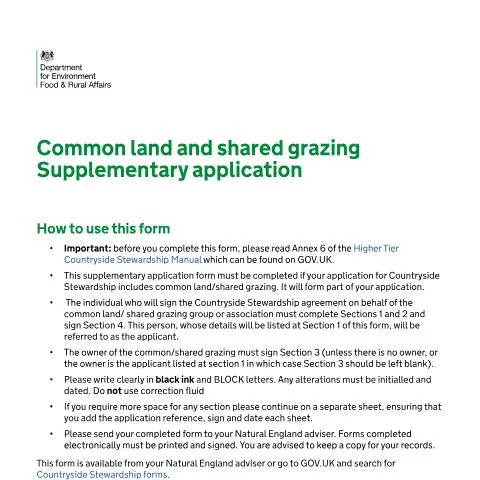
Understanding the Common Land and Shared Grazing Form in Countryside Stewardship
The Common Land and Shared Grazing Supplementary Application Form is pivotal for groups managing common land in the UK and seeking to participate in the Countryside Stewardship programme. This form integrates into a broader application process, ensuring that all legal and environmental considerations are met. It is crucial for applicants to understand the intricacies of this document, especially the implications of failing to complete it correctly.
The Role of the Common Land and Shared Grazing Form
This form acts as a supplementary application, specifically required when an application for Countryside Stewardship involves common land or shared grazing. It allows applicants to present necessary information about the land in question and the parties involved in its management. Proper completion of this form ensures your application is considered for grants and support aimed at enhancing the environmental management of rural land.
Integration with the Countryside Stewardship Application
When applying for the Countryside Stewardship, the inclusion of this supplementary form is mandatory if the land under consideration is common land or shared grazing. Failure to include this document can lead to delays or even rejection of the application. The Common Land and Shared Grazing Form plays a vital role in verifying the identities and rights of all stakeholders involved in the management of the land.
Key Sections of the Form: An In-Depth Breakdown
Each section of the form requires meticulous attention to detail, as inaccuracies can lead to significant complications. Below is a detailed exploration of each section.
Section 1: Details of the Applicant
- Application Reference Number: This is a unique identifier for your application, essential for tracking.
- Name of Applicant: Ensure to provide full legal names, using titles and initials accurately.
- Business Name: If applicable, include the official name of the organization.
- Contact Information: Fill in all relevant contact details. Pay attention to formatting; use BLOCK LETTERS as specified.
- Status of Applicant: Clearly indicate your role (e.g., Secretary, Rights Holder). This influences who has authority over certain decisions regarding the land.
Section 2: Common/Shared Grazing Details
This section focuses on the land itself. It includes:
- Name of the Common/Shared Grazing: The official name as registered.
- Common Land Register Unit Number(s): This is crucial for identifying specific parcels of common land.
- Ownership Declaration: If the land has an owner, their consent is required for the application.
Common pitfalls include omitting the owner’s details or failing to confirm if the whole area is included in the application. Such omissions can lead to processing delays.
Section 3: Declarations by Owners
Only to be completed if the land has an owner who is not the applicant. This section must be handled with care:
- If you are an agent, you must have explicit authorization from the owner to fill out this section.
- Declarations must be signed by the owner or their agent, which legally binds them to the terms of the application.
Section 4: Applicant Declaration
Here, the applicant must confirm they have consulted all involved parties, including rights holders. This ensures that all voices are heard when decisions about the land are made.
- Consultation Requirement: It’s vital to contact all graziers entitled to rights on the common land before submission. This can be a contentious area if not approached diligently.
- Confirmation of Rights: You must provide a clear list of right holders, shortlisting those actively participating and those who are not.
Insights on the Application Timeline
Understanding the timing of your application is essential to ensure compliance and maximize benefits:
- Application Period: Applications generally open at specific dates each year, and it’s critical to be aware of these to avoid missing deadlines.
- Submission Deadline: The completed form, along with all required documents, must be submitted by the specified cutoff date. Late submissions could result in automatic disqualification.
- Review Duration: Once submitted, the application will be reviewed by Natural England or the appropriate authority, which typically takes several weeks.
- Outcome Communication: Applicants will be notified of the outcome, and if approved, the terms of the Countryside Stewardship agreement will be outlined.
Applicant Profiles: Who Should Apply?
This form is primarily designed for various stakeholders involved in the management of common land or shared grazing rights. Each category of applicant has unique considerations:
- Common Land Owners: Individuals or entities that have legal ownership of the common land.
- Associations: Groups formed to manage shared grazing lands may apply collectively to maximize environmental benefits.
- Agricultural Committees: Those with a vested interest in sustainable farming practices on common land.
It’s essential for applicants to be aware of their rights and responsibilities under the Countryside Stewardship scheme, as these can vary significantly based on ownership and engagement levels.
Application Channels: Making the Right Choice
Completing the application form can be done via various methods:
- Online Submission: Some applicants may prefer to complete and submit the form electronically. However, it must be printed and signed before sending it to Natural England.
- Paper Submission: If you opt for a traditional approach, ensure that the form is completed thoroughly, signed and sent to the designated authority.
- Direct Submission: In some cases, coordinating with a Natural England adviser can facilitate better understanding and smoother processing of applications.
Choosing the appropriate submission method can affect processing time and the ability to respond to queries from the reviewing authority.
Impact of Non-compliance and Missing Information
The stakes are high in correctly completing the Common Land and Shared Grazing Form. Here are the potential repercussions of non-compliance:
- Rejection of Application: Incomplete or inaccurate forms can lead to outright rejection, denying access to funding and support.
- Delays in Processing: Missing documentation or unclear information can lead to delays, impacting the financial planning of the applicant.
- Loss of Rights: If rights holders are not properly consulted or acknowledged, there may be disputes that could jeopardize the communal management of the land.
Practical Tips for a Successful Application
To enhance your chances of a successful application, consider the following strategies:
- Thoroughly Review the Guidance: Read Annex 6 of the Higher Tier Countryside Stewardship Manual available on GOV.UK before filling out the form.
- Documentation Check: Ensure that all supporting documents, including ownership details and rights declarations, are gathered and attached as required.
- Consult with Experts: Engaging with Natural England advisers can provide crucial insights and help avoid common pitfalls in the application process.
- Maintain Clear Communication: Keeping open lines of communication with all stakeholders involved in the common land is vital for a smooth application process.
By adhering to these guidelines, applicants can navigate the complexities of the application process more effectively, ensuring their interests are represented and protected.
Understanding Common Land Designations
Common land in the UK is designated land where local communities have rights of pasture, often referred to as "commoners." It is important to understand the types and classifications of common land to navigate the Countryside Stewardship scheme effectively. Common land can be classified into several categories, including:
- Common Pasture: Areas where livestock can graze, typically under common rights.
- Woodland Common: Wooded areas that may have rights associated with timber collection and grazing.
- Common Land with Rights of Way: These areas not only support grazing but also serve as thoroughfares for walkers and wildlife enthusiasts.
Each type of common land can have unique management requirements and funding opportunities under the Countryside Stewardship scheme. Understanding these distinctions is key for applicants seeking to utilize shared grazing forms effectively.
Eligibility and Application Process for Countryside Stewardship
To apply for the Countryside Stewardship scheme regarding common land and shared grazing, applicants must meet specific eligibility criteria. Understanding these conditions can greatly enhance the likelihood of a successful application:
- Land Ownership: The applicant must either own the common land or be an appointed commoner with rights to graze livestock. Documentation proving this is essential.
- Environmental Benefits: Proposed stewardship actions must deliver clear environmental benefits, such as enhancing biodiversity, improving water quality, or restoring natural habitats.
- Compliance with Existing Legislation: Applicants must comply with local and environmental laws, including maintaining public access and protecting wildlife.
The application process typically involves submitting a detailed plan outlining the intended stewardship actions, including how they will sustain or improve the health of the common land. Forming partnerships with local environmental groups or councils can provide additional support and resources throughout the application process.
Challenges in Managing Common Land under the Countryside Stewardship Scheme
While the Countryside Stewardship scheme offers numerous opportunities for enhancing and maintaining common land, it also presents a unique set of challenges. Understanding these can help stakeholders mitigate risks and ensure the success of their stewardship efforts:
- Conflicting Interests: Common land often involves multiple stakeholders, including local communities, conservation groups, and commercial interests. Balancing these competing needs can be complex and time-consuming.
- Funding Limitations: While Countryside Stewardship provides financial support, the funds may not cover all necessary management activities or may require significant matching resources from the land manager.
- Environmental Changes: Common lands are susceptible to climate change, invasive species, and changing agricultural practices. Ongoing monitoring and adaptation of management strategies are essential.
To tackle these challenges, establishing clear communication channels among all stakeholders, conducting regular land assessments, and remaining adaptable to changing conditions are vital. Engaging with existing networks and seeking advice from experienced professionals in land management can also provide valuable insights.