Understanding the Statutory Incident Report: A Critical Tool in Animal Feed Safety
In the realm of food safety, the importance of proactive reporting cannot be overstated. The Statutory Incident Report for Salmonella in animal feedingstuffs (ZO2 feed) is a pivotal document that plays a significant role in safeguarding public health and animal welfare. By addressing potential salmonella contamination, this form not only protects animals but also has broader implications for human health and the food supply chain.
The Regulatory Framework Behind the Report
The necessity of such a reporting mechanism stems from several key regulations established by the UK government, primarily under the auspices of the Animal and Plant Health Agency (APHA) and the Department for Environment, Food & Rural Affairs (DEFRA). The Zoonoses Order 1989 is particularly crucial, mandating the monitoring of zoonotic diseases like salmonella that can be transmitted through feed.
This legislative framework ensures that any suspected contamination is promptly reported, investigated, and addressed. The process is designed to mitigate the risks associated with animal feed, ensuring that both animal health and consumer safety are prioritized.
Why Salmonella Reporting Matters
- Public Health Risk: Salmonella poses significant health risks to humans, often through the consumption of contaminated animal products.
- Animal Welfare: Infected animals may suffer dire health consequences, which can lead to increased mortality rates.
- Economic Impact: Outbreaks can result in substantial financial losses for both farmers and the wider agricultural industry.
Who is Required to Submit the Report?
The ZO2 form must be submitted by various stakeholders involved in animal feed production and distribution. This includes:
- Feed Manufacturers: Those involved in producing animal feed who suspect contamination.
- Veterinarians: Professionals who identify potential salmonella cases in livestock.
- Farmers: Individuals operating farms who notice signs of illness in their animals that may link to feed.
Specific cases may arise where individuals may be exempt or require distinct procedures. For example, small-scale producers or those operating under specific licenses may have different reporting requirements. Understanding these nuances is crucial for compliance.
Step-by-Step Guide to Completing the Form
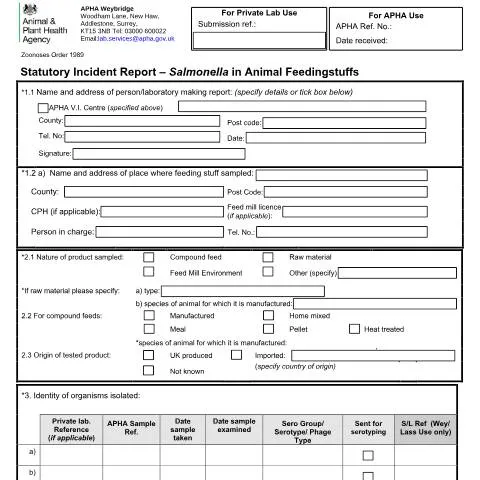
Completing the ZO2 report requires careful attention to detail. Here’s a breakdown of the key sections of the form:
Section 1: Reporting Entity Information
In this initial section, the reporter must provide their name, address, and contact details. Accuracy is paramount as this information will be used for follow-ups.
Section 2: Details of the Feed Sampled
This section requests comprehensive details about the feed in question, including:
- Nature of Product: Indicate whether it's compound feed, raw material, or another type.
- Species of Animal: Specify the target animal population to understand the potential impact.
Section 3: Identification of Isolated Organisms
Here, laboratory test results should be documented. Reporting the serotype of the salmonella isolated is crucial for epidemiological tracking.
Submission Channels Explained
There are various channels through which the ZO2 report can be submitted:
| Submission Method | Advantages | Considerations |
|---|---|---|
| Online Submission | Fast processing; direct access to tracking | Requires internet access; may have technical issues |
| Paper Submission | Accessible for all; no tech required | Longer processing time; potential for postal delays |
| In-person Submission | Immediate confirmation; personal guidance | Travel required; limited operating hours |
Dealing with Errors and Denials
Should a report be denied or deemed incomplete, it’s vital to understand the recourse available. Common issues include missing signatures, incomplete details, or inaccuracies. Here’s what one can do:
- Clarification Requests: Contact APHA for detailed feedback on why the submission was rejected.
- Modify and Resubmit: Address the noted issues and ensure that the form is resubmitted promptly, ideally within specific timelines recommended by the agency.
Documentation and Follow-Up
Retaining copies of all submitted documents is essential for future reference and to support any potential disputes regarding submission statuses.
Profiles of Concerned Parties and Unique Cases
Different stakeholders may find themselves in unique situations requiring tailored approaches. For example:
- Small Farmers: May need specific guidance for reduced reporting requirements.
- Large Manufacturers: Often have dedicated compliance teams but must ensure all staff are trained on proper reporting protocols.
- International Suppliers: Those importing animal feed must also adhere to UK standards, which may involve additional documentation.
Conclusion: The Importance of Compliance
Maintaining compliance with the requirements surrounding the ZO2 report is not merely a bureaucratic obligation; it is a fundamental aspect of ensuring public health and animal welfare. The proactive reporting of suspected salmonella incidents can prevent widespread outbreaks, protect livelihoods, and contribute to safe food systems.
As stakeholders navigate these responsibilities, they should remain informed and vigilant, ensuring that every report is completed with the utmost care. The health of animals, consumers, and the agricultural industry as a whole depends on it.
Understanding Animal Feed Regulations in the UK
The regulation of animal feed in the UK is a critical aspect of agricultural practices and food safety. Under the Animal Feed (Hygiene, Sampling etc.) (England) Regulations 2015, the Department for Environment, Food & Rural Affairs (DEFRA) oversees the production and distribution of animal feed. This includes strict compliance with hygiene standards to prevent contamination, thereby safeguarding both animal health and human food safety.
Producers of animal feed must adhere to the principles laid out in the Feed Hygiene Regulation (EC) No. 183/2005, which ensures that feed is safe, of good quality, and poses no risk to the health of animals and humans. The regulation requires that any business involved in the production, processing, distribution, or trade of animal feed must register with the appropriate authority and be subject to regular inspections. These measures help prevent the introduction and spread of pathogens like Salmonella.
Furthermore, animal feed producers must maintain detailed records of their raw materials and production processes, which should be available for inspection by authorities. This traceability is essential not only for compliance but also for quick response in case of a salmonella outbreak linked to contaminated feed.
Identifying and Reporting Salmonella Contamination in Feed
Salmonella poses a significant risk in animal feed, particularly those containing animal by-products (ABPs). To report suspected salmonella contamination, industry professionals must first understand the signs of contamination in feed. This might include unusual odours, visible mould growth, or even reduced feed consumption by animals.
If you suspect that salmonella is present in a feed product, it’s vital to take immediate action. Document all observations related to the suspected contamination, including lot numbers, packaging details, and any symptoms observed in animals consuming the feed. The next step is to contact the Animal and Plant Health Agency (APHA) to report the findings. They can guide you through the necessary procedures for testing and verification of salmonella presence.
Once a report is made, APHA will advise on the appropriate sampling techniques for suspected feed products. It’s critical to follow their guidance closely to ensure accurate results. In addition, if you are a feed industry operator, you are required to notify the Food Standards Agency (FSA) about any suspected incidents of salmonella, as they will coordinate further investigations and potential recalls.
The Role of Testing Laboratories in Salmonella Surveillance
Testing laboratories play a crucial role in the surveillance of salmonella in animal feed. Accredited laboratories that specialise in veterinary microbiology can perform the necessary tests to confirm the presence of salmonella in feed products. These tests often involve isolating the bacteria from samples and performing further analysis to identify the strain.
Producers and suppliers of animal feed should have relationships with accredited testing laboratories to facilitate prompt and accurate testing of their products. Regular sampling and testing of feed can help in early detection of pathogens, including salmonella. It is advisable to establish a routine testing schedule that aligns with your production cycles, ensuring that any issues can be identified before they impact animal health or food safety.
In cases where salmonella is detected, laboratories will provide detailed reports that can be used to support further investigations and to inform stakeholders about necessary safety measures. Coordination between feed producers, testing laboratories, and regulatory bodies is essential for effective salmonella management within the animal feed industry.