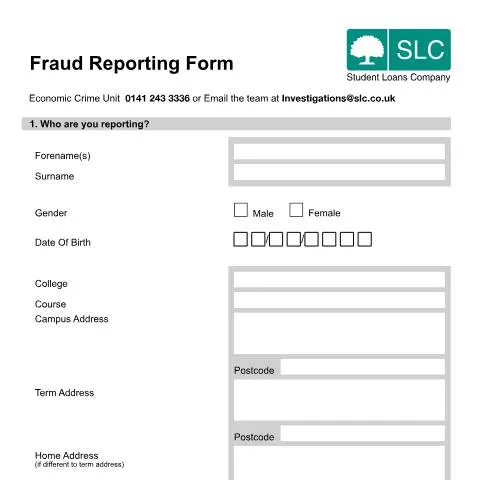
When Financial Misconduct Threatens Student Funding: Understanding the SLC Fraud Reporting Process
Student loan fraud represents a significant threat to the integrity of the UK's higher education funding system, with fraudulent claims potentially costing taxpayers millions annually whilst depriving genuine students of essential financial support. The Student Loans Company operates a dedicated Economic Crime Unit specifically to investigate suspected fraudulent activity, relying heavily on reports from institutions, students, and members of the public to identify and pursue cases of misconduct.
The fraud reporting mechanism serves as a critical safeguard within the student finance ecosystem, enabling the detection of everything from fabricated enrolment records and falsified income declarations to more sophisticated schemes involving multiple identities or organised criminal networks targeting student support systems. Understanding how this reporting process works proves essential for educational institutions, students, and anyone who encounters suspicious activity within the student finance sphere.
Identifying Reportable Fraudulent Activities Within Student Finance
The Student Loans Company's fraud reporting system addresses a broad spectrum of misconduct, ranging from individual student deception to institutional-level irregularities. Identity fraud represents one of the most common categories, where individuals use false or stolen personal information to secure student loans or maintenance grants to which they have no legitimate entitlement.
Educational institutions may encounter students presenting forged documentation to support their applications, including fabricated academic transcripts, falsified residence proofs, or counterfeit identity documents. Similarly, students might misrepresent their course attendance status, continuing to claim funding whilst no longer actively participating in their studies or having transferred to different institutions without proper notification.
Income-related fraud frequently involves students or their families deliberately understating household earnings to qualify for means-tested support, whilst residence fraud occurs when applicants falsely claim to meet UK residency requirements or misrepresent their immigration status to access funding reserved for domestic students.
| Fraud Category | Common Indicators | Typical Impact |
|---|---|---|
| Identity Fraud | Inconsistent personal details, suspicious documentation | Unauthorised funding awards |
| Academic Misrepresentation | False course enrolment, attendance discrepancies | Continued payments after withdrawal |
| Financial Deception | Undeclared income, hidden assets | Excessive means-tested support |
| Institutional Irregularities | Phantom students, inflated enrolment figures | Systematic funding abuse |
Completing the Fraud Report: Section-by-Section Guidance
Subject Identification Requirements
The opening section demands comprehensive identification of the suspected individual or organisation. Forename and surname fields should reflect the name under which the person applied for student finance, even if you suspect this differs from their true identity. When reporting suspected identity fraud, include any alternative names or variations you've encountered in the additional comments section.
The gender specification assists the SLC in cross-referencing records, particularly important given that gender markers appear on official student finance documentation. Date of birth proves crucial for definitively identifying the correct student record, as names alone often prove insufficient given common surname combinations.
Course details should specify the exact programme title as registered with the institution, including any relevant course codes or qualification levels. This information enables the Economic Crime Unit to verify enrolment status and identify potential discrepancies between claimed and actual academic participation.
Address Information and Its Investigative Significance
The multiple address fields serve distinct investigative purposes beyond simple contact information. Campus addresses help verify genuine student residence patterns, whilst term addresses often reveal lifestyle inconsistencies that suggest fraudulent activity. Students claiming financial hardship whilst maintaining expensive accommodation, for instance, may warrant closer scrutiny.
Home addresses become particularly significant when investigating residence-based fraud, as they help establish whether applicants genuinely meet UK residency requirements for student finance eligibility. Discrepancies between declared and actual residence patterns often indicate attempts to circumvent eligibility restrictions.
The organisation address field proves essential when reporting institutional fraud, encompassing everything from legitimate universities engaging in questionable practices to completely fraudulent educational establishments created solely to exploit student finance systems.
Constructing Effective Fraud Allegations: The Evidence Section
The fraud details section represents the most critical component of any report, requiring careful documentation of suspicious activities whilst avoiding speculation or unfounded accusations. Chronological presentation of events typically proves most effective, allowing investigators to understand how fraudulent activity developed and identifying key decision points or red flags.
Specific incidents carry far more investigative weight than general suspicions. Rather than stating "I think this student is lying about their finances," effective reports might specify "Student claimed household income below £25,000 on their application but was observed discussing family business revenues exceeding £100,000 during a recorded seminar discussion on 15th March 2024."
Documentation of witness involvement proves invaluable, particularly when multiple individuals can corroborate suspicious behaviour or provide independent verification of concerning activities. Include names and contact details for potential witnesses, noting their relationship to the suspected fraud and the specific information they might provide.
- Financial inconsistencies: Unexplained wealth relative to declared income
- Academic irregularities: Non-attendance despite continued funding claims
- Documentation anomalies: Suspicious or potentially falsified supporting documents
- Behavioural indicators: Evasive responses to routine administrative queries
- Third-party information: Reports from other students, staff, or external sources
Reporter Anonymity and Contact Protocols
The optional nature of reporter contact details reflects the SLC's recognition that fraud reporting often involves sensitive institutional relationships or personal circumstances. Anonymous reporting remains fully acceptable and receives equal investigative attention, though providing contact information can significantly enhance the investigation process.
When reporters choose to provide their details, the SLC typically maintains confidentiality throughout the investigation process, disclosing reporter identity only when legally required or with explicit consent. Educational staff reporting student fraud often benefit from maintaining communication channels with investigators, as they may observe additional suspicious behaviour during ongoing investigations.
The telephone contact option proves particularly valuable for complex cases requiring clarification or additional detail, whilst email communication allows for the secure transmission of supporting documentation or photographic evidence that supports fraud allegations.
Professional Obligations and Institutional Reporting
University and college staff often face specific professional obligations regarding fraud reporting, particularly when institutional policies mandate disclosure of suspected misconduct. Student finance administrators frequently encounter the first indicators of fraudulent activity through routine application processing or compliance checks.
Academic staff may observe behavioural patterns suggesting fraudulent activity, such as students claiming financial hardship whilst displaying obvious signs of substantial personal wealth. Accommodation officers often identify residence-related fraud through housing application processes that reveal inconsistencies in stated living arrangements.
Supporting Documentation and Evidence Preservation
Whilst the fraud reporting form itself doesn't include document upload functionality, the additional comments section should reference any supporting evidence available to investigators. Photographic evidence of suspicious documents, screenshots of social media posts contradicting declared circumstances, or copies of internal institutional communications may all support fraud allegations.
The Student Support Number or Customer Reference Number field enables direct linkage to existing SLC records, dramatically accelerating the investigation process by providing immediate access to the subject's complete funding history and application details.
When submitting reports via email to the Economic Crime Unit, reporters can attach relevant supporting documentation directly, ensuring investigators receive comprehensive information packages that facilitate thorough case development. Digital evidence should be preserved in its original format when possible, maintaining metadata that might prove crucial during formal investigations.
Remember that effective fraud reporting requires factual accuracy above all else. Investigators rely on precise, verifiable information to build cases that can withstand legal scrutiny and result in successful prosecutions where appropriate.
Investigation Procedures and Outcome Expectations
Following report submission, the Economic Crime Unit conducts preliminary assessments to determine investigation priority and resource allocation. High-value cases involving substantial fraudulent amounts or organised criminal activity typically receive immediate attention, whilst routine cases may undergo initial screening processes before full investigation commencement.
The SLC maintains strict confidentiality throughout investigation processes, rarely providing detailed progress updates to reporters unless their ongoing cooperation proves necessary. Investigation timescales vary significantly depending on case complexity, evidence availability, and the cooperation level of subjects and institutions involved.
Successful investigations may result in various outcomes, from simple funding adjustments and repayment demands to formal criminal prosecutions coordinated with relevant law enforcement agencies. The SLC possesses substantial recovery powers, including the ability to pursue civil debt recovery actions and implement garnishment procedures against fraudulent recipients.
Institutional Consequences and Systemic Improvements
Fraud investigations sometimes reveal systemic weaknesses within institutional processes, leading to enhanced verification procedures or modified application protocols. Educational establishments may face scrutiny regarding their own compliance procedures, particularly when investigations suggest institutional negligence enabled fraudulent activity.
The Economic Crime Unit regularly shares intelligence with other government departments and agencies, contributing to broader efforts to combat benefit fraud and financial crime across the public sector. This collaborative approach helps identify cross-system fraud patterns and develops more effective prevention strategies.
Prevention Through Reporting: Long-term System Protection
Effective fraud reporting serves prevention purposes beyond individual case resolution, contributing to the development of enhanced detection systems and improved application verification processes. Pattern recognition emerging from multiple reports often reveals new fraud methodologies requiring systematic countermeasures.
The SLC uses aggregated reporting data to identify high-risk application characteristics, geographic fraud concentrations, and seasonal fraud patterns that inform resource deployment and prevention strategy development. Educational institutions benefit from this intelligence sharing through updated guidance on fraud indicators and enhanced verification protocols.
Regular fraud reporting also demonstrates the ongoing vigilance of the student finance community, deterring potential fraudsters who recognise the substantial risk of detection and prosecution. The Economic Crime Unit's visible presence and active investigation program serves as a powerful deterrent against opportunistic fraud attempts.
By maintaining robust fraud reporting mechanisms and encouraging community participation in system protection, the Student Loans Company preserves the integrity of student finance arrangements that millions of legitimate students depend upon for their educational advancement and future career development.
Understanding the Investigation Process After Reporting
Once you've submitted a fraud report to the Student Loans Company, understanding what happens next can help set realistic expectations about timescales and outcomes. The SLC operates a structured investigation framework that balances thoroughness with procedural fairness, though the complexity of each case significantly influences processing times.
Initial assessment typically occurs within 10 working days of receipt, during which SLC's Counter Fraud Team reviews the submitted evidence to determine whether the allegations warrant a full investigation. Cases involving straightforward documentation discrepancies—such as mismatched income declarations—may progress more rapidly than complex schemes involving multiple parties or sophisticated identity fraud.
The investigation phase itself can extend from several weeks to many months, particularly where the SLC must coordinate with external agencies. For instance, suspected benefit fraud requires liaison with the Department for Work and Pensions, whilst tax-related irregularities involve HMRC cooperation. Immigration status verification through the Home Office can add considerable time to cases involving overseas students or those with complex visa histories.
During active investigations, the SLC maintains strict confidentiality protocols. Reporters should not expect regular updates unless they've provided contact details and specifically requested feedback. The company's Data Protection obligations under UK GDPR mean that investigation details cannot be shared with third parties, even when they've initiated the report.
Evidence gathering may involve requesting additional documentation from educational institutions, employers, or financial institutions. Students under investigation receive formal notification of the inquiry, including their rights to representation and the specific allegations being examined. This notification period can sometimes prompt voluntary disclosures or payment arrangements that resolve matters without formal sanctions.
Where investigations substantiate fraud allegations, the SLC's response varies according to the severity and value involved. Minor overpayments—perhaps resulting from late-reported income changes—typically result in adjusted repayment schedules rather than formal penalties. However, deliberate deception involving substantial amounts may trigger criminal referrals to the Crown Prosecution Service, particularly where the fraud exceeds £5,000 or involves organised criminal activity.
The SLC also operates a civil recovery process for fraudulent overpayments, which can include interest charges and administrative penalties. These civil sanctions don't require criminal conviction but do follow strict procedural requirements, including the right to independent review and appeals processes.
Protecting Yourself When Making Reports: Legal Safeguards and Potential Risks
Reporting suspected fraud carries both legal protections and potential risks that reporters should understand before proceeding. The Public Interest Disclosure Act 1998 provides comprehensive whistleblower protection for those reporting suspected wrongdoing in good faith, though these protections apply primarily to employment relationships rather than general public reporting.
Good faith reporting—where you genuinely believe fraud has occurred based on reasonable evidence—provides strong legal protection against defamation claims. However, malicious or reckless allegations lacking factual basis could expose reporters to civil liability, particularly where false accusations damage someone's reputation or career prospects.
Documentation of your concerns proves crucial for legal protection. Maintain copies of all evidence that prompted your report, including dates, locations, and circumstances of observed irregularities. This contemporaneous record demonstrates the reasonable basis for your suspicions and supports any subsequent legal defence if challenged.
The SLC's reporting systems include built-in protections designed to minimise reporter exposure. Anonymous reporting options reduce identification risks, whilst the company's investigation protocols ensure that allegations undergo professional assessment before any action affecting the accused individual.
Privacy considerations under UK GDPR mean that reporters should avoid collecting or sharing personal data beyond what's necessary to substantiate their concerns. Accessing someone else's financial documents, student records, or private communications without authorisation could constitute data protection breaches, potentially undermining your report and creating separate legal liability.
Professional obligations may influence your reporting decision, particularly for those working in education, finance, or public services. Many employers maintain specific policies regarding fraud reporting, sometimes requiring internal escalation before external reporting. University staff, for instance, often must report suspected student fraud through institutional channels initially, though this doesn't prevent subsequent SLC reporting if internal processes prove inadequate.
Consider the potential impact on relationships, particularly in educational or workplace settings where ongoing contact with the suspected individual is unavoidable. While legal protections exist, practical considerations around working relationships and community dynamics may influence how and when you choose to report concerns.
Insurance implications deserve consideration for those in professional roles. Professional indemnity policies may provide coverage for legal costs arising from good faith reporting, though policy terms vary significantly. Reviewing your coverage before making reports can provide additional peace of mind.
Special Circumstances and Complex Cases: When Standard Procedures Don't Apply
Certain fraud scenarios require modified reporting approaches due to their complexity, urgency, or involvement of multiple agencies. Understanding these special circumstances ensures appropriate escalation and prevents delays that might compromise investigation effectiveness.
Identity theft cases involving student loan applications demand immediate attention, particularly where fraudsters have used stolen personal details to obtain funding. These situations often require simultaneous reporting to Action Fraud, the national cybercrime reporting centre, alongside SLC notification. The interconnected nature of identity fraud means that student loan abuse frequently accompanies broader financial crimes affecting multiple institutions.
Organised fraud schemes—such as essay mills facilitating academic fraud or immigration consultancies coaching clients on fraudulent applications—present particular challenges requiring coordinated agency response. The SLC works closely with the UK Border Agency, Serious Fraud Office, and regional police forces when tackling systematic fraud operations. Early identification of organised schemes can prevent extensive damage, making prompt reporting particularly crucial.
Cross-border fraud involving students from overseas requires careful handling due to jurisdictional complexities and international cooperation requirements. EU students may benefit from reciprocal arrangements affecting investigation procedures, whilst those from non-EU countries face additional verification challenges through embassy and consular channels.
Emergency situations—such as suspected fraud involving vulnerable individuals or those at risk of harm—may warrant direct police involvement alongside SLC reporting. Domestic violence situations where financial control includes student loan manipulation require sensitive handling through specialist support services rather than standard fraud reporting channels.
Historical fraud cases present unique evidential challenges, particularly where documentation has been lost or individuals have graduated and moved abroad. The SLC maintains investigation capabilities for cases dating back several years, though evidence preservation becomes increasingly difficult with time. Early reporting, even of suspected historical fraud, improves recovery prospects considerably.
Institutional fraud involving educational establishments themselves requires careful navigation of reporting channels. Where universities or colleges are suspected of systematic fraud—perhaps through inflated enrollment figures or fictitious courses—the Office for Students and relevant professional bodies may need notification alongside the SLC. These cases often involve regulatory compliance issues extending beyond simple fraud allegations.
Mental health considerations affect both fraud perpetration and reporting decisions. Students experiencing mental health crises may inadvertently provide incorrect information or fail to update changing circumstances. Distinguishing between deliberate fraud and mental health-related confusion requires careful assessment, sometimes involving medical professionals in the investigation process.
Appeals and review processes operate differently for complex cases, particularly where multiple agencies are involved or where significant sums are at stake. The SLC's standard review procedures may be supplemented by independent assessments or tribunal hearings, depending on the circumstances and amounts involved. Understanding these escalation routes proves valuable when dealing with sophisticated fraud schemes or disputed allegations.