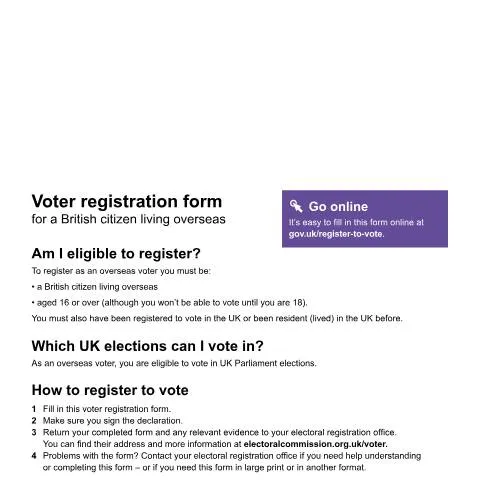
When Distance Separates You from the Ballot Box: Understanding Overseas Voter Registration
Living abroad as a British citizen doesn't mean severing your democratic ties with the UK. Whether you're working in Dubai, studying in Melbourne, or retired on the Costa del Sol, the right to participate in UK Parliament elections remains yours—provided you navigate the registration process correctly. The paper form for overseas voter registration serves as your gateway back to the UK electoral system, but it comes with specific requirements and timelines that can catch the unprepared off guard.
The stakes are particularly high during election periods when registration deadlines loom large. Miss the cut-off, and you'll find yourself watching pivotal political moments unfold from the sidelines, unable to influence outcomes that may directly affect your pension, healthcare access, or even your right to return to the UK. This reality has become increasingly relevant as Brexit reshaped the relationship between Britain and its overseas citizens, making their electoral voice more crucial than ever.
The Digital-First Reality and When Paper Still Matters
The UK government strongly encourages online registration through gov.uk/register-to-vote, positioning the digital route as the primary method. However, the paper form ITR-O-GB remains essential for specific circumstances that the online system cannot accommodate effectively.
Complex documentation requirements often drive overseas voters toward the paper option. When you're dealing with multiple identity verification documents, foreign address formatting that doesn't fit standard UK postcode fields, or situations requiring detailed explanations—such as gaps in your UK residence history—the paper form provides the necessary space and flexibility.
Connectivity issues in certain overseas locations also make paper submission more reliable. Internet infrastructure varies dramatically across countries, and submitting sensitive personal information through potentially unstable connections raises security concerns for many voters. The postal route, while slower, offers certainty that your application reaches the electoral registration office intact.
Regional Variations in Processing
Electoral registration offices across England, Scotland, Wales, and Northern Ireland handle overseas applications differently. Some offices have dedicated teams for international voters, while others process these applications alongside domestic registrations. This disparity affects processing times and the level of guidance available when complications arise.
Eligibility Beyond the Basic Requirements
The fundamental criteria—British citizenship and previous UK residence or registration—mask a more complex eligibility landscape. Your specific circumstances determine not just whether you can register, but which constituency will receive your vote and how long your registration remains valid.
| Scenario | Constituency Assignment | Registration Duration |
|---|---|---|
| Previously registered voter | Last UK registration address | Up to 15 years from departure |
| Left UK under 18, parent registered | Parent's registration address | Up to 15 years from departure |
| Left UK under 18, never registered | Last UK residence | Up to 15 years from departure |
| Crown servant/military | Special provisions apply | Extended eligibility period |
The 15-year limit represents a significant change from previous unlimited overseas voting rights. This deadline creates urgency for long-term expatriates who may lose their voting rights entirely if they don't act promptly. The countdown begins from your departure date, not from when you last voted, making accurate record-keeping crucial.
Complex Family Situations
Young adults who left the UK as children face particular challenges. If you departed at age 16 and your parent was registered at your family address, you can claim that constituency even decades later. However, proving your parent's registration status from abroad requires careful documentation, often involving contact with electoral registration offices that may have undergone multiple reorganisations.
Dual citizenship situations add another layer of complexity. While British citizenship qualifies you for UK voting rights, some countries restrict their citizens from participating in foreign elections. Understanding these restrictions before registering helps avoid potential conflicts with your country of residence.
Mastering the Documentation Maze
The supporting documents system operates on a points-based approach that rewards high-quality identification. List A documents—primarily passports and biometric immigration documents—provide standalone verification. This streamlined approach suits most overseas voters who maintain current UK passports.
List B and C documents create combination requirements that can puzzle applicants. The one-from-B-plus-two-additional rule means you might pair a birth certificate with utility bills and bank statements. However, these documents must originate from UK, Channel Islands, or Isle of Man institutions, creating challenges for long-term overseas residents whose UK financial ties have weakened.
The Evidence Dilemma for Long-Term Expatriates
Citizens who left the UK decades ago often lack the required documentation trail. Bank accounts close, utility companies lose records, and paper documents deteriorate in different climates. The form acknowledges this reality by allowing applicants to proceed without supporting documents, but this route triggers additional verification procedures that extend processing times significantly.
Photocopying requirements deserve careful attention. Electoral registration offices need clear, complete copies that show all relevant information. Partial scans or poor-quality copies lead to delays and requests for resubmission. When dealing with international postal services, these delays compound quickly.
Address Complexities Across International Boundaries
UK electoral systems are built around postcodes and standardised address formats that don't translate well to international locations. Rural addresses in countries without formal postal systems, apartment numbers in high-rise buildings with different numbering conventions, or addresses in languages using non-Latin scripts all create registration challenges.
The correspondence address option provides flexibility for voters whose permanent overseas address poses delivery problems. Using a reliable UK address for electoral correspondence—perhaps a family member's home or a mail forwarding service—ensures you receive polling cards and other electoral materials promptly.
Timing and Geographic Considerations
International postal delivery times vary dramatically. A form posted from Western Europe might reach the UK within a week, while the same document from remote Pacific islands could take a month or longer. Factor in potential postal strikes, customs delays, or regional conflicts that disrupt mail services when planning your submission timeline.
Some countries restrict or monitor outgoing mail to foreign governments. Understanding local postal regulations helps avoid situations where your voter registration form becomes entangled in bureaucratic processes beyond your control.
The Electoral Calendar and Strategic Timing
UK electoral cycles create windows of opportunity and risk for overseas voters. General elections must occur at least every five years, but early dissolution of Parliament can compress registration timelines dramatically. The traditional deadline—11 working days before polling—becomes critical when international postal delays enter the equation.
By-elections pose particular challenges because they're called with shorter notice periods. If your constituency seat becomes vacant, you might have just weeks to complete registration before the replacement election occurs. Monitoring UK political developments helps anticipate these scenarios.
Annual Registration Reviews
Electoral registration offices conduct annual canvasses that can affect overseas voters. If your registration lapses due to non-response to verification requests sent to UK addresses, you'll need to re-register completely. Maintaining current contact information with your electoral registration office prevents these administrative gaps.
The annual review process also provides opportunities to update your overseas address or correct errors in your registration details without submitting an entirely new application.
Processing Realities and Administrative Variations
Electoral registration offices handle overseas applications with varying degrees of sophistication. Urban authorities with large expatriate populations often have streamlined processes and experienced staff. Rural offices might process overseas applications infrequently, leading to longer processing times and requests for additional clarification.
The verification process can involve multiple rounds of correspondence. Initial applications might generate requests for additional documentation or clarification of address details. Each exchange adds weeks to the overall timeline, particularly when international postal services are involved.
When Applications Face Rejection
Common rejection reasons include incomplete documentation, addresses that can't be verified against UK records, or eligibility questions that require further investigation. The appeals process for overseas voters operates under the same legal framework as domestic applications, but practical challenges multiply when you're coordinating from abroad.
Electoral registration officers have discretionary powers to accept alternative evidence or waive certain requirements in exceptional circumstances. Building a constructive relationship with your registration office through clear communication and prompt responses to queries can influence these decisions positively.
Integration with the Broader UK Democratic System
Overseas voter registration connects to wider UK electoral infrastructure in ways that affect your democratic participation beyond just casting ballots. Your registration status influences eligibility for other civic roles, including jury service obligations when you return to the UK and certain public sector employment opportunities.
The registration also creates a formal record of your ongoing connection to the UK, which can prove valuable for future citizenship applications by family members or for demonstrating your intention to return to the UK for tax or legal purposes.
Proxy voting arrangements become crucial for overseas voters who want to participate but cannot guarantee they'll receive postal ballots in time. Setting up a proxy requires additional paperwork and finding a trusted person in your UK constituency willing to vote on your behalf. This relationship must be established well before election periods begin.
Data Protection and International Privacy
The Data Protection Act 2018 and UK GDPR govern how electoral registration offices handle your personal information, but international data transfers add complexity. Understanding how your information flows between UK authorities and any overseas addresses you provide helps you make informed decisions about privacy settings and data sharing preferences.
Some overseas voters prefer to maintain minimal UK data footprints, using only essential contact information and avoiding detailed address sharing. Others embrace comprehensive registration that facilitates other UK government services. The choice affects not just your electoral participation but your broader relationship with UK administrative systems.
Maintaining Your Registration While Living Abroad Long-Term
Your overseas voter registration isn't automatically permanent – it requires active maintenance to remain valid. The Electoral Registration Officer (ERO) in your last UK constituency will periodically review your eligibility, typically through annual canvass letters sent to your overseas address or your appointed representative's UK address.
Annual Canvass Process for Overseas Voters
Each summer, usually between July and October, EROs conduct their annual canvass to update the electoral register. As an overseas voter, you'll receive correspondence asking you to confirm your continued eligibility and current circumstances. This might arrive as a Household Enquiry Form (HEF) or an Individual Electoral Registration (IER) confirmation request.
If you've appointed a representative in the UK, they may receive this correspondence on your behalf. It's crucial they understand their role in forwarding these documents promptly, as delayed responses can result in your removal from the register. The canvass letter will typically ask you to confirm your current overseas address, your continued British citizenship status, and whether you still intend to return to the UK within a reasonable timeframe.
Updating Your Registration Details
Life circumstances change when living abroad, and you must notify your ERO of significant updates. Moving to a new country or changing your overseas address requires immediate notification – failure to do so could mean missing crucial voting materials or canvass correspondence.
If you change your appointed representative, you'll need to complete a new declaration section on form RV2 or submit a separate notification to your ERO. The new representative must provide their consent and understand their responsibilities, including forwarding postal vote materials and maintaining secure storage of your ballot papers.
Marriage, civil partnership, or legal name changes also require notification to ensure your registration remains accurate. You may need to provide supporting documentation, such as a marriage certificate or deed poll, particularly if these changes occurred overseas and need to be verified against UK records.
Consequences of Registration Lapse
If your registration lapses – whether through missed canvass responses, expired eligibility periods, or failure to update details – you cannot vote in UK elections until you re-register. The re-registration process follows the same procedures as initial registration, requiring you to complete form RV2 again and provide fresh supporting evidence.
This can be particularly problematic if a snap election is called with minimal notice. General elections must be held with at least 25 working days' notice, but by-elections or referendums may have shorter timeframes. If you're not registered when the election is called, you cannot participate, even if you subsequently submit an urgent registration application.
Special Circumstances and Complex Cases
Certain situations create additional complexity for overseas voter registration, requiring careful consideration of eligibility rules and documentation requirements. Understanding these scenarios helps ensure your registration remains valid and your voting rights are protected.
Crown Servants and Their Families
Crown servants – including diplomatic staff, armed forces personnel, and certain civil servants – have special provisions under overseas voting legislation. If you're a Crown servant posted abroad, you may register as an overseas voter even if you were never previously registered in a UK constituency, provided you can demonstrate a qualifying connection to a particular area.
This qualifying connection might be through previous residence, family ties, or educational history in a specific constituency. You'll need to provide detailed evidence of this connection when completing form RV2, including documentation such as tenancy agreements, council tax records, or educational certificates showing your link to the area.
Spouses, civil partners, and dependent children of Crown servants also benefit from these provisions. If you're married to or in a civil partnership with a Crown servant, you can register in the same constituency as your partner, even if you have no personal connection to that area. Children can register once they reach 16 (for the electoral register) or 18 (to actually vote), using their parent's qualifying connection.
Students Studying Overseas
British students studying abroad face unique considerations for voter registration. If you're temporarily overseas for education but maintain strong ties to the UK – such as a family home, UK bank accounts, or intentions to return after graduation – you may qualify as an overseas voter rather than simply maintaining your existing UK registration.
The key distinction lies in your circumstances and intentions. Students who maintain a UK address (such as a family home) and return regularly during holidays might choose to remain on the register at that address. However, if you've moved abroad more permanently for extended study programs, overseas registration might be more appropriate.
Gap year students present another complex case. If you're taking a gap year abroad before university, during studies, or after graduation, your registration options depend on your specific circumstances and the duration of your absence. Short-term travel (under 12 months) might not require overseas registration, while longer periods typically do.
Dual Nationals and Multiple Citizenships
Holding multiple nationalities can complicate overseas voter registration. While British citizenship is the primary requirement, some countries restrict political participation by their citizens in foreign elections. You should verify whether your host country's laws permit you to vote in UK elections as an overseas voter.
Additionally, if you hold citizenship of your country of residence, local authorities might question your temporary status or intentions to return to the UK. This is particularly relevant for the "reasonable timeframe" requirement – if you've acquired permanent residency or citizenship elsewhere, demonstrating continued connection to the UK becomes more challenging.
Documentary evidence becomes crucial in these cases. You might need to provide evidence of ongoing UK ties, such as property ownership, pension arrangements, family connections, or professional obligations that demonstrate your intention to return within a reasonable period.
Technical Requirements and Document Handling
Successfully completing form RV2 requires attention to technical details that can make the difference between acceptance and rejection of your application. Understanding these requirements helps avoid common pitfalls that delay or prevent registration.
Signature and Identity Verification Standards
Your signature on form RV2 serves as a crucial identity verification tool, particularly important given the remote nature of overseas applications. The signature you provide will be used to verify your identity for future voting materials, so consistency is essential.
Use the same signature style you employ on official documents such as your passport or driving licence. Avoid elaborate flourishes or significant variations from your usual signature, as these can cause verification problems later. If your signature has changed significantly since your passport was issued (due to injury, age, or personal preference), consider including a brief explanatory note with your application.
The witness signature requirements are equally stringent. Your witness must be someone who knows you personally and can verify your identity – they cannot be a family member or someone living at the same address. Acceptable witnesses typically include professionals such as doctors, teachers, solicitors, or chartered accountants, but local variations exist between different EROs.
Address Formatting and Postal Considerations
Correctly formatting your overseas address prevents postal delays and ensures you receive voting materials reliably. Use the local postal format for your country of residence, but ensure it's clearly legible to UK postal workers who will be sending materials to you.
Include your full postal code or zip code, and consider adding the country name in both English and the local language if different. Some EROs recommend including telephone numbers or email addresses as backup contact methods, though these aren't mandatory fields on form RV2.
If you live in an area with unreliable postal services, consider using a more reliable address such as your workplace, a friend's address, or a postal forwarding service. However, you must have legitimate access to this address and be able to collect mail promptly, as voting deadlines are strict.
Supporting Documentation Standards
When providing supporting documentation, quality and clarity are paramount. Photocopies must be clear and legible – blurred or faded copies may be rejected. If submitting copies of passport pages, ensure all text and photographs are clearly visible.
For documents in foreign languages, certified English translations may be required. Contact your ERO to confirm their specific requirements, as policies vary between different registration areas. Some EROs accept sworn translations from qualified translators, while others may require official consular translations.
Original documents should never be sent unless specifically requested, as postal systems can be unreliable and replacement documents may be difficult to obtain while overseas. Keep copies of everything you submit for your own records, including the completed form RV2 itself.
Timing and Deadline Management
International postal delays can significantly impact your registration timeline. While there's no specific deadline for overseas voter registration outside of election periods, applications must be received and processed before any election you wish to participate in.
Plan for potential delays by submitting your application well in advance of any anticipated elections. General elections typically occur every five years, but snap elections can be called with minimal notice. Local elections, mayoral elections, and referendums follow their own schedules and may provide limited registration opportunities.
Consider using tracked postal services or courier delivery for your application, particularly if you're applying close to an election period. While this incurs additional cost, it provides certainty about delivery and can prevent your application from being lost in international mail systems.
Some EROs accept scanned applications by email for initial processing, followed by original documents by post. This can significantly reduce processing times, but confirm whether your specific ERO offers this service before relying on it for time-sensitive applications.