Navigating the MR08: A Vital Step for Companies without an Instrument
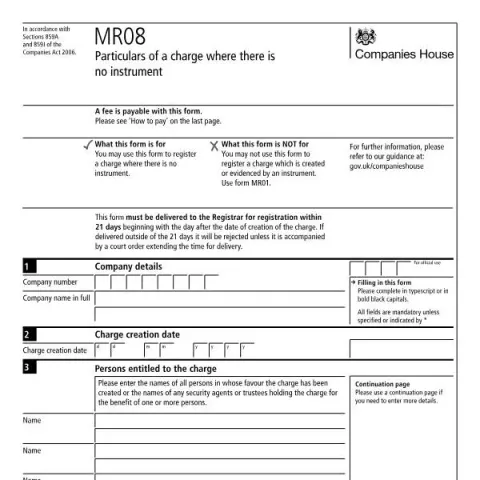
When a company takes on debt or secures obligations with its assets, proper documentation is crucial. The MR08 form, officially titled "Register a charge where there is no instrument," provides a pathway for companies to register these charges in the absence of formal documentation. Understanding the nuances of this document can prevent costly missteps and ensure compliance with the Companies Act 2006.
Understanding the Context of the MR08 Form
The MR08 form is specifically designed for situations where a charge is created but not evidenced by a formal instrument. This can often occur in less conventional financing arrangements or agreements that lack written contracts. By filing the MR08, a company can officially notify the registrar at Companies House of the charge.
The Importance of Timely Filing
Timeliness is of the essence when it comes to filing the MR08. The form must be delivered to the Registrar within 21 days of the charge's creation. Failing to meet this deadline can result in rejection unless accompanied by a court order that extends the filing deadline. This adherence to the timeline is critical for maintaining the validity of the charge against the company's assets.
Who Is Responsible for Filing the MR08?
The responsibility to file the MR08 typically falls on the company itself or an appointed officer, such as a director or secretary. However, anyone with an interest in the charge can authenticate the form. It is essential that the individual filling out the document understands the implications of the charge being registered, as well as their responsibilities under the Companies Act.
Distinctive Features of the MR08 Compared to Similar Forms
While there are various forms associated with charges at Companies House, it’s essential to recognize what sets the MR08 apart. For instance, if a charge is created or evidenced by an instrument, the correct form to use is MR01. The MR08 is strictly for circumstances where no formal instrument exists. This specificity helps avoid confusion and ensures that the correct procedures are followed.
Comparative Table of Related Forms
| Form Code | Purpose | Applicable Situations |
|---|---|---|
| MR08 | Register a charge where there is no instrument | When charges are agreed but lack formal documentation |
| MR01 | Register a charge created or evidenced by an instrument | When formal documentation exists for the charge |
| MR06 | Statement of particulars of a charge | To file obligations secured by a registered charge |
Essential Information Required to Complete the MR08
Completing the MR08 form requires diligence and accuracy. It is imperative to fill out the document using typescript or bold black capitals, ensuring clarity and readability. Below are the key sections that must be completed:
Mandatory Fields
- Company Name and Number: Ensure that these details match the records at Companies House to avoid complications.
- Charge Creation Date: The date must be entered in the format dd/mm/yyyy.
- Persons Entitled to the Charge: List all individuals or entities that have a legal interest in the charge.
- Description of the Charge: Provide a clear and concise description of the nature of the charge and the property or undertaking involved.
- Obligations Secured: Detail the obligations that are secured by the charge.
Checklist for Completing the MR08
To facilitate a smooth filing process, consider following this checklist prior to submission:
- Verify that company details match those on the public register.
- Confirm the charge creation date is accurately recorded.
- Ensure all names of entitled persons are listed.
- Describe the charge and property comprehensively.
- Detail the secured obligations clearly.
- Authenticate the form properly.
- Include the required fee of £24.
What to Do If You Encounter Issues with the MR08
It is not uncommon to encounter issues during the filing process. Whether it’s an incomplete form, missing information, or an error in the details provided, knowing the appropriate course of action is essential.
Addressing Rejections or Errors
If your MR08 submission is rejected, you will typically receive a notification detailing the reasons for the rejection. It is vital to rectify the issues promptly. Here's a step-by-step approach:
- Read the rejection notice carefully to understand the specific reasons.
- Gather the necessary documentation or information needed to correct the mistakes.
- Resubmit the MR08 with the correct information promptly. Remember to file it within the stipulated time frame if you wish to maintain the charge's validity.
Integrating the MR08 into Broader Administrative Procedures
Filing the MR08 is often just one component of a larger administrative process involving company finance and compliance. Understanding how this form fits within the overall corporate governance framework is crucial.
Connecting with Other Forms and Regulations
In addition to filing the MR08, companies may need to consider filing additional forms such as the MR06 to detail obligations secured by the registered charge. Keeping abreast of all regulatory requirements under the Companies Act 2006 is vital for maintaining compliance.
Common Situations Requiring the MR08
There are various scenarios in which a company might need to register a charge using the MR08:
- Startups Seeking Financing: A new company may take on a loan secured by its assets without formal instruments.
- Restructuring Debt: Companies revising their debt agreements may need to register new charges.
- Corporate Mergers or Acquisitions: In complex corporate transactions, charges may be created without formal documentation.
Final Steps: Submission and Payment Details
Once the MR08 form is completed accurately, the next step involves submission and payment. Companies House offers different channels for filing, and understanding these can save time.
Filing Methods
- Online Submission: Certain forms can be uploaded directly to Companies House via their official website.
- Paper Submission: If filing by post, ensure you send the form to the correct address to avoid delays.
Payment Procedures
A fee of £24 must be included with the MR08 submission. Payments can be made via cheque or postal order, made out to 'Companies House.'
Important Considerations for Filing
When preparing for the submission:
- Double-check all entries for errors or omissions.
- Confirm the resolution or agreement authorizing the charge is properly documented, if applicable.
- Save copies of all submitted documents for your records.
Leveraging Resources for Additional Support
Filing the MR08 doesn't have to be a daunting task. Various resources are available to assist in understanding and completing the form correctly. Companies House provides guidance notes on their website, and reaching out to legal or financial advisors can also provide clarity on the charge registration process.
Resourceful Links
While specific advice should always be tailored to individual circumstances, utilizing the resources available from Companies House can guide you effectively:
- Visit the Companies House website for comprehensive guidance.
- Contact the Companies House helpline for personalized inquiries.
Ultimately, filling out and submitting the MR08 form is a critical administrative duty for companies. By understanding its purpose, requirements, and implications, you can navigate the intricacies of corporate finance with confidence.
Understanding the MR08 Form: Key Considerations
When dealing with the registration of a charge without an instrument, understanding the MR08 form is paramount. This form is a mechanism for notifying Companies House about a charge when no formal written instrument exists. A charge, often referred to in financial contexts, represents a form of security interest over an asset. To ensure proper registration and compliance, it’s essential to recognize the nuances associated with the MR08 process.
Typically, charges can arise from various arrangements, including, but not limited to, mortgages, loans, or even informal agreements that create a security interest. In the absence of a formal instrument, the MR08 form allows companies to clarify the nature of the charge and the parties involved, enabling proper legal protection and priority ranking of creditors. This process is particularly relevant in situations where a charge is created informally or through actions that do not produce a written instrument, such as verbal agreements or deeds not executed in the proper form.
Fill in your form directly online
No printing: type your details into the boxes of the official form, tick, then download the PDF ready to send.
- 1Type into the form boxes
- 2Tick in one click
- 3Save and download the PDF
When preparing the MR08 form, companies must clearly outline the details of the charge. Key information required includes the name and registered number of the company, a description of the charge, and details regarding the nature of the arrangement that led to the charge. It's worth noting that the form must be submitted to Companies House within 21 days of the charge being created to avoid penalties or the risk of the charge being deemed unenforceable. This timeline is critical for ensuring that the interests of the charge holder are protected, particularly in cases where other creditors may be involved.
Common Pitfalls and How to Avoid Them
While submitting the MR08 form is fundamentally straightforward, there are several pitfalls that companies often encounter during the process. These can lead to registration delays, penalties, or even the invalidation of the charge itself. Understanding these common mistakes can simplify the submission process and safeguard your company's interests.
One frequent issue is the lack of adequate identification of the charge. Companies must describe the charge explicitly and provide sufficient detail regarding the assets involved. Vague or ambiguous descriptions can lead to disputes and challenges from other creditors. Additionally, ensuring that the correct company information is provided is crucial; errors in the name or registration number can result in the form being rejected by Companies House.
Moreover, companies often underestimate the importance of timeliness. As previously mentioned, the MR08 form must be submitted within 21 days of the charge being created. However, many businesses mistakenly assume that this deadline is flexible. Failure to adhere to this timeline can result in the charge being rendered ineffective against subsequent creditors. To mitigate this risk, companies should establish internal processes for tracking charge creation and registration deadlines.
Another common oversight involves the signatures required on the MR08 form. The form must be signed by a director or secretary of the company, and if there are multiple signatories, it is essential to ensure that all required signatures are obtained. Missing signatures can lead to delays and additional complications in the registration process.
Impact of Non-Compliance with MR08 Regulations
Failing to comply with MR08 regulations can have significant repercussions for a company. The implications of not properly registering a charge can extend beyond mere administrative penalties; they can also jeopardise the company's financial standing and its relationships with creditors.
One of the most serious consequences of non-compliance is the risk of losing priority in the event of insolvency. If a charge is not registered properly, it may be considered void against the liquidator or administrator of a company. This means that creditors with superior claims may take precedence over those who have failed to register their charges, resulting in potential financial loss.
Additionally, failure to submit the MR08 within the stipulated time frame may lead to legal challenges from other creditors who may argue that their interests are compromised. Such situations can result in costly legal disputes and erode trust with financial partners, potentially affecting future financing opportunities.
Moreover, companies that repeatedly fail to comply with registration requirements may find themselves subject to increased scrutiny from regulatory bodies. This could lead to not only financial penalties but also reputational damage, impacting the company's standing within the industry and with customers. It's clear that adherence to MR08 regulations is not just a matter of form-filling; it is integral to maintaining the financial health and integrity of a business.