Brexit's Impact on British Fishermen: Navigating EU Landing Requirements
Since the UK's departure from the European Union, British fishing vessels face a complex web of new administrative obligations when seeking to land their catch in EU designated ports. The prior notification requirement represents one of the most significant operational changes for the fishing industry, transforming what was once a straightforward domestic operation into an international procedure requiring meticulous documentation.
This notification system, administered through the Marine Management Organisation under the Department for Environment, Food & Rural Affairs, serves as the gateway for British flagged vessels to access EU markets. The process reflects the EU's commitment to combating illegal, unreported and unregulated (IUU) fishing whilst maintaining traceability throughout the seafood supply chain.
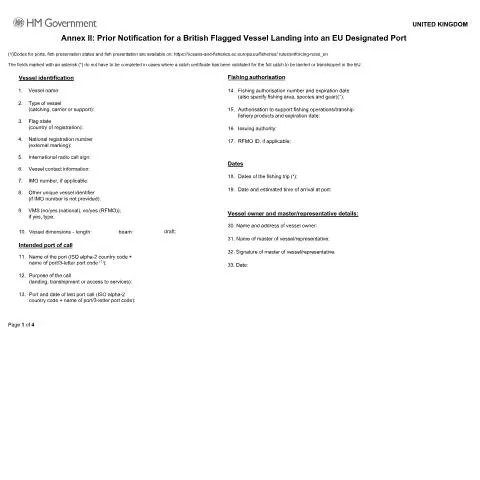
The four-page Annex II form has become the essential document bridging British fishing operations with European market access, yet its complexity often catches operators unprepared. Understanding its requirements isn't merely about compliance—it's about preserving commercial relationships that sustain coastal communities across the UK.
Vessel Categories and Their Distinct Obligations
The notification requirements vary significantly depending on vessel classification, with the form distinguishing between catching vessels, carrier vessels, and support vessels. Each category faces different scrutiny levels and documentation requirements when approaching EU ports.
Catching vessels—those actively engaged in fishing operations—must provide comprehensive catch data including species composition, fishing areas, and preservation methods. The form demands specific FAO alpha-3 codes for each species, requiring operators to familiarise themselves with international classification systems that may differ from traditional UK naming conventions.
Carrier vessels, which transport catch from fishing vessels without engaging in fishing activities themselves, face unique challenges around transhipment documentation. These vessels must detail any mid-sea transfers, including precise coordinates and dates, creating potential complications for operators managing complex supply chains across international waters.
| Vessel Type | Primary Documentation Focus | Additional Requirements |
|---|---|---|
| Catching Vessel | Catch composition and fishing areas | Fishing authorisation details, gear specifications |
| Carrier Vessel | Transhipment records and cargo manifest | Source vessel identification, transfer locations |
| Support Vessel | Service provision documentation | Operational authorisation, client vessel details |
Support vessels, providing services such as fuel, provisions, or technical assistance, must demonstrate legitimate operational purposes. The EU's heightened vigilance around potential circumvention of fishing quotas means support vessels face increased scrutiny regarding their actual activities and client relationships.
Decoding the Technical Infrastructure Requirements
The form's technical specifications reflect the EU's sophisticated monitoring approach, demanding precise vessel identification across multiple international systems. The International Maritime Organisation (IMO) number serves as the primary identifier for larger commercial vessels, but smaller fishing boats often lack IMO registration, necessitating alternative identification methods.
For vessels without IMO numbers, operators must provide other unique vessel identifiers, typically the Lloyd's Register number or similar classification society designation. This requirement frequently puzzles smaller operators whose vessels may never have required such international registration, highlighting the gap between traditional UK fishing practices and new EU expectations.
The Vessel Monitoring System (VMS) requirements present another layer of complexity. Operators must specify whether their vessel carries national VMS equipment, Regional Fisheries Management Organisation (RFMO) systems, or both. The distinction matters significantly—EU authorities use VMS data to verify fishing activities and track vessel movements, making accurate reporting essential for avoiding compliance issues.
Vessel dimensions—length, beam, and draft—require precise measurement in metres, not the traditional feet and inches still common in British maritime circles. This seemingly minor detail can cause delays if measurements don't align with official vessel documentation, particularly for older vessels where records may use imperial measurements.
Fishing Authorisation: The Heart of Compliance
The fishing authorisation section represents the most scrutinised element of the notification process, where British vessels must demonstrate their legal right to fish in specific areas and target particular species. Post-Brexit arrangements have created a complex patchwork of licensing requirements that vary by fishing zone and target species.
British vessels fishing in UK waters but landing in EU ports must provide their UK fishing licence number along with specific details about authorised fishing areas, permitted species, and approved gear types. The challenge lies in translating UK licensing terminology into EU-compatible formats, particularly where fishing areas cross multiple jurisdictions.
For vessels that have been fishing in EU waters under quota arrangements or specific agreements, additional documentation becomes necessary. These vessels must provide RFMO identification numbers where applicable, particularly for highly migratory species like tuna that fall under international management regimes.
The expiration date requirement demands careful attention—EU authorities will reject notifications for vessels whose fishing authorisations have expired, even if renewal is pending. This creates operational challenges for vessels whose fishing trips span licence renewal periods, requiring careful voyage planning around administrative timelines.
Special Considerations for Multi-Zone Operations
Vessels operating across multiple fishing zones face particular complexity in completing authorisation details. Each fishing area may require separate authorisation references, and the form must clearly distinguish between different licensing authorities and their respective jurisdictions.
The International Council for the Exploration of the Sea (ICES) subdivision system, used for area reporting, differs from traditional UK fishing area designations. Operators must translate their fishing locations into ICES terminology, requiring familiarity with international maritime boundary definitions that may not align with historical fishing grounds.
Catch Documentation: Precision in Numbers and Classifications
The catch reporting section demands unprecedented precision in species identification and weight calculations, moving far beyond traditional market-based classifications. The requirement for FAO alpha-3 codes forces operators to adopt international scientific nomenclature, where common names like "cod" become "COD" and regional variations must be precisely classified.
Weight reporting presents multiple challenges, particularly the distinction between live weight, landed weight, and net weight. Live weight refers to the fish's weight when caught, landed weight includes processing and ice, while net weight excludes packaging and preservation materials. These distinctions directly impact quota calculations and market valuations.
The presentation and preservation codes reference a complex European classification system covering everything from fresh whole fish to frozen fillets. Operators must specify processing states using standardised codes that may not reflect traditional British market categories, requiring translation between commercial practices and regulatory requirements.
For mixed catches—common in multi-species fisheries—each species requires separate reporting lines with individual area and weight details. This granular approach can result in extensive documentation for vessels targeting diverse species assemblages, particularly in areas where fishing patterns don't align with EU reporting expectations.
Zero Reporting and Negative Catches
The form explicitly accommodates zero reporting situations where vessels enter EU ports without commercial catches. This might occur for vessels seeking refuge from weather, requiring emergency services, or conducting non-fishing operations. Zero reports still require complete vessel identification and voyage details, maintaining the audit trail EU authorities demand.
Vessels that have experienced gear loss, regulatory closures, or other circumstances resulting in no retained catch must still complete the notification process. The zero reporting mechanism protects operators from accusations of failing to declare catches whilst maintaining transparency about vessel movements and activities.
Transhipment Operations: Managing Complex Supply Chains
Transhipment reporting represents one of the form's most technically demanding sections, reflecting EU concerns about supply chain integrity and quota compliance. Vessels involved in at-sea transfers must document every exchange with precision that matches international anti-IUU fishing protocols.
The requirement to specify area or port of transhipment demands precise coordinate reporting for at-sea transfers or specific port codes for harbour-based operations. This level of detail enables EU authorities to cross-reference activities with other vessels and verify the legitimacy of catch transfers.
Date and time reporting for transhipment operations must align with Coordinated Universal Time (UTC) standards, avoiding confusion from local time variations. Operators must maintain precise logs of transfer activities, as discrepancies between reported times and other vessel movements can trigger compliance investigations.
Transhipment authorisation requirements vary by flag state and fishing area, with some regions requiring advance approval for any cargo transfers. British vessels must ensure their transhipment activities comply with both UK regulations and the requirements of the area where transfers occur, creating potential conflicts between different regulatory regimes.
Digital Submission and Processing Timelines
While the physical form provides the documentation framework, actual submission occurs through digital channels managed by the Marine Management Organisation. The electronic submission system requires operators to upload completed forms along with supporting documentation, creating a digital audit trail for EU authorities.
Processing timelines vary by destination port and catch composition, with high-risk vessels or suspicious catch patterns subject to extended review periods. Standard notifications typically receive responses within 24-48 hours, but complex cases involving multiple species or transhipment operations may require several days for approval.
The notification must be submitted before departure from the fishing area or previous port, not upon arrival at the EU destination. This timing requirement forces operators to complete documentation while still at sea or in port, often under challenging conditions that don't favour detailed paperwork.
EU port authorities maintain the right to request additional documentation or clarification even after initial approval, potentially delaying landing operations. Operators should prepare comprehensive supporting documentation beyond the basic form requirements, anticipating potential queries about fishing activities, catch composition, or vessel movements.
Enforcement Consequences and Commercial Implications
Non-compliance with prior notification requirements carries significant penalties ranging from landing delays to complete market exclusion. EU authorities can refuse port access to vessels with incomplete or inaccurate notifications, forcing operators to seek alternative landing arrangements that may compromise catch quality and commercial value.
Repeated compliance failures can result in vessels being flagged in EU databases, subjecting them to enhanced scrutiny for future port calls. This escalation can effectively exclude operators from EU markets, devastating businesses dependent on European seafood demand.
The commercial implications extend beyond immediate penalties—buyers increasingly demand compliance documentation as part of their own due diligence processes. Market access depends not just on regulatory approval but on demonstrating systematic compliance that supports buyer confidence and supply chain integrity.
Insurance implications also merit consideration, as some marine insurance policies now include compliance requirements for international operations. Vessels failing to meet notification requirements may find themselves without coverage for related losses, compounding the financial risks of non-compliance.
For British fishing operators, mastering this notification process represents more than bureaucratic compliance—it's essential for maintaining the European market relationships that underpin the industry's economic viability. Success requires treating the form not as an administrative burden but as a commercial tool for demonstrating professionalism and regulatory awareness in an increasingly complex international environment.
Vessel Monitoring System (VMS) Requirements and Compliance
Beyond basic prior notification, UK fishing vessels operating in EU waters must maintain continuous compliance with Vessel Monitoring System requirements, which serve as a crucial component of fisheries enforcement and stock management. The VMS operates as an automated satellite-based tracking system that transmits your vessel's position, course, and speed to both UK authorities and relevant EU coastal states at regular intervals.
For vessels over 12 metres in length, VMS equipment installation is mandatory before entering EU waters. The system must be type-approved by the Marine and Coastguard Agency (MCA) and capable of transmitting position reports every two hours when fishing, or every four hours when steaming. However, some EU member states impose stricter reporting frequencies—French waters, for instance, may require hourly transmissions in certain protected zones.
The technical specifications for VMS equipment are stringent and non-negotiable. Your system must use Inmarsat-C satellite communication technology and be tamper-proof, with sealed antenna connections and protected power supplies. Any attempt to interfere with VMS functionality constitutes a serious offence under both UK and EU regulations, potentially resulting in vessel detention and substantial penalties.
Vessel operators must understand that VMS data serves multiple purposes beyond basic position monitoring. EU authorities use this information to verify compliance with fishing area restrictions, monitor effort limitations in quota-managed fisheries, and cross-reference vessel movements with logbook entries. Discrepancies between VMS tracks and declared fishing activities can trigger investigations and may be used as evidence in enforcement proceedings.
In the event of VMS equipment failure, immediate notification protocols become critical. You must contact the UK Fisheries Monitoring Centre within four hours of discovering any malfunction, providing details of the technical issue and your vessel's last known position. Simultaneously, you must inform the relevant EU coastal state authority if operating within their waters. Continued fishing with defective VMS equipment is generally prohibited, though some member states may grant temporary exemptions for vessels returning directly to port for repairs.
The data transmission requirements extend beyond simple position reporting. Modern VMS systems must also relay vessel identification codes, including your UK fishing vessel licence number and international radio call sign. Some EU waters require additional data fields, such as fishing gear deployment status or catch composition indicators, transmitted through enhanced VMS protocols.
Cross-Border Enforcement Mechanisms and Penalty Frameworks
The enforcement landscape for UK vessels fishing in EU waters operates through a complex web of bilateral agreements, joint patrol arrangements, and harmonised penalty structures that can significantly impact your fishing operations and business viability. Understanding these mechanisms is essential for maintaining compliance and avoiding potentially severe financial consequences.
EU member states retain primary jurisdiction over fisheries enforcement within their territorial waters and exclusive economic zones, but cooperation agreements with UK authorities ensure that violations can be pursued through multiple channels. When a UK-flagged vessel commits an apparent infringement in EU waters, the coastal state may issue immediate penalties, detain the vessel, or refer the matter to UK authorities for action under domestic legislation.
The penalty frameworks vary considerably between EU member states, reflecting different legal traditions and enforcement priorities. French authorities, for example, operate under administrative penalty systems that can impose fines of up to €22,500 for serious quota violations, while also having powers to confiscate catch and fishing gear. Spanish enforcement focuses heavily on technical conservation measures, with penalties for mesh size violations potentially reaching €60,000 for repeat offenders.
Joint inspection programmes between UK and EU authorities create additional complexity in enforcement scenarios. Under the Trade and Cooperation Agreement, EU inspectors may board UK vessels in certain circumstances, while UK fisheries protection vessels maintain limited patrol rights in agreed areas. These joint operations require careful coordination to avoid jurisdictional conflicts and ensure that evidence gathering meets both UK and EU legal standards.
The mutual recognition of penalties represents a significant development in cross-border enforcement. UK authorities are generally required to enforce penalty notices issued by EU member states against UK-flagged vessels, provided the penalties meet certain procedural standards and proportionality requirements. This means that a fine imposed by Irish authorities for logbook violations will likely be pursued through UK courts if the vessel operator fails to pay within the specified timeframe.
Administrative cooperation extends to licence suspension and fishing ban enforcement. If an EU member state suspends a UK vessel's fishing rights within their waters due to serious violations, this information is shared with UK authorities and may influence future licence renewals or quota allocations. Some member states maintain vessel blacklists that can effectively bar non-compliant operators from accessing their fishing grounds for extended periods.
The appeals process for enforcement actions varies significantly depending on the issuing authority and the nature of the violation. EU member states must provide clear information about appeal rights and procedures, typically allowing 30 to 60 days for formal challenges. However, appeals often must be lodged in the local language and follow domestic legal procedures, potentially requiring specialist legal representation familiar with the relevant member state's administrative law.
Species-Specific Notification Protocols and Conservation Measures
Different fish species and fishing activities trigger distinct notification requirements and operational restrictions when fishing in EU waters, reflecting the complex patchwork of conservation measures designed to protect vulnerable stocks and marine ecosystems. These species-specific protocols often override general notification procedures and can significantly affect your fishing strategy and operational planning.
For highly regulated species such as bluefin tuna, the notification requirements extend far beyond basic prior notification to encompass detailed catch documentation, observer coverage, and real-time reporting obligations. UK vessels targeting bluefin tuna in EU waters must obtain specific authorisation from both UK authorities and the relevant coastal state, typically requiring 72 hours advance notice and detailed fishing plans including proposed gear configurations and fishing areas.
Deep-sea species subject to EU conservation measures require particularly rigorous notification procedures. When targeting species such as orange roughy, black scabbardfish, or deep-sea sharks, vessels must provide detailed information about intended fishing depths, gear specifications, and expected catch composition. Many EU member states require scientific observer coverage for deep-sea fishing operations, with observer costs typically borne by the vessel operator.
The European eel regulations impose some of the most complex notification requirements in EU fisheries management. UK vessels engaged in eel fishing must navigate a maze of seasonal closures, size restrictions, and quota limitations that vary between river basins and member states. Glass eel fishing, in particular, requires specific licences and detailed reporting of catch quantities, with some areas requiring daily catch reports during the fishing season.
Pelagic fisheries targeting species such as mackerel, herring, and horse mackerel operate under sophisticated quota management systems that influence notification requirements. These fisheries often involve large-scale operations with multiple vessels working cooperatively, requiring coordinated notification procedures and shared quota allocations. The timing of notifications becomes critical in pelagic fisheries, as quota exhaustion can occur rapidly and may trigger immediate fishing prohibitions.
Marine protected area designations add another layer of complexity to species-specific protocols. Natura 2000 sites, marine conservation zones, and fisheries restricted areas each impose distinct notification requirements and operational limitations. Some protected areas require environmental impact assessments for certain fishing activities, while others mandate gear modifications or seasonal fishing restrictions that must be detailed in prior notifications.
The emerging focus on ecosystem-based fisheries management has introduced new notification requirements related to bycatch reporting and habitat protection measures. UK vessels operating in EU waters must increasingly demonstrate compliance with technical conservation measures designed to minimise impacts on non-target species and sensitive marine habitats. This includes detailed reporting of discards, compliance with real-time closure systems, and participation in industry-science partnerships for data collection.
Genetic sampling and tagging programmes for certain species create additional operational requirements that must be incorporated into notification procedures. Scientific sampling programmes for stocks such as cod, sole, and plaice may require vessels to accommodate researchers or follow specific protocols for biological sample collection, with these activities requiring advance coordination through official notification channels.