Vital Role of the Ship Supplies Declaration in Maritime Operations
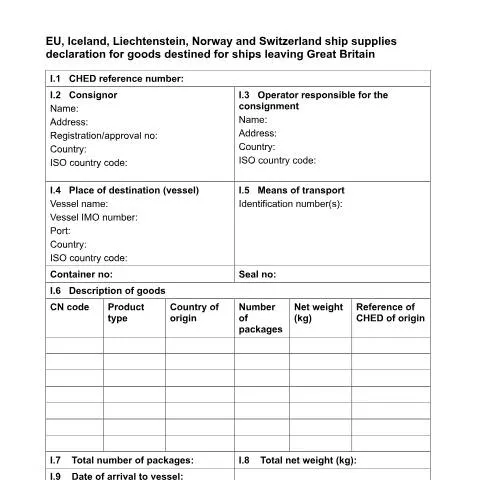
In the realm of maritime regulations, the EU, Iceland, Liechtenstein, Norway and Switzerland ship supplies declaration serves as a critical document. This declaration is not merely bureaucratic paperwork; it ensures that supplies destined for ships leaving Great Britain comply with specific regulatory standards. The declaration enables effective tracking of goods meant for maritime transport, thus playing a pivotal role in trade security and compliance with international law.
Understanding the Context and Importance
When goods are transported to vessels bound for international waters, it’s essential to provide detailed information about these supplies. The Department for Environment, Food & Rural Affairs (DEFRA) has set forth the guidelines governing the use of this declaration. This document is particularly important for maintaining the integrity of the supply chain and ensuring safety and compliance with customs regulations.
Distinguishing the Ship Supplies Declaration from Other Forms
This document is part of a broader range of customs and shipping forms that can often lead to confusion among operators. It’s essential to distinguish the ship supplies declaration from other similar forms, such as the Customs Declaration Service (CDS) or the Entry Summary Declaration (ENS).
- Ship Supplies Declaration: Specifically for goods loaded onto ships for consumption on board.
- Customs Declaration Service (CDS): Used for the import and export of goods and customs duties.
- Entry Summary Declaration (ENS): Requires details about goods entering the EU from a non-EU country.
The unique purpose of the ship supplies declaration focuses exclusively on the supplies being loaded onto vessels, ensuring compliance with maritime regulations that govern the movement of goods across international waters.
Who is Required to Submit This Declaration?
In general, the responsibility for submitting the ship supplies declaration falls on consignors, which may include ship owners, shipping agents, or freight forwarders. However, understanding who qualifies to submit this declaration can be complex, depending on various situations and profiles.
Different Profiles and Responsibilities
1. Ship Owners: Typically responsible for the declaration if they are directly providing supplies to their vessels.
2. Shipping Agents: Often handle the paperwork on behalf of the ship owner, simplifying the process.
3. Freight Forwarders: May assume responsibility for the declaration when transporting goods intended for vessels.
Exceptions may arise based on the type of goods and their intended use on the ship. For example, certain supplies may not require a declaration if they fall under existing agreements or exemptions.
Preparing for Submission: The Necessary Documentation
Completing the ship supplies declaration requires comprehensive preparation. The document typically requires a variety of key details that must be accurately filled out to avoid delays or compliance issues.
Key Information Required
- CHED Reference Number: This is a unique identifier for tracking purposes.
- Consignor Details: Include the name, address, and registration number of the consignor.
- Details of the Operator: Name and address of the operator responsible for the consignment.
- Vessel Information: Name of the vessel, IMO number, port of destination, and country.
- Description of Goods: This entails the CN code, product type, country of origin, net weight, and number of packages.
It’s crucial to gather all necessary information beforehand to ensure that the declaration can be completed efficiently and correctly. This preparatory work helps to streamline the submission process and minimizes potential compliance issues.
Chronology of the Declaration Process
The declaration process follows a specific sequence of steps that ensure compliance from the initial stages of documentation to the final submission.
Step-by-Step Breakdown
- Gather Information: Collect the necessary details about the consignor, operator, vessel, and goods.
- Complete the Declaration: Fill in each section accurately, ensuring all required information is included.
- Submit to DEFRA: The completed declaration must be submitted to the Department for Environment, Food & Rural Affairs for approval.
- Receive Confirmation: Once submitted, wait for confirmation of receipt and compliance from the authority.
- On-Board the Vessel: Ensure the supplies are loaded onto the vessel, with the declaration accompanying the shipment.
Following these steps will help maintain smooth operations and compliance with maritime regulations.
Tracking Your Declaration: Following Up with DEFRA
Once the ship supplies declaration has been submitted, it’s crucial to monitor its status through the DEFRA, especially if there are concerns regarding compliance or documentation.
How to Monitor Your Submission
To track the progress of your declaration, you may need to:
- Contact DEFRA directly through their official channels.
- Reference your CHED number for quicker processing of your inquiry.
- Maintain copies of all submitted documents to facilitate any necessary follow-ups.
Being proactive in tracking your submission can help mitigate any delays in the shipping process caused by documentation issues.
Timelines: Essential Dates and Expectations
Understanding the timeline associated with the ship supplies declaration is essential for effective planning.
Key Milestones
| Stage | Deadline | Action Required |
|---|---|---|
| Submission of Declaration | At least 24 hours before departure | Ensure accuracy and completeness. |
| Confirmation from DEFRA | Within 24 hours | Check for feedback or compliance issues. |
| Loading onto Vessel | As per shipping schedule | Accompany the goods with the declaration. |
Adhering to these timelines is crucial for avoiding complications or delays in the shipping process.
Final Thoughts on the Essential Nature of Ship Supplies Declaration
The ship supplies declaration is a vital document for anyone involved in maritime operations, ensuring that supplies destined for vessels comply with necessary regulations. By understanding its role, the necessary preparations, and the timeline for submission, operators can navigate this administrative requirement more effectively. The importance of accurate and timely documentation cannot be overstated, as it directly impacts operational efficiency and compliance with international maritime law.
As an operator, staying informed on best practices and regulatory changes regarding the ship supplies declaration can foster smoother maritime operations and help uphold trade integrity.
Understanding the Customs Declaration Process for Ships Supplying from the EU and EEA
When it comes to shipping supplies from the EU and EEA (European Economic Area) countries such as Iceland, Liechtenstein, and Norway, the customs declaration process is crucial. The UK has specific regulations that must be adhered to, particularly following Brexit, which has altered the landscape of trade between the UK and EU/EEA countries.
Legal Framework and Obligations: The customs process for shipping supplies is governed by the Customs and Excise Management Act 1979 and other regulations stipulated by HM Revenue and Customs (HMRC). Under these provisions, vessels carrying goods from the EU or EEA into UK waters must declare their cargo upon arrival. This includes completing a SUPPLY declaration, which specifies the nature of the supplies, their origin, and their intended use.
Who is Responsible for the Declaration?: The responsibility of submitting the customs declaration may fall on various parties. The ship's master, the owner, or a nominated agent may complete the SUPPLY declaration. It's essential for those involved to understand that failure to submit the correct declaration can lead to fines and impounding of the vessel. It is advised to work closely with a customs agent who is familiar with shipping regulations to ensure compliance.
Required Information: When preparing a SUPPLY declaration, certain information must be included. This includes:
- The name and registration of the vessel.
- The estimated time of arrival.
- Details of the supplies being shipped (type, quantity, and value).
- Information on the originating country and the final destination.
- Documentation proving the shipment is compliant with all regulatory requirements, including safety and environmental checks.
Customs Procedures Post-Brexit: After the UK’s exit from the EU, new customs checks were introduced. Ships must now adhere to the customs regimes applicable to non-EU imports. It's important to stay updated with the latest regulations and potential changes, as these can affect shipping schedules and costs.
Challenges and Solutions in Ship Supplies Declaration
Navigating the complexities of the SUPPLY declaration process can present unique challenges for ship operators and suppliers alike. Understanding these challenges and the available solutions can facilitate smoother operations.
Documentation Delays: One common issue arises from delays in obtaining the necessary documentation for the SUPPLY declaration. Often, suppliers may not have all required documents ready by the time the ship arrives at the UK port. To mitigate this, it’s vital to establish a robust documentation process before departure. Utilizing a checklist that outlines all necessary documents for customs can be helpful.
Changes in Regulations: The shipping industry is dynamic, and regulations can change frequently. Ship operators must stay informed about updates to customs regulations, especially those that affect supplies from the EU and EEA. Subscribing to updates from HMRC and attending trade seminars can aid in keeping abreast of these changes.
Customs Duty and VAT Implications: When shipping supplies, it's crucial to understand the potential customs duty and VAT implications. Different types of goods may attract different rates, and knowing how these apply to supplies can save considerable costs. Engaging with a customs expert can clarify these obligations and ensure compliance with the correct tariff codes.
Use of Technology: Leveraging technology can significantly ease the declaration process. Various software solutions are available that can streamline the documentation and declaration processes, reducing human error and expediting submission times. Investing in such technologies can prove beneficial for shipping companies looking to enhance efficiency.
The Role of Customs Agents in Shipping Supplies from EU/EEA
Customs agents act as intermediaries between shipping companies and customs authorities, playing a vital role in ensuring compliance with declaration processes. Understanding their roles can enhance the supply chain efficiency for ships operating in the UK.
Expertise in Regulations: Customs agents possess in-depth knowledge of the regulations governing shipping supplies. Their expertise is invaluable in navigating the complexities of customs declarations, especially for businesses unfamiliar with the processes post-Brexit. They can provide advice on the correct documentation and duties applicable, ensuring that declarations are submitted accurately.
Facilitating Communication with Authorities: Customs agents serve as a point of contact between the shipping companies and HMRC. They can facilitate communication, handle inquiries, and address any issues that arise during the declaration process. This can minimize delays and provide peace of mind for ship operators.
Cost-Effectiveness: While hiring a customs agent incurs a cost, it can ultimately be cost-effective by preventing fines, delays, and additional fees associated with incorrect declarations. Agents can also advise on optimizing supply chains to reduce customs duties and improve overall operational efficiency.
Training and Compliance: Many customs agents also offer training for shipping staff on compliance with customs regulations. Such training is beneficial in ensuring that all personnel are aware of the necessary processes and can effectively manage supply chains, leading to fewer errors during declarations.
By understanding the intricacies of the SUPPLY declaration process and how to navigate it effectively, shipping operators can ensure compliance and streamline their operations when supplying from EU and EEA countries to the UK.