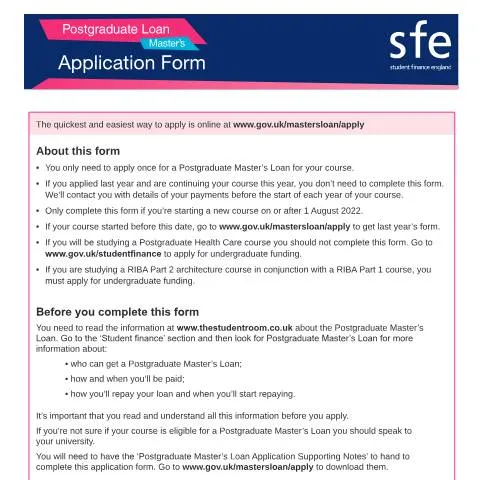
Navigating the 2022 to 2023 Student Finance Application: A Comprehensive Guide for Postgraduate Master's Students
For many postgraduate students in the UK, securing adequate funding is crucial for a successful academic journey. The 2022 to 2023 Student Finance Application Form for Postgraduate Master’s students is designed to streamline the process of obtaining financial aid. This document not only represents an opportunity but also carries certain responsibilities and requirements that students need to understand thoroughly. As you prepare to embark on your postgraduate studies, grasping the intricacies of this application is vital.
The Financial Landscape: Understanding the Postgraduate Master's Loan
The Postgraduate Master’s Loan provides financial assistance to students pursuing eligible master's programmes. As a prospective student, understanding the parameters surrounding this loan will facilitate a smoother application process. Here are some key points:
- Students can apply for funding up to £11,836, which will be disbursed in three payments each academic year.
- The loan amount varies based on the length of the course, and no repayment is required until the student’s income exceeds £21,000.
- Interest accrues from the day the first payment is issued, calculated as the Retail Price Index plus 3%.
Bear in mind, students who have previously received funding for a postgraduate course might not be eligible unless they can justify non-completion due to compelling personal reasons.
Before You Begin: Essential Preparations for Your Application
Preparation is critical when approaching the application process. Rushing through the form can lead to errors and potential delays. Prior to filling out the application, consider these preparatory steps:
- Read the Guidance Materials: The Postgraduate Master’s Loan Application Supporting Notes are invaluable resources. They provide essential information on how to correctly complete the application form and outline what supporting documents you'll need.
- Verify Course Eligibility: Not all courses qualify for the Master's Loan. If you're uncertain, consult your university’s financial aid office for clarity.
- Collect Necessary Documentation: Prepare your personal identification documents, such as your passport or birth certificate, as they will be required for verification.
Being diligent in these preparations can save you considerable time and stress in the long run.
Decoding the Application Form: Navigating Key Sections
The application form comprises several sections, each requiring specific information. Careful attention must be paid to ensure that all fields are completed accurately. Here’s a breakdown of essential sections to focus on:
Section 1: Personal Details
This section requires your personal information, such as name, address, and date of birth. Make sure to enter this information exactly as it appears on your official documents. Mistakes here can lead to delays.
Section 2: Course Information
In this part, you’ll need to provide details about your chosen course, including the institution's name and course start date. Ensure you verify the start date since it impacts the eligibility of your application.
Section 3: Financial Information
Here, you’ll declare any other sources of income or financial assistance you may have. Omitting this information can affect your loan amount, so be transparent about your financial situation.
Section 4: Supporting Documents
The application typically requests supporting documents for verification. These may include:
- Proof of identity (passport/birth certificate)
- Evidence of course acceptance (offer letter from the university)
- Any additional documentation specified in the supporting notes
Failure to include these documents will stall your application, so ensure all required materials are submitted.
Completing the Form: Common Pitfalls and How to Avoid Them
Even with the best intentions, applicants frequently encounter challenges when filling out the form. Here are some common pitfalls and how to sidestep them:
- Incomplete Responses: Always answer every question in the sections marked mandatory. Missing information will lead to processing delays.
- Incorrect Details: Double-check that all information matches your identification documents to avoid discrepancies.
- Missing Supporting Documents: Keep a checklist of all required documents. It’s easy to overlook a small yet crucial item.
Taking the time to review your application before submission can significantly enhance your chances of a smooth approval process.
Submission Strategies: Getting Your Application to the Right Place
Once you've completed the form and gathered all necessary documents, the next step is submission. There are two primary methods to submit your application:
Online Submission
Applying online is often the fastest and most efficient method. Ensure you have a secure internet connection, and follow the prompts on the official government website to complete your application process digitally.
Postal Submission
If you prefer to submit your application via post, ensure that you send it to the correct address listed in the application instructions. Using a tracked postal service can provide peace of mind regarding the delivery of sensitive documents.
After Submission: Understanding the Timeline and Next Steps
Once your application is submitted, you may wonder what happens next. Here's what you can expect:
- Processing Time: Applications are typically processed within 4-6 weeks. However, this may vary based on the volume of submissions being handled.
- Receiving Confirmation: The Student Loans Company will send you confirmation once your application has been processed. This communication will detail your loan amount and payment schedule.
- Payment Schedule: Payments are generally made in three instalments throughout the academic year, directly into your bank account.
It's pivotal to remain patient during this stage and monitor your email for updates from the Student Loans Company.
Potential Challenges: What to Do in Case of Errors or Missing Information
Despite preparation, issues may arise with your application. Here's how to address common challenges:
Receiving a Refusal
If your application is denied, the Student Loans Company will provide a reason for the refusal. In most cases, you will have the option to appeal the decision, provided you can present further evidence or clarification.
Correcting Mistakes
If you realise you made an error post-submission, contact the Student Loans Company as soon as possible to rectify the mistake. They will guide you on the next steps to amend your application.
Handling Missing Documents
In instances where documents are requested post-submission, ensure that you provide any requested information promptly to avoid delays in processing.
The Legal Framework: Understanding Your Rights and Obligations
It’s essential to be aware of the legal implications tied to your loan application. The Data Protection Act 2018 and UK GDPR govern how your personal data is handled during this process.
- Data Protection: Your information will be processed lawfully and transparently. It’s your right to understand how your data is used.
- Obligations: Providing false information on your application can lead to legal ramifications. Be diligent in ensuring that all information is accurate and truthful.
Understanding these parameters helps you navigate the application process with confidence while protecting your rights as a student.
Profiles of Applicants: Tailoring Your Application
The application process for a Postgraduate Master's Loan can vary significantly depending on individual circumstances. Here are some common profiles and considerations:
First-Time Applicants
For students entering postgraduate education for the first time, following the application guidance meticulously is crucial. Seeking assistance from university advisors can provide valuable insights.
Continuing Students
If you’re progressing to a new course following an incomplete previous course, ensure you have documentation to support your change of circumstances.
Students with Disabilities
Those requiring additional support due to disabilities should also consider applying for the Disabled Students' Allowance (DSA), which is separate from the Master's Loan and can aid in covering extra costs associated with your studies.
By recognising your unique situation and tailoring your application approach, you can enhance your chances of a successful outcome.
Understanding the Student Finance Application Process for Postgraduate Master's Students
Postgraduate Master's students in the UK are eligible for various forms of financial support, and understanding the application process can make a significant difference in accessing funding. The Student Finance England (SFE) provides loans and grants tailored for postgraduate students, which can help cover tuition fees and living costs.
Fill in your form directly online
No printing: type your details into the boxes of the official form, tick, then download the PDF ready to send.
- 1Type into the form boxes
- 2Tick in one click
- 3Save and download the PDF
To initiate your application, you must complete the Postgraduate Master’s Loan application form. This is an online process, where you will need to create an account or log in to an existing one on the Student Finance England website. Make sure to have your National Insurance number ready, as it is a key identifier throughout your application.
When filling out your application, you'll need to provide personal details such as your address, course details, and financial information. It is crucial to provide accurate and honest information, as any discrepancies can lead to delays or issues in receiving your funds. Additionally, you might need to submit supporting documents, such as proof of identity, that could include a valid passport or driving licence.
Once your application is submitted, you will receive a confirmation email, and your application will be processed. Keep a lookout for any correspondence from SFE, as they may request further information or clarification. Typically, the processing time can vary, but allowing 4 to 6 weeks for the initial assessment is advisable. It's important to apply as early as possible, preferably before your course begins, to ensure timely disbursement of funds.
Eligibility Criteria for Postgraduate Master’s Loans
To qualify for a Postgraduate Master’s Loan in the UK, applicants must meet specific eligibility criteria set by the Student Finance England. Understanding these criteria will help you assess your eligibility and prepare your application accordingly.
Firstly, you must be a UK national or have settled status in the UK, meaning you have indefinite leave to remain. Students from the EU post-Brexit may have different eligibility rules and should check the latest information regarding their status.
Your age is also a factor; you must be at least 18 years old to apply for a postgraduate loan. Additionally, the course you are applying for must be a full-time or part-time postgraduate course that lasts at least 1 year (or 2 years for part-time courses) and is delivered at a recognised higher education institution in England.
It’s essential to note that you cannot receive a Postgraduate Master’s Loan if you have previously received a Postgraduate Doctoral Loan. The maximum loan amount available varies, but for the 2022/2023 academic year, the maximum loan for new students is £12,167. However, the actual amount you can receive may depend on the tuition fees charged by your institution.
Before applying, check the specific details regarding the repayment structure. Postgraduate loans will begin to be repaid once you earn over a certain income threshold, which is currently £21,000 per year, and these loans will be written off after 30 years if not fully repaid.
Common Mistakes to Avoid When Applying for Student Finance
The application for student finance can be complex, and many applicants make common mistakes that can complicate the process. Here are several pitfalls to avoid when filling out your Student Finance application for a Postgraduate Master’s Loan.
Firstly, one common mistake is underestimating the importance of deadlines. The application process is time-sensitive, and failing to submit your application before the deadline can result in losing potential funding. Ensure that you are aware of the specific deadlines for your course and apply as soon as possible.
Another prevalent mistake is providing incomplete or inaccurate information. Double-check all your entries, especially your financial details and personal information. Any errors could lead to your application being delayed or rejected. Remember to keep a record of all communications with Student Finance England, including any reference numbers.
Some applicants also forget to provide supporting documents. It is crucial to submit all required documentation as requested by SFE. This often includes proof of identity and residency, which should be current and valid. Delays in providing these documents can impact your application timeline significantly.
Furthermore, failing to consider additional funding options is another oversight. While the Postgraduate Master’s Loan is a viable option, you may also explore scholarships, grants, and bursaries offered by universities or external organisations. Researching these options early can provide a more comprehensive financial support package.
Lastly, do not hesitate to contact the financial support office at your institution for guidance on the application process. They can provide valuable insights and assistance tailored to your specific situation, helping you navigate through the application smoothly.