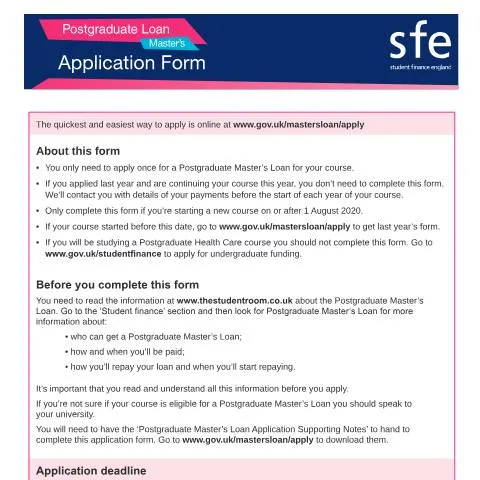
Navigating the 2020 to 2021 Student Finance Application for Postgraduate Master’s Students
If you're preparing to embark on a new academic journey as a postgraduate Master's student in the UK, understanding the nuances of the application process for student finance is crucial. The 2020 to 2021 Student Finance Application forms and notes for postgraduate Master's students provided by the Student Loans Company (SLC) are designed specifically to assist those seeking financial support for their studies. This comprehensive guide will explore the various aspects of this application process, ensuring you are well-equipped to submit your application smoothly.
Understanding Your Eligibility: Who Can Apply?
The eligibility criteria for the Postgraduate Master’s Loan are quite specific, and understanding them is vital before you even begin filling out the application form. Unlike undergraduate funding, the Master's Loan has its unique set of rules.
Key Eligibility Criteria
- Age Limit: Applicants must be at least 18 years old at the start of the course.
- Course Conditions: Only eligible postgraduate courses qualify. Make sure your course falls within the scope defined by the SLC.
- Previous Funding: If you have previously received funding for a postgraduate Master's, you are not eligible for this loan.
- Residency Requirements: Generally, applicants must be living in England, and certain residency conditions apply, particularly for EU students or those from outside the UK.
If your situation is complex—such as if you have previously studied abroad or are returning to education after a long break—it is advisable to contact your university or the SLC directly to clarify your eligibility before submitting your application.
Completing the Application: Step-by-Step Guidance
Filling out the application form requires attention to detail and adherence to specific instructions. Here’s a breakdown of the steps you should follow:
Prepare Your Documentation
Before diving into the online application, gather all necessary documents. This may include:
- Your passport or another form of identification.
- Proof of your current residency.
- Details about your course, including the start date and length.
Ensure that you have the 'Postgraduate Master’s Loan Application Supporting Notes' handy as they provide essential guidance on how to complete each section of the application form.
Filling Out the Form
When you start the application:
- Follow the on-screen instructions carefully. Each question will indicate whether it is mandatory or optional.
- Be meticulous in entering your personal details as they appear on your identification documents. Any discrepancies can delay your application.
- If your name has changed, documentation will be required to support this change.
Keep in mind the deadline for submission; for one-year courses, it is nine months after the start date of the academic year, and longer courses have their own deadlines.
Exploring the Financial Details: What to Expect
Once your application is submitted, you can expect financial support based on specific criteria. Understanding how much you can receive and the repayment process is crucial.
Funding Amounts and Payment Structure
Eligible students can apply for a loan of up to £11,222. This amount is typically distributed evenly across the academic year, with payments made directly into your bank account in three instalments. It's important to understand the structure of these payments:
| Payment Number | Timing |
|---|---|
| 1 | First payment at the start of the course |
| 2 | Second payment at the beginning of the second term |
| 3 | Final payment at the start of the third term |
Interest Rates and Repayment Conditions
Understanding the financial implications of your loan is vital:
- The interest on your loan begins from the date you receive your first payment.
- The interest rate is calculated based on the Retail Price Index (RPI) plus an additional 3%.
- Repayment starts once your income exceeds £21,000 a year, with a repayment rate of 6% of your income above this threshold.
Loan repayments will occur alongside any other student loans you may hold, so plan accordingly to ensure you are financially prepared for this obligation.
Post-Application Process: What Happens Next?
After submission, your application will be processed by the SLC, after which you will receive further communication regarding your funding status. Here are the steps involved:
Tracking Your Application
It's important to keep track of your application status. You can do this by:
- Logging into the SLC website to check your application progress.
- Keeping an eye on your email for any requests for additional information or documentation.
- Calling the SLC customer service for updates if you're concerned about delays.
Managing Changes and Updates
Should your situation change—whether it’s a shift in your course details, a change of address, or even a withdrawal from the course—you must inform the SLC immediately. Failing to do so can lead to complications with your loan disbursement and repayment obligations.
Identifying Common Pitfalls and Misunderstandings
Despite the clear guidelines, numerous applicants face challenges during the process. Being aware of these can save time and stress:
Common Issues
- Incorrect Information: One of the most frequent issues stems from entering incorrect personal details. Double-check names, addresses, and ID numbers.
- Missing Documentation: Ensure you submit all required documents to avoid delays. Any missing documents will postpone your loan processing.
- Assuming Previous Loans Affect Eligibility: Remember, if you have already received funding for a postgraduate course, you may not be eligible for a new loan.
Being proactive about these common pitfalls can help you navigate the application process more smoothly.
The Scope of Support Beyond the Application
The Student Loans Company offers various support services to assist applicants throughout their educational journey. Benefiting from these services can enhance your overall experience as a student.
Additional Financial Assistance
Should you have a disability or specific learning difficulty, you may qualify for Disabled Students’ Allowances (DSAs). These allowances help cover additional costs incurred due to your condition and do not require repayment. To apply, you’ll need to provide documentation that supports your eligibility.
Resources and Contact Points
The SLC has made numerous resources available to help students understand the financial system better:
- Visit the SLC website for up-to-date information on funding options.
- Engage with online forums and peer support groups for shared experiences and advice.
- Contact the SLC directly through their helpline for any personalized queries.
Summing Up Your Journey to Funding Success
Completing the 2020 to 2021 Student Finance Application for Postgraduate Master’s students can seem daunting, but understanding each step empowers you to navigate the process effectively. From confirming your eligibility to managing post-application expectations, being informed is key. By following the guidelines outlined in this article, you can confidently approach your postgraduate education without the added burden of financial uncertainty.
Now that you are equipped with the knowledge required to successfully complete your application and navigate the student finance landscape, it’s time to focus on what matters most—your studies and personal growth. Good luck!
Understanding the Different Types of Postgraduate Funding in the UK
When considering postgraduate study, it is essential to understand the various funding options available to students. In the UK, students can access several types of financial support, which can significantly ease the burden of tuition fees and living costs. The main categories of funding include government loans, scholarships, and grants.
Firstly, postgraduate Master’s students can apply for a government-backed loan through the Student Loans Company (SLC). As of the 2020 to 2021 academic year, eligible students can borrow up to £11,222 for their course. The application process involves submitting a Student Finance application form, which assesses your eligibility based on your residency status and previous education. The loan is repayable at a rate of 6% of your income over £27,295 after graduation.
Besides loans, many universities offer scholarships based on merit or need. These awards, which don’t have to be repaid, can come in various forms, including tuition fee waivers or stipends for living expenses. It is advisable for students to check with their prospective institutions for specific scholarship opportunities and application deadlines.
Fill in your form directly online
No printing: type your details into the boxes of the official form, tick, then download the PDF ready to send.
- 1Type into the form boxes
- 2Tick in one click
- 3Save and download the PDF
Furthermore, there are also grants available for specific demographics, such as those with disabilities or those from low-income backgrounds. Organizations like the DWP administer certain grant programs, which can provide additional financial support. Students should ensure they explore all potential avenues for funding to maximize their chances of covering their postgraduate costs.
Key Considerations When Filling Out Application Forms
Completing your Student Finance application form accurately is crucial to ensure you receive the funding you need. Here are some vital considerations to keep in mind while filling out these forms.
Firstly, ensure that all personal details are entered correctly, especially your National Insurance number, as this is a key identifier in the UK’s financial system. Any discrepancies can cause delays or even result in the rejection of your application. Double-check your name, date of birth, and address against official documents to avoid any mistakes.
Additionally, consider your residency status, as eligibility for funding can vary depending on whether you are a UK national, EU citizen, or international student. The SLC requires proof of residency, and it’s advisable to have your documents, such as utility bills or bank statements, ready for verification during the application process.
Next, gather all necessary financial information, including household income details, to assess your eligibility for means-tested support. Be prepared to provide information about your parents' or spouse's income if required. The more comprehensive and accurate the financial information provided, the better your chances of receiving additional funding.
Lastly, pay close attention to the deadlines associated with the application process. The deadline for submitting your Student Finance application for the 2020 to 2021 academic year was set for May 2020 for new students. Applications submitted after this date could result in delayed funding, affecting your ability to start your course. Always check the official Student Finance England website for the most current deadlines and requirements.
Repayment and Financial Management Post-Study
Once you graduate and commence repayment of your Student Finance loan, it is essential to manage your finances wisely. The repayment structure is designed to be manageable, but understanding your obligations and planning ahead can make a significant difference.
Post-study, you will begin repaying your loan once you earn above the threshold of £27,295. The repayments are automatically deducted from your salary through the PAYE system, simplifying the process for graduates. It's important to note that interest will accrue on your loan from the moment you take it out, with rates varying based on income levels.
To effectively manage your student loan repayments, it’s advisable to create a budget that includes your monthly expenses alongside your repayment obligations. Look into setting up a separate savings account to cover your loan payments when they begin. This proactive approach can help mitigate financial stress when transitioning from student life to full-time employment.
Additionally, understanding the implications of your income on your repayment terms is crucial. For instance, if your income fluctuates, you may be eligible for a reduced repayment rate during lower-earning periods. Keep abreast of any changes in your employment status and notify the SLC accordingly to ensure that your repayments remain aligned with your financial situation.
Lastly, it is worth noting that any unpaid loans will be written off after 30 years, or if you become permanently disabled or die before the loan is fully repaid. Therefore, while it's essential to stay on top of your repayments, it's also important to be aware of the circumstances under which your loan obligations may cease.