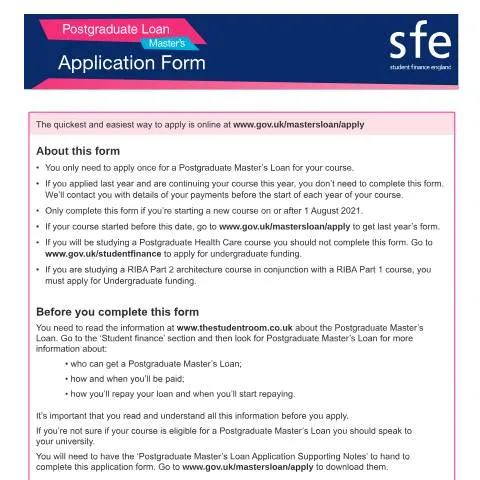
Understanding the 2021 to 2022 Postgraduate Master’s Loan Application Process
The journey towards further education often hinges on financial support, especially for postgraduate students. The 2021 to 2022 Student finance application forms and notes for postgraduate Master's students play a crucial role in securing funding for those embarking on a master's programme. If you're beginning a new course after August 1, 2021, this application is your gateway to obtaining a Postgraduate Master’s Loan, which can significantly ease the financial burden associated with higher education.
Timeline: Key Dates and What to Expect
It's essential to stay informed about the important deadlines surrounding the application process. Here’s a breakdown of the key dates:
- Application Start Date: Generally opens from the announcement of funding, which is often in the early spring preceding the academic year.
- Application Deadline for One-Year Courses: Nine months after the first day of your academic year. Ensure you submit your application well ahead of this date to avoid any payment delays.
- Application Deadline for Longer Courses: Nine months after the first day of your final year. This extended deadline recognizes the duration of study required for these programmes.
Being proactive in your application submission can ensure timely financial assistance, allowing you to focus on your studies rather than finances.
Decoding the Application: Essential Components
The application form consists of several sections designed to capture your personal information accurately. Be prepared to provide details such as:
- Personal Details: This includes your name, National Insurance number, and date of birth. Ensure this information matches your official identification.
- Course Information: Specify the course title, institution, and start date. Verify that your course is eligible for funding under the Postgraduate Master’s Loan scheme.
- Financial Information: You may be asked to provide details regarding your income or that of your household. This assessment helps determine your eligibility for a loan.
Each question must be answered accurately. Missing or incorrect information can lead to application delays.
Preparing the Necessary Documentation
Gathering the right documents is a vital step in the application process. Here’s a checklist of supporting evidence you may need:
- Proof of identity: Passport, birth certificate, or other official identification.
- Evidence of residence: Utility bills or bank statements showing your current address.
- Course acceptance letter: Confirmation from your university or institution that you've been accepted to the course.
Ensure to keep copies of all documents submitted. If any supporting documents are missing, this could slow down your application process.
Documents Distinction: What Sets This Application Apart
Confusion often arises between the Postgraduate Master’s Loan application and other finance-related forms. Here’s how to differentiate:
| Document Type | Purpose | Eligibility |
|---|---|---|
| Postgraduate Master’s Loan Application | Funding for postgraduate taught Master’s courses. | Postgraduate students starting new courses on/after 1 August 2021. |
| Undergraduate Funding Application | For students pursuing undergraduate degrees. | Only for undergraduate programmes. |
| Disabled Students’ Allowance (DSA) | Financial support for students with disabilities. | Available to those meeting the disability criteria under the Equality Act 2010. |
Understanding these distinctions can streamline your application process and ensure you are applying for the right funding.
Navigating Challenges: What If Your Application is Rejected?
In the unfortunate event of your application being rejected, it’s crucial to know your options. Here’s a step-by-step approach:
- Review the Reason for Rejection: You will receive a notification detailing why your application was not accepted. Understanding this reason is key to addressing the issue.
- Gather Additional Information: If your application was incomplete or missing documentation, ensure you have all required materials ready for resubmission.
- Submit an Appeal: If you believe your application was unfairly rejected, you can appeal the decision. Follow the guidelines provided in your rejection notice.
- Consult Your University: If you’re unsure about the next steps, your university’s finance office can offer guidance and may assist in the appeals process.
Taking swift action can help mitigate any disruptions to your education financing.
Unique Circumstances: Special Considerations in the Application Process
Various personal situations can affect your application for a Postgraduate Master’s Loan. Here’s how to manage these unique circumstances:
- International Students: If you are studying in the UK from abroad, check your eligibility for the Postgraduate Master’s Loan. Some international students may not qualify.
- Part-Time Study: If you are considering part-time study, you may still apply for a loan, but it will be adjusted according to your study intensity.
- Changing Courses: Should you change your course after applying, you’ll need to notify the Student Loans Company immediately to avoid complications.
Being aware of these factors can enhance your application experience and ensure that your unique situation is taken into account.
After Submission: What Happens Next?
Once you have submitted your application, here’s what to expect:
- Processing Time: The processing time may vary, but you should expect to hear back within a few weeks. If additional information is required, they will contact you.
- Payment Schedule: If your application is successful, your funding will be released in instalments throughout your course. Typically, this payment is received three times per academic year and is paid directly into your bank account.
- Repayment Terms: It’s crucial to understand your repayment obligations, which commence once you earn over £21,000 per annum. You will repay 6% of your income over this threshold.
Understanding these steps can help you manage your finances smoothly during your studies.
Additional Resources for a Seamless Application Experience
For further information and assistance during the application process, various resources are available:
- Visit the official Student Loans Company website for guidelines and updates on the Postgraduate Master’s Loan application.
- Engage with forums such as The Student Room to connect with other postgraduate students about their experiences.
- Follow social media channels for real-time updates and information from the Student Finance England.
With the right information and preparation, applying for a Postgraduate Master’s Loan can be a straightforward process, allowing you to focus on what really matters—your education.
Understanding Student Finance Options for Postgraduate Master's Students
Navigating the world of student finance can be a daunting task for postgraduate Master's students in the UK. Understanding the options available is crucial for making informed decisions. As a postgraduate student, you might be eligible for a range of financial support options including loans, grants, and scholarships. It's important to note that these options can vary significantly depending on your residency status, chosen course, and university.
The main source of funding for postgraduate students in England is the Master's Loan, which can be a game changer. You can borrow up to £11,570 for your tuition and living costs if you meet the eligibility criteria. This loan is non-means-tested, meaning your household income does not affect the amount you can borrow. However, it’s important to apply through the Student Loans Company (SLC), as they are the official body that administers these loans. Ensure you have your National Insurance number handy, as this is a key identifier during the application process.
Fill in your form directly online
No printing: type your details into the boxes of the official form, tick, then download the PDF ready to send.
- 1Type into the form boxes
- 2Tick in one click
- 3Save and download the PDF
For students studying in Wales, Scotland, and Northern Ireland, the financing options differ slightly. Welsh students can apply for a Tuition Fee Loan and a Maintenance Loan, while Scotland offers a range of support that includes a Postgraduate Tuition Fee Loan for students attending university within the UK. Northern Irish students can also access specific loans that cater to their local needs. Always consult your local Student Finance Office to get the most accurate and up-to-date information relevant to your situation.
Application Process: Step-by-Step Guidance
Filing your application for postgraduate student finance can be an overwhelming experience, but breaking it down into manageable steps can simplify the process. The first step is to determine your eligibility criteria. You will need to be a UK resident and enrolled on a full-time or part-time Master's course recognized by the student finance authorities. Once you’ve established your eligibility, follow these steps:
- Gather Necessary Documentation: Ensure you have the required documents, including your National Insurance number, proof of identity (such as your passport), and details of your course. Your university will provide a ‘Learning Agreement’ which outlines your course details, and you will need this information to fill out your application.
- Complete the Application Form: You can apply online through the Student Loans Company portal. Make sure you fill out the Postgraduate Master’s Loan Application Form thoroughly. Double-check that all information matches your official documents to avoid delays.
- Submit Your Application: After confirming that everything is accurate, submit your application. It’s recommended to keep a copy of your application for your records.
- Await Confirmation: The SLC will process your application and will notify you of your loan entitlement. This can take several weeks, so it’s prudent to apply as early as possible.
- Receive Your Funding: Once your application is approved, your funds will typically be disbursed in instalments directly to your university to cover tuition fees, while maintenance loans will be paid into your bank account.
Throughout the application process, remain proactive in checking your application status on the SLC portal. If you encounter issues or have questions, do not hesitate to reach out to their customer service for assistance.
Repayment of Student Loans: What You Need to Know
Understanding the repayment of student loans is crucial for every postgraduate student. The repayment structure for Master's Loans is designed to be manageable, ensuring that graduates aren’t burdened by excessive debt. Here’s how the repayment works:
Once you have completed your course and are earning above the repayment threshold, you will need to start repaying your loan. As of the current tax year, the threshold is set at £27,295 annually, meaning you will only begin repayments once your income surpasses this figure. The repayment rate is set at 6% of your income above this threshold.
For example, if you earn £30,000 a year, your repayment would be calculated as follows:
- Annual income: £30,000
- Repayment threshold: £27,295
- Income above threshold: £30,000 - £27,295 = £2,705
- 6% repayment on £2,705 = £162.30 annually, or approximately £13.52 per month.
It’s also essential to stay informed about how interest rates apply to your loan. Interest rates on postgraduate loans are based on inflation, specifically the Retail Price Index (RPI) plus a margin. This means your loan will accrue interest while you study and during the repayment period. The rate typically ranges from RPI plus 3% to RPI plus 0%, depending on your income level post-graduation.
Additionally, if you are unable to repay the loan within 30 years after you become eligible to repay, the debt will be written off. It’s advisable to keep track of your loan balance and repayments through the SLC's online services.