Navigating the Assignment of Rights in Plant Breeding
In the dynamic world of agriculture and horticulture, the process of assigning rights to newly bred plant varieties is crucial for breeders seeking to protect their innovations. The Plant Breeders: Assignment of Rights form from the Animal and Plant Health Agency plays a pivotal role in this procedure. Completing this document accurately is essential for ensuring that the rights of the original breeder are legally transferred to another party, thereby enabling the assignee to apply for or hold Plant Breeders’ Rights (PBR). This article explores the intricacies of this form, its significance, and the procedural aspects associated with it.
Understanding the Legal Framework
The legal foundation for the Assignment of Rights stems from the Plant Varieties Act 1997 and the Plant Breeders’ Rights Regulations 1998. This framework establishes the rights of breeders over their innovations and the process through which these rights can be assigned. It is essential for parties involved in the breeding and marketing of plant varieties to understand this legal landscape as it dictates their rights and obligations.
The Importance of Plant Breeders’ Rights
Plant Breeders’ Rights grant the breeder exclusive rights to exploit their new variety. This includes selling it, producing it, or using it for further breeding. However, if the breeder decides to transfer these rights, they must complete the Assignment of Rights form. The implications are significant:
- Once rights are assigned, the original breeder forfeits any future claims on the variety.
- The assignee gains control over the commercial exploitation of the variety.
- Proper documentation is essential to prevent legal disputes regarding ownership.
Identifying Who Should File This Form
The Assignment of Rights form is exclusively for the person who bred or discovered and developed the plant variety, or their successor in title. It’s crucial to understand who qualifies as a successor; this might include heirs or individuals to whom rights have been legally assigned through contracts or other means. This specificity prevents misuse and ensures that rights are only transferred by authorized individuals.
Eligibility Criteria
To qualify for completing the form, consider the following:
- You must be the original breeder or a legally recognized successor.
- Documentation proving your relationship to the variety may be required.
- Ensure no prior rights have been assigned that might conflict with this process.
Completing the Assignment of Rights Form: A Step-by-Step Guide
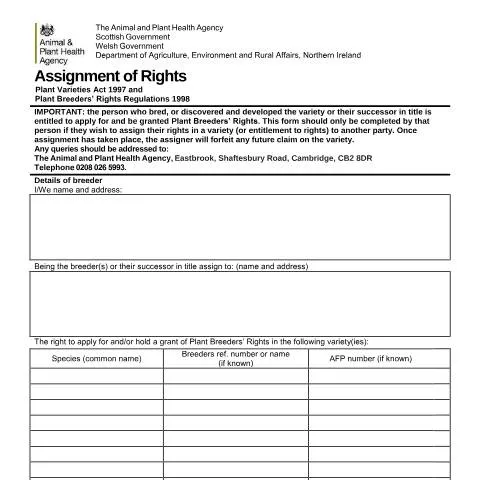
Filling out the Assignment of Rights form requires careful attention to detail. Each section of the form must be completed accurately to avoid delays or rejections. Below, we break down the form into manageable sections:
Section 1: Details of the Breeder
The first section captures the name and address of the breeder(s) or their successor. Ensure the provided information is current and matches any previously submitted documentation to avoid discrepancies.
Section 2: Assignment Details
This section is critical as it details to whom the rights are being assigned. It’s vital to include the name and address of the assignee accurately. Any errors here can lead to legal complications or an incomplete transfer.
Section 3: Varietal Information
In this part, you must specify the variety or varieties being assigned. Include common names, the breeder's reference number (if known), and any AFP numbers related to the varieties. This precision is crucial for the administrative processing of the rights assignment.
Section 4: Signature and Declaration
The final part requires the signature of the breeder. This must be an original signature unless sent via email, which must then comply with specific electronic submission rules. The declaration reaffirms the breeder's intent to assign rights, which is legally binding once submitted.
The Implications of Assigning Rights
Transferring rights is a significant decision and comes with various responsibilities and implications:
For the Assignor
Once you sign and submit the form, the assignor relinquishes any claims to the variety. This means:
- You cannot use the variety for commercial purposes.
- Future royalties or profits from the variety will now go to the assignee.
- It’s advisable to keep a copy of the assignment for your records.
For the Assignee
The assignee must understand their new obligations:
- They must maintain compliance with all relevant laws and regulations regarding the new variety.
- They are responsible for necessary registrations and subsequent applications for PBR.
- Any breach of these obligations may lead to penalties or revocation of rights.
Timing and Submission: What to Expect
After completing the form, you must submit it to the Animal and Plant Health Agency. The submission process may vary based on how you choose to send the form—by post or electronically. Keep in mind that while electronic submissions might expedite processing, ensure that you comply with all electronic submission guidelines outlined by the Agency.
Processing Times and Follow-Up
Once your form is submitted, there is usually a processing period where the Agency verifies the details. Typically, you should expect processing to take a few weeks. During this period:
- It’s wise to keep a record of your submission, including dates and any correspondence.
- If you do not receive confirmation or feedback within a reasonable timeframe, consider following up with the Agency.
Common Challenges and How to Avoid Them
Understanding common pitfalls can save time and reduce frustration when filling out the Assignment of Rights form. Here are some key points to consider:
Incomplete Information
Each section of the form must be completed fully. Leaving sections blank or providing unclear information can lead to delays. Always double-check the form against the requirements specified by the Agency.
Conflicting Rights
If the variety has had rights previously assigned or is under any dispute, it’s essential to resolve these issues before submitting the Assignment of Rights form. Legal disputes can complicate or nullify the assignment process.
Documentation Errors
Ensure all supporting documents are accurate and relevant. Any discrepancies in personal data can lead to rejections. It’s advisable to cross-reference your information with existing official documents.
Final Thoughts on the Assignment of Rights
The Assignment of Rights form is more than just a regulatory requirement; it is a strategic tool that can shape the future of a plant breeder's innovations. Understanding its nuances—from completion to submission—ensures that rights are transferred seamlessly, protecting breeders and assignees alike. For any uncertainties, reaching out to the Animal and Plant Health Agency can provide clarity and guidance. By being informed and meticulous, breeders can navigate this essential process with confidence, ensuring their contributions to agriculture continue to thrive.
Understanding the Plant Breeders' Rights Framework in the UK
The Plant Breeders' Rights (PBR) system in the UK is a significant aspect of protecting the intellectual property of those involved in the breeding and development of new plant varieties. Governed by the Plant Varieties Act 1997, this system enables plant breeders to obtain exclusive rights for their varieties, preventing unauthorized use and commercialization. These rights can last for up to 25 years, depending on the type of plant species, and are critical for incentivizing innovation within the horticulture and agriculture sectors.
When a breeder develops a new variety, they can apply for PBR through the UK Plant Variety Rights Office, which operates under the Animal and Plant Health Agency (APHA). A thorough examination is conducted to assess the distinctness, uniformity, and stability (DUS) of the new variety. Successful applicants receive a certificate that grants them exclusive rights to the propagation, sale, and marketing of their new variety. It’s also vital to understand the potential for licensing agreements, where rights can be assigned or licensed to other parties, enhancing the breadth of market access and potential revenue streams.
Assignment and Licensing of Plant Breeders' Rights
When it comes to the assignment of rights, breeders have several options. An assignment is a transfer of ownership of the rights to another entity, while licensing allows a third party to use the rights without transferring ownership. The choice between these two options often depends on business objectives, market strategies, and the nature of the relationships between parties involved.
Licensing agreements can be particularly beneficial for breeders who wish to retain ownership of their rights while expanding their market reach. These agreements can be exclusive or non-exclusive, depending on the terms negotiated. It's essential for breeders to ensure that any licensing contracts are crafted with precision, detailing the scope, duration, and financial arrangements to avoid misunderstandings later on.
As with any intellectual property transaction, both parties should engage in due diligence. This includes verifying the ownership of the PBR, understanding the legal obligations related to the rights, and potentially involving legal experts familiar with plant variety rights to draft or review agreements. An effective licensing strategy can lead to profitable collaborations, especially in exporting new varieties to emerging markets.
The Role of Advisory Bodies and Legal Support in PBR Transactions
Engaging with advisory bodies and legal experts in the realm of Plant Breeders' Rights is critical for both new and established breeders. Organizations such as the UK Plant Variety Rights Office provide valuable resources and guidance on the application process, rights management, and compliance with legal standards. Furthermore, attending workshops or seminars hosted by these bodies can enhance a breeder’s understanding of current trends, market demands, and legal developments impacting PBR.
Legal support plays a vital role throughout the lifecycle of plant breeders’ rights. Specialists in intellectual property can assist in navigating complex issues arising from challenges to rights ownership, infringement disputes, or negotiating licensing agreements. They can also provide insights into the implications of the Data Protection Act 2018 and UK GDPR as they relate to the processing of personal data within the context of PBR transactions, ensuring that all operations comply with legal standards while protecting stakeholders' interests.
In summary, the assignment of rights in the context of Plant Breeders' Rights in the UK involves various dimensions, including the initial application process, potential for licensing agreements, and the critical role of legal advisors. Breeders must remain informed and proactive to maximize their rights effectively and ensure compliance with the regulatory landscape.