Understanding the Development Right(s) Notice of Surrender (SR1)
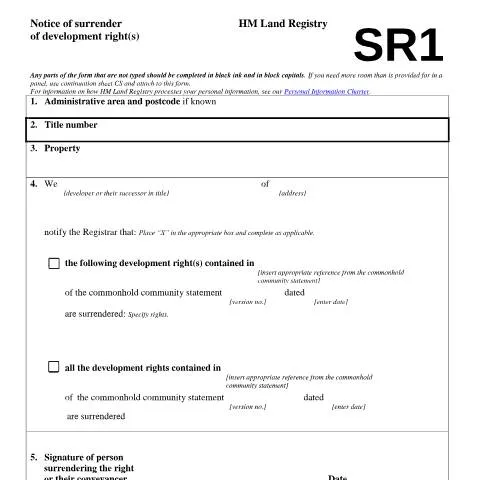
The Notice of Surrender of Development Right(s) (SR1) is a vital document for property developers and owners within the framework of commonhold land. This notice serves to formally surrender specific development rights associated with a property, recognising the significance of clear communication in property rights changes. By clarifying the rights that are being surrendered, the SR1 ensures that all interested parties, including the Land Registrar, are aware of the changes in the development rights.
Key Elements of the SR1 Document
When navigating the SR1, several critical components must be understood to ensure accurate processing and compliance with the requirements of HM Land Registry. The document comprises the following essential sections:
- Administrative Area and Postcode: Identification of the property’s location.
- Title Number: Reference to the specific title under which the property is registered.
- Property Details: The property to which the rights pertain must be clearly stated.
- Development Rights Surrendered: Specifics of the rights being surrendered, according to the commonhold community statement.
- Signature: The document must include the signature of the person surrendering the rights or their conveyancer.
- Date: The date on which the surrender is made.
When is an SR1 Notice Required?
The SR1 notice becomes indispensable in various situations. Developers or property owners may need to surrender development rights due to changes in planning intentions, project modifications, or as a part of a larger sale agreement. Here are some specific scenarios where the SR1 is applicable:
- Changes in Development Plans: If a developer decides to alter the originally planned development, they may need to surrender certain rights associated with the previous plan.
- Sale of Property: When selling property, the seller may be required to surrender development rights that are no longer applicable or desired.
- Commonhold Community Changes: In the event of adjustments to community statements, developers may need to formally surrender rights as dictated by the updates.
Interpreting Development Rights: Key Concepts
Understanding development rights is crucial for accurately completing the SR1 notice. These rights are legal permissions that allow property owners to undertake specific developments on their land. Here are some key terms associated with development rights:
- Commonhold: A form of property ownership that allows individuals to own units within a building and share ownership of common areas.
- Commonhold Community Statement: A legal document that outlines the rights and responsibilities of owners within a commonhold development.
- Surrender of Rights: The formal process of relinquishing certain rights, which may involve specific legal procedures and documentation.
Step-by-Step Process for Submitting the SR1
Submitting the SR1 involves several steps to ensure compliance with legal requirements and effective communication with the Land Registry. Here is a detailed walkthrough:
- Gather Necessary Information: Ensure you have all relevant property details, including the administrative area, postcode, and title number.
- Identify Development Rights: Determine which specific development rights you intend to surrender, referencing the commonhold community statement.
- Complete the SR1 Notice: Fill in the notice clearly, ensuring that all information is accurate. Use black ink and block capitals for handwritten entries.
- Sign and Date: Ensure the notice is signed by either the individual surrendering the rights or their conveyancer, along with the date.
- Submit to HM Land Registry: Send the completed SR1 document to the appropriate HM Land Registry office.
Avoiding Common Misinterpretations
While the SR1 notice is straightforward, several common misinterpretations can lead to complications:
- Assuming Automatic Acceptance: Surrendering rights does not guarantee that the Land Registry will accept the notice. Ensure compliance with all legal requirements.
- Incorrect Details: Any errors in property details or rights being surrendered can result in delays. Double-check all entries for accuracy.
- Lack of Documentation: Supporting documents, such as the commonhold community statement, should be referenced accurately; failure to do so can cause processing issues.
The Role of HM Land Registry in the Process
HM Land Registry plays a crucial role in the surrender of development rights. They are responsible for registering the surrender and updating the land record accordingly. Here’s how HM Land Registry engages with the SR1 notice:
- Verification: The registry verifies the information contained in the SR1 to ensure it aligns with existing records.
- Documentation Maintenance: Once the SR1 is accepted, HM Land Registry updates the property's title to reflect the surrendered rights.
- Public Record Keeping: The surrendered rights become part of the public record, which can impact future transactions involving the property.
Legal Considerations and Implications
When dealing with the SR1 notice, it’s essential to understand the legal implications involved in surrendering development rights:
- Data Protection: Comply with the provisions of the Data Protection Act 2018 and UK GDPR, especially when processing personal data in the context of the surrender notice.
- Rights of Third Parties: Ensure that surrendering rights does not infringe upon the rights of third parties, especially in commonhold developments.
- Potential Future Developments: Surrendered rights may limit future development options; consider consulting with legal advisors before proceeding.
Conclusion: Ensuring Smooth Navigation through the SR1 Process
Navigating the SR1 process requires thorough preparation, attention to detail, and an understanding of the implications of surrendering development rights. By following the outlined steps and being mindful of common pitfalls, property developers and owners can ensure that their submissions are processed smoothly and efficiently. Ensuring accurate and timely communication with HM Land Registry not only safeguards their interests but also facilitates clarity within the property development framework.
Understanding the Development Rights and the Notice of Surrender (SR1)
In the context of land use and property development regulations in the UK, development rights refer to the permissions granted to landowners or developers to carry out specific types of building works. These rights can be complex, often defined by various statutory instruments and local planning policies. The Notice of Surrender, formalized through form SR1, is a crucial element in the development process, particularly when it comes to relinquishing these rights. It is typically used when a developer decides to surrender their development rights back to the local planning authority, either due to changes in circumstances, compliance issues, or strategic planning decisions.
The issuance of a Notice of Surrender has implications for both the developer and the local authority. It acts as a formal declaration that the developer no longer wishes to pursue the development rights associated with a particular piece of land. This can occur for a variety of reasons, including financial setbacks, change in market conditions, or a shift in the developer's strategic focus. Understanding the context in which a Notice of Surrender is applied is paramount, as it plays a significant role in future land use and planning decisions made by the authorities.
Filling Out the SR1 Form: Essential Steps and Considerations
Completing the SR1 form is a necessary step for any developer wishing to formally surrender their development rights. The process, while straightforward, does require careful attention to detail to ensure compliance with local regulations and to avoid potential disputes down the line.
First and foremost, ensure that you have all the relevant information at hand, which typically includes:
- Developer's Details: Full name, address, and contact information of the developer or their representative.
- Land Information: A clear description of the land in question, including its address, title number, and any specific boundaries.
- Relevant Planning Permissions: Details of the original development rights that are being surrendered, including permission references and dates.
Once you have gathered the necessary information, the next step is to complete the SR1 form itself. This form can generally be obtained from the local planning authority or, in some cases, through official government websites.
It's crucial to be precise when filling out the form, as inaccuracies can lead to unnecessary delays or outright rejections of the application. After completing the form, submit it to the appropriate local authority for processing. Following submission, it is advisable to maintain a copy of the completed SR1 for your records, as this can prove invaluable for any future reference regarding the status of the development rights.
Implications and Consequences of Surrendering Development Rights
Understanding the implications of surrendering development rights through the SR1 process is vital for developers, investors, and landowners alike. Surrendering these rights can have both immediate and long-term consequences that need to be considered carefully.
One immediate effect of surrendering development rights is the potential impact on the property's valuation. When development rights are relinquished, the associated potential for future development may decrease, leading to a reduction in the property's market value. This aspect is particularly important for investors to consider, as the financial return on the property may diminish, impacting overall investment strategies.
Moreover, surrendering development rights can also influence future land use planning decisions within the area. Local planning authorities may view the surrender as an opportunity to reassess land use strategies, potentially leading to changes in zoning and planning policies that could affect not only the surrendered land but also adjacent areas. This underscores the importance of engaging with local authorities and understanding the broader planning context before proceeding with a Notice of Surrender.
In certain cases, developers may wish to retain some aspect of their development rights while surrendering others. This approach can be complex and requires thorough discussions with planning professionals to navigate the nuances of local development policies effectively.
Ultimately, the process of issuing a Notice of Surrender via form SR1 is not merely a procedural step but a strategic decision that carries significant weight for future development opportunities. Therefore, ensuring that you approach this process with a comprehensive understanding of its implications is essential for any landowner or developer.