Navigating the Authorisation of Agent Process for Plant Breeders' Rights
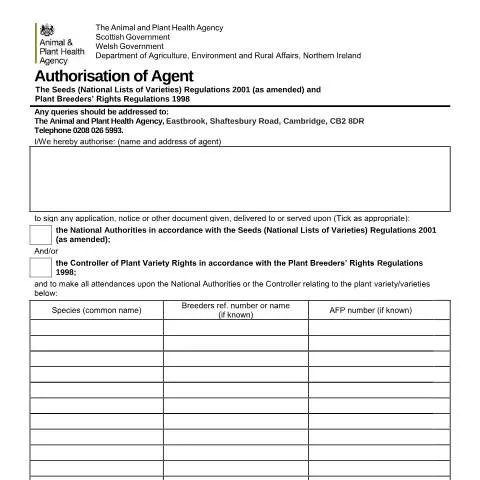
Understanding the intricacies of the National List and Plant Breeders' Rights: Authorisation of Agent form is crucial for anyone involved in the plant breeding industry in the UK. This form serves a vital function in allowing an agent to represent a breeder in dealings with the relevant national authorities concerning plant varieties. The implications of completing this form correctly can be significant in ensuring that your rights as a breeder are protected and that your applications are processed smoothly.
The Role of the Authorisation of Agent Form in Plant Breeding
At its core, the Authorisation of Agent form enables breeders to delegate responsibilities to an appointed agent. This is not merely a procedural formality; it is a necessary step in navigating the complex landscape of plant variety rights. With regulations governed by the Seeds (National Lists of Varieties) Regulations 2001 and the Plant Breeders’ Rights Regulations 1998, the form plays a crucial role in ensuring compliance with legal requirements.
This form allows your agent to:
- Sign applications and notices on your behalf.
- Communicate directly with the National Authorities concerning your plant varieties.
- Manage all attendances and discussions related to plant variety rights and registrations.
By designating an agent, breeders can focus on their core activities while ensuring that their administrative tasks are handled by a knowledgeable representative.
Who Needs to Submit This Form?
The requirement to submit the Authorisation of Agent form lies primarily with plant breeders who seek to register their varieties or manage their plant breeders' rights. This includes:
- Individuals or companies breeding new plant varieties.
- Those seeking to establish rights under the relevant regulations.
- Entities wishing to ensure their plant varieties are included on the National List.
It's essential to understand the nuances of your role as a breeder in this process. If you are operating as a business, ensure that you have internal processes in place for authorising an agent, particularly if multiple varieties or applications are involved.
Completing the Authorisation of Agent Form
Filling out the Authorisation of Agent form accurately is crucial to avoid delays or complications in the processing of your applications. Below are the key sections to focus on:
Agent Information
Begin by providing the name and address of the agent you wish to authorise. Ensure that this information is precise to avoid any miscommunication. Incorrect details can lead to your application being invalidated or delayed.
Details of the Plant Variety
Within this section, you will need to specify the species of the plant (common name) as well as any reference numbers associated with the variety. If you are uncertain about these identifiers, consult your breeding records or the relevant authorities for assistance.
Signature and Date
Your signature is vital for the form’s validity. It should be your original signature unless you are submitting the form electronically, in which case specific protocols may apply. Make sure to date the signature appropriately, as this can affect the validation period of your authorisation.
Where and How to Submit Your Form
The submission process for the Authorisation of Agent form can be conducted through several methods:
- Online Submission: For a quicker turnaround, online submission is often encouraged. Ensure you have a secure account with the relevant agency.
- Paper Submission: If you prefer traditional methods, print and complete the form, then send it directly to the Animal and Plant Health Agency at their Cambridge address.
- In-Person Submission: For those needing immediate assistance or clarification, visiting the agency in person could be beneficial.
Regardless of the method, ensure that you retain a copy of the submitted form for your records. This is vital should any issues arise during processing.
The Timing of Your Application: What to Expect
Timing is a critical factor when submitting the Authorisation of Agent form. Submissions should ideally be made well in advance of any major deadlines related to plant variety registrations. Consider the following:
- The seed planting and harvesting seasons can impact the timeline for approval.
- Be aware of any specific deadlines for national lists that may affect your applications.
- Following submission, processing times may vary, so keep your agent informed and check in regularly to ensure there are no unexpected delays.
When submitting, take note of the processing times provided by the Animal and Plant Health Agency. It’s prudent to allow a buffer period before critical planting dates.
Documenting Your Submission: Essential Records
Maintaining a thorough record of your dealings with the authorities is key to ensuring that your rights as a breeder are protected. Here’s how to document your submission:
- Keep a copy of the completed Authorisation of Agent form.
- Document any correspondence with your agent regarding their authorisation.
- Record dates of submission and any follow-up communications with the Animal and Plant Health Agency.
Having detailed records will not only help streamline future applications but will also serve as evidence should any disputes arise over the authorisation process.
Handling Complications and Monitoring Your Application Status
Once your form has been submitted, it’s important to stay engaged with the process. Here are ways to handle potential complications:
- Follow-Up: Don’t hesitate to reach out to the Animal and Plant Health Agency to inquire about the status of your application. Keeping communication lines open will help alleviate uncertainties.
- Addressing Issues: If there are concerns regarding your application, such as missing documentation or discrepancies, these should be tackled promptly. Ensure your agent is also involved in these discussions.
In instances where urgent resolutions are required, clearly communicate the urgency of your situation to the agency. They may expedite processing if justified.
Understanding the Broader Context of Plant Breeders' Rights
The Authorisation of Agent form doesn’t exist in isolation; it is part of a broader framework of regulations governing plant breeders' rights. To fully appreciate its importance, it’s beneficial to understand:
- The rights conferred by successful applications for plant variety registrations.
- The implications of non-compliance with regulations due to improper authorisation.
- How successful applications can enhance your marketability and protect your intellectual property as a breeder.
Being informed about the entire regulatory landscape will empower you as a breeder, enabling you to make better strategic decisions regarding your varieties.
Final Thoughts on the Authorisation Process
Completing the National List and Plant Breeders' Rights: Authorisation of Agent form is a significant step in safeguarding your interests as a plant breeder in the UK. By understanding the requirements, submission processes, and timing, you can ensure a smoother navigation through this necessary bureaucratic hurdle. As the landscape of plant breeding continues to evolve, staying informed and proactive will serve you well in managing your rights and responsibilities effectively.