When Vehicle Modifications Trigger Legal Obligations for PSV Operators
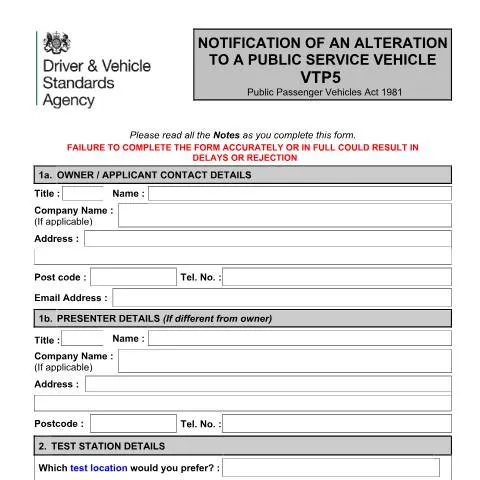
The moment a coach operator decides to retrofit air conditioning, reconfigure seating, or install wheelchair accessibility features, they cross into the realm of notifiable alterations. Under Section 20 of the Public Passenger Vehicles Act 1981, any modification that changes a public service vehicle's original specification must be declared to DVSA through the VTP5 notification process. This isn't merely administrative housekeeping—it's a legal requirement that ensures passenger safety standards remain intact after modifications.
The VTP5 form serves as the formal gateway between your altered vehicle and its continued legal operation on UK roads. Whether you're a small coach company adding entertainment systems or a major bus operator implementing accessibility upgrades across your fleet, this notification triggers a re-examination process that can determine whether your vehicles maintain their type approval status.
Decoding the Scope of Notifiable Alterations
Not every spanner turned or component replaced requires DVSA notification. The legislation draws clear distinctions between routine maintenance and modifications that fundamentally alter a vehicle's characteristics. Normal replacement of worn, defective or damaged parts on a like-for-like basis falls outside the notification requirement, as does the fitting of emissions abatement devices—recognising the environmental imperative for operators to upgrade their fleets.
However, the definition of "alteration" extends beyond obvious structural changes. Installing air conditioning systems, upgrading to alloy wheels, adding entertainment monitors, or implementing double glazing all constitute notifiable modifications. The reasoning centres on how these changes affect weight distribution, structural integrity, electrical systems, and passenger capacity—factors that could impact safety performance in ways not covered by the original type approval.
| Modification Type | Notification Required | Key Consideration |
|---|---|---|
| Seating reconfiguration | Yes | Changes passenger capacity and emergency evacuation |
| Wheelchair lift installation | Yes | Affects structural integrity and weight distribution |
| Air conditioning retrofit | Yes | Impacts electrical systems and unladen weight |
| Like-for-like brake pad replacement | No | Routine maintenance with identical specification |
| Engine replacement (same spec) | No | Maintaining original manufacturer specification |
Consequential Alterations and Hidden Complexity
The VTP5 form specifically requires disclosure of all alterations including consequential alterations. This catches operators who might overlook secondary modifications needed to support primary changes. Installing wheelchair accessibility equipment, for instance, often necessitates electrical system upgrades, structural reinforcement, and suspension adjustments. DVSA may refuse examination or demand return visits if these consequential changes aren't fully declared upfront.
Technical Standards Framework and Compliance Pathways
Section 5 of the VTP5 form presents operators with a crucial decision point regarding which technical standards will govern their vehicle's re-approval. This isn't merely academic—it determines the examination criteria DVSA will apply and can significantly impact modification feasibility and cost.
The primary pathway maintains compliance with original certification standards—whether ECE Regulation 107.02, Regulation 36, Regulation 52, Directive 2001/85, COIF, or Construction and Use requirements. This route preserves continuity with the vehicle's initial approval but may prove restrictive for certain modifications, particularly accessibility upgrades that didn't feature in older standards.
The alternative pathway applies Individual Vehicle Approval (IVA) standards as specified in item 52, Part 4 of Schedule 2 of the Road Vehicles (Approval) Regulations 2020. This option, available only for vehicles originally approved to specific EU regulations, can provide greater flexibility for accessibility modifications but requires careful consideration of compliance implications.
Navigating Standard Selection Strategically
Operators face a strategic choice here. Original standards may prove more familiar to workshop teams and vehicle manufacturers, but IVA standards might better accommodate modern accessibility requirements or innovative modifications. The decision impacts not only immediate examination outcomes but also future modification possibilities and potential resale considerations.
Capacity Changes and Operational Impact Assessment
Section 6 of the VTP5 form requires detailed documentation of any carrying capacity changes—a critical area where operators must balance commercial objectives against regulatory compliance. The form distinguishes between upper and lower deck capacity, standing passengers, wheelchair positions, and crew seats, recognising that modern PSV operations involve complex passenger mix considerations.
Wheelchair position installation, for example, typically reduces overall passenger capacity while enhancing accessibility compliance. The form requires precise before-and-after figures because these changes directly impact the vehicle's operating licence conditions and revenue potential. Operators must consider whether capacity reductions affect route viability or require Traffic Commissioner notification for service alterations.
Standing passenger provisions present particular complexity for double-deck vehicles, where upper deck standing is generally prohibited while lower deck standing capacity depends on specific design features and safety equipment. The VTP5 documentation must accurately reflect these distinctions to ensure examination proceeds smoothly.
Weight Implications and Evidence Requirements
Section 9 addresses unladen weight changes—a seemingly straightforward requirement that can prove surprisingly complex in practice. Adding air conditioning, wheelchair lifts, or entertainment systems inevitably increases vehicle weight, potentially affecting handling characteristics, fuel consumption, and legal weight limits under operator licensing conditions.
DVSA requires evidence at the time of inspection for any declared weight changes. This typically means arranging weighbridge certification shortly before examination, ensuring accuracy within reasonable tolerances. Operators should note that significant weight increases might trigger additional considerations around axle loadings, suspension adequacy, and braking performance.
The weight declaration also feeds into broader operational considerations. Increased unladen weight reduces potential payload, affecting passenger capacity calculations and potentially requiring operator licence variation if gross vehicle weights approach legal limits.
Multi-Vehicle Notifications and Efficiency Considerations
The VTP5 form accommodates up to ten vehicles within a single notification, provided they share identical technical specifications and examination geography. This provision recognises the operational reality of fleet modifications, where operators often implement standardised upgrades across multiple vehicles simultaneously.
However, the identical technical specification requirement demands careful interpretation. Vehicles of the same model and year might still vary in existing equipment, previous modifications, or manufacturer options. The VTP5A annex provides space for additional vehicle details, but operators must ensure genuine specification consistency to avoid examination complications.
Geographic Examination Constraints
The requirement for examination within the same geographical area reflects DVSA's operational scheduling and examiner specialisation. Attempting to include vehicles requiring examination at distant test stations within a single notification will likely result in rejection or delay. Operators should group vehicles logically around available test locations, potentially submitting multiple VTP5 forms for geographically dispersed fleets.
Processing Timelines and Customer Contact Protocols
DVSA advises allowing three clear weeks for application processing—a timeline that operators should factor into modification project planning. This processing period covers initial assessment, examination scheduling, and appointment letter dispatch, but doesn't include the actual examination time or any subsequent remedial work requirements.
The form provides the Customer Contact Centre number (0300 123 9000) for applications not acknowledged within the three-week window. However, operators should distinguish between processing delays and examination scheduling constraints, particularly during peak periods when test station availability may extend beyond normal timelines.
The appointment letter referenced in Section 10 will specify examination conditions and requirements, potentially including additional documentation, vehicle preparation standards, or specific modification evidence. Operators should ensure responsible personnel monitor for this correspondence to avoid examination delays or failures due to inadequate preparation.
Digital Submission and Declaration Formalities
The VTP5 completion instructions direct users to DVSA's online service for coach and bus testing applications, reflecting the agency's digital transformation initiatives. This electronic submission route typically provides faster processing and integrated tracking capabilities compared to postal submissions.
The declaration section requires careful attention, particularly the commitment that vehicles will be built in accordance with required standards. This forward-looking declaration creates legal obligations extending beyond the notification itself, requiring operators to ensure ongoing compliance throughout any modification work and subsequent operation.
Electronic signatures are acceptable for digital submissions, but the declaration must be completed in full. The requirement to print the signatory's full name alongside their signature provides additional accountability and helps DVSA identify responsible individuals for follow-up queries or compliance issues.
Data Protection and Information Handling
The form's data protection notice references DVSA's Personal Information Charter and commits to using provided information solely for statutory functions. This assurance becomes particularly relevant given the detailed technical and operational information required, much of which could be commercially sensitive for larger operators or specialist vehicle converters.
Understanding Different Categories of PSV Alterations and Their Reporting Requirements
The DVSA classifies PSV alterations into distinct categories, each carrying specific notification requirements and assessment procedures. Understanding these categories helps operators determine the appropriate reporting pathway and avoid compliance issues.
Structural modifications represent the most complex category, encompassing changes to the vehicle's fundamental framework. This includes wheelchair accessibility installations, where operators must demonstrate compliance with the Public Service Vehicles Accessibility Regulations 2000. The DVSA requires detailed engineering drawings showing how wheelchair spaces integrate with existing seating arrangements, emergency exits, and structural integrity. When installing wheelchair lifts or ramps, operators must provide certification from approved suppliers demonstrating load capacity, safety mechanisms, and maintenance schedules.
Seating configuration changes require careful documentation of passenger capacity calculations. The DVSA applies strict formulas based on seat dimensions, aisle widths, and emergency egress requirements. For instance, reducing seat pitch to increase capacity triggers enhanced scrutiny of evacuation times and passenger comfort standards. Operators modifying from standard coach seating to high-density urban configuration must recalculate weight distribution and provide updated stability assessments.
Mechanical alterations focus on powertrain and safety system modifications. Engine conversions, particularly alternative fuel retrofits, demand comprehensive documentation including emissions certificates, fuel system safety assessments, and driver training records. The DVSA pays particular attention to CNG (Compressed Natural Gas) and LPG conversions, requiring annual pressure vessel inspections and specialized maintenance protocols.
Brake system modifications trigger mandatory testing requirements. Operators installing auxiliary braking systems, such as electromagnetic retarders or engine brakes, must provide performance data demonstrating stopping distances within legal parameters. The DVSA requires evidence of driver familiarization training, as unfamiliar braking characteristics can affect operational safety.
Technological upgrades increasingly feature in modern PSV operations. CCTV system installations must comply with Data Protection Act 2018 requirements, including passenger notification signage and data retention policies. The DVSA examines how camera positioning affects driver visibility and passenger privacy. GPS tracking and fleet management systems require documentation of data processing procedures and passenger consent mechanisms where applicable.
Digital destination displays and passenger information systems need approval for visibility standards and electromagnetic compatibility. The DVSA assesses whether new displays interfere with vehicle electronics or driver instrumentation. Audio announcement systems must meet accessibility requirements under the Equality Act 2010, ensuring clear audibility for passengers with hearing impairments.
Compliance Timelines and Inspection Scheduling Procedures
DVSA operates structured timelines for processing PSV alteration notifications, with specific milestones operators must observe to maintain legal compliance. These timelines vary significantly based on alteration complexity and current DVSA workload pressures.
Initial assessment periods typically span 10-15 working days from complete application submission. During this phase, DVSA technical specialists review submitted documentation for completeness and regulatory compliance. Applications lacking essential information trigger automatic rejection, resetting the timeline completely. Operators should anticipate potential queries during this period, particularly for complex structural modifications or novel technological installations.
The DVSA prioritizes applications based on operational urgency and public safety implications. Emergency repairs affecting vehicle roadworthiness receive expedited processing, often within 5 working days. Conversely, comfort enhancements or non-essential modifications may experience extended assessment periods, particularly during peak application seasons coinciding with fleet renewal cycles.
Inspection scheduling follows assessment approval, with DVSA coordinating site visits based on geographical efficiency and examiner availability. Operators in remote locations should expect longer scheduling delays, as DVSA consolidates multiple inspections per visit to optimize resource utilization. Urban operators typically access more flexible scheduling options due to higher examiner density.
Pre-inspection preparation requires careful coordination with maintenance schedules. The DVSA expects vehicles to be operationally ready, with all modifications completed and systems functional. Incomplete installations result in failed inspections and rescheduling delays. Operators should maintain detailed modification logs, including supplier certificates, installation records, and testing documentation for examiner review.
Seasonal considerations significantly impact scheduling availability. Summer months experience increased demand due to tourism-related fleet expansions and school transport preparations. December applications often face delays extending into the new year due to reduced DVSA staffing and operator holiday periods. Forward-planning operators submit applications during quieter periods, typically February-March and September-October.
Re-inspection requirements follow specific protocols when initial inspections identify deficiencies. Minor issues may permit immediate rectification and re-examination during the same visit, while significant defects require complete re-application processes. The DVSA charges additional fees for re-inspections caused by operator preparation failures, emphasizing the importance of thorough pre-inspection checks.
Documentation Standards and Record-Keeping Requirements
Comprehensive documentation forms the cornerstone of successful PSV alteration notifications, with DVSA maintaining strict standards for technical specifications, certification evidence, and ongoing compliance records. These requirements extend far beyond initial application submission, creating ongoing obligations throughout the vehicle's operational lifetime.
Technical specification documentation must demonstrate engineering competence and regulatory compliance through detailed drawings, calculations, and test results. The DVSA expects professional-standard documentation prepared by qualified engineers, including detailed load calculations for structural modifications and stress analysis for mounting points. Hand-drawn sketches or amateur documentation typically result in application rejection.
Material specifications require comprehensive supplier certification, including material grades, safety factors, and compliance with relevant British Standards or European equivalents. Welding documentation must include welder qualifications, procedure specifications, and non-destructive testing results where applicable. The DVSA maintains approved supplier lists for critical components, and operators using non-approved alternatives face enhanced scrutiny and potential rejection.
Installation photography provides crucial evidence of workmanship quality and regulatory compliance. The DVSA requires high-resolution images showing modification details from multiple angles, including before, during, and after installation phases. Photographs must clearly demonstrate access routes, emergency equipment positioning, and passenger safety features. Poor quality or insufficient photographic evidence frequently delays application processing.
Certification documentation from component suppliers must include original certificates rather than photocopies, with clear traceability to specific vehicle installations. The DVSA verifies supplier credentials and may contact manufacturers directly for complex or novel installations. Operators should maintain complete certification chains, including sub-component approvals and testing evidence.
Ongoing record maintenance extends compliance obligations beyond initial approval. The DVSA requires operators to maintain modification logs documenting any changes, repairs, or component replacements affecting approved alterations. These records must be available for routine inspections and enforcement visits, with missing documentation potentially triggering compliance action.
Maintenance schedule documentation must demonstrate ongoing safety and performance monitoring for modified systems. The DVSA expects enhanced inspection frequencies for complex modifications, with detailed records of maintenance actions, component condition assessments, and performance monitoring results. Digital record-keeping systems must comply with data protection requirements while ensuring ready availability for DVSA inspection.
Driver training records become mandatory when modifications affect vehicle operation or safety systems. The DVSA requires evidence of comprehensive driver familiarization covering modified controls, emergency procedures, and passenger assistance systems. Training documentation must include competency assessments and refresher training schedules, particularly for accessibility equipment operation and emergency evacuation procedures.