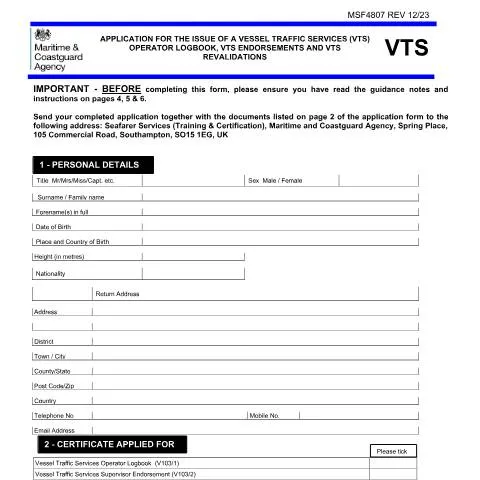
Navigating the Application Process for a Vessel Traffic Services (VTS) Licence
Acquiring a Vessel Traffic Services (VTS) licence is a critical step for professionals aiming to operate safely and efficiently within the maritime domain. The application process, while straightforward, necessitates keen attention to detail and adherence to specific guidelines set forth by the Maritime and Coastguard Agency (MCA). This document serves as a comprehensive guide to understand the intricacies of applying for a VTS licence, from initiating the application to receiving your licence.
Understanding the Role and Necessity of a VTS Licence
The VTS licence is essential for personnel responsible for the safe navigation of vessels within designated areas. This includes VTS operators, supervisors, and instructors. The licence is not merely a formality; it signifies that the holder possesses the requisite skills and knowledge to manage vessel movement effectively, thereby enhancing safety at sea.
Individuals seeking this licence typically fall under various categories:
- VTS Operators: Those who actively manage traffic and communications.
- VTS Supervisors: Experienced personnel overseeing operators and ensuring compliance with regulations.
- VTS Instructors: Trainers who impart knowledge and skills to aspiring VTS operators.
Essential Components of the Application: What to Prepare
When preparing for your VTS licence application, it’s critical to gather all necessary documentation to support your submission. The following are mandatory requirements:
- Complete personal details including contact information and identification (passport photographs).
- Certificates demonstrating nautical knowledge, including:
- Certificate of Nautical Knowledge
- VTS Induction certificate
- VTS Operator course certificate
- Radio certification (GoC/RoC/LRC/VTS VHF)
- Employer’s letter confirming medical fitness and language proficiency (generally IELTS level 7).
- Additional endorsements or logbooks, depending on whether you are applying for a new licence, revalidation, or upgrade.
Step-by-Step Guide to Completing Your Application
To successfully fill out the VTS application form, follow these steps meticulously:
- Read the Guidance Notes: Before you start, review the notes provided on pages four to six of the application form.
- Fill in Personal Details: Ensure accuracy, particularly in your name, contact information, and nationality.
- Selection of Certificates: Clearly tick the boxes for the certificates you are applying for, such as the VTS Operator Logbook or endorsements.
- Documentation Checklist: Double-check that you have all required documents listed on page two of the application form.
- Declaration: Sign and date the declaration to affirm that the information provided is accurate.
Submitting Your Application: Channels and Preferences
Applications can be submitted in different formats, each with its nuances:
- Online Submission: For those comfortable with digital processes, submitting your application online is efficient. Visit the dedicated payment portal on the Gov.uk website to process your application fee and receive confirmation.
- Postal Submission: If you prefer traditional methods, send your completed application to:
- In-Person Submission: Although less common, you may be able to submit your application in person at a designated MCA office, which can offer immediate clarification on any queries.
Seafarer Services (Training & Certification) Maritime and Coastguard Agency Spring Place, 105 Commercial Road Southampton, SO15 1EG, UK
What Happens After Submission? Understanding the Processing Timeline
Once your application is submitted, several stages occur:
- Initial Review: The MCA will check your application for completeness and compliance with all guidelines.
- Further Checks: Additional verification of your documents may occur, including validating your maritime qualifications and employer’s letters.
- Decision Notification: You will receive a notification regarding the outcome of your application. This can take several weeks, depending on the volume of applications being processed.
If approved, you will receive your VTS licence and any relevant endorsements. If denied or if further information is needed, the MCA will inform you of the reasons for refusal.
Addressing Common Issues: What If Your Application Is Rejected?
In the unfortunate event that your application is rejected, it is critical to understand your options:
- Request for Clarification: Contact the MCA to seek detailed information about the reasons for rejection.
- Rectification: If there were errors or missing documents, correct these promptly and reapply.
- Appeals Process: If you believe the rejection was unjustified, inquire about the formal appeals process, which allows you to submit additional evidence or arguments.
Unique Circumstances: Special Considerations for Applicants
Certain applicants may face unique circumstances that require additional attention:
- Foreign Nationals: If you are applying from outside the UK, ensure that your documents comply with both UK standards and regulations in your own country.
- Minors: Applicants under the age of 18 must have parental or guardian consent and may need additional documentation to verify their age and capabilities.
- Complex Situations: If you have a complex background, such as gaps in your maritime experience or previous disqualifications, it’s advisable to provide a comprehensive explanation with your application.
Keeping Track: Monitoring Your Application Status
After submission, keeping tabs on your application status can provide peace of mind. Here are some steps to follow:
- Confirm Receipt: If submitting by post, ensure you have a proof of posting. For online submissions, keep an email confirmation.
- Follow-Up: If you have not heard back within the expected timeline, contact the MCA for an update on your application status.
Understanding these stages and being proactive can help streamline the process and mitigate delays.
The Importance of Compliance and Integrity in the Application Process
Throughout this process, it is paramount to act with integrity. Providing false information can lead to severe penalties, including a £5000 fine. The MCA adheres strictly to the provisions outlined under the Data Protection Act 2018 and UK GDPR, ensuring that your personal data is handled responsibly.
By embarking on the journey to acquire your VTS licence with diligence and attention to detail, you not only enhance your professional capabilities but also contribute to the overall safety and efficiency of maritime operations. Every step, from gathering documents to submitting your application, can significantly impact your future in the maritime industry.
Understanding the Vessel Traffic Services (VTS) Licensing Framework
In the UK, the licensing of Vessel Traffic Services (VTS) plays a crucial role in ensuring navigational safety and the effective management of maritime traffic. The authority responsible for overseeing the issuance of VTS licences is the Maritime and Coastguard Agency (MCA). The framework for VTS operations is guided by both national regulations and international conventions, specifically the International Maritime Organization (IMO) regulations, which set standards for VTS systems globally.
The primary purpose of a VTS is to provide information, advice, and service to vessels navigating in congested or hazardous waters. As a vessel operator or service provider seeking to apply for a VTS licence, you must demonstrate compliance with these regulatory standards as well as the operational requirements as set forth by the MCA. This includes the need for a thorough understanding of traffic management, maritime communications, and emergency response protocols.
When applying for a VTS licence, you must prepare relevant documentation that outlines your operational capabilities, staff qualifications, and the technology you will use to monitor and manage vessel traffic. The MCA will assess your application based on these criteria, and you may be required to demonstrate your compliance through a series of tests or inspections before a licence is granted.
Preparing Your Application: Essential Documentation and Considerations
Before submitting your application for a VTS licence, it is essential to gather all necessary documentation. This not only facilitates a smoother application process but also ensures that your submission meets the stringent requirements set out by the MCA. Key documents to include in your application package are as follows:
- Operational Procedures Manual: This document should outline your standard operating procedures (SOPs) for VTS operations, including protocols for information dissemination, incident reporting, and emergency response.
- Staff Competency Records: Provide proof of qualifications and training for all personnel who will be involved in VTS operations. This should include certifications for radar operation, radio communications, and any relevant maritime qualifications.
- Technology Specifications: Detail the VTS technology you will use, including radar systems, communication tools, and software solutions for tracking and managing maritime traffic. Highlight how your technology complies with national and international standards.
- Risk Assessment and Mitigation Strategies: Conduct a comprehensive risk assessment of your intended VTS operations, addressing potential hazards and outlining your strategies for mitigating these risks to ensure navigational safety.
- Funding and Resource Allocation: Outline your financial plan for maintaining VTS operations, including budgetary allocations for equipment, personnel training, and maintenance costs.
Once you've compiled these documents, it's advisable to schedule a pre-application meeting with the MCA. This meeting provides an opportunity to clarify any questions regarding the application process and ensure that your submission is as robust as possible.
Post-Application Process: Inspections and Compliance Monitoring
After your application for a VTS licence has been submitted, the next phase involves a thorough assessment by the MCA, which may include inspections and evaluations of your operational capabilities. The MCA will conduct site visits to ensure that your facilities and equipment meet the required safety and operational standards. Here’s what to expect during this phase:
- Site Inspections: MCA surveyors will visit your VTS facility to assess compliance with the submitted documentation and regulatory standards. This includes evaluating your operational environment, technology, and personnel readiness.
- Demonstration of Operations: You may be required to demonstrate your VTS operations in real-time, showcasing how you manage vessel traffic and respond to emergencies. This practical demonstration is critical in proving your capability to operate a VTS effectively.
- Ongoing Compliance Monitoring: Once your VTS licence is granted, the MCA will conduct regular compliance checks to ensure that your operations continue to meet the required safety and operational standards. This could involve periodic audits and re-assessments that focus on staff training, technology updates, and operational procedures.
- Reporting Obligations: As a licensed VTS operator, you will have specific reporting obligations to the MCA regarding operational incidents, traffic statistics, and any changes in personnel or technology. Staying transparent and compliant with these obligations is essential for retaining your licence.
Understanding and preparing for the post-application process is vital to ensure that you maintain compliance and uphold the safety standards expected of VTS operators in the UK.