Understanding the Notice of a Written Special Resolution for Company Name Change
The process of changing a company's name in the United Kingdom is governed by the Companies Act 2006 and involves specific legal procedures. One key step is the passing of a written special resolution by the company's members (shareholders or members), which formally approves the change. This guide explains the purpose, process, and requirements for giving notice of such a resolution to Companies House, the official register of companies in the UK.
What is a Written Special Resolution?
A written special resolution is a formal document that records the decision made by a company's members to alter the company's name. Unlike an ordinary resolution, which requires a simple majority, a special resolution typically requires at least 75% of the members' approval. This resolution must be agreed upon in writing, without the need for a physical meeting, making it a convenient option for private companies seeking to change their name efficiently.
Purpose and Legal Basis
The primary purpose of giving notice of a written special resolution is to ensure that the change of company name is officially recorded and registered with Companies House. Under the Companies Act 2006, the company must deliver a copy of the resolution within 15 days of passing it. This statutory requirement helps maintain an accurate and up-to-date public record of company details, including any name changes.
Who Needs to Use This Procedure?
This procedure is exclusively applicable to private companies. Public companies have different requirements and processes for changing their names, often involving resolutions passed at general meetings rather than written resolutions. If you are a private company considering a name change, this process provides a straightforward legal pathway to effect the change.
Steps to Give Notice of a Written Special Resolution
1. Passing the Resolution
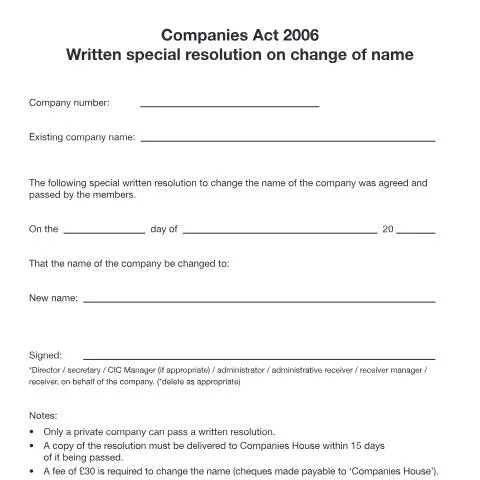
The company's members must agree on the new name and pass a written special resolution. This document should clearly state that the company intends to change its name and specify the new name. The resolution must be signed by the authorized members or their representatives, such as directors or company secretaries.
2. Delivery to Companies House
Once the resolution is passed, a copy must be submitted to Companies House within 15 days. This submission can be made electronically or via post, depending on the company's preferred method. The document should include:
- Company number
- Existing company name
- Details of the resolution, including the new name
- Signature of the authorized person (e.g., director, secretary)
3. Payment of the Fee
A fee of £30 is payable for the name change process. Payments can be made by cheque, payable to ‘Companies House,’ or through electronic payment methods if submitting online. Ensure the payment is made promptly to avoid delays in processing.
Additional Considerations
Before submitting the resolution, it is advisable to verify that the new name is available and not already in use or too similar to an existing registered name. This can be checked on the official Companies House register at companieshouse.gov.uk.
Furthermore, companies should ensure that the resolution is properly signed and that all required details are accurately completed. Once registered, Companies House will issue a certificate of incorporation on change of name, which serves as official confirmation of the change.
Important Notes and Legal References
- Only private companies can pass a written resolution for a name change.
- The resolution must be delivered within 15 days of being passed.
- A fee of £30 applies to this process.
- Check the availability of the new name at: companieshouse.gov.uk
- The resolution must be signed by an authorized person representing the company.
Summary
Changing a company's name through a written special resolution is a streamlined process designed for private companies. It involves passing a formal resolution, delivering a copy to Companies House within the statutory period, and paying the applicable fee. This process ensures that the company's new name is officially recorded and publicly accessible, maintaining transparency and legal compliance.