Understanding the Framework: Police Powers and Legal Requirements
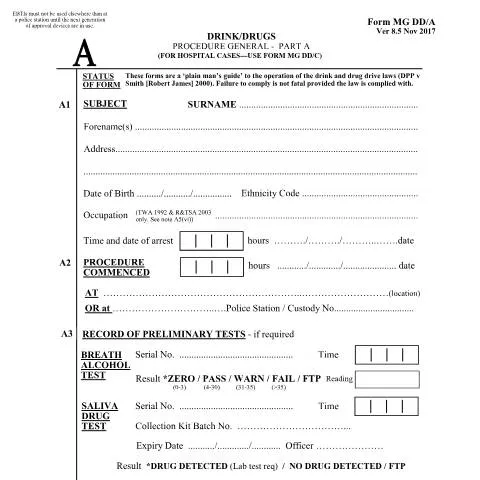
When a police officer suspects drink or drug driving, they must follow precise procedures set out in the Manual of Guidance Drink and Drug Driving (MGDD). The Form MG DD/A represents the cornerstone of this process, providing officers with a structured approach to conducting investigations at police stations or approved locations. This guidance document embodies what the courts have described as a "plain man's guide" to the operation of drink and drug drive laws, offering practical direction whilst maintaining legal compliance.
The manual operates within a complex legislative framework encompassing the Road Traffic Act 1988, Transport and Works Act 1992, and Railway and Transport Safety Act 2003. Officers must navigate these statutes whilst ensuring compliance with the Police and Criminal Evidence Act 1984 (PACE) and its associated codes of practice. The form serves as a procedural safeguard, helping officers gather evidence that will withstand scrutiny in court proceedings.
Central to the process is the concept that failure to comply with form requirements is not fatal provided the law itself has been complied with. This principle, established in DPP v Smith (Robert James) 2000, recognises that the forms provide guidance rather than rigid legal requirements. However, this flexibility demands that officers understand both the procedural framework and the underlying legal principles.
| Legislative Framework | Primary Application | Key Provisions |
|---|---|---|
| Road Traffic Act 1988 | Road vehicle offences | Sections 4-11 drink/drug driving |
| Transport and Works Act 1992 | Railway operations | Safety-critical workers |
| Railway and Transport Safety Act 2003 | Aviation and maritime | Extended transport sectors |
| PACE 1984 | Evidence procedures | Custody and interview protocols |
Navigating the Sequential Procedure: From Arrest to Evidence Collection
The MG DD/A form follows a carefully structured sequence designed to ensure comprehensive evidence gathering whilst protecting suspects' rights. The procedure commences with recording essential details including the subject's personal information, arrest circumstances, and initial observations. Officers must document the time and date of arrest alongside the procedure commencement time, creating a chronological framework for subsequent actions.
Section A4 requires officers to record the manner of the subject, including speech patterns, demeanour, and signs of intoxication. This documentation proves crucial for back-calculations and defending against technical challenges. Officers should note any changes in the subject's condition during the investigation period, as these observations may influence expert testimony regarding alcohol absorption and elimination rates.
The preliminary testing phase (Section A3) encompasses three potential assessments:
- Breath alcohol tests using approved screening devices, with results categorised as ZERO (0-3), PASS (4-30), WARN (31-35), or FAIL (>35)
- Saliva drug tests requiring serial numbers, batch numbers, and expiry dates, with outcomes recorded as DRUG DETECTED, NO DRUG DETECTED, or FTP (Failed to Provide)
- Preliminary impairment tests administered by trained officers to assess drug impairment through standardised field sobriety assessments
Each test requires meticulous recording of device serial numbers, times, and results. Officers must ensure that evidential breath testing instruments (EBTIs) are only used at police stations until next-generation approval devices become available for use elsewhere. This restriction reflects ongoing technological developments and Home Office approval processes for portable evidential equipment.
Location Considerations and Procedural Adaptations
The manual acknowledges that procedures may commence at various locations, with specific provisions for different scenarios. Form MG DD/A may be used at police stations or, with approved next-generation devices, at other locations. However, hospital cases require Form MG DD/C, reflecting the unique medical and legal considerations in healthcare settings.
When procedures begin elsewhere and subsequently direct officers to Form MG DD/B, the investigation must continue at a police station. This transition occurs because blood and urine samples can only be required at police stations or hospitals, not at roadside locations or other venues. This geographic limitation ensures proper medical supervision and custody procedures for invasive sampling methods.
Recording Requirements and Documentation Standards
The manual establishes rigorous documentation standards that extend beyond simple form completion. Officers must record all relevant observations, statements, and procedural steps with precision and clarity. The guidance emphasises that italicised text should be read out verbatim, ensuring suspects receive consistent information regardless of the investigating officer.
Section A5(vii) addresses the critical issue of recording unsolicited comments. When subjects make statements outside the formal framework—whether spontaneous admissions, explanations, or denials—officers must document these at Section A24. The recording officer must time and sign each entry, and where practicable, provide the subject with opportunities to read and verify the record's accuracy.
The verification process follows PACE Code of Practice C11.13, requiring officers to:
- Allow subjects to read their recorded statements
- Invite subjects to sign statements as correct or indicate inaccuracies
- Request endorsement with phrases such as "I agree that this is a correct record of what was said"
- Document any disagreements and obtain signatures confirming accurate reflection of disputes
- Record any refusal to sign verification statements
This meticulous approach protects both suspects' rights and evidential integrity, ensuring that spontaneous statements retain their probative value whilst meeting admissibility requirements.
Technical Challenges and Back-Calculation Scenarios
The manual recognises that drink-driving cases increasingly involve sophisticated technical defences challenging the reliability and interpretation of test results. Officers' observations recorded in Section A4 become crucial when expert witnesses attempt to calculate blood alcohol levels at the time of driving, particularly when significant time has elapsed between the incident and testing.
Back-calculation requires consideration of multiple factors including:
- The subject's physical condition and behaviour at different times
- Food consumption and timing relative to alcohol intake
- Individual metabolic rates and absorption patterns
- The gap between driving and testing
- Any medical conditions affecting alcohol processing
Detailed contemporaneous observations help forensic experts assess these variables and provide more accurate retrospective calculations. Changes in the subject's condition during custody may indicate ongoing absorption or elimination, affecting the relationship between test results and impairment levels whilst driving.
Device Limitations and Next-Generation Approvals
The current restriction limiting EBTI use to police stations reflects ongoing Home Office evaluation of portable evidential devices. Traditional breath testing equipment requires controlled environmental conditions, regular calibration, and trained operator supervision—factors more easily maintained in custody suites than at roadside locations.
Next-generation devices under development aim to provide evidential-quality results whilst maintaining portability and reliability in various environmental conditions. Until these receive full Home Office approval, officers must transport suspects to police stations for evidential breath testing, potentially affecting the timing of procedures and the relevance of results to driving capability.
Special Populations and Procedural Modifications
The manual acknowledges that certain populations require modified procedures reflecting their particular vulnerabilities or circumstances. Young persons aged 17 or under possess specific rights regarding consent and representation, with procedures adapted to ensure appropriate adult involvement where necessary.
PACE Code of Practice C12.3 provides additional guidance for interviewing persons under the influence of drink or drugs. Officers must assess whether suspects possess sufficient mental capacity to understand questions and provide reliable responses. Severely intoxicated individuals may require medical assessment before formal interviewing can proceed.
Healthcare professionals play crucial roles in assessing fitness for procedures, particularly when medical conditions may affect test reliability or suspect welfare. The manual distinguishes between registered health care professionals (HCP) and medical practitioners (doctors), recognising different qualification levels and decision-making authorities within the procedural framework.
| Special Consideration | Procedural Requirement | Key Safeguard |
|---|---|---|
| Young persons (≤17 years) | Appropriate adult involvement | Enhanced consent procedures |
| Severe intoxication | Medical fitness assessment | Delayed procedures if necessary |
| Mental health concerns | Capacity evaluation | Healthcare professional consultation |
| Language barriers | Interpreter services | Verified understanding |
Multi-Agency Coordination and Expert Support
The manual recognises that drink and drug driving investigations often require coordination between multiple agencies and expert services. The NPCC National Police Liaison Officer at the Department for Transport provides specialist advice on MG DD processes, offering support when officers encounter unusual circumstances or complex technical issues.
This liaison function proves particularly valuable when cases involve emerging substances, novel testing technologies, or cross-jurisdictional elements. The centralised expertise ensures consistent national approaches whilst allowing for local adaptation to specific circumstances.
Forensic science providers contribute crucial support through laboratory analysis of biological samples and expert testimony interpretation. Their involvement begins with proper sample collection and chain of custody procedures, extending through court proceedings where technical evidence requires expert explanation.
Circumstances Beyond Standard Procedures
Section A5(v) acknowledges that this form cannot cater for all eventualities, directing officers to record unusual circumstances at Section A24 together with additional particulars or notes. This flexibility provision recognises the diversity of real-world scenarios that may not fit standard procedural templates.
Examples of circumstances requiring additional documentation might include:
- Medical emergencies during custody
- Equipment failures or calibration issues
- Language or communication difficulties
- Unusual behaviour patterns suggesting medical conditions
- Challenges to officer authority or procedure
- Environmental factors affecting test reliability
Comprehensive documentation of these exceptional circumstances helps ensure that subsequent legal proceedings can properly evaluate the evidence's reliability and admissibility.
Quality Assurance and Legal Compliance Framework
The manual operates within a broader quality assurance framework designed to maintain public confidence in drink and drug driving enforcement. Regular updates—with the current version dated November 2017—reflect evolving legal requirements, technological developments, and procedural improvements based on operational experience.
Compliance monitoring occurs at multiple levels, from individual case file reviews to force-wide audits of procedural adherence. Training programmes ensure officers understand both the mechanical aspects of form completion and the underlying legal principles governing evidence collection and suspect rights.
The Data Protection Act 2018 and UK GDPR impose additional obligations regarding personal information handling, storage, and sharing. Officers must ensure that data collected during drink and drug driving procedures meets privacy requirements whilst remaining available for legitimate law enforcement and judicial purposes.
Professional standards departments monitor complaint patterns and procedural errors, identifying training needs and systemic issues requiring policy attention. This feedback mechanism helps maintain procedural effectiveness whilst protecting individual rights and maintaining public trust in enforcement activities.
The manual's emphasis on sequential procedure completion, comprehensive documentation, and expert consultation reflects recognition that drink and drug driving cases increasingly face sophisticated legal challenges. Proper adherence to guidance requirements helps ensure that evidence withstands scrutiny whilst protecting both public safety and individual rights within the justice system.
MGDD Evidence Collection and Laboratory Procedures
The Manual of Guidance for Drink and Drug Driving establishes rigorous protocols for evidence collection that must be followed precisely to ensure admissibility in court proceedings. These procedures form the backbone of successful prosecutions and protect both public safety and defendants' rights under UK law.
Breath Specimen Collection Standards
Police officers must follow exact sequences when operating approved breath testing devices. The MGDD specifies that officers must observe suspects for at least 20 minutes before administering breath tests to ensure no residual mouth alcohol affects readings. During this observation period, suspects must not consume anything, smoke, vomit, or belch, as these actions can compromise test accuracy.
The guidance details calibration requirements for breath testing equipment, mandating regular checks using certified reference standards. Officers must document calibration dates, reference batch numbers, and any anomalies in device performance. Failure to maintain proper calibration records can result in evidence being ruled inadmissible, regardless of the actual alcohol reading obtained.
Temperature variations significantly impact breath test accuracy, and the MGDD addresses environmental considerations that officers must account for. Testing must occur in controlled conditions wherever possible, with ambient temperature recorded alongside breath specimen results. Officers receive specific training on identifying when environmental factors might compromise test reliability.
Blood and Urine Sampling Protocols
When breath testing proves impossible or inappropriate, the MGDD governs blood and urine specimen collection procedures. Medical professionals conducting blood draws must hold appropriate qualifications and follow strict chain of custody protocols. The guidance specifies approved collection sites, typically police stations with medical facilities or designated healthcare centres.
Blood specimens require dual vials using sodium fluoride preservative to prevent bacterial degradation of alcohol content. The MGDD mandates specific labelling procedures, including suspect identification details, collection time and date, and medical professional signatures. Both suspect and officer must witness the sealing process, with any irregularities documented immediately.
Urine collection follows different protocols due to the delayed alcohol absorption timeline. The MGDD requires two separate specimens collected at least 20 minutes apart, with the first specimen discarded to ensure accurate representation of blood alcohol levels at the time of driving. Officers must maintain continuous observation during the collection period to prevent sample substitution or contamination.
Drug Recognition Expert Procedures
The MGDD incorporates Drug Recognition Expert (DRE) protocols for cases involving suspected drug impairment. These highly trained officers conduct systematic evaluations following standardised procedures developed through international law enforcement cooperation. The 12-step DRE process includes preliminary examinations, eye movement tests, divided attention tasks, and vital signs monitoring.
Documentation requirements for DRE evaluations exceed those for alcohol testing due to the complexity of drug impairment assessment. Officers must record detailed observations of suspect behaviour, physical symptoms, and performance on standardised field sobriety tests. The MGDD emphasises the importance of contemporaneous note-taking, as drug effects can change rapidly over time.
Toxicological analysis of biological specimens follows different timelines and procedures for drug cases. The MGDD addresses various drug categories, from cannabis and cocaine to prescription medications and novel psychoactive substances. Each category requires specific collection and testing protocols, with different detection windows and interpretive challenges for forensic scientists.
Prosecution Challenges and Courtroom Applications
The MGDD serves as the foundation for presenting drink and drug driving evidence in criminal proceedings, but successful prosecutions require careful attention to procedural compliance and expert testimony standards. Crown Prosecution Service guidelines work alongside MGDD protocols to ensure robust cases that withstand defence challenges.
Expert Witness Requirements
Forensic scientists testifying in drink and drug driving cases must demonstrate competency in accordance with MGDD standards and Criminal Procedure Rules. The guidance establishes minimum qualifications for expert witnesses, including relevant scientific education, practical experience in forensic toxicology, and ongoing professional development requirements.
Expert testimony must address not only the analytical results but also their interpretation in the context of driving impairment. The MGDD provides frameworks for explaining complex concepts like alcohol absorption and elimination rates, drug metabolism pathways, and individual variation factors to lay juries. Experts must avoid speculation while providing scientifically sound opinions within their areas of competence.
Quality assurance procedures for forensic laboratories align with MGDD requirements and international accreditation standards. Regular proficiency testing, method validation, and measurement uncertainty calculations ensure reliable results that meet evidential standards. Defence challenges often focus on laboratory procedures, making adherence to MGDD protocols crucial for maintaining public confidence in the criminal justice system.
Common Defence Strategies and Responses
Defence solicitors frequently challenge MGDD compliance to undermine prosecution cases, requiring prosecutors to demonstrate meticulous adherence to established procedures. Common challenges include questioning the reliability of testing equipment, the competency of officers conducting procedures, and the integrity of specimen handling throughout the chain of custody.
The "hip flask defence" remains a persistent challenge where defendants claim post-driving alcohol consumption to explain elevated readings. The MGDD addresses this scenario through back-calculation procedures and witness testimony requirements. Prosecutors must establish drinking patterns before and after driving incidents, often requiring detailed timeline reconstruction and expert pharmacokinetic testimony.
Medical defences involving prescription medications or underlying health conditions require careful evaluation against MGDD criteria. The guidance distinguishes between therapeutic drug use and impairment, considering factors like prescribed dosages, timing of administration, and individual patient responses. Officers must document any claimed medical conditions and prescribed medications during initial investigations.
Sentence Guidelines and Mitigation Factors
While the MGDD primarily addresses technical procedures, it influences sentencing considerations through the quality and reliability of evidence presented. Magistrates and judges rely on accurate scientific evidence to determine appropriate penalties within statutory frameworks established by the Road Traffic Offenders Act 1988.
Breath alcohol readings significantly impact sentence severity, with higher readings attracting longer disqualification periods and increased financial penalties. The MGDD ensures accurate measurements that support proportionate sentencing, while procedural compliance protects against successful appeals that could undermine road safety objectives.
Aggravating factors documented through MGDD procedures include evidence of dangerous driving behaviour, accident involvement, and previous convictions for similar offences. Conversely, mitigation might consider medical conditions affecting test results, genuine emergencies necessitating driving, and exceptional hardship circumstances that proper evidence collection helps establish or refute.
International Cooperation and Cross-Border Enforcement
The MGDD incorporates international best practices and facilitates cooperation with European and global law enforcement agencies in addressing drink and drug driving offences that cross jurisdictional boundaries. These provisions become increasingly important as travel patterns evolve and enforcement technologies advance.
European Union Coordination Mechanisms
Despite Brexit, UK authorities maintain cooperation agreements with EU member states regarding cross-border traffic offences, including drink and drug driving cases involving UK residents abroad or foreign nationals in the UK. The MGDD addresses recognition of foreign test results and procedures for obtaining evidence from overseas jurisdictions.
Mutual legal assistance treaties enable UK prosecutors to request forensic evidence from EU laboratories when cases involve cross-border elements. The MGDD establishes quality standards that facilitate recognition of UK test results by foreign courts, ensuring that British tourists face appropriate consequences for driving offences committed abroad while maintaining evidential integrity.
Training exchanges and technical cooperation programmes allow UK experts to share MGDD expertise with international colleagues while learning from foreign innovations in drink and drug driving enforcement. These relationships prove particularly valuable in addressing emerging challenges like novel psychoactive substances and sophisticated evasion techniques.
Technology Transfer and Innovation Adoption
The MGDD framework adapts to incorporate technological advances developed in other jurisdictions while maintaining compatibility with UK legal requirements and procedural standards. International research collaboration accelerates the development and validation of new testing methods and detection technologies.
Roadside drug testing devices undergo extensive evaluation processes guided by MGDD criteria before approval for UK use. These assessments consider not only technical performance but also operational practicality, training requirements, and legal admissibility standards. International experience with similar technologies informs UK adoption decisions and implementation strategies.
Data sharing agreements enable UK authorities to access international databases of drug reference standards and analytical methods, enhancing the capability to detect and prosecute cases involving substances not commonly encountered in domestic enforcement. The MGDD provides frameworks for validating foreign analytical methods and incorporating international reference materials into UK laboratory procedures.
Diplomatic and Consular Considerations
UK consular services rely on MGDD standards when assisting British nationals arrested for drink and drug driving offences overseas, ensuring that foreign procedures meet minimum standards of reliability and procedural fairness. Consular officers receive training on technical aspects of drink and drug driving enforcement to provide informed assistance to detained citizens.
Reciprocal arrangements with Commonwealth countries often reference MGDD procedures as benchmark standards for mutual recognition of driving disqualifications and criminal convictions. These agreements prevent offenders from evading consequences by relocating between jurisdictions while respecting national sovereignty over criminal justice systems.
International visitors to the UK benefit from MGDD procedural protections that ensure fair treatment regardless of nationality or familiarity with British legal systems. Translation services, diplomatic notification procedures, and cultural sensitivity training for enforcement officers help maintain international confidence in UK justice while upholding road safety standards for all road users.