Navigating the Planning Inspectorate's Appeal Form: A Comprehensive Guide
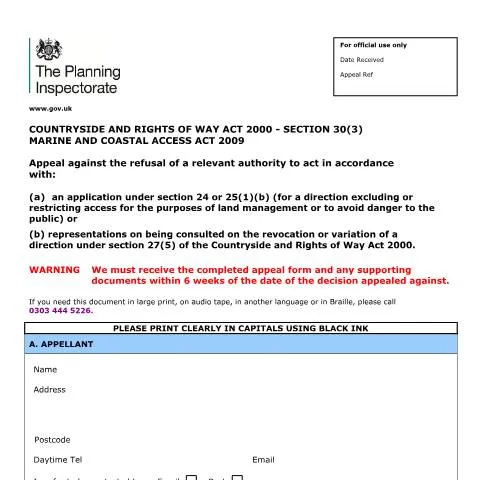
In the intricate landscape of UK planning law, navigating the appeal process can be daunting, especially for those unfamiliar with its nuances. The Planning Inspectorate's "Restriction Appeals: Appeal Form and Guidance" serves as a critical tool for anyone wishing to contest a decision made by a relevant authority regarding access restrictions under the Countryside and Rights of Way Act 2000 and the Marine and Coastal Access Act 2009. Understanding how to effectively complete and submit this form is essential for ensuring your voice is heard in this process.
Understanding the Appeal Process: When and Why to Use the Form
The appeal process is triggered when individuals disagree with decisions made by local authorities concerning access restrictions to land, typically for management or safety reasons. For instance, if a landowner or occupier receives a notification about a direction that limits access to their property for safety or management purposes, they may appeal this decision through the Inspectorate.
Key Scenarios for Filing an Appeal:
- A direction under section 24 or 25(1)(b) that excludes or restricts access.
- Consultations regarding the revocation or variation of a direction under section 27(5).
The appeal must be lodged within six weeks of the decision, making timely action critical. Failure to submit the appeal form and necessary documentation within this timeframe can result in the dismissal of your appeal.
Channeling Your Appeal: Online vs. Paper Submissions
When preparing to submit your appeal, it’s vital to consider the channels available for submission. The Planning Inspectorate provides both online and paper submission options, each with its own advantages.
Online Submission:
- Faster processing times, as submissions are received immediately.
- Confirmation of receipt is typically provided more swiftly.
- Accessible from the comfort of your home, reducing logistical barriers.
Paper Submission:
- Useful for individuals who may not be comfortable with technology.
- Allows for the inclusion of detailed annotations directly on physical documents.
- Can be sent via recorded delivery for peace of mind.
Regardless of the method chosen, ensure that your appeal form is completed accurately and that all required documentation is included to avoid delays.
Deciphering the Form: Navigating Each Section
The appeal form comprises several sections, each requiring careful attention. Here’s a detailed breakdown of the key parts:
A. Appellant Information
This section gathers basic personal information, including your name, address, telephone number, and preferred method of contact. Be aware that any inaccuracies here can lead to communication issues later on.
B. Agent Information
If you are appointing an agent to manage your appeal, their details must be provided. This is critical as all correspondence will be directed to this individual.
C. Location of the Appeal Site
Accurate site identification is paramount. Include:
- The OS Grid reference.
- A clear description of the site, including notable landmarks.
- The relevant local authority's name.
Any discrepancies in this section can lead to complications or dismissal of the appeal.
D. Relevant Authority Details
In this section, you need to specify the authority whose decision you are appealing against. Also, include any reference numbers associated with your application.
E. Grounds for Appeal
Clearly state why you believe the relevant authority did not act in accordance with the law. Selecting the correct grounds is crucial, as it sets the foundation for your argument.
F. Reasons for Appeal
Here, you should articulate the specifics of your case. Use this section to provide a persuasive narrative about your position, supported by factual evidence.
G. Procedure Selection
You have three procedural options for your appeal: written representations, hearings, or inquiries. Each serves different needs:
- Written Representations: Most common and straightforward.
- Hearing: Facilitates discussion in a less formal setting.
- Inquiry: A more formal procedure akin to a court setting.
Select the one that best fits your situation and substantiate your choice.
H. Supporting Documents
It's imperative to include all required documents, as failure to do so can lead to rejection. Essential documents typically include:
- A copy of your application to the relevant authority.
- The authority's decision.
- A detailed site plan.
- Relevant correspondence.
Double-check to ensure that each document is labeled correctly and included in your submission.
What Happens After Submission? A Timeline Overview
Once your appeal is submitted, here’s what to expect as the process unfolds:
- Initial Review: The Planning Inspectorate will review your appeal for completeness and adherence to guidelines.
- Confirmation: You will receive a notification confirming receipt and outlining the next steps.
- Determination of Procedure: The Secretary of State will decide the appropriate procedure based on your preferences and case complexity.
- Investigation and Site Visits: If relevant, an inspector may conduct a site visit.
- Decision: A decision will be communicated to you, typically within a few months.
Understanding this timeline helps manage expectations and prepares you for the subsequent steps.
In Case of a Rejection: Understanding Your Options
Receiving a refusal of your appeal can be disheartening, but it is important to understand your options. Here are some pathways to consider:
Revisiting the Decision
If you believe there are grounds for further action, you may be able to:
- Ask for a review if you have new evidence.
- Seek legal advice to explore potential grounds for judicial review.
Correcting Errors
If you notice mistakes in the information submitted, you should contact the Planning Inspectorate immediately. Any amendments may not guarantee a change in the decision but could be important for future considerations.
Missing Documentation
If your appeal is rejected due to lack of documentation, ascertain precisely which documents were missing and provide these promptly if timelines allow.
Special Considerations: Unique Circumstances and Exceptions
In some cases, applicants may face unique challenges, such as language barriers, disabilities, or complex legal matters. Here’s how to address these situations effectively:
Language and Accessibility Accommodations
Should you require assistance in completing the form due to language or disability issues, the Planning Inspectorate is obligated to provide support. For documents in large print, audio formats, or other languages, contact their helpline directly.
Complex Cases
If your appeal involves multiple parties or extensive stakeholder engagement, consider enlisting professional assistance. Legal experts can provide invaluable guidance.
Age Considerations
In cases where minors or vulnerable individuals are involved, ensure that the appeal process is handled with care, keeping their best interests at heart. Such cases may require additional documentation or support, particularly if there's a guardian or representative involved.
Distinguishing This Form from Similar Applications
It is critical to differentiate the "Restriction Appeals" form from other planning-related documents. Often, applicants confuse it with general planning application forms or other appeal forms.
Key Differences Include:
| Form Type | Purpose | Applicable Legislation |
|---|---|---|
| Restriction Appeals | Appeal against access restrictions | Countryside and Rights of Way Act 2000 |
| Planning Application | Request for planning permission | Town and Country Planning Act 1990 |
| General Appeal Form | Appeal against refusal of planning permission | Planning Act 2008 |
Understanding these distinctions is essential for ensuring the correct procedures are followed and that you submit the appropriate form for your situation.
Final Tips for Successful Submission
To increase the chances of a successful appeal, here are some practical tips:
- Carefully read all guidelines and instructions provided with the form.
- Maintain clear communication with the Planning Inspectorate throughout the process.
- Consider consulting with a professional if your case is particularly complex.
- Double-check all documents for completeness before submission.
By navigating the appeal process with diligence and understanding, you can effectively advocate for your rights and ensure that decisions regarding land access are just and fair.
Understanding the Grounds for Making an Appeal
When contemplating a restriction appeal, it's essential to comprehend the specific grounds upon which you can submit your appeal. The Planning Inspectorate assesses appeals based on several factors, including procedural errors, the context of the decision, and substantive matters related to the planning policy.
Common grounds for appeal include:
- Procedural Errors: This may involve a failure to follow the required planning procedures, such as inadequate public consultation or not adhering to statutory timeframes.
- Inconsistencies with Local Plans: If the decision made by the local authority contradicts the specified local plan or national policy frameworks, this could form a solid basis for your appeal.
- Development Context: Changes in the development context or new information that supports your application may also qualify your appeal. For instance, if new evidence shows that the development would not negatively impact the locality as previously claimed.
It's crucial to present a well-structured argument that ties your grounds for appeal to the relevant policies and procedures outlined in official documents. Engaging a planning consultant can often enhance your appeal, as they can provide expert insights and validate your claims.
Submitting Your Appeal: Step-by-Step Process
The submission of a restriction appeal involves a defined process under the Planning Act. Here’s a detailed step-by-step guide to ensure you navigate this correctly:
- Prepare Your Appeal Form: Complete the appropriate appeal form, which can be found on the Planning Inspectorate’s website. Ensure that you include all necessary details and documentation to support your claim.
- Gather Supporting Evidence: Collect evidence that substantiates your grounds for appeal. This could include photographs, architectural drawings, and witness statements. Ensure these documents clearly reflect how your development aligns with local and national planning policies.
- Submit Your Appeal: Submit your completed appeal form along with supporting documents online or via post to the Planning Inspectorate. Be mindful of the timelines dictated by planning regulations—generally within six months of the original decision.
- Await Confirmation: After submission, you will receive an acknowledgement from the Planning Inspectorate. This will detail the appeal reference number and outline the next steps.
- Attend the Hearing or Inquiry: Depending on the complexity of your case, a local inquiry or hearing may be scheduled. Be prepared to present your case effectively, ideally with the assistance of a planning expert or consultant.
- Receive the Decision: Post inquiry, the Planning Inspectorate will issue a decision, typically within a few weeks to months, depending on the complexity and workload. Monitor your email or post for this communication.
Throughout this process, maintaining clear communication and adhering to deadlines is essential to ensure your appeal is considered valid and has the best chance for success.
Common Pitfalls to Avoid in the Appeal Process
While many individuals embark on the appeal journey with good intentions, certain pitfalls can significantly diminish the chances of a successful outcome. Here are some common missteps to avoid:
- Lack of Clarity: Your appeal must be clear and concise. Ambiguities can lead to confusion and may be grounds for dismissal. Ensure that your arguments are organized logically and supported by concrete evidence.
- Failure to Follow Procedures: Each phase of the appeal process has specific protocols that must be followed. Missing deadlines or neglecting to adhere to submission guidelines can jeopardize your appeal. Keep detailed records of your submissions and correspondence.
- Ignoring Feedback: If your application was previously denied, it’s essential to thoroughly review the feedback and reasons for refusal provided by the local authority. Failing to address these points in your appeal may weaken your case.
- Insufficient Evidence: Relying solely on verbal assertions without substantial documentation can lead to rejection. Ensure that all claims are backed by relevant evidence, which may include expert opinions or supporting data.
- Neglecting Representation: Even if you feel confident about your case, consider engaging professional representation. A planning consultant can provide invaluable assistance, particularly in navigating complex procedural matters and articulating your argument effectively during hearings.
By being aware of these potential pitfalls and taking proactive steps to avoid them, you can significantly enhance the strength of your appeal and its likelihood of success.