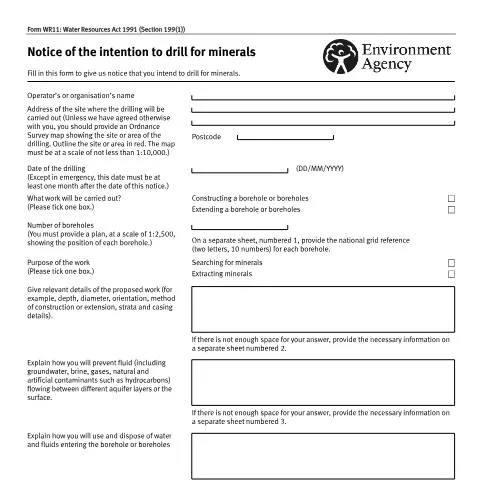
The Importance of the Notice of Intent to Drill for Minerals
In the realm of natural resource extraction, the Notice of Intent to Drill for Minerals serves as a critical document that lays the groundwork for responsible and regulated drilling activities. This notice not only informs the Environment Agency of the planned drilling operations but also ensures that operators comply with environmental standards. By submitting this notice, mineral operators demonstrate their commitment to preserving the integrity of the UK's natural resources while adhering to legal frameworks that govern such activities.
Key Elements of the Notice
Understanding the components of the notice is essential for any operator intending to drill for minerals. The document encompasses several key sections that provide vital information regarding the planned drilling activities:
- Operator Information: The notice requires details about the operator or organization, ensuring that the Environment Agency can establish a point of contact.
- Site Details: It is imperative to specify the exact location of the drilling site, accompanied by an Ordnance Survey map. This helps mitigate any environmental risks associated with the chosen location.
- Drilling Schedule: Operators must communicate the intended date for drilling, which should be at least one month after the notice is submitted, barring emergencies.
- Types of Work: The notice outlines whether the operator intends to construct new boreholes or extend existing ones, which informs the regulatory assessment process.
- Purpose of Work: Clarifying whether the goal is searching for or extracting minerals is crucial, impacting the regulatory scrutiny and required compliance measures.
Navigating Regulatory Interactions
The submission of the notice forms part of a broader regulatory framework governed by the Water Resources Act 1991. Operators should be aware of how this notice interacts with other legal requirements in the drilling process:
- Environmental Impact Assessments (EIA): Depending on the scale of the drilling project, an EIA might be required. This assessment evaluates the potential environmental consequences of the planned activities and informs the Environment Agency's decision-making process.
- Water Management Plans: Operators must ensure that their plans detail how they will manage water resources, particularly in terms of preventing contamination and ensuring sustainable water usage.
- Adherence to Mining Regulations: All drilling activities must comply with specific mining regulations that govern the extraction process, including adherence to health and safety standards.
Common Misinterpretations and Clarifications
Operators often encounter misunderstandings regarding the implications of the notice. Clarifying these points is vital for ensuring compliance and avoiding delays:
- Emergency Drilling Dates: While the notice stipulates a minimum one-month notice period, emergency situations can alter this requirement. However, operators should be prepared to justify the emergency to the Environment Agency.
- Map Requirements: Some operators mistakenly believe that a rough sketch is acceptable. A precise Ordnance Survey map at a scale of 1:10,000 is necessary to accurately delineate the drilling site.
- Fluid Management Details: Failing to provide comprehensive information on how fluids will be managed can lead to rejection of the notice. Operators must detail their strategies for preventing contamination between aquifer layers and disposing of fluids responsibly.
When is This Notice Indispensable?
The Notice of Intent to Drill for Minerals is not only a mere formality; it serves critical functions across various scenarios:
- New Mineral Exploration Projects: For any new site where drilling for minerals is planned, this notice is a prerequisite for commencing operations.
- Extension of Existing Boreholes: Operators looking to extend current boreholes need to file this notice to ensure continued compliance with environmental regulations.
- Regulatory Audits: During routine audits or inspections by the Environment Agency, having this notice on record can demonstrate compliance and proactive communication with authorities.
Limitations of the Notice
While the notice serves as a foundational document, it is essential to recognize its limitations and scope:
- Scope of Work: This notice specifically addresses drilling for minerals and does not encompass other activities, such as drilling for water extraction or geothermal purposes.
- Time-Bound Nature: Submitting this notice does not grant indefinite permission to drill. Operators must keep abreast of any changes in regulations that may affect their rights to continue drilling based on the submitted notice.
- Single Location Focus: The notice pertains to a specific site and does not account for multiple sites unless they are individually addressed in separate submissions.
Best Practices for Completing Your Notice
To ensure that the Notice of Intent to Drill for Minerals is completed accurately and effectively, consider the following best practices:
- Thoroughly Research Regulations: Familiarize yourself with all relevant regulations and guidelines provided by the Environment Agency before completing the notice.
- Consult with Environmental Experts: Engaging environmental consultants can help navigate complex environmental assessments and enhance compliance strategies.
- Engage with Local Communities: Building relationships with local communities and stakeholders can facilitate a smoother approval process and minimize potential opposition.
Details to Include in the Notice
Operators must ensure that the notice is comprehensive and includes all required information. Critical details to include are:
| Detail Required | Explanation |
|---|---|
| Operator’s Name | Provide the full legal name of the operator or organization. |
| Site Address | Include the specific site address, ensuring accuracy to avoid compliance issues. |
| Drilling Dates | Date must be set at least one month after the notice submission unless an emergency situation justifies otherwise. |
| Borehole Information | Specify the number of boreholes and provide a detailed plan showing their positions. |
| Fluid Management | Clearly explain how potential contaminants will be managed and how water and fluids will be disposed of. |
Looking Ahead: The Future of Mineral Drilling Regulations
The landscape for mineral drilling regulations is evolving in response to environmental concerns and technological advancements. Operators should remain vigilant in tracking regulatory changes that could impact their operations:
- Increased Scrutiny: As climate change becomes an ever-more pressing issue, regulators may introduce stricter guidelines regarding drilling practices and environmental assessments.
- Innovation in Technology: New technologies aimed at minimizing environmental impacts during drilling are emerging. Staying informed about these advancements can enhance an operator's environmental compliance and operational efficiency.
- Public Engagement: Transparency and engagement with the public and local communities will likely play a larger role in the regulatory process, shaping how operators conduct mineral drilling in the future.
Understanding the Drilling for Minerals Notification Process
The process of notifying authorities about your intention to drill for minerals in the UK is governed by specific regulations that ensure environmental protection while facilitating resource extraction. The initial step involves submitting a Notice of Intent, which must be sent to the appropriate local council or relevant authority as stipulated under the Environmental Protection Act 1990 and the Minerals Planning Policy. This document outlines your drilling plans, including the location, methods, expected duration, and any potential environmental impacts.
It is critical to include comprehensive information in your Notice of Intent to avoid delays. Authorities require details on the geological targets, drilling techniques, anticipated noise levels, and any measures you will implement to mitigate environmental impact. If your drilling project is part of a larger development, you may also need to consider integrating with a wider Environmental Impact Assessment (EIA), which assesses cumulative effects alongside other projects in the area.
Best Practices for Minimizing Environmental Impact During Drilling
When engaging in mineral drilling, it’s essential to prioritize environmental responsibility. Implementing best practices is not just good ethics; it's often a legal requirement under various environmental regulations. Start by conducting thorough preliminary research to understand the flora and fauna in the drilling area. This can involve consultation with environmental experts and the local community to identify sensitive habitats, which may require special consideration or protection measures.
Moreover, during the drilling operation, ensure that noise and dust are kept to a minimum. This can be achieved through the use of modern, quieter drilling rigs and efficient dust suppression techniques. Additionally, establish a clear plan for the management of waste materials generated during drilling. This includes proper disposal of drilling fluids and cuttings in compliance with the Environment Agency's guidelines. Engage local stakeholders by providing updates on your operations and responding promptly to any concerns they raise. Building good relationships can mitigate risks and enhance your project’s reputation.
Responding to Concerns and Legal Objections from the Community
Community engagement is a critical aspect of the drilling notification process, especially in areas where drilling might provoke local objections. When submitting your Notice of Intent, be prepared for possible concerns from residents, environmental organizations, and council members. It's advisable to proactively address potential issues by including a section in your notice that discusses how you intend to manage impacts on the local environment and community.
If objections arise following the submission of your Notice of Intent, it's crucial to respond thoughtfully. You may need to arrange community meetings to discuss the project in detail, providing transparency about your operations and the measures you are taking to mitigate adverse effects. This open dialogue can frequently alleviate fears and lead to collaborative solutions. If the concerns lead to formal objections, be prepared to enter a negotiation phase, possibly involving local councils, where you may have to adjust your plans to reach a consensus.
Ultimately, understanding the complexities of local regulations, engaging with the community, and demonstrating a commitment to environmental stewardship can significantly enhance the prospects of your drilling project proceeding smoothly.