The Strategic Role of Trainer Registration in Theory Test Booking Systems
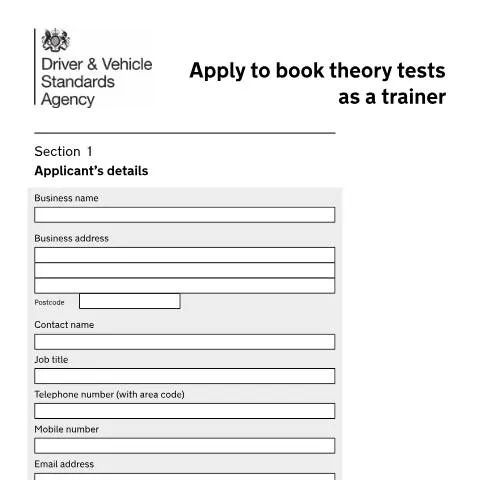
For driving instructors and training establishments across the UK, the ability to book theory tests directly for pupils represents a significant operational advantage. The DVSA's trainer registration system, facilitated through form DVSA 0597, transforms how approved driving instructors (ADIs) and fleet training managers coordinate their pupils' theoretical assessments. Rather than leaving candidates to navigate the booking process independently—often resulting in delayed tests or scheduling conflicts with practical lessons—registered trainers gain privileged access to the theory test booking platform.
This registration framework operates on a multi-tiered approval system. Primary applicants submit the initial business registration, establishing their organisation's credentials and operational scope. Subsequently, they designate authorised users who receive individual login credentials to the booking system. This structure ensures accountability whilst providing flexibility for larger training establishments with multiple instructors or administrative staff.
The significance extends beyond mere convenience. In areas where theory test appointments are heavily subscribed—particularly major urban centres—registered trainers often secure preferential booking windows or access to cancelled slots that aren't immediately visible to public users. This advantage proves crucial for maintaining structured training programmes where theory and practical elements must align with course schedules.
Understanding Business Eligibility and Category Authorisations
The DVSA's registration criteria reflect the agency's commitment to maintaining professional standards within the driver training sector. Business registration requirements mandate that applicants possess legitimate commercial status, evidenced through registered business identification numbers and established trading addresses. This isn't merely bureaucratic formality—it ensures that only bona fide training providers gain access to what effectively constitutes a commercial booking facility.
The category selection mechanism within Section 1 determines the scope of your booking authority. The four available categories—Car, Motorcycle, LGV (Large Goods Vehicle), and PCV (Passenger Carrying Vehicle)—correspond directly to the different theory test variants administered by DVSA. Each category carries distinct implications:
| Test Category | Typical Training Context | Booking Considerations |
|---|---|---|
| Car | Standard ADI instruction, fleet driver training | Highest demand; advance booking essential |
| Motorcycle | CBT providers, motorcycle schools | Seasonal variations in availability |
| LGV | Commercial vehicle training centres | Limited test centre locations |
| PCV | Bus and coach operator training | Specialised centres; longer booking lead times |
Significantly, your initial category selection isn't necessarily permanent. Established trainers can submit updated registrations to expand their authorised categories as their business develops. However, each category addition triggers a fresh assessment of your organisation's capability to deliver appropriate training standards.
Navigating the Multi-User Framework
Section 2's user designation system addresses a common operational challenge: how training organisations delegate booking responsibilities whilst maintaining oversight and accountability. The DVSA recognises that larger establishments require multiple staff members to access booking functions, but equally acknowledges the security and audit trail implications of widespread access.
Each designated user receives individual login credentials tied to the parent organisation's registration. This creates a clear hierarchy where the primary contact (established in Section 1) maintains administrative oversight, whilst authorised users handle day-to-day booking activities. The system logs all booking activities against individual user accounts, providing comprehensive audit trails for both internal management and DVSA compliance purposes.
When completing user details, consider the practical implications of your selections. Staff turnover in training establishments can be significant, and updating user registrations involves administrative processing time. Many successful applicants initially register a smaller core team of permanent staff, subsequently adding temporary or seasonal instructors through separate update submissions.
Email accuracy proves critical throughout this process. The DVSA's automated systems rely heavily on email communication for login credential distribution, system updates, and important policy announcements. Incorrect or outdated email addresses can result in users being locked out of the system, potentially disrupting training schedules during peak booking periods.
Declaration Requirements and Legal Commitments
The declaration section represents more than a standard administrative formality—it constitutes a binding agreement with specific performance obligations and compliance requirements. By signing, applicants commit to operating within the DVSA's terms of agreement, which encompass both technical usage protocols and broader professional conduct standards.
These terms typically include provisions regarding:
- Booking accuracy: Ensuring pupil details match their provisional licence information precisely
- Cancellation policies: Adhering to minimum notice periods for test cancellations to avoid system penalties
- Data security: Maintaining appropriate safeguards for pupil personal information
- System integrity: Avoiding attempts to circumvent booking limitations or exploit system vulnerabilities
Breaches of these commitments can result in registration suspension or permanent exclusion from the trainer booking system. Given the competitive advantages that system access provides, such sanctions carry significant business implications for affected training providers.
The signature requirement demands physical completion—electronic signatures aren't accepted for this particular form. This reflects the legal weight that DVSA places on the declaration, treating it as a formal contract rather than a simple registration exercise.
Submission Protocols and Processing Expectations
The specified email submission route—[email protected]—connects directly to DVSA's Theory Test National Operations team, a specialised unit handling trainer registrations alongside broader theory test administration. This centralised approach ensures consistent processing standards but also means that submission timing can influence processing speeds during peak periods.
Unlike many government forms that offer multiple submission channels, DVSA 0597 operates exclusively through email submission. This digital-first approach reflects the inherently technological nature of the service being requested—access to an online booking platform. However, it also means that applicants must ensure their completed forms are clearly legible when scanned or photographed for email transmission.
Processing timescales aren't explicitly guaranteed, reflecting the DVSA's cautious approach to service level commitments. However, industry experience suggests that straightforward applications typically receive responses within 10-15 working days during standard periods, extending to 4-6 weeks during peak training seasons (typically September-November and February-April when training demand intensifies).
The form's July 2021 version date indicates relatively recent revision, suggesting that current procedures reflect lessons learned from earlier iterations. This stability suggests that dramatic procedural changes are unlikely in the near term, providing confidence for training providers making medium-term business planning decisions based on current access arrangements.
Data Protection Implications and Information Management
The data protection notice embedded within DVSA 0597 reflects the agency's compliance with both the Data Protection Act 2018 and UK GDPR requirements. However, the implications extend beyond the immediate application process to encompass the ongoing relationship between trainers, DVSA, and the pupils for whom tests are booked.
When trainers book theory tests on behalf of pupils, they become data controllers for the personal information they submit to DVSA systems. This creates ongoing obligations regarding data accuracy, retention, and security that extend well beyond the initial registration process. Training providers must ensure they maintain appropriate consent from pupils for this data processing activity.
The notice's reference to data sharing "as part of a criminal investigation or to prevent fraud" reflects DVSA's role in maintaining the integrity of the driving test system. Theory test fraud—including impersonation, illegal assistance, or document falsification—represents a significant concern for road safety authorities. Registered trainers' privileged access to booking systems places them within the scope of these anti-fraud measures.
For training establishments, this creates a requirement to maintain robust internal procedures for verifying pupil identities and ensuring that booking requests are legitimate. The reputational and operational risks associated with inadvertent involvement in fraudulent activity make these precautions essential business practices rather than mere regulatory compliance.
Integration with Broader Training Operations
The trainer booking system's value becomes most apparent when considered within the context of comprehensive driver training programmes. Successful training providers typically integrate theory test scheduling with practical lesson planning, creating coordinated programmes that optimise both learning outcomes and resource utilisation.
This integration requires sophisticated scheduling systems that account for multiple variables: pupil readiness for theory assessment, practical test availability, instructor schedules, and seasonal demand patterns. The ability to book theory tests directly eliminates one significant variable from this complex equation, enabling trainers to construct more predictable and efficient training programmes.
For fleet training operations, the benefits prove even more pronounced. Large organisations training multiple drivers simultaneously can coordinate theory tests to align with employment start dates, vehicle availability, and operational requirements. The batch booking capabilities available to registered trainers facilitate this coordination in ways that individual bookings simply cannot match.
The system also supports contingency planning for training disruptions. Weather-related practical test cancellations, instructor illness, or vehicle maintenance issues can disrupt carefully planned training schedules. Registered trainers' ability to modify theory test bookings provides valuable flexibility for managing these operational challenges whilst minimising impact on pupils' overall training timelines.
Ongoing Compliance and Registration Maintenance
Registration approval marks the beginning rather than the end of the trainer's relationship with DVSA's booking systems. Ongoing compliance requirements ensure that registered trainers continue meeting the standards that justified their initial approval, whilst system updates and policy changes require active engagement from users.
The DVSA periodically reviews trainer registrations, particularly when concerns arise regarding booking patterns, cancellation rates, or associated test outcomes. Trainers whose pupils demonstrate unusually high failure rates may face additional scrutiny, as this could indicate inadequate preparation or inappropriate booking timing. Conversely, consistent positive outcomes can enhance a trainer's standing and potentially influence future policy developments.
System maintenance and updates occur regularly, typically during off-peak hours to minimise disruption. However, registered trainers receive advance notification of significant changes that might affect booking procedures or available functionality. This communication typically occurs through the email addresses registered in Section 2, emphasising the importance of maintaining accurate contact information.
Business changes—relocations, ownership transfers, or significant operational modifications—require prompt notification to the TTnationaloperations team. Failure to maintain accurate registration details can result in system access suspension, potentially occurring at critical times when theory test bookings are urgently required. The helpline number (0300 200 1122) provides a direct route for resolving urgent access issues, though non-urgent updates should continue through the standard email channel to maintain proper documentation.
Managing Multiple Test Centre Locations and Regional Considerations
Driving instructors operating across different regions of the UK often need to navigate varying availability and booking patterns at different test centres. The DVSA's booking system allows you to select from multiple test centre locations, but understanding the nuances of each region can significantly improve your booking success rate and pupil satisfaction.
Metropolitan areas such as London, Birmingham, and Manchester typically experience higher demand and longer waiting times, sometimes extending to 8-12 weeks for theory test slots. In contrast, rural test centres in areas like the Scottish Highlands, mid-Wales, or parts of Northern England may offer availability within 2-4 weeks. However, these centres might have limited operating days or reduced daily capacity.
When booking theory tests across different regions, consider the specific requirements that may apply. For instance, test centres in Wales offer theory tests in both English and Welsh languages, which you'll need to specify during booking if your pupil requires Welsh language support. Scottish test centres follow the same DVSA standards but may have different seasonal availability patterns, particularly in remote areas where weather conditions can affect centre operations during winter months.
Some test centres operate on reduced schedules, opening only on specific weekdays or offering limited weekend availability. Rural centres might close for extended periods during local holidays or adverse weather conditions. The booking system will display real-time availability, but it's worth noting that centres in tourist areas may experience seasonal fluctuations, with reduced availability during peak holiday periods when temporary staff shortages occur.
For instructors working near regional borders, cross-border booking strategies can be particularly effective. A pupil living in Chester might benefit from booking at centres in both England and Wales, while those near the Scottish border could consider centres on either side. However, ensure your pupils understand travel implications and can reliably attend their chosen location.
The booking system also accounts for accessibility requirements across different locations. While all DVSA test centres meet minimum accessibility standards, some older facilities may have limitations that could affect pupils with specific mobility needs. When booking for pupils requiring accessibility accommodations, you can filter test centres based on available facilities such as hearing loops, wheelchair access, or support for visual impairments.
Advanced Booking Strategies and Cancellation Management
Experienced driving instructors develop sophisticated booking strategies that go beyond simple availability checks. Understanding the DVSA's cancellation and rebooking patterns can significantly improve your ability to secure preferred time slots for your pupils, particularly during high-demand periods.
The theory test booking system releases cancelled appointments back into the available pool immediately, but these slots often appear during specific time windows. Many cancellations occur on Friday afternoons and Sunday evenings, as pupils reassess their readiness for upcoming tests. Similarly, slots frequently become available 48-72 hours before the test date, when pupils realise they're unprepared or face scheduling conflicts.
Implementing a systematic approach to monitoring cancellations can yield significant benefits. Some instructors check the booking system at regular intervals throughout the day, particularly during lunch hours (12:00-14:00) and early evenings (17:00-19:00) when pupils are most likely to make cancellation decisions. However, avoid excessive checking, as this can be counterproductive and time-consuming.
When managing bookings for multiple pupils simultaneously, consider staggered booking strategies. Rather than booking all pupils for the earliest available dates, spread bookings across different weeks to allow flexibility for rescheduling if needed. This approach also helps manage your own workload, preventing situations where multiple pupils require intensive theory preparation simultaneously.
The three-working-day cancellation notice period requires careful planning. If you need to cancel a theory test, ensure you do so before the deadline to avoid the full fee being forfeited. The DVSA defines working days as Monday through Friday, excluding bank holidays, so a test scheduled for Tuesday would need cancellation by the previous Thursday to qualify for a refund.
For pupils who fail their theory test, immediate rebooking strategies can be crucial. The system allows immediate rebooking after a failed attempt, but popular time slots fill quickly. Consider booking a backup slot for confident pupils before their first attempt, which can be cancelled if they pass or retained if they need to retake.
Understanding seasonal booking patterns also proves valuable. Theory test demand typically peaks in spring (March-May) as pupils prepare for summer driving lessons, and again in early autumn (September-October) as students return to education. Demand often decreases during December and January, making these months ideal for booking pupils who have flexible timing.
Technical Integration and Digital Workflow Optimisation
Modern driving instruction businesses increasingly rely on digital tools and systematic approaches to manage theory test bookings efficiently. While the DVSA booking system remains the official platform, instructors can develop complementary workflows that streamline the entire process from initial pupil consultation through to test completion.
Establishing a standardised digital record-keeping system proves essential for managing multiple pupil bookings effectively. Create digital files for each pupil containing their provisional licence details, theory test preferences, attempted booking dates, and any special requirements. This information becomes particularly valuable when rebooking or when pupils need to provide documentation for their practical test booking later.
Many instructors develop reminder systems that prompt them to check on pupil progress at appropriate intervals. For instance, setting calendar reminders two weeks before a theory test allows time to assess pupil readiness and potentially reschedule if necessary. Similarly, reminders three days before the cancellation deadline help avoid inadvertent fee forfeitures.
The integration of theory test booking with broader lesson planning requires systematic coordination. When booking theory tests, consider your practical lesson schedule and ensure adequate preparation time. A pupil booked for a theory test in four weeks needs consistent preparation sessions, which should align with your available teaching slots and their learning pace.
Document management becomes particularly important when handling multiple registrations or updates. Maintain clear records of when registration updates were submitted, which pupils are affected, and any pending confirmations from DVSA. This documentation proves invaluable if discrepancies arise or if you need to contact DVSA support services.
Consider developing template communications for common scenarios such as booking confirmations, test reminders, and rescheduling notifications. These templates ensure consistent messaging while saving time on routine administrative tasks. However, personalise these communications appropriately to maintain the instructor-pupil relationship quality.
The booking system's integration with your business operations should also account for payment processing and financial tracking. Maintain clear records of theory test fees paid on behalf of pupils, refunds processed, and any additional charges for rebooking or cancellation services you might offer. This financial tracking becomes essential for tax purposes and business accounting.
For instructors operating as part of larger driving schools, coordinate booking activities with colleagues to avoid conflicts and maximise efficiency. Shared calendar systems or booking logs can prevent multiple instructors from competing for the same time slots and ensure equitable access to preferred booking times across the instructor team.