Navigating the Complexities of Endangered Species Accommodation and Care Forms
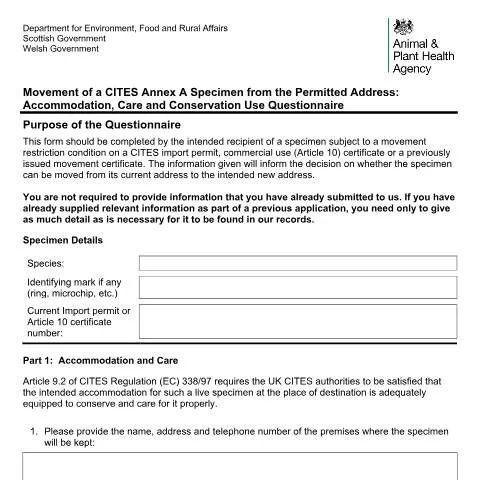
When dealing with endangered species, whether for conservation efforts, educational purposes, or research, the legal and procedural frameworks can be daunting. The Endangered Species: Accommodation and Care Forms are integral documents in ensuring compliance with international conventions like CITES (the Convention on International Trade in Endangered Species of Wild Fauna and Flora). This document allows intended recipients of CITES Annex A specimens to demonstrate that they meet the stringent requirements for both accommodation and care.
Understanding the Regulatory Framework
The movement of endangered species is heavily regulated to prevent their exploitation and ensure their survival. Under Article 9.2 of CITES Regulation (EC) 338/97, UK CITES authorities must verify that any new accommodation for such specimens is adequate for their care. This regulatory requirement plays a crucial role in safeguarding endangered species from adverse conditions during their transport and after arrival.
To fully appreciate the significance of the Accommodation and Care Forms, one must delve into the broader implications of CITES regulations:
- Conservation Efforts: The forms help in assessing whether the new premises can support the conservation needs of the species.
- Legal Compliance: Failure to adhere to these requirements can lead to severe penalties, including confiscation of the specimens and legal action against the holders.
- Public Awareness: The forms also encourage public education regarding endangered species and their care, ultimately fostering a deeper respect for biodiversity.
Who Needs to Complete These Forms?
Understanding who is required to fill out the Accommodation and Care Forms is essential. According to the specified regulations, the intended recipient of a specimen that is subject to a movement restriction condition on a CITES import permit or Article 10 certificate is responsible for completing the form. This can include:
- Individuals or organizations involved in conservation programmes.
- Institutions like zoos, aquariums, and educational facilities.
- Research facilities engaged in scientific studies that require the use of endangered species.
The forms must be completed even if the applicant has submitted similar information before; however, they only need to provide the details necessary for their records to be updated, which can simplify the process for repeat applications.
Key Sections of the Accommodation and Care Forms
To ensure that the form is completed correctly, it can be helpful to break down its main sections. Here’s a closer look:
Part 1: Accommodation and Care
This section serves to evaluate the suitability of the premises where the specimen will be kept. Critical information required includes:
- The name, address, and contact number of the premises.
- Details about the enclosure, including size and structure, species housed, and environmental enrichment.
- Veterinary care arrangements detailing the veterinarian's contact information and their role in animal care.
Part 2: Intended Use of the Specimen
This part is pivotal as it outlines the purpose for which the specimen will be kept. The applicant must specify:
- Breeding: Information about breeding programmes, including details about other involved specimens.
- Education: The type of educational displays planned and how they will contribute to conservation awareness.
- Research: An outline of the intended research, what information will be gathered, and its potential publication.
Preparing Your Application: Documentation and Evidence
Gathering the necessary documentation is crucial for a successful application. The following preparations are essential:
- Collect Evidence: Ensure you have all required information, including previous certificates or permits related to the specimen.
- Consult Documentation: Refer to existing guidelines on the care of the specific species involved, ensuring you can provide adequate environmental conditions.
- Veterinary Support: Have a letter or contact details from the veterinarian confirming their availability and familiarity with the species.
All documentation collected should adhere to the principles outlined in the Data Protection Act 2018 and UK GDPR, which govern how personal data is processed during these applications.
The Submission Process and Next Steps
Once the form is completed, the next essential step is submission. Here’s how the process typically unfolds:
- Submission Method: The completed forms should be sent to the relevant CITES authority, typically through electronic submission via official channels.
- Follow-Up: It is advisable to follow up with the agency to confirm receipt of your application and to inquire about any further information they might need.
After submission, the authorities will review the form to determine whether the accommodation and proposed care adequately meet the requirements for the endangered species involved. This assessment usually takes several weeks, depending on the volume of applications being processed.
Understanding the Implications of Non-Compliance
For potential recipients of endangered species, understanding the risks associated with non-compliance can emphasize the importance of proper documentation:
- Legal Ramifications: Non-compliance can result in legal action, including fines and confiscation of animals.
- Impact on Conservation Efforts: Failure to adequately care for specimens can have adverse effects on their populations and conservation status.
- Reputational Damage: Organizations found in violation may face significant reputational harm, affecting future funding and partnerships.
Distinguishing Between Similar Forms
It’s crucial to differentiate the Accommodation and Care Forms from other related documentation. For instance:
| Form Type | Purpose | Key Differences |
|---|---|---|
| Endangered Species: Accommodation and Care Forms | Evaluate care and accommodation for CITES specimens. | Focuses on current and future care; details accommodation specifics. |
| CITES Import Permit Application | Request for permission to import specimens. | More focused on the import process; does not assess care. |
| Article 10 Certificates | Allow commercial use of species. | Regulates trade rather than care; often overlaps with accommodation requirements. |
Understanding these differences can streamline the application process and avoid potential misunderstandings with regulatory authorities.
The Role of Data Protection in Application Processing
Given the sensitive nature of the information that accompanies the Accommodation and Care Forms, compliance with data protection regulations is paramount. Under the Data Protection Act 2018 and UK GDPR, applicants have rights concerning their personal data, including:
- Right to access personal data held by the authorities.
- Right to rectify inaccuracies in submitted information.
- Right to complain regarding misuse of personal data.
These protections ensure that applicants can confidently engage with the authorities, knowing their personal and sensitive information will be handled with care.
Final Thoughts on Completing the Accommodation and Care Forms
Completing the Endangered Species: Accommodation and Care Forms can be a complex process, but it plays a crucial role in ensuring that endangered species are cared for in accordance with legal requirements. By understanding each section of the form, preparing thorough documentation, and ensuring compliance with relevant regulations, applicants can facilitate the movement of CITES specimens while contributing to global conservation efforts.
Ultimately, the responsibility that comes with caring for endangered species is significant. It requires not only an understanding of legal frameworks but also a commitment to ethical care and species preservation.
Understanding the Regulations for Endangered Species Accommodation
In the United Kingdom, the protection of endangered species falls under various legal frameworks primarily governed by the Conservation of Habitats and Species Regulations 2017, which implements the EU Habitats Directive. This legislation mandates strict guidelines on how to manage and accommodate endangered species, ensuring that their habitats are preserved and that any activities involving these species are carefully regulated.
Before any accommodation or care forms for endangered species can be completed, it is essential for individuals or organizations to understand the species-specific needs and the legal obligations that come with them. For instance, the Natural England agency is responsible for the oversight of ecological assessments, which may be required depending on the species in question. Such assessments help determine the impact of proposed accommodation on the species’ habitat and population.
When preparing to create accommodation for endangered species, applicants will often be required to submit a detailed plan outlining the intended use of the land, types of species involved, and measures that will be taken to mitigate any environmental impact. This may include the installation of specific nesting sites or feeding areas that cater to the unique needs of the species accommodated.
It's also crucial to remain informed about local biodiversity action plans (BAPs) since these documents provide guidelines for conserving local species. BAPs may offer specific recommendations on habitat management practices which can influence the design and implementation of accommodation forms.
Submitting Care Forms: What You Need to Know
The submission of care forms for endangered species is a critical aspect of ensuring compliance with UK wildlife laws. These forms typically include vital information such as the type of species, purpose of care, and the conditions under which the species will be kept. When filling out these forms, accuracy is paramount. Misrepresentation of information can result in severe legal consequences, including fines or revocation of care permits.
Care forms often require detailed records of the species’ health and wellbeing, including veterinary care logs, feeding regimens, and environmental enrichment activities. This information not only provides a clear picture of the care being given but also helps authorities assess the suitability of the accommodation provided.
Moreover, certain species may have unique care requirements that must be highlighted in the submission. For example, some reptiles require specific temperature ranges and humidity levels to thrive, whereas avian species may need particular types of perches and nesting materials. Any failure to meet these care standards can not only compromise the wellbeing of the species but may also lead to regulatory action from bodies such as the Department for Environment, Food & Rural Affairs (DEFRA).
In some cases, ongoing monitoring may be required, where care forms are not just submitted once but need to be updated regularly to reflect the current state of the species and its accommodation. This can include additional assessments or reports that are made available to the authorities for review to ensure continuing compliance with all necessary regulations.
Collaborating with Conservation Organizations
Collaboration with conservation organizations can greatly enhance the effectiveness of accommodation and care efforts for endangered species. These organizations often provide resources, expertise, and guidance that can help individuals and businesses navigate the complexities of wildlife regulations and care requirements.
Organizations such as the Royal Society for the Protection of Birds (RSPB) or the Wildlife Trusts offer educational materials and support for managing local habitats. They can also supply training on best practices for the care of specific species, which can be invaluable for those submitting accommodation and care forms.
In addition, many conservation groups operate volunteer programs that allow individuals to engage directly with endangered species. Participating in these programs can provide practical experience that is beneficial when completing care forms. Furthermore, having experience documented through these programs can strengthen an application, demonstrating a commitment to conservation and an understanding of the challenges involved in caring for endangered species.
Collaboration can extend beyond just education; it can also involve partnerships in habitat restoration projects or community engagement campaigns that aim to protect local species. When such initiatives are undertaken, it can positively impact the likelihood of a successful application for accommodation or care, as it showcases a proactive approach to conservation efforts.
Finally, organizations often have access to funding opportunities that can assist with the financial aspects of creating suitable accommodation. This financial support can be crucial for individuals or smaller entities that may struggle to meet the costs associated with complying with legal requirements for endangered species care.