Navigating the Appeal Process: Understanding Form SEND28A
When a young person under the age of 18 finds themselves detained in a youth accommodation, the complexities of educational rights and needs can become a significant concern. This is particularly true when facing decisions made by Local Authorities regarding Educational Health Care (EHC) plans. The SEND28A form is a crucial document for those wanting to appeal against such decisions, providing a structured way for young individuals and their representatives to voice their grievances.
Understanding the Role of Form SEND28A in the Appeal Process
Form SEND28A is specifically designed for young people detained in youth accommodations who wish to appeal decisions related to their EHC assessments and plans. The significance of this appeal form lies in its ability to pave the way for a fair review of the educational provisions that are essential for the young person's development. By utilising this form, individuals can address specific concerns, such as a lack of support or incorrect assessments regarding their educational needs.
Who Should Consider Submitting Form SEND28A?
The primary users of the SEND28A form are young people who have the legal right to appeal decisions made by their Local Authority regarding their educational needs. This includes:
- Young individuals who have been denied an EHC needs assessment.
- Those whose EHC plans are deemed insufficient or misrepresent their educational requirements.
- Young persons who are dissatisfied with the provisions outlined in their EHC plans.
- Individuals detained under various legal circumstances, such as remand or recall orders.
It's critical for the young person or their legal representative to fully understand the implications of the decisions being appealed before submitting the SEND28A form.
The Structure of the SEND28A Form: A Detailed Breakdown
Completing the SEND28A form requires careful attention to detail, as it serves as a formal request for an appeal. Let’s explore its key sections and what information is needed.
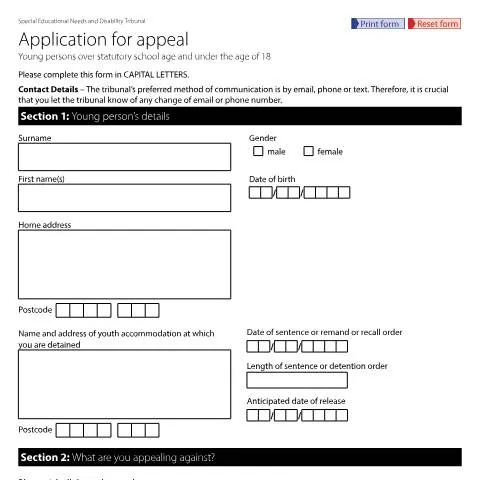
Section 1: Young Person’s Details
The first section collects essential personal information:
- Surname and First Name(s): Clear identification is crucial. Use capital letters to ensure readability.
- Date of Birth: This is critical to confirm the age eligibility of the applicant.
- Home Address and Postcode: Ensure accuracy for correspondence and tribunal notifications.
- Name and Address of Youth Accommodation: Specify where the young person is currently detained.
- Date of Sentence or Detention: Important for context and understanding the timeline of the case.
- Anticipated Date of Release: This helps in identifying the urgency and context of the appeal.
Section 2: Grounds for Appeal
This section allows the young person or their representative to indicate the specific reasons for the appeal. It covers:
- Requests for assessments that were denied.
- Disagreement with the contents of an existing EHC plan.
- Concerns about the school or institution named in the EHC plan.
Providing detailed reasons and evidence within this section is paramount. Clarity and specificity will aid the tribunal in understanding the nuances of the appeal.
Section 3: Needs and Language Requirements
Here, the young person identifies any special needs they may have, including communication requirements for the hearing:
- Specify any need for an interpreter or signer, including language and dialect.
- Details about any special assistance needed during the hearing, such as disability access provisions.
Submitting the Form: Options and Best Practices
Once the SEND28A form is completed, it must be submitted to the HM Courts & Tribunals Service. Understanding the available channels for submission is crucial:
Channels for Submission
Applicants have several options for submitting the SEND28A form:
- Online Submission: If available, this is the quickest method, allowing for instant confirmation of receipt.
- Postal Submission: Ensure to send the form using a method that provides tracking and confirmation of receipt.
- In-Person Submission: If feasible, delivering the form directly to the tribunal office can clarify any immediate questions.
Regardless of the submission method, it’s vital to keep copies of the completed form and any accompanying documents for personal records.
Post-Submission: What Comes Next?
Upon submitting the SEND28A form, it is important to understand the timeline and the subsequent steps:
Timeline and Possible Outcomes
The tribunal will review the appeal and notify the young person or their representative of the next steps. Key considerations include:
- Acknowledgment of Receipt: The tribunal typically sends an acknowledgment confirmation.
- Hearing Date: Expect a notice for a hearing, which may be set based on the complexity of the case and availability.
- Possible Decisions: The tribunal will either uphold the Local Authority's decision, require further assessment or evidence, or issue a ruling in favour of the appellant.
Understanding Complex Situations: Special Cases and Exceptions
The appeal process can become especially complicated in certain circumstances. Some scenarios to consider include:
Foreign Nationals and Their Rights
If the young person is a foreign national, there may be additional considerations regarding their legal status that can impact the appeal process. It's advisable to consult with organisations that specialise in legal rights for foreign nationals to ensure comprehensive support.
Handling Refusals and Errors
In cases where the appeal is refused or if there are errors in the documentation or process, the following steps should be taken:
- Request a Review: A request can be made for the tribunal to reconsider their decision, outlining the specific grounds for the review.
- Correcting Errors: If there are mistakes in the submitted form, contact the tribunal immediately to rectify the issue.
- Seek Legal Advice: Engaging a legal representative who understands the SEND appeal process can provide clarity and direction.
Comparing Form SEND28A with Related Forms
It’s essential to distinguish the SEND28A from other appeal forms that might be confused with it. For instance, forms related to general appeals in the education sector or those for adult appeal processes cover different age groups or situations.
| Form Reference | Description | Target Group |
|---|---|---|
| SEND28A | Appeal form for young persons under 18 in youth accommodation | Young individuals detained in youth accommodation |
| SEND20 | Appeal form for general educational needs assessments | Children and young people outside of custody |
| EDUC3 | Appeal against decisions on school placements | All school-age children |
The Importance of Accountability and Representation
Throughout the appeal process, having the right representation can make a profound difference. Engaging a qualified legal representative ensures that the young person’s case is articulated effectively, and their rights are upheld. Moreover, understanding the complex interplay between educational rights and legal frameworks can significantly impact the outcome of the appeal.
Finding Support and Resources
Various organisations and charities provide free legal advice and support for young people navigating the education system and appealing decisions. It's essential to access these resources early in the process to ensure that the young person is adequately prepared for their hearing.
What to Remember Before Submitting Form SEND28A
As the young person prepares to submit their SEND28A form, there are several key aspects to keep in mind:
- Gather Supporting Documents: Ensure all required documentation is included with the appeal form to avoid delays.
- Be Thorough and Specific: Clear and detailed explanations in the form can strengthen the appeal.
- Stay Informed: Understanding the entire appeal process, including timelines and potential outcomes, will help manage expectations and prepare for the tribunal hearing.
The SEND28A appeal form represents not just a piece of paperwork, but a critical opportunity for young people in youth accommodations to advocate for their educational rights. Navigating this process with thorough preparation and support can lead to better educational opportunities, ultimately laying the groundwork for a brighter future.
Understanding the Appeal Process for Form SEND28A
When a young person under 18 is detained in youth accommodation, it often becomes necessary to navigate a complex appeal process to secure their rights and ensure appropriate treatment. The SEND28A form specifically serves as the official appeal mechanism against decisions regarding the detention and associated provisions for these individuals. Understanding this process is crucial for guardians, social workers, and legal representatives.
Firstly, it is essential to identify the grounds for appeal. These can include concerns about the legality of the detention, treatment conditions, or the appropriateness of the decisions made concerning the individual’s care. Having valid reasons not only strengthens the appeal but is also a prerequisite for initiating the process. Once you have identified the grounds for appeal, gather relevant evidence, including medical reports, witness statements, and any documentation that supports your case.
The next step involves completing the SEND28A form accurately. Ensure all sections are filled out, providing as much detail as necessary. If certain sections do not apply to your situation, it’s essential to indicate this clearly. Misleading or incomplete information can lead to delays or dismissals of the appeal. Additionally, include any supplementary documents that could bolster your appeal. This might include letters of support from professionals involved in the young person's care, which can provide an external validation of your claims.
Once your appeal is prepared, submit it to the relevant authority — typically, the Family Court or a youth court, depending on the specifics of the case. Pay attention to submission deadlines and format requirements. A well-prepared appeal can significantly affect the outcome. After submission, prepare for a potential hearing where oral arguments may be presented. Legal representation during this process can be immensely beneficial, as trained professionals can navigate the intricacies of court procedures and advocate effectively on behalf of the young person.
Legal Considerations in Appeals Under SEND28A
The legal landscape surrounding appeals made using Form SEND28A is shaped by several key regulations that govern the treatment and rights of detained young individuals. Understanding these legal frameworks is critical for anyone involved in the appeal process. The primary legislation relevant to these cases includes the Children Act 1989 and the Children and Families Act 2014, which establish the legal rights of children and young people in various circumstances, including detention.
Section 20 of the Children Act 1989, for instance, provides a basis for local authorities to intervene when a child is in need, which may include situations where a child is detained in youth accommodation. Additionally, the Human Rights Act 1998 plays a vital role in ensuring that any appeal considers the individual's rights, such as the right to a fair trial and the right to respect for private and family life.
When preparing for an appeal using SEND28A, it is essential to highlight any violations of these rights, along with evidence that supports claims of improper treatment or procedural unfairness. This can include inadequate access to education, medical care, or mental health services during the detention period. Furthermore, the Data Protection Act 2018 and UK GDPR principles should be adhered to when handling personal data during the preparation of the appeal, ensuring that any sensitive information is processed lawfully and transparently.
Moreover, legal aid may be available for young people and their families to help cover the costs associated with legal representation during an appeal. Understanding eligibility criteria for legal aid is a pivotal step in ensuring that young individuals can access the representation they deserve. Legal representatives can assist in evaluating the viability of the appeal and the possible outcomes based on the specific circumstances of the case.
Resources and Support for Families Navigating SEND28A Appeals
Navigating the appeal process using Form SEND28A can be daunting, particularly for families dealing with the stress of a young person's detention. Therefore, it’s essential to be aware of the resources and support systems available to assist during this challenging time. Various organizations provide guidance and advocacy for families involved in these situations, helping them understand their rights and the appeal process.
Local advocacy services, often operated by charities or community organizations, can provide vital assistance. These services typically offer free legal advice, help families understand the complexities of the SEND28A form, and offer support in gathering evidence for appeals. They may also provide emotional support and counseling for families navigating the emotional toll of detention on both the young person and their loved ones.
Furthermore, the Children’s Commissioner for England plays a significant role in promoting the interests and rights of young people. They provide resources that can help families understand the appeal process, the rights of detained young people, and how to make effective complaints if they feel their rights are being violated.
Online resources and forums can also be invaluable. Many parents and guardians share their experiences and strategies for successfully navigating the appeal process. These platforms provide a space for sharing information, obtaining advice, and connecting with others in similar situations, which can be both comforting and informative.
Finally, consider reaching out to solicitors who specialize in youth law or human rights law. Many solicitors offer initial consultations at no cost, allowing families to assess their options without a financial commitment. Finding the right legal representative can significantly impact the outcome of an appeal, providing families with a sense of security and support as they pursue the best possible outcome for their young person.