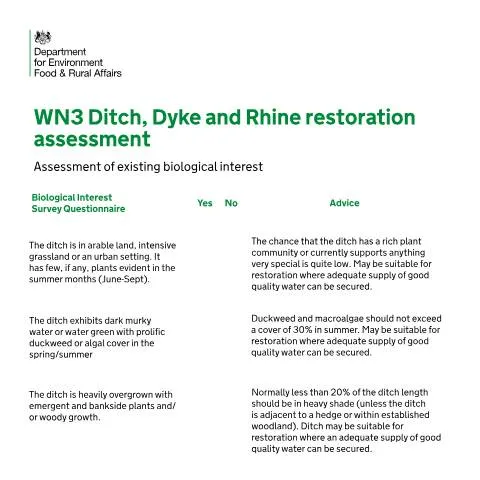
Understanding the Ditch, Dyke, and Rhine Restoration Assessment Form
The Ditch, Dyke, and Rhine Restoration Assessment Form plays a pivotal role in the UK’s Countryside Stewardship scheme, administered by Natural England under the guidance of the Department for Environment, Food & Rural Affairs (DEFRA). This form is essential for land managers and farmers aiming to restore or enhance the ecological value of their ditches, dykes, and rhines, thereby contributing positively to biodiversity and natural water management systems.
Who is Required to Submit This Assessment?
The targets for completion of the restoration assessment form include:
- Farmers and landowners involved in the Countryside Stewardship scheme.
- Individuals seeking to enhance the ecological quality of their land, especially where it involves aquatic ecosystems.
- Professionals contracted for ecological assessments or restoration projects.
It's crucial to note that the requirement to submit this form applies not only to those with existing stewardship agreements but also to new applicants looking to participate in environmental schemes that include ditch restoration.
The Importance of Accurate Biological Assessments
Completing the assessment accurately is paramount. Each section of the form is designed to gauge the existing biological interest of the ditches. This process includes evaluating:
- Current plant communities and their diversity.
- Water quality indicators, including the presence of invasive species.
- Habitats surrounding the ditches, which directly affect their ecosystem services.
For example, if a ditch has an abundance of native wetland plants, it may indicate a healthy ecosystem, whereas a lack of vegetation or excessive algae growth might suggest the need for management intervention. Responding correctly to these questions influences the potential for successful restoration and the overall health of the local biodiversity.
A Step-by-Step Guide to Completing the Assessment
Before filling out the form, it is beneficial to conduct a preliminary survey of the ditch in question. This survey should focus on identifying key ecological features. Here’s a structured approach:
- Conduct a Visual Assessment: Look for signs of plant life, water levels, and overall habitat conditions.
- Collect Existing Data: Gather any previous biological records or surveys related to the ditch from local environmental record centres or wildlife trusts.
- Complete the Survey Questionnaire: Use the form to assess various criteria, such as:
- Presence of native vs. invasive species.
- Water quality indicators and depth measurements.
- Habitat structure around the ditch.
- Consult Experts If Needed: If uncertain about the ecological status, seek advice from Natural England's advisors.
Submission Channels: Navigating the Process
Submission of the Ditch, Dyke, and Rhine Restoration Assessment can be executed through several channels:
- Online Submission: Through the Rural Payments service, which is recommended for speed and efficiency.
- Paper Submission: The form can also be printed and mailed to the relevant Natural England office. Ensure the form is signed and dated correctly.
- In-Person Submission: It’s possible to submit in person at certain local offices, which may offer additional guidance.
Regardless of the method, it is imperative to keep a copy of the submitted form for your records. The tracking of submission dates and forms is essential in case of follow-ups or queries from authorities.
Timeline: When to Submit and What Follows?
Timing is critical when dealing with ecological assessments. Generally, assessments should be submitted as part of the Countryside Stewardship application process. Here’s the typical timeline:
| Period | Action Required | Follow-up Actions |
|---|---|---|
| 1st January - 31st March | Prepare biological assessment and complete form. | Consult local experts as needed. |
| 1st April - 31st May | Submit assessment form. | Await confirmation of receipt from Natural England. |
| June | Follow-up with any additional information if requested. | Begin planning for restoration efforts based on feedback. |
Understanding the Broader Context of the Restoration Assessment
This assessment form is part of a more extensive framework aimed at conserving and enhancing natural environments across the UK. It fits within a larger suite of conservation strategies that include:
- Environmental Stewardship Schemes: Programs designed to improve biodiversity on agricultural land.
- Funding and Grants: Financial support for landowners implementing restoration and conservation practices.
- Community Engagement: Collaboration with local communities to educate and involve them in conservation efforts.
Understanding this context allows applicants to appreciate how their efforts contribute not only to local ecosystems but also to national biodiversity goals.
Distinguishing Between Similar Environmental Forms
While the Ditch, Dyke, and Rhine Restoration Assessment Form serves a specific purpose, it is essential to recognize how it differs from other environmental documentation that may lead to confusion:
- Waterbody Management Plans: Focused on larger water bodies rather than individual ditches.
- Wildlife Habitat Assessments: Broader assessments that may include various habitat types, not limited to aquatic environments.
Recognizing these distinctions can prevent misunderstandings and ensure that stakeholders select the appropriate forms for their specific environmental management needs.
Consequences of Non-Compliance and the Importance of Timing
Failure to submit the Ditch, Dyke, and Rhine Restoration Assessment Form can result in significant repercussions. Not only may it lead to a denial of funding or support for restoration projects, but it can also hinder local biodiversity improvement efforts. Compliance ensures that:
- You receive tailored advice and support from Natural England.
- Your restoration efforts are aligned with national conservation objectives.
- You maintain eligibility for future grants and stewardship opportunities.
Also, be aware that if you miss submission deadlines, you may need to wait until the next application cycle, which can delay your restoration efforts by a full year or more.
Final Considerations: Preparing for Success
As you prepare to engage with the Ditch, Dyke, and Rhine Restoration Assessment Form, remember that thorough preparation is key. Here are some final tips:
- Keep Records: Document your observations and any management actions taken.
- Engage with Advisors: Utilize the advice and resources offered by Natural England.
- Monitor Your Work: Regularly assess and adjust your restoration strategies based on outcomes and observations.
Engaging effectively with this process not only helps in the successful restoration of ditches and rhines but also contributes to the overarching goals of environmental stewardship and biodiversity conservation across the UK.
Understanding the Ditch, Dyke and Rhine Restoration Assessment Process
The Ditch, Dyke and Rhine Restoration Assessment is a vital component of the Countryside Stewardship scheme in the UK, aimed at enhancing the ecological quality and functionality of watercourses and associated habitats. This assessment is not merely a bureaucratic requirement; it serves as a tool for landowners and managers to restore and maintain vital ecosystems that contribute to biodiversity and water management. Understanding the assessment process is essential for those involved in environmental stewardship.
The assessment typically begins with a comprehensive site evaluation. This involves identifying the current state of ditches, dykes, and rhines on the property, assessing their condition, and understanding their ecological value. Factors such as the presence of native flora and fauna, water quality, and the impact of agricultural activities on these watercourses are also considered. It's important to collect this information using standard ecological assessment methods and to document findings comprehensively. Landowners may wish to engage with local conservation groups or ecological consultants to facilitate this process.
Once the preliminary assessments are completed, landowners will need to complete the Ditch, Dyke and Rhine Restoration Assessment Form, which can be accessed through the relevant government portal. It is critical to fill out this form accurately as it forms the basis for any claims or applications for funding under the Countryside Stewardship scheme. Supporting evidence, such as photographs of the site and detailed descriptions of the current and proposed restoration work, should accompany the submission.
The assessment form itself asks a series of targeted questions designed to gauge the potential benefits of the restoration work, including improvements in water quality, habitat creation, and the potential to mitigate flooding. Providing quantitative data where possible can enhance the application, as it demonstrates a clear understanding of the ecological impacts and benefits of the proposed restoration activities.
Funding and Support for Restoration Projects
One of the significant advantages of participating in the Countryside Stewardship scheme is the potential access to funding for restoration projects. The government provides financial assistance to landowners and farmers who are committed to enhancing their land’s ecological value. However, the funding is not automatically granted; successful applications require a well-structured plan and clear demonstration of the intended benefits.
When applying for funding, it is essential to outline the specific projects you intend to undertake. This might include actions such as installing silt traps to improve water quality, re-profiling banks to enhance habitat diversity, or creating new channels to encourage natural water flow and improve ecological resilience. Each action will need to be justified in terms of its environmental benefits, costs, and expected outcomes.
Furthermore, it is advisable to keep abreast of updates from DEFRA (Department for Environment, Food & Rural Affairs) and the local Environmental Agency, as they often provide information on available grants, deadlines, and application processes. Networking with other landowners who have successfully navigated the funding landscape can also provide valuable insights and tips.
Additionally, consider engaging with local environmental charities or NGO's, as they may offer support services that assist with project design, funding applications, and implementation. Their expertise can be invaluable in ensuring that restoration projects are not only compliant with regulatory requirements but also effectively contribute to local biodiversity goals.
Monitoring and Evaluation Post-Restoration
After the implementation of restoration projects, the work does not end. Continuous monitoring and evaluation are crucial to ensure that the restoration efforts are effective and that they meet the objectives outlined in your assessment form and funding application. Establishing a monitoring plan at the outset will facilitate this process and help to identify both successes and areas needing adjustment.
Monitoring should include regular assessments of water quality, biodiversity, and the physical condition of the ditches, dykes, and rhines. This can involve simple visual assessments, as well as more detailed scientific methods, depending on the scale and scope of the project. Engaging with local wildlife groups can assist in the evaluation process, providing expert knowledge and resources that help track ecological changes over time.
It is also essential to document any changes and to be prepared for potential follow-up assessments required by the governing bodies overseeing the Countryside Stewardship scheme. In some cases, landowners may be asked to provide reports detailing the effectiveness of the restoration efforts and how they have contributed to wider environmental goals. Keeping comprehensive records will not only satisfy any regulatory requirements but also serve as a valuable resource for ongoing land management practices.
Ultimately, the long-term success of ditch, dyke, and rhine restoration projects hinges on a commitment to adaptive management, where ongoing evaluation informs future strategies and improvements. By regularly assessing the ecological outcomes of restoration efforts, landowners can ensure that they are fostering resilient ecosystems that benefit both wildlife and the community.