Navigating the WU18 (Scot) Document: A Practical Insight
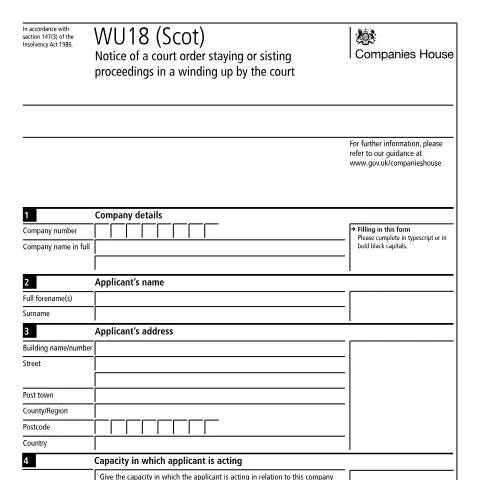
The WU18 (Scot) notice, officially known as the Notice of a court order staying or sisting proceedings in a winding up by the court, is a critical document for companies facing potential winding-up proceedings in Scotland. Understanding its contents, the context in which it is used, and the procedural intricacies is essential for effective compliance and representation.
This document serves a specific purpose within the framework of the Insolvency Act 1986, primarily guiding applicants through the process of notifying Companies House about a court order that either stays (halts) or sist (suspends) proceedings related to the winding up of a company. This notice is vital for ensuring that the public records at Companies House accurately reflect the current legal status of the company.
Understanding the Scope of the WU18 (Scot) Document
The WU18 (Scot) notice covers several aspects crucial to the winding-up process:
- Identification of the Company: Applicants must provide the full name and company number, ensuring it matches the public record.
- Details of the Applicant: The applicant must clearly state their name, address, and capacity in which they are acting, whether as a director, creditor, or another relevant party.
- Date of Court Order: The date on which the court order was issued must also be included, marking the point at which the proceedings are officially stayed or sisted.
However, it’s important to note that this document only functions as a notification mechanism, and does not provide legal protection or resolution of the insolvency issue itself. Additionally, it does not replace other filings or documentation that may be required in the ongoing handling of the company’s affairs.
The Procedural Significance of the WU18 (Scot)
One of the frequent questions regarding this document is how it fits within the broader insolvency procedure. It's essential to recognize that:
- It is usually filed after a court hearing in which a decision has been made to either stay or sist the winding-up action against the company.
- The notice must be submitted as soon as possible to avoid any confusion regarding the company’s status during the winding-up process.
Furthermore, it is crucial for the applicant to attach a copy of the court order when submitting the WU18 (Scot). This attachment serves as evidence of the court’s decision and is necessary for transparency and record-keeping at Companies House.
Who Needs to Submit the WU18 (Scot)?
The WU18 (Scot) notice is primarily aimed at individuals or entities involved in the winding-up process. This includes:
- Directors of the Company: If a director has been involved in the proceedings leading to a stay or sist, they are typically responsible for submitting the notice.
- Creditors: Should creditors initiate or be directly involved in the winding-up process, they may also need to file this notice to reflect their interests accurately.
- Other Interested Parties: Any individual or organisation with a vested interest in the company’s winding-up may submit the WU18 (Scot), ensuring they have the authority to act on behalf of the company.
Thus, understanding the parties involved is crucial for compliance and effective communication with Companies House.
Steps to Utilize the WU18 (Scot) Document Effectively
To navigate the submission of the WU18 (Scot) notice smoothly, follow these practical steps:
- Gather Required Information: Ensure you have all pertinent details including the company name, number, and the date of the court order.
- Complete the Document: Fill in the WU18 (Scot) notice legibly, in typescript or bold black capitals, to avoid any issues with legibility.
- Attach the Court Order: Include a copy of the court order granting the stay or sist, as this is crucial for validating the notice.
- Review for Accuracy: Double-check all entries to ensure consistency with the public record and accuracy in the information provided.
- Submit the Notice: Return the completed notice to the appropriate Companies House address, preferably the one specified for expedience, located at: The Registrar of Companies, Companies House, Fourth floor, Edinburgh Quay 2, 139 Fountainbridge, Edinburgh, Scotland, EH3 9FF.
These steps ensure adherence to the procedure and mitigate the risk of delays or issues during the winding-up process.
Document Integrity and Public Record Implications
One of the notable aspects of the WU18 (Scot) notice is its impact on the public record maintained by Companies House. When submitted, the information provided becomes part of the public record, which serves various purposes:
- Transparency: The public record aids transparency in the corporate sector, allowing stakeholders, creditors, and the general public to have insight into the status of companies under winding-up proceedings.
- Legal Standing: The notice functions as a legal document, and inaccuracies or omissions may lead to complications in future proceedings.
- Potential Queries: Including a contact name and information, though optional, may facilitate any queries from Companies House, ensuring smoother communication if additional clarification is needed.
Interrelation with Other Related Documents
Within the framework of insolvency, the WU18 (Scot) does not exist in isolation. It interacts with several other documents and filings that may be required during winding-up proceedings:
| Document | Purpose |
|---|---|
| WU1 (Scot) | Application for a winding-up order. |
| Form 4.10 | Appointment of a liquidator. |
| Form 6.23 | Notice of meeting of creditors in a winding-up. |
Each document serves a specific purpose and is critical in ensuring the proper legal and procedural flow of the winding-up process. Familiarity with these documents and their functions allows applicants to navigate the complexities of insolvency more effectively.
Final Recommendations for Effective Use of the WU18 (Scot) Document
To optimize the process surrounding the use of the WU18 (Scot) notice, consider the following recommendations:
- Stay Informed: Regularly check for updates or changes in the insolvency legislation that may impact the procedures or documents needed.
- Engage Legal Counsel: Consultation with a legal professional experienced in insolvency can provide guidance tailored to specific circumstances, ensuring compliance and protecting rights.
- Maintain Accurate Records: Keep copies of submitted notices and any related correspondence to track the company's status and any developments concerning the winding-up proceedings.
Being proactive in these areas can significantly reduce misunderstandings and foster a smoother resolution to the winding-up process.
Understanding the Legal Context of Winding Up Proceedings
Winding up a company is a significant legal process in the UK, particularly under Scottish law where the term 'sisting' is often used in place of 'staying'. When a court order is sought to stay or sist proceedings, it is crucial to understand the legal framework and implications surrounding this process. This is particularly important for directors and creditors who may be affected by the outcome of the winding-up petition. The legal basis for winding-up orders can be found in the Insolvency Act 1986, and in Scotland, it involves both the Companies Act 2006 and specific procedural rules that govern court actions.
When a winding-up order is placed, it indicates that a company is unable to pay its debts, which triggers significant consequences for its operations, employee contracts, and assets. If a court grants a stay or sist on the proceedings, this essentially pauses the winding-up process, allowing the company time to rectify its financial situation or negotiate with creditors. This legal mechanism is not automatic; it requires an application to the court and is often contingent on presenting a viable plan for addressing the company's debts.
Procedure for Giving Notice of a Court Order Staying or Sisting Proceedings
To give notice of a court order to stay or sist proceedings in a winding-up case, it is essential to follow a structured legal procedure to ensure compliance with court requirements. The first step involves obtaining the court order from the relevant court, which must outline the specifics of the stay or sist, including its duration and any conditions attached to it.
Once the court order is secured, the next step is to serve notice of this order to all relevant parties involved in the proceedings. This includes creditors, shareholders, and any other interested parties. The notice must clearly communicate the details of the court order, including the date it was issued, the reasons for the stay or sist, and the implications for the ongoing proceedings.
The serving of notice should ideally occur as soon as practicable following the issuance of the court order to avoid any potential confusion or disputes regarding the status of the winding-up proceedings. Typically, notice can be served via registered post or through legal representatives to ensure that it is appropriately documented.
In addition, it is vital to file a copy of the notice with the court where the original winding-up petition was lodged. This serves as an official record that the court has been made aware of any changes in the status of the proceedings. The format of the notice must comply with any specific court rules, and often additional forms may need to accompany the notice to ensure all legal bases are covered.
Potential Outcomes and Next Steps After a Stay or Sist
Once a stay or sist has been successfully implemented, the company's directors and stakeholders must consider their next steps carefully. The duration of the stay or sist will significantly influence what actions need to be taken during this period. If the court has set a specific timeframe, the company must use this period effectively to either resolve its financial difficulties or work towards a compromise with creditors.
One common outcome following a stay or sist is that the company may enter into a Company Voluntary Arrangement (CVA), which is a formal agreement with creditors to repay debts over a specified period. This option can be beneficial as it may allow the company to continue trading while restructuring its debts. However, the company must demonstrate to the court and its creditors that the proposal is viable and in the best interests of all parties involved.
Another potential outcome could be the appointment of an administrator. If the company is in severe financial distress, appointing an administrator may provide more robust protection against creditors and allow for a structured plan to salvage the company’s assets. This appointment would also require the court's approval and must be executed in compliance with the relevant laws.
Throughout this process, it is advisable for the directors to seek legal and financial counseling. Experienced professionals can provide valuable insights into the best course of action, helping to navigate the complexities of UK insolvency law and ensuring compliance with any legal obligations arising from the stay or sist.