Navigating the Winding-Up Process: Understanding WU07
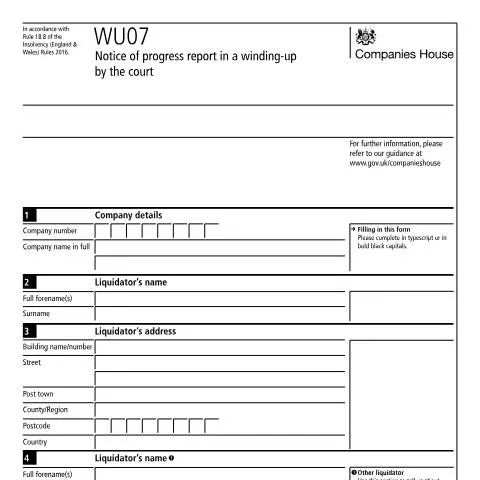
The winding-up process of a company can be an intricate affair, often laden with legal complexities. One pivotal document in this process is the Notice of Progress Report in a Winding-Up by the Court, referred to as WU07. This document plays a crucial role in keeping stakeholders informed on the status of a company’s liquidation. Understanding its nuances is vital for liquidators, creditors, and company directors alike, especially during times when clarity is paramount.
Key Components of the WU07 Notice
The WU07 notice comprises several essential components that reflect the progress of the winding-up process. Here’s a breakdown of the key sections:
- Liquidator’s Information: This includes the liquidator's full name, address, and contact details. The liquidator acts as the main contact throughout the process, managing the company’s assets and settling debts.
- Period of Progress Report: Clearly indicating the timeframe for which the report applies is crucial. This helps establish a timeline for stakeholders to understand what has transpired and what lies ahead.
- Signature of the Liquidator: The liquidator's signature validates the report, signifying that the information provided has been carefully compiled and is accurate to the best of their knowledge.
- Attachment of Progress Report: This section mandates the inclusion of a detailed progress report, which outlines the actions taken during the specified period.
When is the WU07 Notice Required?
The WU07 notice is indispensable in several scenarios:
- Court-Ordered Liquidation: If a company is being wound up by court order, the liquidator must provide regular updates through the WU07 notice. This keeps the court and interested parties informed about the liquidation status.
- Creditor Engagement: Creditors have a vested interest in the company's assets and recovery efforts. The WU07 helps facilitate transparency and builds trust among all parties involved.
- Compliance with Legal Obligations: Filing the WU07 is not merely a procedural formality; it is a legal requirement under the Insolvency (England & Wales) Rules 2016, specifically Rule 18.8. Non-compliance can result in penalties or further legal complications.
Understanding the Progress Report: What it Should Include
The progress report, which must accompany the WU07 notice, needs to encapsulate significant details about the winding-up process. Here’s what the report typically covers:
- Overview of Financial Position: A summary of the company’s current financial status, including assets, liabilities, and estimated returns for creditors.
- Actions Taken: A detailed account of the actions performed by the liquidator to manage the company’s affairs. This may include asset sales, settlements reached with creditors, and any challenges encountered.
- Future Projections: Outlining expected timelines for completing the winding-up process, including when creditors can anticipate distributions.
- Challenges and Issues: Any obstacles faced during the liquidation process should be addressed to provide a transparent view of the situation.
Common Misinterpretations of the WU07 Notice
Despite its straightforward appearance, the WU07 notice can be subject to misinterpretation. Here are some common pitfalls:
- Assumption of Completeness: Some may mistakenly believe that submitting the WU07 alone fulfills all reporting obligations. However, it must be accompanied by a comprehensive progress report to be valid.
- Ignoring Timelines: Stakeholders often underestimate the importance of adhering to specified timelines. Missing deadlines can lead to legal repercussions.
- Overlooking the Public Record: All information submitted via the WU07 is publicly accessible. Therefore, liquidators should be cautious about the information disclosed, particularly sensitive matters.
Integrating WU07 with Other Liquidation Documents
The WU07 does not stand alone; it must work in conjunction with other documents related to the winding-up process. Here’s how it fits into the broader context:
| Document | Purpose |
|---|---|
| Statement of Affairs | A comprehensive document detailing the company’s financial status at the onset of liquidation. |
| First Progress Report | Initial report outlining the liquidator's actions post-appointment. |
| Final Meeting Document | Summarises the liquidation process, including final accounts and distributions. |
Practical Steps for Liquidators: Filing the WU07 Notice
Liquidators should follow a series of practical steps to ensure the WU07 notice is filed correctly:
- Compile Comprehensive Data: Gather all the necessary information regarding the company's assets, liabilities, and the actions taken during the liquidation process.
- Draft the Progress Report: Ensure the report is thorough, detailing every aspect of the winding-up process to date.
- Complete the WU07 Form: Provide accurate details of the liquidator and the period of the progress report. Ensure that the name and company number match the official public records.
- Sign and Date: The liquidator must sign and date the notice, affirming its authenticity.
- Submit to Companies House: Send the completed WU07 and accompanying documents to Companies House. For expediency, it’s advisable to dispatch it to their Cardiff address.
The Limitations of the WU07 Notice
While the WU07 notice is an important tool in the winding-up process, it does have limitations:
- Time-Sensitive: The information becomes quickly outdated, necessitating frequent updates to maintain accuracy for stakeholders.
- Scope of Information: The notice is not a comprehensive account of all liquidation activities; it serves merely as a snapshot during the winding-up process.
- Public Disclosure Risks: As all submitted information is publicly available, liquidators must approach the report with caution to protect sensitive company data.
Final Thoughts on the WU07 Notice
In the winding-up of a company, clarity and communication are crucial. The WU07 notice serves as a vital document that connects liquidators, creditors, and the legal framework governing insolvency in the UK. Familiarity with its components, requirements, and associated documents can significantly ease the winding-up process and ensure compliance with legal obligations. By understanding and effectively utilising the WU07 notice, stakeholders can navigate the complexities of insolvency with greater assurance.
Understanding the Court's Role in the Winding-Up Process
When a company is unable to pay its debts, it may enter a winding-up process which can be initiated by creditors or the company itself. The court plays a central role in this process, ensuring that all legal obligations are adhered to, and that the rights of creditors are respected. The winding-up order is made under the Insolvency Act 1986, and the court's involvement is crucial throughout to ensure transparency and fairness.
One of the roles of the court is to appoint an official receiver who acts as the liquidator. This official receiver is responsible for managing the winding-up process which includes collecting and realising the company’s assets, dealing with creditors’ claims, and ultimately distributing any remaining funds to creditors. It is essential for the appointed liquidator to provide progress reports to the court, detailing the progress made in the winding-up process. These reports are not merely procedural but serve as a means for the court to monitor the liquidator's actions and the overall process integrity.
The liquidator’s progress report, filed using form WU07, must include various details such as the company's financial status, the actions taken since the last report, and any anticipated challenges that may arise. The court uses this information to assess whether the winding-up is proceeding appropriately and to determine if any further direction is needed. Understanding the role of the court in this process is essential for all parties involved, particularly creditors who wish to ensure that their claims are handled correctly.
The Importance of Timeliness and Accuracy in Progress Reporting
When dealing with winding-up proceedings, the timely submission of progress reports is vital. The scheduled reporting helps to ensure that all stakeholders, including creditors and the court, remain informed about the status of the winding-up process. Delays or inaccuracies in these reports can lead to various complications, including potential legal repercussions for the liquidator.
According to the Insolvency Rules 2016, a liquidator is required to prepare a progress report at regular intervals, typically every six months, unless the court orders otherwise. Each progress report must be thorough and cover specific elements such as the financial position of the company, any assets that have been realised, and the outcomes of creditor meetings. Additionally, any issues encountered during the process must be disclosed, allowing the court to provide any necessary guidance or intervention.
Should a liquidator fail to submit a progress report on time, they may face questions from the court regarding their performance and the management of the company’s assets. Moreover, such delays could also frustrate creditors, who are eager for updates on when they might expect to see a return on their claims. Therefore, it is imperative for the liquidator to adhere to deadlines and ensure that all reports are accurate and comprehensive. This not only upholds the integrity of the winding-up process but also helps to maintain trust among all involved parties.
Post-Winding Up Considerations and Implications for Stakeholders
Once the winding-up process concludes, it is essential for stakeholders, especially creditors, to understand the implications of the process and the final outcome. After the distribution of available assets, creditors may find themselves in a position where they have either received a full or partial payment of their claims or none at all, depending on the company's financial situation and the priority of claims under insolvency law.
It is important for creditors to be aware that, post-winding-up, the company will be dissolved. This means that creditors will no longer have the option to pursue claims against the company as it will cease to exist legally. However, it is also essential to understand that personal guarantees from directors or other individuals may still be enforceable, depending on the circumstances of the debt. Creditors should consider seeking legal advice if they believe additional avenues for recovery exist.
Furthermore, the official receiver or liquidator may also be liable for mismanagement of funds or failure to act in the best interests of the creditors, potentially leading to personal legal implications for them. This underscores the importance of transparency and accuracy throughout the winding-up process. Overall, understanding the broader implications of a winding-up can help creditors manage their expectations and plan for the future, particularly when considering the legal avenues available to them post-process.