Navigating the Liquidation Landscape: Understanding Form 4.35
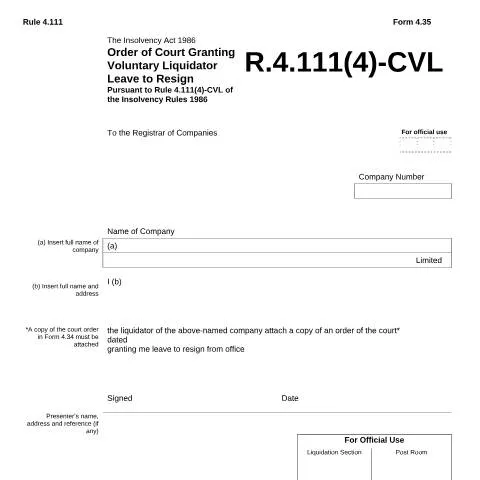
When a company in the UK faces financial distress, it may enter a process called liquidation. This complex procedure not only involves the closure of the business but also the formal distribution of its assets to settle debts. One crucial aspect of this process is the ability for a liquidator to resign from their role, an action that carries legal weight and implications. This is where Form 4.35 comes into play, serving as a formal notice to the Registrar of Companies via Companies House regarding a court order that allows a liquidator to step down from their duties.
Form 4.35: Context and Importance
At the heart of the insolvency process, Form 4.35 is an essential document that provides an official record of a liquidator's resignation. This form is grounded in the Insolvency Act 1986 and is part of the overarching framework that governs insolvency proceedings in the UK.
Understanding when and how to utilise Form 4.35 can significantly affect the outcome of liquidation proceedings, influencing not only the liquidator's responsibilities but also the rights of creditors and stakeholders involved.
Key Elements of Form 4.35
The form itself is relatively straightforward but contains critical components that must be accurately completed to avoid delays or complications. Key elements include:
- Company Name and Number: The official name of the company and its registered number must be clearly indicated.
- Liquidator Details: The liquidator must provide their full name and the address where they can be contacted.
- Court Order Reference: A copy of the court order granting permission for the liquidator to resign must be attached, specifically referenced as Form 4.34.
- Signature and Date: The document should be signed and dated by the liquidator, ensuring the authenticity of the submission.
The Role of the Court Order
One of the pivotal aspects of Form 4.35 is the requirement for a court order. This order not only legitimises the liquidator's resignation but also serves as a protective measure for all parties involved. The court order should stipulate the reasons for the resignation, which can range from personal or professional conflicts to issues that may hinder the liquidator's capacity to perform their duties effectively.
Without this order, the resignation may not be recognised, leading to potential legal complications. Therefore, obtaining the court order is a prerequisite step that must be carefully navigated.
Typical Scenarios Requiring Form 4.35
Form 4.35 is vital in various scenarios, particularly when notable changes occur within the liquidation process. Common situations include:
- Change in Liquidator: If the appointed liquidator finds themselves unable to continue due to unforeseen personal circumstances or professional conflicts.
- Completion of Duties: A liquidator may resign once their responsibilities have been fulfilled, and the company is on the verge of completing its liquidation process.
- Legal Conflicts: Instances where a liquidator faces legal challenges or conflicts of interest that might impede their impartiality.
Common Pitfalls and Misinterpretations
The process surrounding Form 4.35 is fraught with potential misinterpretations that can lead to significant issues. Understanding these nuances is essential for all parties involved in the liquidation process.
Common Misunderstandings Include:
- Assuming Automatic Approval: Some may believe that submitting Form 4.35 guarantees automatic approval from Companies House. In reality, the accompanying court order must be robust and clearly stated.
- Neglecting Attachments: Failing to include the court order (Form 4.34) can result in the rejection of Form 4.35, causing unnecessary delays.
- Timing Issues: A resignation notice must be submitted in a timely manner, particularly if it relates to ongoing proceedings. Delays can complicate matters for all stakeholders.
Engaging with Other Documentation in Liquidation
Form 4.35 does not exist in isolation; it is part of a broader set of documentation that must be navigated during the liquidation process. Understanding how this form interacts with other paperwork is essential for a smooth transition.
Important related documents include:
| Document | Purpose |
|---|---|
| Form 4.34 | Formal court order permitting the liquidator to resign. |
| Form 4.75 | Return of final accounts to inform creditors of the liquidation's outcome. |
| Form 600 | Application for the appointment of a new liquidator, if necessary. |
Each of these forms plays a crucial role in ensuring that the liquidation process is conducted fairly and transparently, adhering to legal obligations.
Who Benefits from Understanding Form 4.35?
Understanding the implications of Form 4.35 is not just for liquidators. This knowledge is essential for a variety of stakeholders involved in the liquidation process:
- Liquidators: They must be fully aware of their rights and responsibilities as they navigate the complexities of resignation.
- Company Directors: Understanding the ramifications of a liquidator's resignation is critical for directors, particularly in terms of future liabilities.
- Creditors: Creditors must be informed about any changes in the liquidator's status, as this can impact the recovery of funds owed to them.
Step-by-Step Guide to Using Form 4.35
Utilising Form 4.35 effectively involves careful attention to detail, ensuring compliance with both legal requirements and procedural norms. Here is a step-by-step guide:
- Obtain a Court Order: Before submitting Form 4.35, ensure that you have a signed court order (Form 4.34) detailing the permission to resign.
- Complete the Form: Fill out all required fields accurately, including the company name, number, and your contact details.
- Attach the Court Order: Ensure that a copy of the court order is attached to the form, as this is a critical requirement.
- Sign and Date: Complete the document with your signature and the date of submission.
- Submit to Companies House: Send the completed Form 4.35, along with the court order, to Companies House for processing.
The Ongoing Role of Companies House
Once Form 4.35 is submitted, Companies House plays a pivotal role in processing the resignation of the liquidator. Their responsibilities include:
- Verification: Companies House will verify that the court order is valid and that all required documentation is intact.
- Record Keeping: They maintain official records of the company’s status, including all changes in liquidation proceedings.
- Communication: Companies House may contact the liquidator or other stakeholders if further information or clarification is required.
By understanding these roles, stakeholders can better navigate the winding complexities of the insolvency landscape.
Final Thoughts: The Importance of Compliance
Engaging with Form 4.35 is not merely a bureaucratic formality; it is a critical step in ensuring that the liquidation process adheres to legal standards and protects the interests of all parties involved. Navigating this process with accuracy and diligence can mitigate risks associated with insolvency and provide a clearer path forward for companies in distress.
Failure to comply with the requirements of Form 4.35 can lead to significant repercussions, from delays in the liquidation process to potential personal liability for company directors. Therefore, it is imperative for all stakeholders to approach this document with the seriousness it warrants, ensuring that every step is carefully executed.
Understanding the Process of Liquidator Resignation in the UK
When a liquidator is appointed to oversee the winding up of a company, various circumstances may arise that lead them to resign from their position. This resignation can occur for numerous reasons, including personal circumstances, conflicts of interest, or simply a belief that the company’s affairs can be better managed by another administrator. Understanding the legal framework and procedural requirements for resigning as a liquidator is crucial for maintaining compliance with relevant laws and regulations.
The Companies Act 2006 provides the statutory basis for how liquidators can resign. Liquidators must ensure that they follow the proper process to avoid potential legal complications. According to Section 171 of the Act, a liquidator may resign from their appointment by sending a notice to the court and notifying the company members. It's important to remember that any resignation must be properly documented and filed to prevent any future disputes or challenges.
Fill in your form directly online
No printing: type your details into the boxes of the official form, tick, then download the PDF ready to send.
- 1Type into the form boxes
- 2Tick in one click
- 3Save and download the PDF
Additionally, liquidators must consider their fiduciary duties and responsibilities to the company’s creditors. They should ensure that their resignation does not adversely affect the ongoing liquidation process. Proper notification to the court is essential, as it allows for the appointment of a replacement liquidator, which can help protect the interests of all parties involved.
The Role of Creditors in Liquidator Resignation
The resignation of a liquidator does not occur in a vacuum; creditors play a pivotal role in this process. Upon the resignation of a liquidator, creditors must be notified, as they have a vested interest in the winding-up proceedings. Provisions under the Insolvency Act 1986 dictate that creditors can raise concerns regarding the resignation of a liquidator if they believe it may disrupt the effective management of the company's assets.
Once a liquidator resigns, the creditors may need to convene a meeting to discuss the appointment of a new liquidator. This meeting typically must be called within 14 days of the resignation, as stipulated in Section 11 of the Insolvency (England and Wales) Rules 2016. It is essential for creditors to be actively involved in this process since their agreement on the new liquidator can significantly influence the liquidation outcome. They have the right to vote on who should be appointed as the successor, providing them with a measure of control over the proceedings.
Moreover, outstanding debts must be considered during this transitional phase. Creditors may want to ensure that their interests are adequately protected and that the new liquidator is capable and properly qualified to handle the complexities of the case. This may involve scrutinizing the credentials and previous experience of potential candidates, to ascertain that they possess the necessary skills for the role.
Common Pitfalls and Best Practices When Resigning as a Liquidator
Resigning as a liquidator comes with its own set of challenges. There are several common pitfalls that those in this position should be aware of to facilitate a smoother transition. One significant risk is not adhering to the procedural requirements stipulated in the Companies Act and the Insolvency Act. Failing to submit the required notices to the court and notify creditors promptly can lead to legal ramifications, including potential claims against the resigning liquidator.
It is advisable that liquidators maintain clear and open communication with the company’s stakeholders throughout the resignation process. This includes not only the creditors but also the company's directors and shareholders. Providing them with timely updates regarding the resignation can help in managing expectations and reducing anxiety about the company's future. Additionally, maintaining well-documented records of all communications and decisions made during this period is essential for protecting oneself against any future disputes.
Another critical best practice is to ensure that all financial affairs are in order before resignation. This involves making sure that all assets have been accounted for, and relevant financial statements are up to date. A liquidator should aim to provide a comprehensive report to the new liquidator, outlining all pertinent information regarding the status of the liquidation. This report should include any outstanding claims from creditors, asset valuations, and any other relevant data that would assist the successor in their duties.
By following these best practices, liquidators can help ensure a more efficient transition and safeguard the interests of all parties involved in the winding-up process.