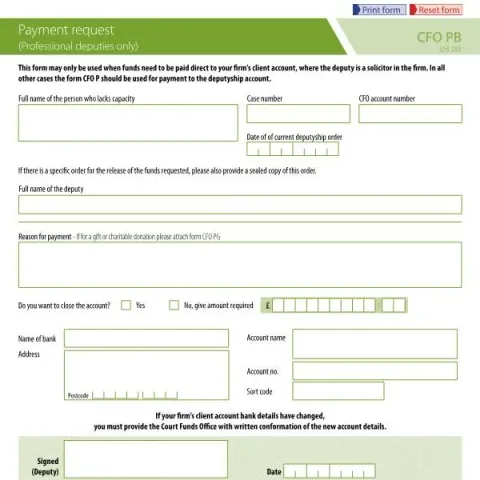
Understanding the Court Funds: Payment Request for Professional Deputies
For solicitors acting as professional deputies, navigating the complexities of managing funds on behalf of individuals who lack capacity can be challenging. A crucial aspect of this management is the Court Funds: Payment Request form. This document is not just another piece of paperwork; it plays a pivotal role in ensuring that clients’ funds are handled efficiently and in compliance with legal regulations. This article will explore the nuances of this specific document, its intended use, and the steps required for submission.
Distinguishing the Payment Request from Similar Forms
Many professionals may confuse the Payment Request form with other documents related to court funds, such as the CFO P form used for payments to deputyship accounts. Understanding these differences is essential for efficient processing and compliance. Here are the primary distinctions:
- Intended Users: The Payment Request form is specifically for professional deputies who are solicitors and intend to deposit funds directly into their firm’s client account.
- Use Cases: This form should be used when a deputy needs to facilitate payments that require immediate access to funds for the client, often related to legal fees or expenses incurred on behalf of the client.
- Required Attachments: Unlike other forms, if the funds are for gifts or charitable donations, a different attachment, CFO PG, must be provided alongside the Payment Request.
The Timeline: Key Dates and What Follows
Timelines are critical in the realm of court funds management. When submitting a Payment Request, it is essential to be aware of the relevant dates that can affect the processing of your request.
Submission Period
The form can be submitted at any point during the deputyship as long as there are funds in the Court Funds Office account that require withdrawal. However, it is advisable to submit requests promptly to avoid unnecessary delays.
Processing Time
Once submitted, the Court Funds Office typically processes requests within 15 working days. However, this can vary depending on the volume of applications being handled at the time.
Post-Submission Actions
Upon approval of the request, funds will be transferred directly to the specified client account. If there are any issues, the Court Funds Office will contact the submitting deputy for clarification.
Addressing Issues: Refusals, Errors, and Missing Documentation
Issues can arise during the process of submitting a Payment Request, whether it be a refusal, an error in the completion of the form, or missing documentation. Understanding how to navigate these challenges is crucial for professional deputies.
What to Do if Your Request is Refused
If a request is refused, the Court Funds Office will typically provide a reason for the refusal. Common reasons include:
- Incomplete forms or missing signatures.
- Insufficient details regarding the recipient account.
- Lack of supporting documents when necessary.
To address a refusal, carefully review the feedback provided and resubmit the request with the necessary modifications.
Correcting Errors
Errors in completed forms are common. If you discover an error after submission, contact the Court Funds Office using the details provided on the form. It’s essential to act quickly and provide corrected information along with the original request reference number.
Handling Missing Documents
If any required documents are missing, the Court Funds Office may delay processing until they receive the necessary information. Ensure that all items listed in the guidance are included before submission to minimize delays.
The Payment Request in the Broader Context of Deputyship
The Payment Request form is only one part of a larger framework of responsibilities that a professional deputy must navigate. Understanding its context is vital for effective fund management.
Role of Professional Deputies
Professional deputies, typically solicitors, have a fiduciary duty to act in the best interest of their clients. This includes managing and safeguarding funds held in the Court Funds Office. The Payment Request form is a tool within this broader responsibility, ensuring funds are accessed appropriately.
Interconnected Processes
In addition to using the Payment Request form, professional deputies must also engage in several other processes:
- Regularly reviewing the client’s financial situation and ensuring that funds are allocated appropriately.
- Maintaining impeccable records of all transactions made on behalf of the client.
- Communicating regularly with the Court Funds Office and keeping abreast of any changes to regulations or procedures that may impact the management of court funds.
Historical and Regulatory Framework
The Court Funds: Payment Request form is rooted in a regulatory framework designed to protect vulnerable individuals who lack capacity. This framework provides assurance that their finances are managed with transparency and accountability.
Evolution of Court Funds Management
The management of court funds has a long history, with the Ministry of Justice overseeing the process to ensure compliance with the law. The current system is part of ongoing efforts to modernize and enhance the transparency of fund management practices. Reforms have been implemented to streamline processes and make interactions with the Court Funds Office more efficient.
Governance and Compliance
All actions taken concerning the Payment Request form must comply with the Data Protection Act 2018 and UK GDPR. This legislation governs how personal data is processed and ensures that sensitive information is handled responsibly.
As a professional deputy, it is essential to be aware of these regulations and incorporate them into your practices to safeguard your clients’ rights and maintain trust.
Practical Tips for Completing the Payment Request Form
The accuracy and completeness of the Payment Request form are paramount. Here are essential tips to ensure a smooth submission process:
Gather Necessary Information
- Ensure that you have all required information about the client, including their full name and case number.
- Collect the bank details of the client account where funds will be deposited, paying special attention to the sort code and account number.
Review Before Submission
Before submitting the form, it is advisable to conduct a thorough review. Double-check all entries for accuracy, and ensure that you have attached any necessary documentation, such as a sealed copy of any specific court orders related to the fund release.
Contacting the Court Funds Office
If you have any uncertainties about filling out the form or need assistance, don’t hesitate to reach out to the Court Funds Office. Their contact details are included on the form itself, and they are available to provide the necessary support.
Conclusion: Ensuring Smooth Fund Management
The Payment Request form is a vital tool for professional deputies overseeing client funds. By understanding its distinctive role and the intricacies involved in its completion and submission, deputies can ensure they manage their clients’ interests effectively and fulfill their legal obligations. Keeping abreast of timelines, addressing issues promptly, and adhering to compliance regulations will lead to successful outcomes in court funds management.
Understanding the Role of Professional Deputies in Court Funds Management
Professional deputies are appointed by the Court of Protection to manage the financial affairs of individuals who lack the mental capacity to do so themselves. This role comes with significant responsibilities, including the management of court funds, which can encompass bank accounts, investments, and property management. A professional deputy must act in the best interest of the individual they represent, ensuring that funds are used appropriately while also adhering to the regulations set by the Court of Protection.
The appointment process involves a thorough assessment of the deputy's qualifications, experience, and the ability to act in the best interests of the person they represent. The Deputyship can be general or limited, depending on the individual’s needs and circumstances. It is crucial for professional deputies to maintain regular communication with the Office of the Public Guardian (OPG) and follow the guidelines established by the Court of Protection to ensure compliance and transparency throughout their tenure.
Moreover, professional deputies must keep detailed records of all transactions and decisions made on behalf of the individual, which may be subject to review by the OPG. This includes providing an annual report detailing the financial position of the individual under their care, which must be submitted to the Court of Protection. By understanding these responsibilities and the legal framework that governs their actions, professional deputies can effectively manage court funds while safeguarding the interests of those they represent.
Preparing a Payment Request: Key Considerations for Professional Deputies
When preparing a payment request from court funds, professional deputies must consider several factors to ensure that the request is justified and compliant with the relevant regulations. Firstly, deputies need to confirm that the funds available in the court account are sufficient to cover the requested payment, taking into account any ongoing expenses or upcoming financial obligations of the person they represent.
Next, documentation is paramount. Each payment request should be accompanied by clear and supportive documentation that justifies the expenditure. For instance, if the request pertains to medical expenses, deputies should provide invoices or receipts from healthcare providers. If it involves care fees, evidence of service agreements or care plans may be necessary. This substantiation not only validates the payment request but also helps in maintaining transparency and accountability.
Additionally, deputies should consider the timing of the payment request. Submitting requests that align with the review periods set by the Court of Protection can help expedite the process. Understanding the urgency of the expense is crucial; for immediate or time-sensitive payments, deputies may need to communicate this to the court clearly and provide evidence of the consequences of any delays.
Finally, it is beneficial for professional deputies to familiarize themselves with the specific forms required for payment requests. The Court of Protection typically provides guidance on the correct forms to use, such as the COP1 or COP4 forms, which must be accurately filled and submitted in accordance with court procedures.
Common Challenges Faced by Professional Deputies in Payment Requests
Professional deputies may encounter various challenges when managing court funds and submitting payment requests. One of the most significant issues is the potential for disputes regarding the necessity or appropriateness of certain expenditures. Family members or other stakeholders may question the validity of a payment request, leading to conflicts that can delay the approval process. It is essential for deputies to remain objective and prepared to justify their decisions with comprehensive documentation and a clear rationale that aligns with the best interests of the individual under their care.
Another common obstacle is the administrative burden associated with maintaining accurate records and adhering to the filing requirements set by the Court of Protection. The deputy's role can involve a significant amount of paperwork, and failure to keep diligent records can lead to compliance issues, audits, or even legal action. To mitigate this risk, many deputies find it beneficial to implement a robust system for paperwork and record-keeping, possibly utilizing digital tools or professional services to streamline the process.
Moreover, professional deputies must navigate the complexities of the data protection implications of handling sensitive personal information. Under the Data Protection Act 2018 and UK GDPR, deputies must ensure that any personal data accessed or processed while managing a person's financial affairs is handled in compliance with the law. This includes obtaining consent when necessary and ensuring secure storage and transmission of sensitive information.
Finally, deputies must also be aware of the evolving nature of legal and regulatory requirements. Keeping up-to-date with changes in legislation or guidance from the Office of the Public Guardian can be challenging but is vital for effective court funds management. Regular training and professional development can provide deputies with the knowledge needed to navigate these changes confidently.