Navigating the Court Funds: Understanding the Authority to Pay Gifts or Donate to Charity
When it comes to the management of funds held for individuals who lack the capacity to manage their own financial affairs, the Court Funds Office (CFO) plays a pivotal role. Among the various requests that can be made to the CFO, the Authority to Pay Gifts or Donate to Charity form stands out, allowing deputies to fulfill the wishes of their clients regarding charitable donations or gifts. Understanding the nuances of this form is essential, especially for deputies and the families of those who may be vulnerable.
The Profile of a Deputy: Who Is Responsible?
Deputies are individuals appointed by the Court of Protection to make decisions on behalf of someone who lacks the mental capacity to do so. This may include a range of circumstances, such as:
- Age-related conditions: Such as dementia or severe cognitive impairment.
- Physical disabilities: That hinder one's ability to manage finances.
- Mental health issues: That may impair decision-making capabilities.
In these cases, the deputy must act in the best interests of the person they represent, often needing to make financial decisions regarding gifts or donations. This includes understanding the limits on the total amount that can be gifted or donated within a 12-month period.
Exceptions and Special Cases
Not every situation is straightforward. There are various exceptions and special cases that deputies must consider:
- Foreign Beneficiaries: If the gift or donation is to an entity or individual based outside the UK, specific regulations may apply, potentially requiring additional checks or approvals.
- Minors: If the beneficiary is a minor, the deputy may need to consider additional legal requirements or restrictions on gifting.
- Urgent Situations: In cases where immediate financial assistance is required, such as medical emergencies, deputies must be prepared to act swiftly and follow the correct procedures for expedited requests.
Completing the Authority to Pay Gifts or Donate to Charity Form
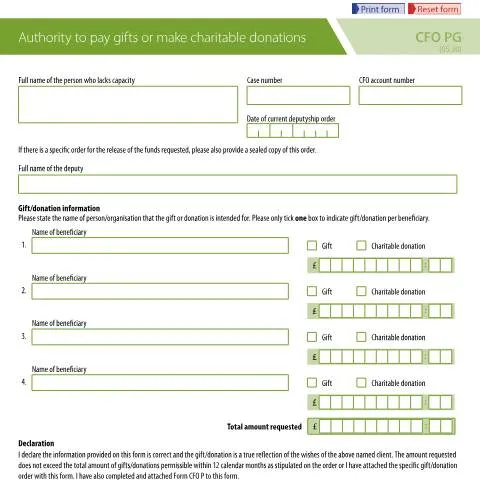
Filling out the Authority to Pay Gifts or Donate to Charity form requires careful attention to detail. The form is structured to collect crucial information that reflects the wishes of the individual lacking capacity. Each section of the form needs to be completed accurately to avoid delays.
Breaking Down the Sections
This form includes specific fields that require proper completion:
- Beneficiary Information: Clearly state the name of the person or organization receiving the gift or donation. Each beneficiary must be indicated separately, along with the corresponding amount.
- Declaration Section: This is a critical part of the form where the deputy verifies that all information is accurate and represents the true wishes of the client. Misrepresentation can lead to legal ramifications.
- Attached Orders: If there is a specific order related to the gift or donation, a sealed copy must be attached to this form. This demonstrates compliance with court requirements.
Common Pitfalls to Avoid When Completing the Form
Filling out official forms can often be daunting. Below are some common pitfalls to avoid to ensure a smooth process:
- Incomplete Information: Ensure all required fields are filled in completely. Missing information can slow down the processing time significantly.
- Incorrect Amounts: Double-check the total amount requested against the permissible limits set by the court. Oversights here can lead to rejection of the request.
- Failure to Attach Required Documents: Remember to include any necessary supporting documents. This could include previous orders or confirmations regarding the individual's incapacity.
Submitting the Completed Form: Where to Send It
Once the form is fully completed and all necessary attachments are included, it’s time to submit it to the Court Funds Office. The submission can be done by post:
Address: Court Funds Office Sunderland SR43 3AB DX 328004 Sunderland 19
For any urgent inquiries, deputies can also reach the Court Funds Office through their customer helpline at 0300 0200 199 or via email at [email protected].
Post-Submission: What to Expect Next?
After submission, deputies should prepare for the following steps:
- Processing Time: The Court Funds Office aims to process requests efficiently, but the time frame can vary based on the complexity of the request.
- Potential Follow-Up: Be prepared for possible questions or requests for additional information from the CFO. Quick responses can help in moving the process along.
- Notification of Decision: Once a decision has been made, the deputy will receive a notification detailing whether the request has been approved or denied.
What to Do in Case of a Refusal
If the request is denied, it’s crucial to understand the reasons behind the decision. The deputy can:
- Request Clarification: Contact the Court Funds Office for detailed explanations regarding the refusal.
- Appeal the Decision: Depending on the situation, it may be possible to appeal the decision. This typically requires submitting a formal appeal to the court.
- Consider Legal Advice: If the matter is complex or if there are disputes regarding the ability to manage finances, seeking legal counsel may be beneficial.
Understanding the Broader Context: The Role of the Court Funds Office in Financial Management
This form does not exist in isolation but plays a part in the broader context of financial management for vulnerable individuals in the UK. The Court Funds Office is responsible for holding and managing funds on behalf of individuals who lack the capacity. It aims to ensure that such individuals are protected and that their wishes are respected.
Understanding how forms like the Authority to Pay Gifts or Donate to Charity fit into these larger processes empowers deputies and families to navigate the complexities of financial management more effectively.
The Importance of Proper Documentation
Proper documentation cannot be overstated. Each gift or donation request must be well-documented to establish legitimacy and compliance with legal standards. This helps protect both the deputy and the person they represent.
- Keep Copies: Always retain copies of submitted forms and any correspondence with the Court Funds Office.
- Document Financial Transactions: Maintain clear records of all financial transactions related to the gifts or donations made.
Final Thoughts on Managing Gifts and Donations
As a deputy, understanding the intricacies of the Authority to Pay Gifts or Donate to Charity form is crucial for ensuring that the financial wishes of those you represent are honored. By navigating the complexities of this form with diligence and awareness, you protect the interests of the vulnerable while fulfilling their desires.
The importance of thorough preparation, attention to detail, and understanding the overarching legal framework cannot be overstated. Your role as a deputy is not only significant in managing finances but also in advocating for the rights and wishes of those who cannot do so themselves.