Navigating the Payment Request Process with the Court Funds Office
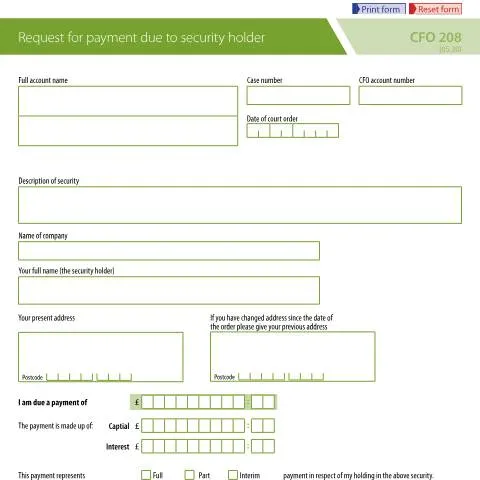
Imagine you are due a payment as a security holder under a court order—perhaps following a legal settlement or a trust fund distribution. The process for requesting this payment, while straightforward, requires careful attention to detail. The official document you need is the "Request for Payment Due to Security Holder" (form CFO 208) issued by the Ministry of Justice. This guide is here to clarify not just the nuances of completing and submitting this form, but also what to expect throughout the process.
Understanding Your Role as a Security Holder
As a security holder, you are entitled to funds that may have been held by the Court Funds Office, often as a result of legal proceedings. This payment may include capital and interest accrued over time. It's essential to know that only the security holder can request payments, except in specific circumstances where legal representatives may act on behalf of the holder. Whether you are an individual, a company, or a trust, understanding your status will inform how you fill out the form and what documentation is required.
Who Can Submit the Request?
- Individuals: If you are the sole security holder, you will complete the form personally.
- Legal Representatives: Solicitors or other authorized representatives can submit the form on your behalf, provided they attach the necessary documentation authorizing their actions.
- Companies: A company can submit a request if it is listed as the security holder, but a company secretary or an authorized individual must sign the form.
Critical Steps to Completing the Form CFO 208
Once you recognize your role, the next step is completing the form accurately. Each section has specific requirements to ensure smooth processing.
Decoding the Form Sections
Let’s break down the significant components of form CFO 208 and highlight common pitfalls:
| Section | Details | Common Pitfalls |
|---|---|---|
| Personal Information | Your full name and current address are mandatory. | Ensure your address matches official documents; otherwise, it may delay processing. |
| Payment Details | Include the total amount due, specifying capital and interest. | Double-check the figures; discrepancies can result in rejection. |
| Account Information | Provide your bank details for payment transfer. | Missing bank statements or incorrect account numbers may delay payments. |
| Signature | Signature must be witnessed by an appropriate individual. | Not adhering to witness requirements can lead to immediate rejection of the form. |
What Happens After Submission?
Once you have submitted your request, you might wonder about the next steps and how to follow up. The Court Funds Office processes requests in the order they are received, and you can typically expect a response within a few weeks. However, the timeline may vary depending on the case's specifics and any additional verification needed.
Staying Updated on Your Request
To keep track of your submission:
- Contact the Court Funds Office: You can reach out via their customer helpline at 0300 0200 199 or email them at [email protected].
- Provide Essential Information: When following up, have your case number and any reference details readily available to facilitate inquiries.
Handling Issues: Refusals and Missing Documents
In case your request for payment is rejected, understanding how to address the situation is crucial. Possible reasons for refusal may include incomplete forms, missing signatures, or discrepancies in your bank details.
What to Do If Your Request is Refused
- Review the Notification: The Court Funds Office will provide a written explanation for the refusal. Carefully review this document to identify the issues.
- Correct and Resubmit: Address any errors noted in the refusal and resubmit your request. Ensure all documentation is correctly completed this time.
- Seek Guidance: If needed, consult legal advisors or financial officers for assistance in rectifying errors.
Special Circumstances: What If You Are an International Applicant?
For individuals living abroad or those dealing with international accounts, additional considerations apply. If you're requesting payments to be made to a bank account outside of the UK, you must provide specific details such as SWIFT/BIC codes and the appropriate IBAN.
Preparing for International Payments
- Bank Details: Make sure to verify your bank's international payment capabilities to avoid complications.
- Documentation Requirements: Include a copy of a bank statement or official letter confirming your account details, as this is crucial for processing international payments.
Extra Considerations: Minors and Vulnerable Individuals
If you are completing the form on behalf of a minor or a vulnerable individual, specific legal protocols must be followed. The Court may require additional verification of authority to act.
Ensuring Compliance with Legal Requirements
- Parental Consent: If you are a guardian, ensure you have the necessary consent to submit requests on behalf of a minor.
- Documentation of Authority: Be prepared to submit any legal documents proving your right to act for the individual concerned.
The Importance of Accuracy: Avoiding Common Errors
Accuracy in your submission cannot be overstated. Making sure every detail aligns with your official documents is critical, as even minor discrepancies can lead to delays or rejection.
Key Areas to Double-Check
- Spelling of Names: Ensure names are spelled correctly as per legal documents.
- Address Verification: Confirm the current address matches what is recorded by the court.
- Signature Compliance: Make sure that the signature aligns with the identity documents provided.
Understanding the Calendar: Key Dates and Timelines
Knowing the timeline for your payment request is vital. Generally, once the Court Funds Office receives your request, they aim to process it within a window of several weeks, barring any complications.
Key Timeframes
- Submission to Acknowledgment: Expect a confirmation of receipt within five working days.
- General Processing Time: Typically two to four weeks for standard requests.
- Special Cases: More complex cases may extend beyond this timeframe; keep communication open with the court.
Final Thoughts: Ensuring a Smooth Experience
Completing the "Request for Payment Due to Security Holder" form (CFO 208) might seem daunting at first, but with meticulous attention to detail and a clear understanding of the process, you can navigate the submission successfully. Remember to check every section thoroughly, prepare the necessary documents, and maintain open lines of communication with the Court Funds Office. These steps will not only enhance your chances of a quick resolution but also ensure that your rights as a security holder are fully upheld.
Understanding Court Funds: The Role of the Public Trustee
The Public Trustee plays a crucial role in managing court funds in the UK. This office is established under the Public Trustee Act 1906, and it provides services for individuals who are unable to manage their funds due to various reasons, such as incapacity or being a minor. One common scenario involves estates where the beneficiaries are either not yet of legal age or are unable to manage their affairs. In such cases, the Public Trustee steps in to safeguard the assets until the funds can be legally transferred to the rightful holders.
When a court order is issued that involves the distribution of funds, the Public Trustee is responsible for holding these funds securely. If you are a beneficiary awaiting payment, understanding the process can alleviate concerns regarding delays. The Public Trustee operates under strict regulations regarding transparency and accounting. They must provide annual statements to beneficiaries, detailing the management of funds and any disbursements made. To initiate a withdrawal, you'll typically need to provide documentation proving your entitlement, such as a copy of the court order or relevant identification.
One important aspect is the service charge applied by the Public Trustee. This charge covers the administrative costs associated with managing the funds. It is essential for beneficiaries to review this charge closely, as it can impact the total amount they receive. For details on the fee structure and any potential exemptions, you should contact the Public Trustee's office directly or consult their official guidelines.
Common Queries Regarding Payment Requests
Individuals often have questions about the payment request process for funds held by the court. A typical query might involve the timeframe for processing a payment request. Generally, once you submit a formal request for payment as a security holder, the court or relevant authority aims to respond promptly, often within a statutory timeframe of 28 days. However, this can vary depending on the complexity of the case or any additional documentation required.
Another common concern is the possible need for a court hearing if there are disputes over the payment. If someone contests your right to the funds, the situation may require judicial intervention, which can draw out the process. It’s advisable to gather all necessary documentation beforehand and consider seeking legal advice to navigate potential disputes effectively. Maintaining clear communication with the court or the administering office can also help clarify any outstanding issues.
In some instances, holders might have questions regarding the status of their payment request. If you find yourself awaiting a response beyond the anticipated timeframe, you have the right to contact the court or the relevant department for updates. It’s wise to keep a record of all communications to reference in case further follow-up is required.
Implications of Delays in Payment Processing
Delays in processing payments can have significant implications for beneficiaries, particularly if the funds are intended for urgent needs such as medical expenses or housing. Understanding the reasons behind these delays can help manage expectations and provide avenues for resolution. Factors contributing to delays can include incomplete documentation, administrative backlogs, or unresolved legal disputes. Being proactive in ensuring that all paperwork is accurate and submitted on time can mitigate some of these issues.
Furthermore, it’s essential to stay informed about any changes in legislation or procedures that might affect payouts. For instance, the implementation of the UK GDPR and the Data Protection Act 2018 has introduced stricter guidelines regarding the handling of personal data in administrative processes. This means that, while protecting your information, some additional checks might slow down routine processes.
In extreme cases, if delays become excessive and impact your financial situation significantly, it may be wise to seek legal counsel. A solicitor can provide guidance on how best to approach the situation and may assist in expediting the process through formal channels.