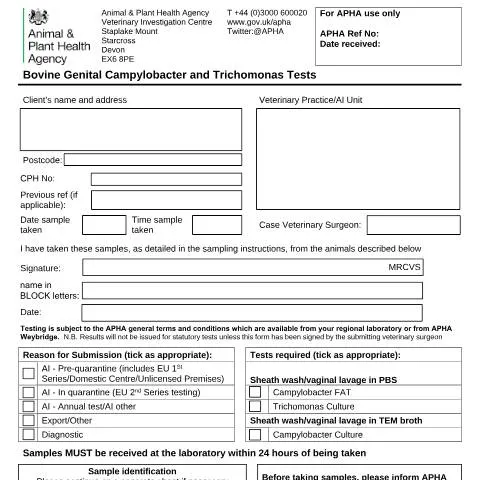
Understanding the Bovine Genital Campylobacter and Trichomoniasis Tests Document
When dealing with the health and productivity of livestock, especially cattle, timely and accurate testing is crucial. The Bovine Genital Campylobacter and Trichomoniasis Tests form is a vital tool in facilitating the diagnosis of these infections, which can have serious implications for reproductive health in cattle. This document, administered by the Animal and Plant Health Agency (APHA), serves a specific purpose in the broader context of livestock health management, ensuring that both farmers and veterinarians can effectively address these issues.
Who Needs to Complete This Document?
The completion of this form is primarily the responsibility of veterinary surgeons and practitioners who are managing cattle health. Here’s a detailed look at the different profiles that might require the use of this document:
- Veterinary Surgeons: Licensed professionals conducting tests on cattle for reproductive health issues.
- Cattle Owners: Farmers who suspect their livestock might be experiencing symptoms related to either Campylobacter or Trichomoniasis.
- Breeding Establishments: Organizations that require pre-breeding tests to ensure the health of breeding stock.
- Exporters: Businesses engaged in exporting cattle, needing to meet health standards for international trade.
Each of these stakeholders plays a role in maintaining animal health, and understanding how to properly complete and submit this form is essential for compliance and effective health management.
The Role of This Document in Cattle Health Management
This form is not merely a bureaucratic requirement; it is instrumental in safeguarding the reproductive health of cattle. The diseases targeted—Campylobacter and Trichomoniasis—can significantly affect fertility rates, which in turn impacts productivity and profitability for farmers.
Consequences of Not Testing
Failure to conduct these tests can lead to:
- Increased Infertility: Both diseases are known to cause reproductive issues, and undetected infections can lead to significant losses.
- Spread of Infection: Infected animals can transmit these diseases to healthy cattle, exacerbating the issue.
- Trade Barriers: For businesses involved in cattle export, not adhering to health protocols can result in trade restrictions.
Thus, this form serves a critical function in the overall health strategy of cattle management.
Decoding the Form: A Step-by-Step Guide
When approaching the completion of the form, attention to detail is paramount. Each section has specific information that must be accurately filled out to avoid delays or rejection of the submission. Below is a detailed breakdown of the form's sections:
Client Information
Begin by providing accurate details about the client. This includes:
- Name and Address: Ensure that the postal address is complete and correct to facilitate communication.
- CPH Number: This is essential as it identifies the holding and is necessary for traceability.
Sampling Details
Accurate recording of sampling details is critical:
- Date and Time of Sample: Note these precisely, as they will dictate the viability of the samples when received by the laboratory.
- Signature of Veterinary Surgeon: This confirms that the testing instructions have been followed.
Reason for Submission and Tests Required
This section dictates the specific reason for testing, which is important for laboratory processing:
- Pre-quarantine for AI: Essential for ensuring that animals are healthy before breeding.
- Routine Testing: Regular checks help in early detection of reproductive health issues.
Choosing the correct tests from the options provided is also crucial. Understanding which test (e.g., Campylobacter FAT or Trichomonas Culture) to mark is key in directing the laboratory's focus.
Supporting Documentation: What to Prepare
Submitting the form often requires additional documentation. Proper preparation enhances the chances of acceptance. Here’s a checklist:
- Previous Reference Numbers: If applicable, include references from prior tests.
- Animal Identification: Keep a thorough record of animal IDs involved in the testing.
Remember, maintaining clear records can aid in managing future health checks and streamlining processes.
Submission Process: Ensuring Timely Delivery
Once the form is completed, it must be submitted correctly to ensure that samples reach the laboratory within the specified timeframe:
- Prepare Samples: Ensure that the samples are ready and correctly labeled.
- Inform the APHA: Notify the APHA in advance of shipment, particularly to confirm the best time for delivery.
- Courier Services: Utilize dedicated courier services to ensure samples arrive within 24 hours, avoiding weekends and bank holidays as specified.
Handling Issues: What to Do If Things Go Wrong
Despite best efforts, issues can arise. Here’s how to handle common problems:
Refusal or Delayed Processing
If your submission is rejected:
- Review the feedback provided by APHA.
- Correct any identified issues and resubmit promptly.
Missing Pieces
In cases where additional information is requested:
- Respond quickly to APHA with the required details.
- Maintain records of correspondence to ensure continuity.
Different Forms for Different Tests: Clarifying Confusions
While this document serves a specific purpose, it is important to distinguish it from other related forms that may be used for similar testing procedures. Understanding the differences can prevent significant delays and confusion:
| Form Name | Purpose | Tests Included |
|---|---|---|
| Cattle Health Test | General health monitoring | Various infections |
| Bovine TB Test | Tuberculosis screening | Mycobacterium bovis |
| Bovine Genital Campylobacter and Trichomoniasis Tests | Specific reproductive health issues | Campylobacter, Trichomonas |
Being aware of these distinctions can aid veterinary surgeons and cattle owners in choosing the correct form for their needs.
Final Thoughts: The Importance of Compliance
Completing the Bovine Genital Campylobacter and Trichomoniasis Tests form is a significant step in ensuring the health of cattle. Compliance with these testing protocols not only safeguards the welfare of the animals but is also critical for maintaining the integrity of livestock management practices. By understanding every detail from the completion of the form to the implications of not adhering to procedures, stakeholders can enhance their operational efficiency and animal health outcomes.
Understanding Bovine Genital Campylobacter and Trichomoniasis in Cattle
Bovine genital campylobacter and trichomoniasis are significant reproductive diseases in cattle that can lead to substantial economic losses for farmers. Understanding the implications of these diseases is essential for effective herd management and biosecurity.
Bovine Genital Campylobacter is primarily caused by the bacteria Campylobacter fetus. The disease can be asymptomatic in cows but often results in early embryonic death and reduced fertility rates. Diagnosis typically involves laboratory testing of vaginal swabs or aborted fetuses, and it is essential to conduct regular testing in herds with a history of reproductive issues.
Trichomoniasis, on the other hand, is caused by the protozoan parasite Trichomonas foetus. It leads to infertility, prolonged calving intervals, and can result in significant financial losses due to decreased calf production. Cattle can be diagnosed through testing of preputial washings in bulls and vaginal swabs in cows. The disease is often transmitted during natural mating, making it critical to implement artificial insemination where possible to reduce the risk of transmission.
Both diseases can be mitigated through vaccination, biosecurity measures, and proper herd management practices, including culling infected animals and testing new herd additions before introduction. Farmers should work closely with their veterinarians to develop a comprehensive herd health plan that includes regular monitoring for these reproductive diseases.
Testing Protocols and Regulations for Bovine Genital Diseases
In the UK, specific regulations govern the testing of cattle for bovine genital campylobacter and trichomoniasis. These testing protocols are crucial for maintaining herd health and ensuring compliance with animal health standards.
Routine Testing: Farmers are encouraged to conduct routine testing, particularly in breeding herds. The testing should be performed by an accredited veterinary surgeon. According to the guidelines set forth by the Animal and Plant Health Agency (APHA), testing protocols may vary depending on the prevalence of reported cases within a local area.
Sample Collection: For campylobacter, the samples are often collected from cows showing signs of reproductive failure. In contrast, for trichomoniasis, bulls must be tested prior to the breeding season. Sample collection should follow strict protocols to ensure the accuracy of results, including appropriate handling and storage conditions for samples.
Reporting and Compliance: Once testing is conducted, results must be reported to the relevant authorities. In the event of a positive diagnosis, farmers must follow a strict biosecurity protocol, including isolation of affected animals and notification of the APHA. Adhering to these regulations is vital not only for individual herds but also for broader animal health efforts in the UK.
Legal Implications: Failure to comply with testing and reporting regulations can result in penalties and restrictions on the movement of animals. Farmers should be well-informed of their responsibilities under the Animal Welfare Act 2006 and the Animal Health Act 1981. Legal advice may be necessary if disputes arise regarding testing obligations or results.
Economic Impact and Management Strategies for Farmers
The economic impact of bovine genital campylobacter and trichomoniasis on cattle farms can be considerable. The costs associated with reduced fertility, increased veterinary care, and the potential loss of animals can severely affect a farm's profitability.
Cost Analysis: Understanding the costs related to these diseases is essential for effective management. Farmers should assess both direct costs, such as veterinary fees and medication, and indirect costs, including lost income from reduced calf production. By calculating the potential losses, farmers can make informed decisions regarding herd management and disease prevention strategies.
Prevention Strategies: Effective management strategies include implementing a comprehensive vaccination program, enhancing biosecurity measures, and regular testing. Farmers should also consider using artificial insemination as a means to prevent the spread of trichomoniasis, particularly in high-risk herds. Keeping accurate records and monitoring herd health closely can help identify issues before they escalate.
Support and Resources: Farmers facing challenges with these diseases can access support from various agricultural and veterinary organizations in the UK. Resources such as the National Farmers' Union (NFU) and local veterinary practices provide valuable information regarding best practices in herd management and disease prevention.
Long-term Management Plans: Developing a long-term cattle management plan with veterinary input is crucial. This plan should encompass regular health checks, follow-up testing for previously affected animals, and strategies to educate farm staff about disease recognition and prevention. By prioritizing proactive management, farmers can minimize the impact of bovine genital campylobacter and trichomoniasis on their operations.