Understanding the Importance of Animal Breeding Control Tests: LSW009
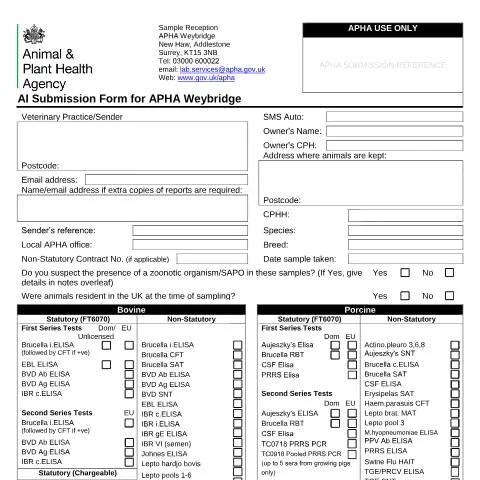
The LSW009 form, under the auspices of the Animal and Plant Health Agency (APHA), plays a crucial role in maintaining the health and welfare of cattle and pigs in the UK. This document not only facilitates the testing of livestock for various diseases but also ensures compliance with national and international health standards. The correct usage of this form is vital for all stakeholders in animal husbandry, including farmers, veterinary practices, and governmental bodies.
Who Needs to Submit the LSW009 Form?
Various parties may be required to complete the LSW009 form, depending on the circumstances surrounding their animal breeding practices. Here are the primary groups involved:
- Veterinary Practices: Vets who carry out health checks and collect samples from livestock need to complete this form to submit for testing.
- Farmers and Livestock Owners: Those who suspect disease or need to ensure the health status of their animals must engage the services of a vet who will handle the paperwork.
- Importers and Exporters: Individuals or businesses involved in the trade of livestock may also need to use this form to comply with health regulations.
Specific Situations Requiring the LSW009 Submission
- Exporting Livestock: When animals are exported, health testing is often mandatory. Completing the LSW009 is essential for meeting export requirements.
- Health Monitoring Programs: Regular health assessments as part of a herd management strategy may necessitate submissions of this form.
- Emergencies: If a zoonotic disease is suspected, immediate action and tests are required, leading to the submission of this form.
Preparation: Gathering Necessary Information
Completing the LSW009 requires careful preparation to ensure that all the required information is accurately provided. Here's a breakdown of the information needed:
Key Information to Collect
- Animal Identification: Ensure that each animal is properly identified with an official ID such as an ear tag or microchip number.
- Sample Details: Collect information about the samples being taken, including the number of samples and their types, which will be indicated on the form.
- Health History: Keep records of any previous vaccinations, treatments, or illness history that may be pertinent during testing.
Documentation and Compliance
In addition to the LSW009 form, you may need to gather supplementary documentation:
- Health Records: Any documentation regarding prior health tests and vaccinations.
- Compliance Certificates: If you operate under certain regulations, include any relevant compliance documents.
Completing the LSW009 Form: Step-by-Step Guidance
Filling out the LSW009 form can be streamlined with a clear understanding of each section. The form is divided into several parts, each requiring specific information:
Section Breakdown
- Veterinary Practice/Sender Information: This section requires the name and contact details of the veterinary practice handling the submission.
- Owner’s Information: Details about the owner of the livestock must be clearly stated, including their County Parish Holding number (CPH).
- Sample Details: Indicate the types of samples collected, categorising them into statutory and non-statutory tests.
- Animal Specifics: For each animal sampled, include its official ID, age, and sex, along with relevant vaccination history.
Submission Methods: How and Where to Send the LSW009
Once completed, the LSW009 form can be submitted via multiple channels, depending on the urgency and type of testing required:
Options for Submission
- Postal Submission: The completed form can be mailed to the APHA Weybridge, ensuring it is sent via a reliable postal service.
- Email Submission: Certain conditions allow for electronic submission of the forms. Verify if your practice qualifies for this option.
How to Track Your Submission
After submitting the form, it is prudent to track its progress:
- Confirmation Receipt: Request confirmation of receipt if submitting by post or note any automated responses if submitted electronically.
- Follow-Up: If you do not receive updates within a reasonable timeframe, contact APHA directly to inquire about the status of your submission.
The Role of the LSW009 in Disease Control and Animal Welfare
Understanding the significance of the LSW009 form extends beyond just completion; it is integral to a broader system of animal health and welfare in the UK. The testing facilitated by this form can prevent the spread of zoonotic diseases, safeguarding public health and animal welfare.
Impact on Public Health
Monitoring diseases in livestock not only helps in protecting animal health but also plays a vital role in public health. By ensuring healthy livestock, we reduce the risk of diseases transmitting from animals to humans, which is essential in today's interconnected world.
Guidelines for Non-Statutory Tests
It is important to note that, in addition to statutory testing, non-statutory tests conducted under the LSW009 form can provide valuable insights into herd health. These tests, while not legally mandated, can help farmers and veterinarians take proactive measures to maintain herd welfare.
What to Do in Case of Issues with Your Submission
In the event of complications such as missing information or rejection of the form, it’s essential to understand your options:
Rejection or Queries
- Addressing Missing Information: If your submission is returned due to incomplete sections, ensure you address all queries before resubmitting.
- Contacting APHA: Should you need clarification or additional information, the APHA provides support for queries regarding the submissions.
Appealing a Decision
If the tests return unsatisfactory results and you feel the outcome may be incorrect, you can appeal the decision. This process usually involves:
- Gathering evidence to support your claim.
- Contacting APHA to discuss your concerns.
Connecting the LSW009 to Broader Agricultural Practices
The LSW009 form is not an isolated document but is connected to a web of interventions designed to ensure animal health. Its use complements other regulatory frameworks within the agricultural sector.
Integration with Other Health Programs
This form often works in tandem with various animal health initiatives aimed at disease prevention and monitoring. Understanding these connections can help stakeholders in animal breeding and health management:
- Vaccination Programs: Knowledge of vaccination status is crucial, particularly when submitting samples for testing.
- Animal Welfare Legislation: Compliance with animal welfare standards means understanding how the results of health tests can affect broader legal obligations.
Leveraging Technology for Efficient Form Management
In modern agriculture, technology plays a pivotal role in ensuring that forms like LSW009 are completed accurately and submitted promptly. Several tools and applications can assist:
Digital Record Keeping
- Software Solutions: Various digital platforms exist for farm management that integrate health records, making it easier to compile the necessary information.
- Mobile Applications: Utilizing mobile technology can streamline the process of documenting animal health and submitting forms with minimal errors.
Education and Training
Ongoing training for veterinary professionals and farmers about the importance of these forms and their proper completion is essential. Staying informed about updates in regulations and best practices can enhance compliance and promote animal welfare.
The Pathway Forward: Ensuring Compliance and Animal Welfare
As the agricultural landscape evolves, understanding the nuances and implications of the LSW009 form will be crucial for all stakeholders involved in animal breeding and health management. By mastering the details surrounding this document, individuals can not only enhance animal welfare but also protect public health and comply with national standards.
Understanding the Legal Framework for Animal Breeding Control Tests
In the UK, the legal framework governing animal breeding control tests, particularly for cattle and pigs, is primarily guided by various regulations set forth by the Animal and Plant Health Agency (APHA) and supported by the Department for Environment, Food & Rural Affairs (DEFRA). The Animal Health Act 1981 and subsequent amendments play a crucial role in shaping the legal landscape. These regulations mandate strict compliance with breeding control protocols to ensure animal health, welfare, and the quality of livestock production.
Specifically, the framework outlines standards for breeding qualifications and the health tests required before animals can be used in breeding programs. For instance, the requirement for health screenings for diseases such as BVD (Bovine Viral Diarrhoea) in cattle and porcine reproductive and respiratory syndrome (PRRS) in pigs is emphasized to prevent the spread of diseases that could impact the UK’s agricultural industry. Compliance with these frameworks is crucial not only for the safety of the animals involved but also for maintaining high standards in food production, which directly affects consumer health.
Moreover, local authorities and veterinary practices often play a role in monitoring compliance with these regulations, ensuring that breeding farms are regularly inspected and that the necessary certifications are obtained. Breeders must maintain meticulous records of their breeding programs, including health testing results, which can be reviewed during inspections by DEFRA or local authorities.
The Role of Genetic Testing in Animal Breeding Control
Genetic testing has emerged as a pivotal aspect of animal breeding control, particularly in enhancing the quality and health of cattle and pigs. By identifying genetic predispositions to certain diseases, breeders can make informed decisions regarding mating pairs, ultimately leading to healthier livestock. The implementation of genetic testing services is encouraged by the government, particularly for breeds that have historically faced health issues.
These tests can identify genetic markers associated with economically significant traits, such as growth rate, feed efficiency, and disease resistance. For instance, tests for the presence of the myostatin gene in cattle, which influences muscle growth, can help breeders select animals that yield higher meat production. Similarly, in pigs, genetic testing can be used to assess traits such as litter size and the overall health of piglets.
Moreover, genetic testing is supported by several initiatives aimed at promoting sustainable breeding practices. The UK government often collaborates with the agricultural sector to fund research and development projects focused on improving breeding techniques through genetic advancements. Livestock Improvement and the UK Cattle Breeding Federation are examples of organizations working alongside DEFRA to ensure that breeding programs integrate the latest scientific research while complying with legal and ethical guidelines.
Challenges and Opportunities in Breeding Control Compliance
While the regulatory framework for animal breeding control tests provides a solid foundation for ensuring livestock welfare and disease management, several challenges persist in achieving full compliance among breeders. One significant challenge is the varying levels of awareness and understanding regarding the legal requirements for breeding programs. Smaller farms, in particular, may not have the resources or access to information necessary to fully comply with all regulations, leading to potential oversights in health testing and documentation.
Additionally, the dynamic nature of regulations can create confusion among breeders. Changes in legislation, such as updates to health testing requirements or new animal welfare standards, necessitate continual education and adaptation for those in the industry. Breeders are encouraged to engage regularly with veterinary services and industry groups to stay informed about changes that may impact their operations.
However, amidst these challenges lie opportunities for improvement and growth within the industry. Increased investment in training for breeders can significantly enhance compliance rates and animal welfare standards. Additionally, advances in technology, such as mobile applications for tracking health tests and breeding records, offer innovative solutions to streamline compliance processes. The government and industry bodies are actively exploring such technology-driven initiatives to support breeders in maintaining stringent compliance standards while promoting animal health and productivity.