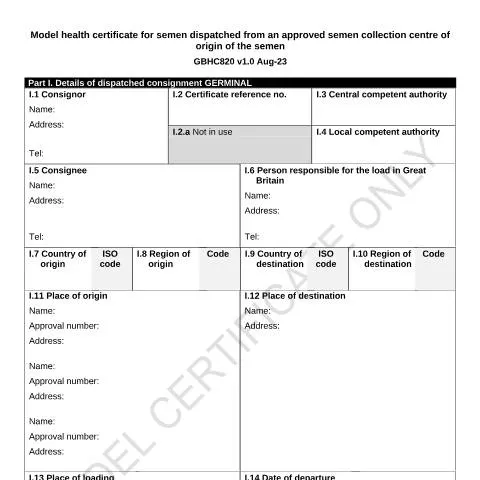
Navigating the Ovine and Caprine Germinal Products Health Certificate
For those engaged in the breeding and export of ovine (sheep) and caprine (goat) germinal products, the Model Health Certificate is an essential document. Not only does it confirm compliance with animal health regulations, but it also facilitates the cross-border movement of these products. The importance of obtaining this certificate cannot be overstated, as it is pivotal in ensuring trade integrity and animal health protection.
Understanding the Health Certificate's Role
The health certificate serves as an official endorsement from a qualified veterinarian, attesting to the health status of the animals from which the germinal products are derived. This includes semen, which must meet stringent health criteria prior to export. The certificate outlines several critical aspects that are verified during its issuance:
- Freedom from Diseases: The exporting country must be free from significant diseases like foot-and-mouth disease, rinderpest, and peste des petits ruminants for a year prior to the collection of semen.
- Compliance with Collection Regulations: The semen collection centre must adhere to specific GB (Great Britain) standards and have the relevant approvals in place.
- Animal Health Requirements: Donor animals must be healthy and free from any clinical signs of disease at the time of semen collection.
Who Can Obtain the Certificate?
Eligibility to obtain the Ovine and Caprine Germinal Products Model Health Certificate is primarily determined by the relationship to animal husbandry and compliance with veterinary regulations. The following parties can apply for the certificate:
- Approved Semen Collection Centres: Only centres that have received formal approval from the relevant authorities can issue the health certificate for the semen they collect and distribute.
- Veterinarians: Qualified veterinarians must oversee the certification process, ensuring all health checks and documentation comply with regulations.
- Exporters: Businesses engaged in the export of ovine and caprine germinal products must ensure the collection centres they work with are accredited and compliant with the regulations.
Conditions for Eligibility
To successfully obtain the health certificate, certain conditions must be met:
- The semen collection must occur in a facility that holds current approval from the local competent authority.
- The donor animals must have undergone health assessments to confirm they are free from the specified diseases.
- All records must be meticulously maintained, detailing the health status of the animals, collection procedures, and transportation details.
Validity and Renewal of the Certificate
Once obtained, the Ovine and Caprine Germinal Products Health Certificate has a defined period of validity, which is usually dictated by the transportation and use of the germinal products. Generally, the following applies:
- Duration of Validity: The health certificate remains valid for a specific period, typically until the products reach their destination or are used for artificial reproduction.
- Renewal Process: If the certificate expires before the products are utilized, another certification process will need to be initiated.
Conditions for Withdrawal
Circumstances may arise where the certificate needs to be revoked or amended. The primary conditions for withdrawal can include:
- Discovery of diseases in the originating country that were not previously disclosed.
- Changes in the health status of the donor animals post-certification.
Addressing Issues with the Health Certificate
Mismanagement or errors during the certification process can lead to complications. Here’s what to do if you encounter problems:
Lost or Misplaced Certificates
If the original health certificate is lost, immediate action is required:
- Contact the issuing veterinarian or the semen collection centre to request a reissue of the certificate.
- Provide proof of original certification, if possible, to facilitate the retrieval.
Disputes and Amendments
Disputes may arise due to perceived discrepancies in the health certificate. In such cases:
- Document all relevant details regarding the dispute and gather supporting evidence.
- Engage with the issuing authority or veterinarian to clarify the issues and seek an official resolution.
The Legal Framework and Importance of the Certificate
The Model Health Certificate operates within a legal framework that ensures compliance with the Animal Health Act and other relevant legislation. Its importance is multifaceted, including:
- Trade Compliance: The certificate is crucial for fulfilling trade requirements, enabling the legal import and export of ovine and caprine germinal products.
- Animal Health Protection: It plays a vital role in preventing the spread of diseases across borders, thereby protecting local livestock populations.
- Legal Accountability: In instances of disputes, the health certificate serves as a legal document that holds significant value in court adjudications.
Legal Consequences of Non-Compliance
Failing to secure the health certificate or presenting false documentation can result in serious repercussions, including:
- Fines and penalties imposed on exporters.
- Legal actions against individuals or companies involved in the misrepresentation of animal health statuses.
Practical Use Cases of the Health Certificate
The Model Health Certificate is not merely a formality; it holds practical significance in various scenarios:
Exporting Semen to International Markets
When exporting semen to countries outside of the UK, the health certificate is a non-negotiable requirement. Customs and veterinary authorities in the destination country will demand to review this document to ensure compliance with their local health regulations.
Transiting Through Great Britain
For entities transporting germinal products through GB en route to a third country, the health certificate must be presented at designated Border Control Posts (BCPs). This ensures that products are not only healthy but also compliant with the regulations of all transit nations.
Connecting with Authorities: The Role of the Department for Environment, Food & Rural Affairs
Engagement with governmental bodies is critical in navigating the requirements surrounding the Model Health Certificate. The Department for Environment, Food & Rural Affairs (DEFRA) and the Animal and Plant Health Agency (APHA) are key players:
- They provide guidelines on the necessary health standards and assist in the approval process for semen collection centres.
- They are involved in the ongoing monitoring of health status and compliance with national and international regulations.
Resources and Support
Entities looking to understand more about the certification process can access a variety of resources:
- Official DEFRA Guidelines: Detailed documents outlining health requirements for breeding and export activities.
- Veterinary Services: Professional support from veterinarians who specialize in livestock health and trade regulations.
Conclusion: The Path Forward for Exporters and Collectors
In the realm of international animal product trade, the Model Health Certificate stands as a cornerstone of compliance and trust. For businesses engaged in the export of ovine and caprine germinal products, understanding the intricacies of acquiring and maintaining this certificate is paramount. The stakes are high, with animal health and trade integrity hanging in the balance. By closely adhering to the procedures and requirements outlined by DEFRA and APHA, stakeholders can ensure their operations are not only legal but also beneficial to both the economy and animal welfare.
Understanding Ovine and Caprine Germinal Products Health Certificates
The health certification process for ovine (sheep) and caprine (goats) germinal products is a crucial element of livestock trade within the UK and international markets. These health certificates are essential to ensure that the animals and their products comply with the animal health rules set forth by both UK authorities and the importing countries. Below, we delve into the intricacies of this certification, including what these germinal products entail, the requirements for certification, and the role of veterinary inspections.
Germinal products typically include semen, ova, and embryos from sheep and goats. The certification process begins with the identification of the animals from which these products are sourced. Each animal must possess a valid identification number, which is paramount for traceability. Additionally, the herd or flock health status must meet specific criteria, such as freedom from certain diseases, which are listed in the health certificate. The presence of a qualified veterinarian is required to perform health checks and to issue the necessary certificates in compliance with the Animal Health Act 1981 and related regulations.
These health certificates must be completed in full and submitted to the relevant authorities before the germinal products can be transported. It's vital for producers to be aware of the specific health requirements of the destination country, as these can vary significantly. For instance, the European Union has stringent regulations on the importation of animal semen, which can include tests for specific diseases such as Bluetongue and Maedi-Visna. Furthermore, the temperature controls during the transport of germinal products must also be strictly followed to maintain viability. Producers must also be cognizant of the requirements set forth by the Department for Environment, Food and Rural Affairs (DEFRA) and abide by the guidance provided on the GOV.UK platform.
Common Challenges in Acquiring Health Certificates
Despite robust frameworks in place, producers often face challenges when acquiring health certificates for ovine and caprine germinal products. One prominent issue is the variability in health regulations across different countries. Producers must stay informed about changing health and export requirements, which can complicate the certification process. For instance, a sudden outbreak of disease in a specific region may lead to immediate changes in export protocols, which are often communicated through DEFRA and other agricultural agencies.
Additionally, miscommunication or inadequate record-keeping can lead to rejections at the point of inspection. It is not uncommon for producers to encounter issues related to incomplete documentation or discrepancies in animal identification. Therefore, meticulous record-keeping is essential to ensure compliance. This includes maintaining comprehensive health records and ensuring all vaccinations and treatments are up-to-date and documented.
Moreover, the timing of veterinary inspections can also pose a challenge. Producers need to coordinate these inspections well in advance of any proposed export date, understanding that veterinary availability may vary. Failure to secure timely inspections can lead to delays, which may ultimately affect the marketability of their products. Engaging with a local veterinarian familiar with export requirements can greatly enhance a producer's ability to navigate these challenges more effectively.
Future Considerations for Ovine and Caprine Germinal Products Trade
As the landscape for livestock trading continues to evolve, the future of ovine and caprine germinal products will be influenced by several factors, including technological advancements, biosecurity measures, and international trade agreements. One significant development is the growing emphasis on animal welfare standards and how these standards impact health certification processes. Producers are increasingly expected to not only meet health requirements but also demonstrate ethical farming practices.
Additionally, advancements in technology, such as genomic testing and the use of artificial intelligence for health monitoring, could revolutionize how health certifications are issued. These technologies could enhance traceability and reduce the time required for health checks, ultimately streamlining the certification process. However, as these technologies become integrated into livestock management, it will be essential for regulatory bodies to establish guidelines that encompass these innovations.
Furthermore, as the UK continues to negotiate trade deals post-Brexit, the implications for health certification in ovine and caprine germinal products will need to be closely monitored. Different trading partners may have unique requirements, necessitating adaptability on the part of producers who wish to export their germinal products. Being proactive in understanding these evolving regulations and maintaining open communication with relevant authorities will be crucial in navigating the future landscape of livestock trade.