Navigating the Complex World of Captive Bird Gatherings Under UK Animal Health Regulations
When thousands of poultry enthusiasts converge at the Royal Welsh Show or when pigeon fanciers organise their regional racing championships, few visitors realise the intricate regulatory framework governing these events. Behind every bird fair, poultry auction, or ornithological exhibition lies a rigorous licensing system designed to prevent the spread of avian diseases whilst preserving Britain's rich tradition of bird keeping and breeding.
The Department for Environment, Food and Rural Affairs (DEFRA) operates a comprehensive licensing regime for bird gatherings through its Animal and Plant Health Agency (APHA). This regulatory structure acknowledges that whilst such events serve vital cultural, educational, and commercial purposes, they also present significant biosecurity risks that could devastate both domestic poultry industries and wild bird populations.
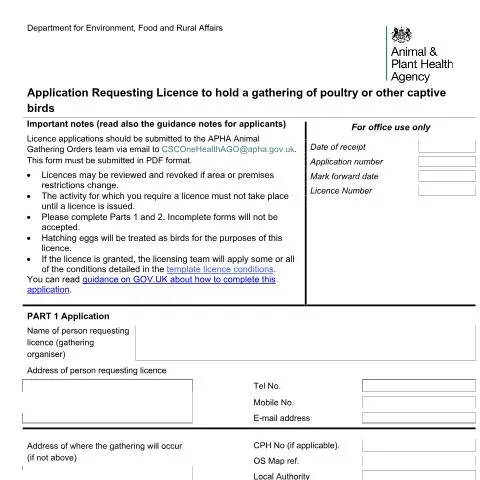
Form EXD660 represents the gateway to this licensing system, serving as the mandatory application document for anyone seeking to organise gatherings involving poultry or other captive birds. The form's complexity reflects the multifaceted nature of avian disease control, encompassing everything from premises inspections to veterinary oversight requirements.
The Regulatory Framework Behind Captive Bird Gathering Controls
The licensing requirements stem from the Animal Health Act 1981 and subsequent regulations, particularly those implemented following major avian influenza outbreaks that have periodically swept across Europe. The UK's approach recognises that bird gatherings create unique epidemiological challenges—concentrating birds from multiple premises in single locations where pathogens can rapidly spread between flocks that would otherwise remain geographically isolated.
Disease Control Zones play a particularly crucial role in the licensing process. When avian influenza or other notifiable diseases are detected, APHA establishes protection and surveillance zones around affected premises. During these periods, bird gatherings within designated areas face either prohibition or significantly enhanced licensing conditions.
The regulatory framework distinguishes between different categories of captive birds, reflecting their varying disease susceptibilities and commercial importance:
- Galliformes (chickens, turkeys, pheasants, quail) face the strictest controls due to their high susceptibility to avian influenza
- Anseriformes (ducks, geese, swans) require careful monitoring as natural reservoirs of influenza viruses
- Ratites (ostriches, emus) have specific handling requirements due to their size and behavioural characteristics
- Columbiformes are subdivided between racing pigeons and fancy varieties, reflecting different risk profiles
Profiles of Organisers: From Agricultural Societies to Specialist Breeding Clubs
The licensing system accommodates a remarkably diverse range of event organisers, each presenting unique operational challenges and risk profiles. Agricultural societies represent perhaps the most visible category, organising large-scale county shows where poultry exhibitions form part of broader agricultural displays. These events typically involve hundreds of birds from dozens of premises, requiring comprehensive contingency planning and veterinary oversight.
Specialist breed societies constitute another significant category, organising focused exhibitions celebrating particular breeds or varieties. The Rare Poultry Society's annual show, for instance, might gather together critically endangered breeds that exist in small numbers across widely scattered locations. These events require particularly careful disease prevention measures given the irreplaceable nature of the genetic material involved.
Commercial operators running poultry auctions or bird fairs face distinct regulatory considerations. Their events often involve the actual sale and transfer of birds, creating additional traceability requirements. The licensing process for such events typically involves enhanced record-keeping obligations and specific provisions for post-event disease monitoring.
Regional Variations and Specialised Events
Scotland, Wales, and Northern Ireland each maintain their own animal health administrations whilst working within the UK-wide framework. Events crossing administrative boundaries—such as the Royal Highland Show in Scotland attracting exhibitors from across Britain—require coordination between different regulatory bodies.
Racing pigeon events present unique challenges given their competitive nature and the valuable breeding stock involved. The Royal Pigeon Racing Association's events often involve birds worth thousands of pounds, making disease prevention both economically and culturally crucial.
The Veterinary Dimension: Professional Oversight and Contingency Planning
Central to the licensing system is the requirement for professional veterinary involvement at multiple levels. Every application must identify a nominated veterinary surgeon who will provide oversight during the event. This individual must be available throughout the gathering and possess appropriate experience with avian species.
The veterinary surgeon's responsibilities extend beyond mere presence at the event. They must approve the applicant's written contingency plan, which forms a mandatory component of every licence application. This plan must address potential disease outbreak scenarios, specifying procedures for isolating affected birds, notifying authorities, and implementing emergency biosecurity measures.
| Veterinary Responsibility | Pre-Event Requirements | During Event Duties |
|---|---|---|
| Health monitoring | Review contingency plans | Clinical surveillance of birds |
| Biosecurity oversight | Approve disinfection protocols | Monitor compliance with hygiene measures |
| Disease response | Establish isolation procedures | Immediate response to suspected cases |
| Record keeping | Verify traceability systems | Maintain detailed health records |
The named bird expert requirement acknowledges that veterinary surgeons, whilst medically qualified, may lack specific expertise with particular avian species. This expert provides specialised knowledge about the behavioural and husbandry needs of the birds involved, complementing the veterinary surgeon's clinical oversight.
Navigating the Application Process: From Initial Submission to Final Approval
The application process begins with submission of the completed EXD660 form to APHA's Animal Gathering Orders team via email at [email protected]. The requirement for PDF format reflects the need for secure document handling and prevents inadvertent alterations during transmission.
Timing considerations prove crucial for successful applications. The guidance emphasises that activities cannot commence until a licence is issued, yet the licensing process involves multiple review stages that can extend over several weeks. Prudent organisers typically submit applications at least six weeks before their planned events.
The Two-Stage Application Structure
Part 1 of the form captures comprehensive event details, from basic organiser information to complex technical specifications. The CPH (County Parish Holding) number requirement links the event to existing agricultural premises registrations, enabling APHA to cross-reference disease control measures and movement restrictions.
Geographic precision proves essential, with applications requiring Ordnance Survey map references alongside postal addresses. This detail enables APHA inspectors to assess local disease risks and evaluate the suitability of proposed venues.
Part 2's declaration section carries significant legal weight, with applicants acknowledging potential criminal penalties for false statements. The Animal Health Act 1981 provides for imprisonment up to six months or fines reaching Level 5 on the standard scale for fraudulent applications.
Biosecurity Protocols and Disinfection Requirements
The licensing system places particular emphasis on DEFRA-approved disinfectants, reflecting scientific evidence about effective pathogen control. Organisers must specify both the disinfectant type and concentration, demonstrating understanding of proper biosecurity protocols.
Common approved disinfectants include formaldehyde-based compounds, quaternary ammonium products, and phenolic disinfectants, each with specific application requirements and contact times. The choice often depends on the venue type, weather conditions, and the species involved.
Footwear disinfection stations represent a mandatory feature at licensed gatherings, with organisers required to maintain effective disinfectant solutions throughout the event. Vehicle wheel washes may be required for larger events or those in high-risk areas.
Premises-Specific Considerations
The licensing assessment considers the fundamental characteristics of proposed venues. Purpose-built agricultural showgrounds typically possess infrastructure supporting effective disease control—hard-standing areas for easy cleaning, water supplies for disinfection stations, and separate entry/exit points enabling controlled movement.
Temporary venues, such as village halls or community centres, require more extensive biosecurity planning. Organisers must demonstrate how they will establish effective disease control measures in environments not originally designed for livestock activities.
Post-Application Assessment and Veterinary Inspector Review
Once submitted, applications enter a structured assessment process managed by APHA's licensing team. Part 3 of the form guides this initial evaluation, with officials systematically checking compliance against established criteria.
The licensing matrix referenced in the assessment process provides standardised criteria for evaluating different event types. This matrix considers factors including bird species, gathering size, geographic location, and current disease status in determining whether events can proceed under licence.
Individual Veterinary Risk Assessments (VRAs) form a critical component of the evaluation process. These assessments consider location-specific factors, including proximity to commercial poultry premises, wild bird migration routes, and historical disease patterns. High-risk locations may face additional licensing conditions or, in extreme cases, prohibition.
The Final Approval Stage
Part 4 requires sign-off from a qualified Veterinary Inspector, reflecting the professional judgment element inherent in licensing decisions. These inspectors possess specialised knowledge of avian diseases and regulatory requirements, enabling them to assess complex risk scenarios.
The inspector's comments section often contains additional conditions tailored to specific events or locations. These might include enhanced surveillance requirements, modified bird movement protocols, or specific contingency measures addressing local risk factors.
Operational Realities: Managing Licensed Events
Successful licence holders face ongoing obligations throughout their events. The seven-day rule means final licences are only issued one week before scheduled gatherings, requiring organisers to maintain flexibility in their planning whilst ensuring all conditions can be met.
Record-keeping requirements extend beyond the event itself, with organisers typically required to maintain detailed registers of participating birds, their origins, and destinations. These records prove essential for disease tracing should problems emerge in subsequent weeks.
Licence revocation remains a possibility even after initial approval, particularly if area restrictions change due to emerging disease outbreaks. The guidance explicitly warns that licences may be reviewed and revoked if circumstances change, emphasising the dynamic nature of disease control measures.
The contingency planning requirement ensures organisers prepare for various emergency scenarios. These plans must address immediate responses to suspected disease cases, including bird isolation procedures, authority notification protocols, and arrangements for early event termination if necessary.
Understanding the EXD660 licensing process proves essential for anyone involved in organising bird gatherings across the UK. The system balances legitimate cultural, educational, and commercial interests against genuine disease control imperatives, requiring organisers to demonstrate both commitment to biosecurity and professional competence in managing complex livestock events.
Documentation Requirements and Evidence Standards
When applying for a specific licence for bird gatherings, the quality and comprehensiveness of your supporting documentation can significantly influence both the processing timeline and approval outcome. Natural England and equivalent authorities across the UK maintain strict evidence standards that reflect the potential biosecurity risks associated with bringing together birds from multiple sources.
Your veterinary health certificates must be issued by a registered veterinary surgeon within 48 hours of the proposed gathering for poultry, or within 7 days for other captive bird species such as ornamental waterfowl or cage birds. The certificate should explicitly state that all birds have been examined and show no clinical signs of notifiable diseases including avian influenza, Newcastle disease, or salmonella variants relevant to your species mix. For gatherings involving birds from different premises, each source location requires separate certification.
Vaccination records present particular complexity, as requirements vary dramatically by species and gathering type. Commercial poultry gatherings typically require evidence of vaccination against Newcastle disease, with booster timing documented to ensure protective immunity levels. However, some rare breed societies specifically prohibit vaccinated birds from competition classes, creating a regulatory tension that your application must address through enhanced biosecurity measures rather than vaccination protocols.
Site maps and facility descriptions must demonstrate practical implementation of your biosecurity plan rather than theoretical compliance. Include detailed floor plans showing bird housing arrangements, visitor pathways, vehicle access points, and waste management areas. Photographic evidence of existing facilities often strengthens applications, particularly for permanent venues seeking regular gathering approvals. Temporary sites require additional documentation showing how structures will prevent wild bird contact and facilitate effective cleaning between different exhibitor groups.
Movement records become particularly critical for gatherings involving birds that will return to their original premises post-event. Your application should outline the tracking system for individual birds or groups, including identification methods (leg rings, microchips, or housing group records) that will enable rapid tracing should disease issues emerge weeks after the gathering concludes.
Species-Specific Regulatory Considerations
Different bird categories face distinct regulatory frameworks that significantly impact licence requirements and conditions. Understanding these species-specific nuances prevents common application errors and ensures appropriate biosecurity measures for your particular gathering type.
Domestic poultry gatherings involving chickens, ducks, geese, turkeys, or guinea fowl fall under the most stringent regulations due to their high susceptibility to notifiable diseases and potential for rapid disease transmission. Commercial layer or broiler gatherings require additional documentation regarding feed sources, as contaminated feed represents a primary disease vector. Rare breed poultry shows often involve birds with limited vaccination history, necessitating enhanced isolation protocols and extended quarantine periods post-gathering.
Cage bird gatherings encompassing canaries, finches, parrots, or budgerigars face different challenges, particularly regarding importation documentation if birds originate from EU countries post-Brexit. CITES documentation may be required for endangered species, even for UK-bred birds, if their species appears on protected lists. Indoor cage bird shows typically present lower biosecurity risks but require ventilation system documentation to prevent aerosol disease transmission in confined spaces.
Ornamental waterfowl gatherings involving swans, ornamental ducks, or geese require particular attention to wild bird contact prevention, as these species often attract wild waterfowl that may carry avian influenza. Outdoor water features must be covered or treated to prevent wild bird access, while indoor facilities need drainage systems capable of complete water replacement between different exhibitor groups.
Game bird gatherings for pheasants, partridges, or quail face additional complexity due to their semi-wild nature and potential interaction with wild populations. Shooting estate gatherings may require coordination with local wildlife management authorities, particularly during breeding seasons when wild populations are most vulnerable to disease introduction.
Ratite gatherings involving emus, ostriches, or rheas represent a specialised category with limited UK precedent. These applications typically require additional veterinary consultation and may involve extended processing periods as authorities assess novel biosecurity challenges associated with these large, powerful birds.
Post-Licence Compliance and Monitoring Obligations
Obtaining your specific licence represents only the beginning of your regulatory obligations, as ongoing compliance monitoring and reporting requirements continue throughout the gathering period and extend into post-event follow-up activities.
Daily health monitoring protocols must be implemented from the moment birds arrive at your gathering location. Designated personnel should conduct systematic health checks at specified intervals, typically every 12 hours for multi-day events. Any bird showing clinical signs of illness must be immediately isolated and reported to the attending veterinary surgeon, with detailed records maintained including bird identification, symptoms observed, time of detection, and remedial actions taken.
Visitor management extends beyond simple attendance recording to include contact tracing capabilities should disease investigation become necessary. Your registration system should capture visitor contact details, premises of origin for any bird owners, and duration of stay at the gathering. Some authorities require visitors to declare recent contact with other bird gatherings or premises experiencing health issues, creating a broader epidemiological picture.
Waste management protocols during the event require particular attention, as contaminated bedding, feed residues, and water sources represent significant disease transmission risks. Your licence conditions will specify approved disposal methods, which may include on-site composting with temperature monitoring, collection by licensed waste contractors, or temporary storage pending laboratory clearance in disease-suspect situations.
Post-event reporting obligations typically extend 21 days beyond the gathering conclusion, reflecting the incubation periods of major avian diseases. You must maintain contact with all participants to monitor bird health status and report any disease incidents that might be linked to the gathering. Some licences require formal health certification from participating premises 14 days post-event, particularly for large commercial gatherings or those involving high-risk species combinations.
Record retention requirements mandate maintaining all gathering-related documentation for minimum periods, typically 3 years for commercial events or 1 year for small-scale hobby gatherings. These records must be readily available for inspection by Animal and Plant Health Agency officials and may be requested during routine compliance audits or disease outbreak investigations affecting other premises in your region.
Insurance obligations may be specified within your licence conditions, particularly for gatherings on public or rented land. Public liability coverage should explicitly include disease transmission scenarios, while some authorities require additional coverage for emergency disease control measures including compulsory slaughter or movement restrictions that might affect participant birds beyond the immediate gathering period.